Saint Lambert
Place du Bailliage
5500 Bouvignes-sur-Meuse (Dinant)
Church | XII-XV & XVIII | Neogothic | Catholic Church

Map
Opening hours
01 January - 31 December
Mon
Tue
Wed
Thu
Fri
Sat
Sun
Only on request:
paroissedebouvignes@gmail.com +32 477 98 00 75 (Frère Jean-Baptiste)(free)
or Maison du Patrimoine médiéval mosan: +32 82 22 36 16 (charged)
Religious offices
Sundays and public holidays: 10.30 am
More information on the parish website:
www.paroissedebouvignes.com
Description
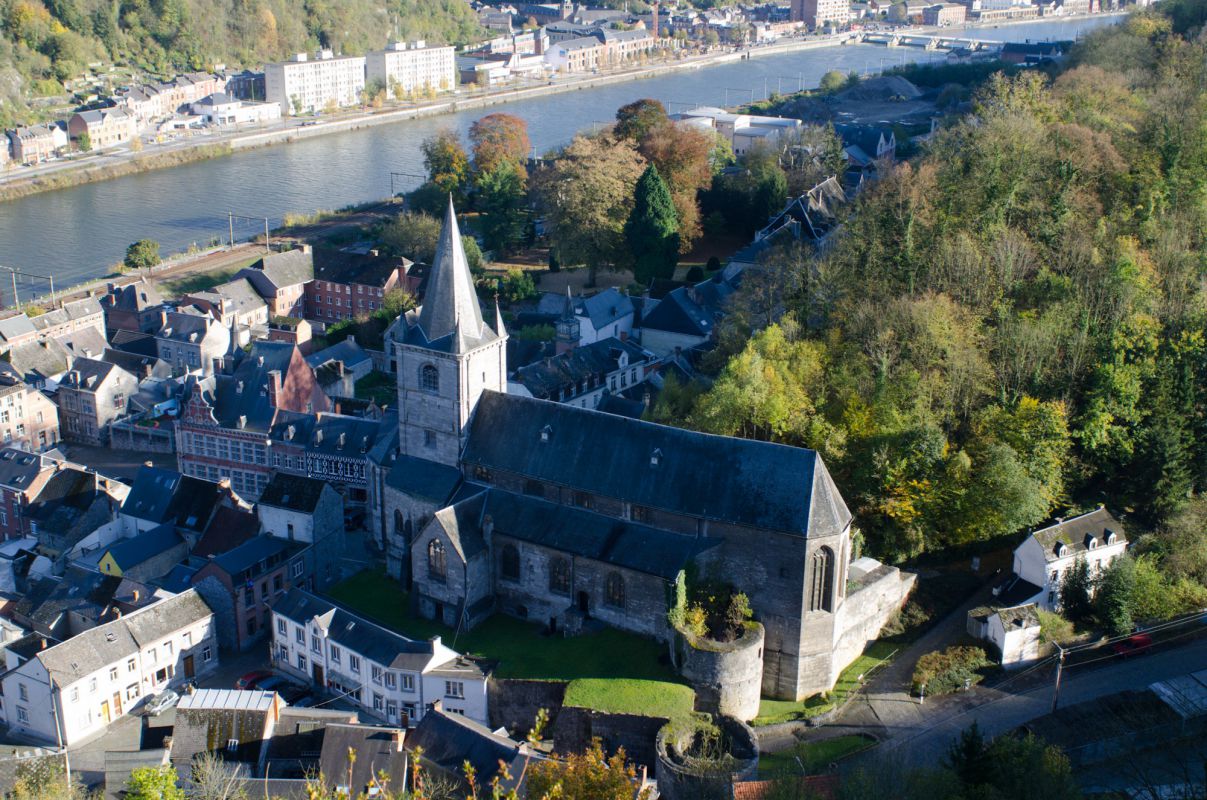
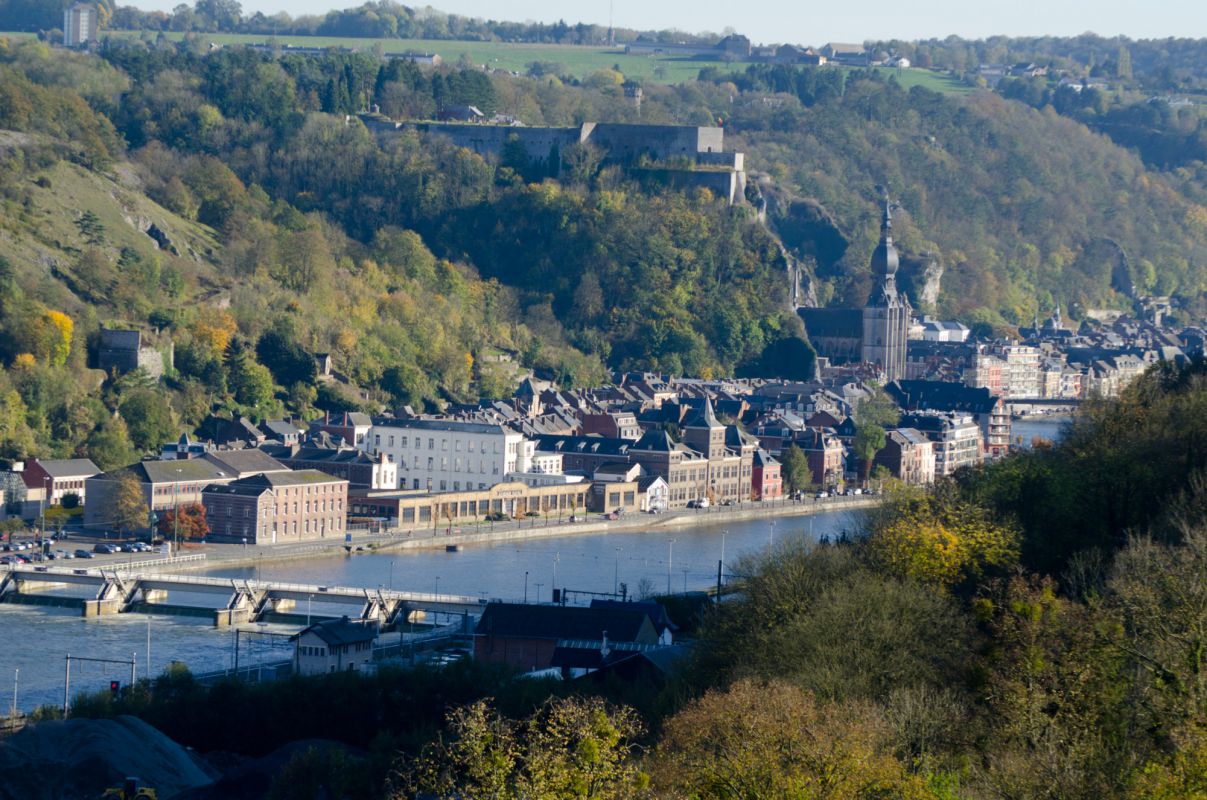
Bouvignes is located on the Meuse opposite Dinant and one has the feeling that time has stopped here. The town was once known for its copper beaters and was prosperous. Traces of this are still visible today with the remains of the count’s ancient castle and the keep of Crèvecoeur which dominates the village.
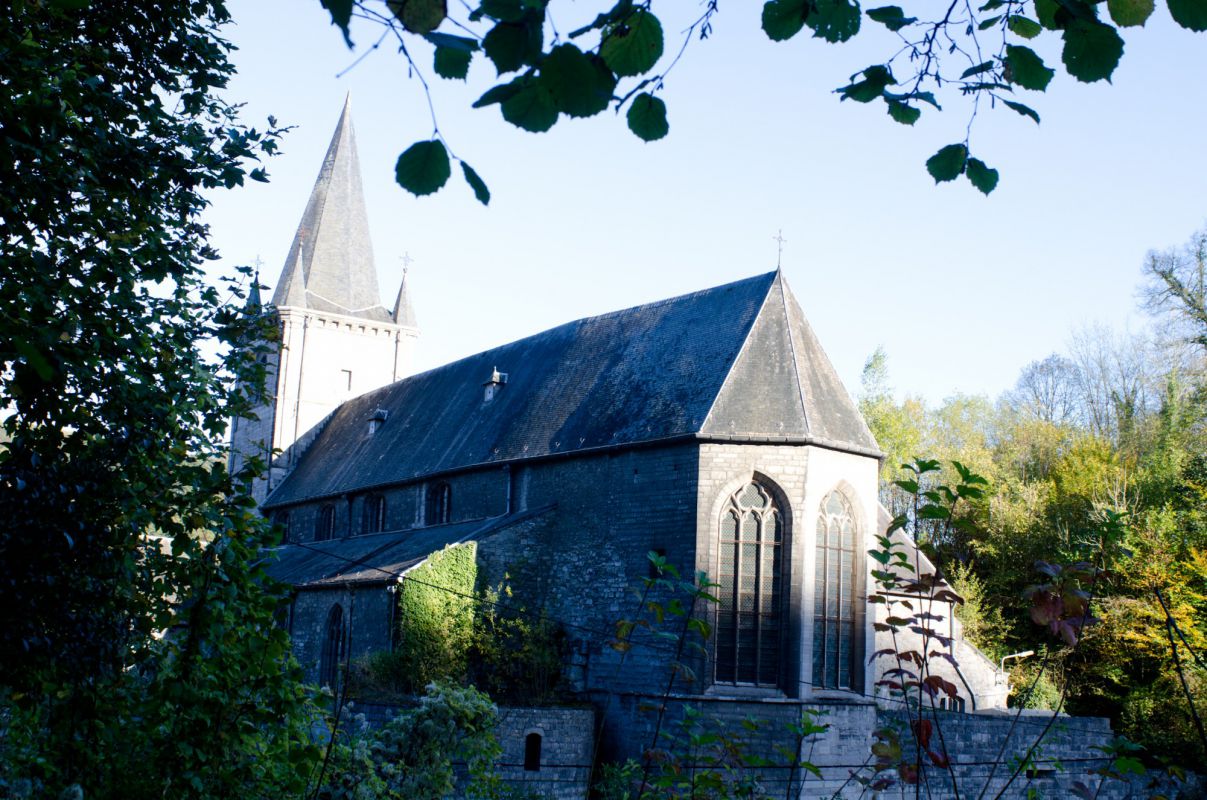
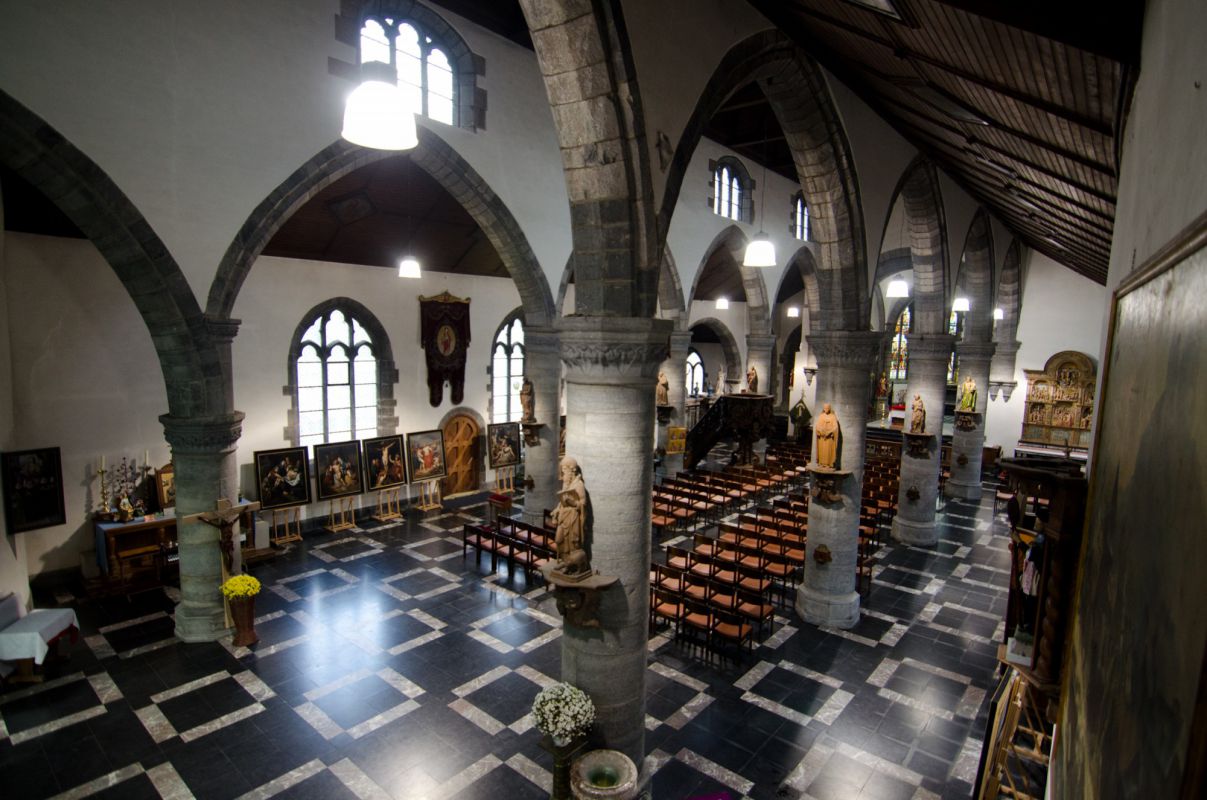
Amongst the old blue stone or timbered houses, of which the old Spanish or so called bailiff’s house is one, stands the imposing church with its powerful square tower. The building dates from the 12th century. Over the centuries it has been subjected to a number of destructions, transformations and renovations. After the damage caused by the 1914-1918 war early Gothic style was emphasised.
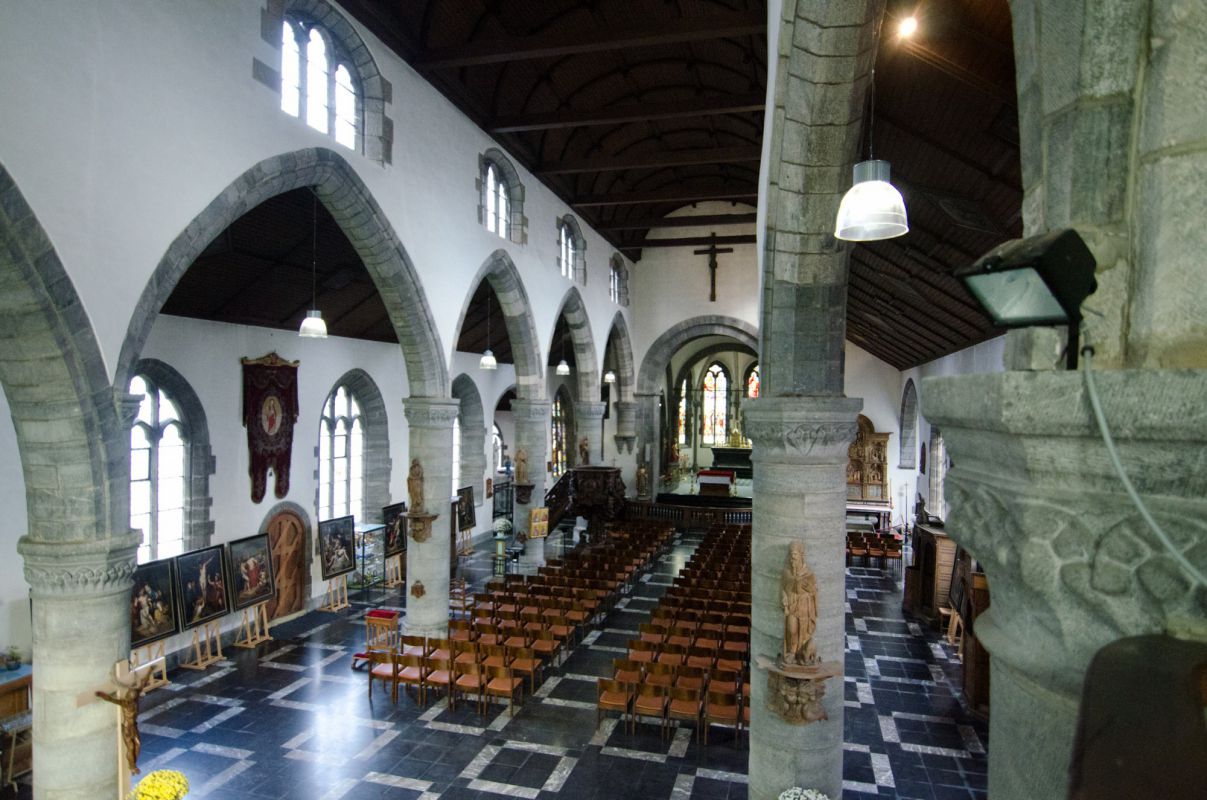
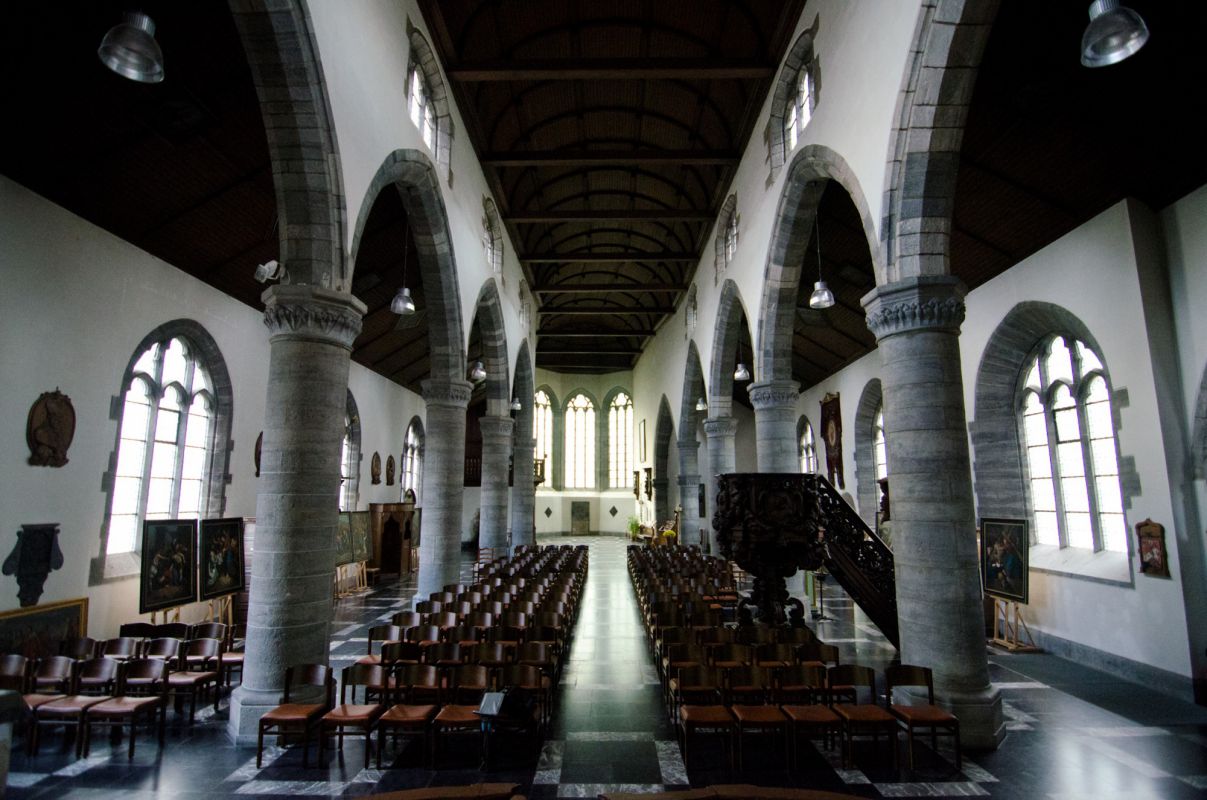
Inside is a very beautiful altarpiece of the true cross created in 16th century Antwerp, a 15th century Christ Pieta and a pulpit.
For a year now, the church has kept a very beautiful invitation to prayer: more than a hundred holy images or icons from Russia and Greece from the 16th to the 21st century.


Photos




Media
Remarkable elements
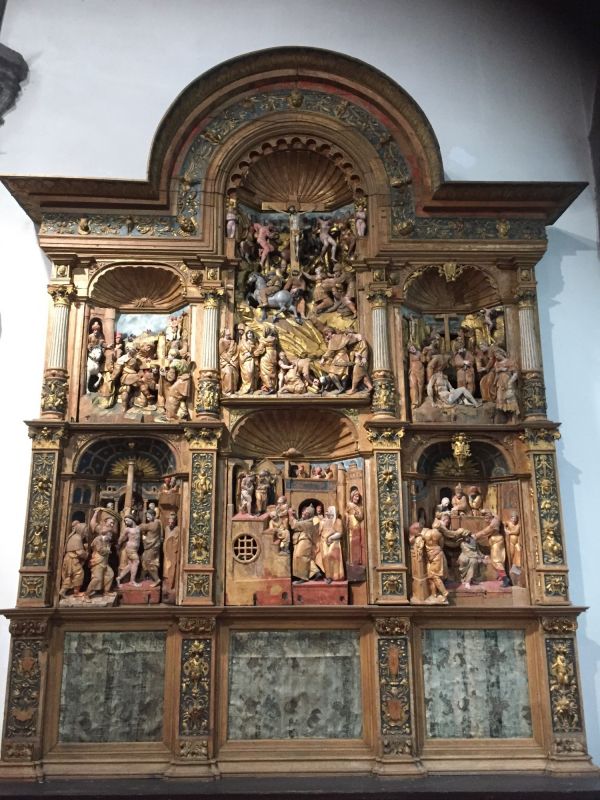
Scaldic Passion Altarpiece
Saint-Lambert Church in Bouvignes preserves a rare mid 16th century Antwerp altarpiece by Jean Leuthard. Made of carved and polychrome oak, it features a predella and six Passion scenes, known as the Altarpiece of the Passion or of the True Cross. Donated after the 1554 Sack of Antwerp, it was restored in the 1990s. A lost predella panel resurfaced in 2015. It was listed as Exceptional Heritage of Wallonia in 2010.
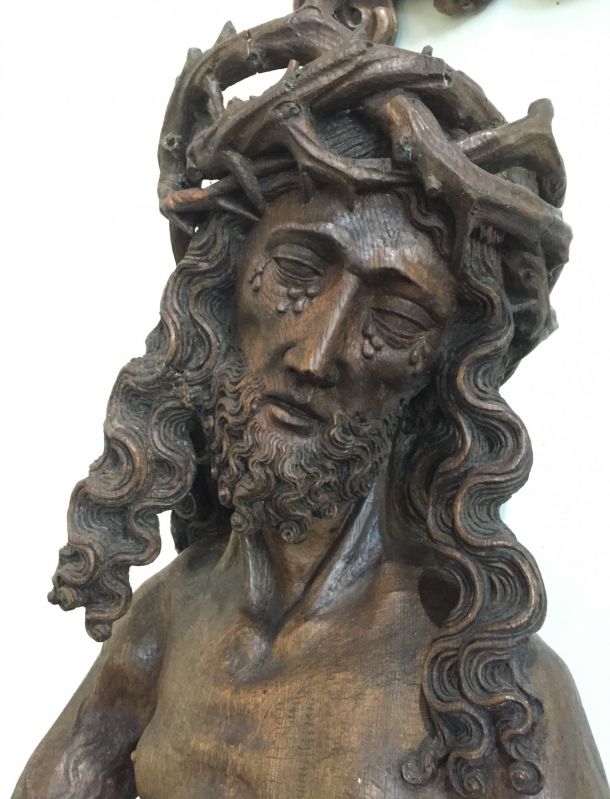
Christ of Pity
This 16th century oak Christ of Pity (178 cm) shows Christ crowned with thorns, in a loincloth, seated on a rock and mourning before the crucifixion. The contrast between the slender upper body and heavier lower part symbolizes spirit and flesh, while the twisted torso and tilted head suggest movement. Likely Brabantine, it marked the church’s restoration, later moved in 1639, returned in the 19th century, and restored in the 1920s.
Classified treasury of the Wallonia-Brussels Federation.

Floreffe Pulpit
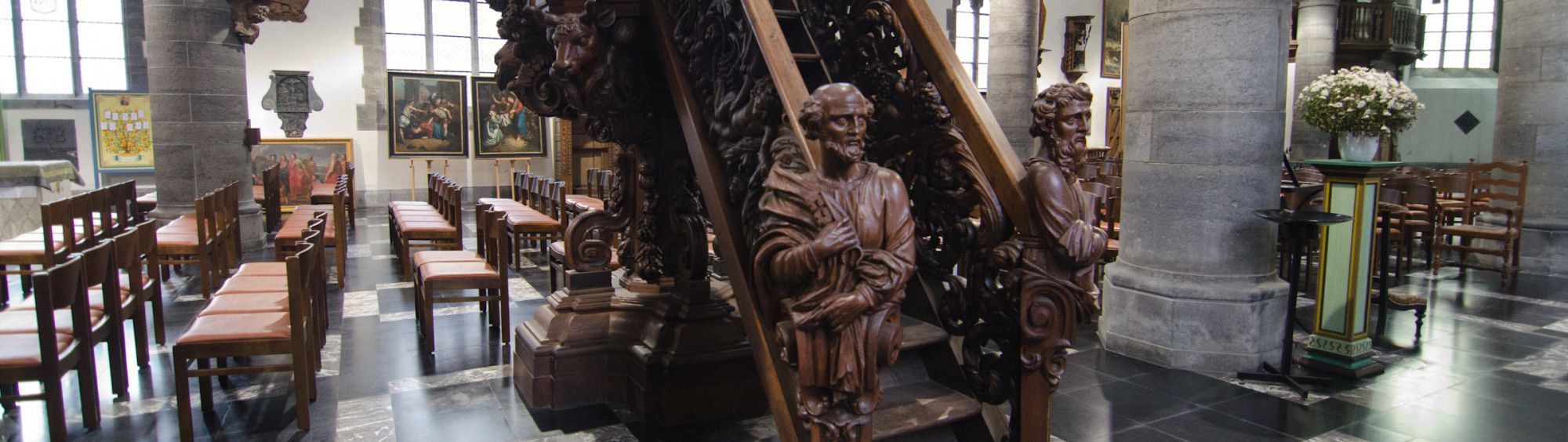
The 17th century Floreffe pulpit, attributed to Pierre Schleiff, was bought in 1770 from the Norbertine Abbey for the church of Bouvignes. The oak piece shows busts of Saints Paul and Peter, cherubs among vines on the handrail, and the symbols of the four evangelists. Medallions depict the Virgin, Saint Augustine, Saint John, and Saint Norbert. Its original sounding board is lost; the dove now hangs at the choir crossing.

Eagle- lectern
This early 17th century copper alloy lectern, 150 cm tall, features an eagle symbolizing the sky, the soul, and the Holy Spirit, linked to Saint John and often shown with a globe of universal power. Such lecterns were common in medieval Europe. The Bouvignes example, its head bent like a pelican, evokes charity and Christ’s sacrifice. A light once hung from its head. It is attributed to coppersmith Antoine de Nassogne (†1621).
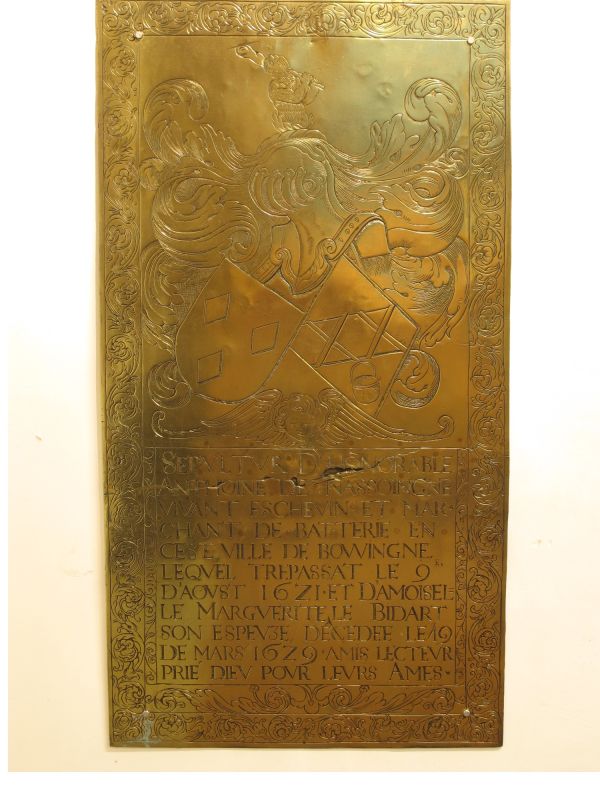
Funerary blade
Dating to around 1629, this 116 cm copper alloy piece was made for Antoine de Nassogne, alderman and copper beater, and his wife Marguerite le Bidart. It bears their coat of arms and depicts a wild man with a club above a helmet, along with shields, a small cauldron and a winged angel’s head. Once placed in the church choir, it was broken by a falling bell and restored before 1888.

The new high altar
Glass table supported by two hands symbolizing Christ, made of a copper-based alloy (2004), created by artists Simon Lewi (1924–2020) and Piotr Stolowsky. Similar altars exist in Sainte-Croix de La Futaie in Watermael-Boitsfort, Saint-Joseph in Wezembeek-Oppem, Saint-Antoine de Padoue in Etterbeek, and Saint Michael’s Cathedral in Brussels. In Bouvignes, the artist also made the Saint-Lambert church cathedra.
Nearby



Circuit
The old stones and their treasures
Detours and other pilgrimages in Namur (loop 4) - The time machine does not yet exist. Maybe one day... In the meantime, if you want to go back a few centuries, a short walk through Bouvignes and Dinant is a must.