Our Lady of Hanswijk
Hanswijkstraat 71
2800 Mechelen
Basilica | 1663 | Baroque | Catholic Church

Map
Opening hours
01 April - 31 October
Mon 9.00 - 17.00
Tue 9.00 - 17.00
Wed 9.00 - 17.00
Thu 9.00 - 17.00
Fri 9.00 - 17.00
Sat 9.00 - 17.00
Sun 9.00 - 17.00
01 November - 31 March
Mon 9.00 - 16.00
Tue 9.00 - 16.00
Wed 9.00 - 16.00
Thu 9.00 - 16.00
Fri 9.00 - 16.00
Sat 9.00 - 16.00
Sun 9.00 - 16.00
Guided tour
Religious offices
Description
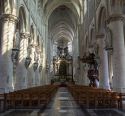
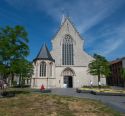
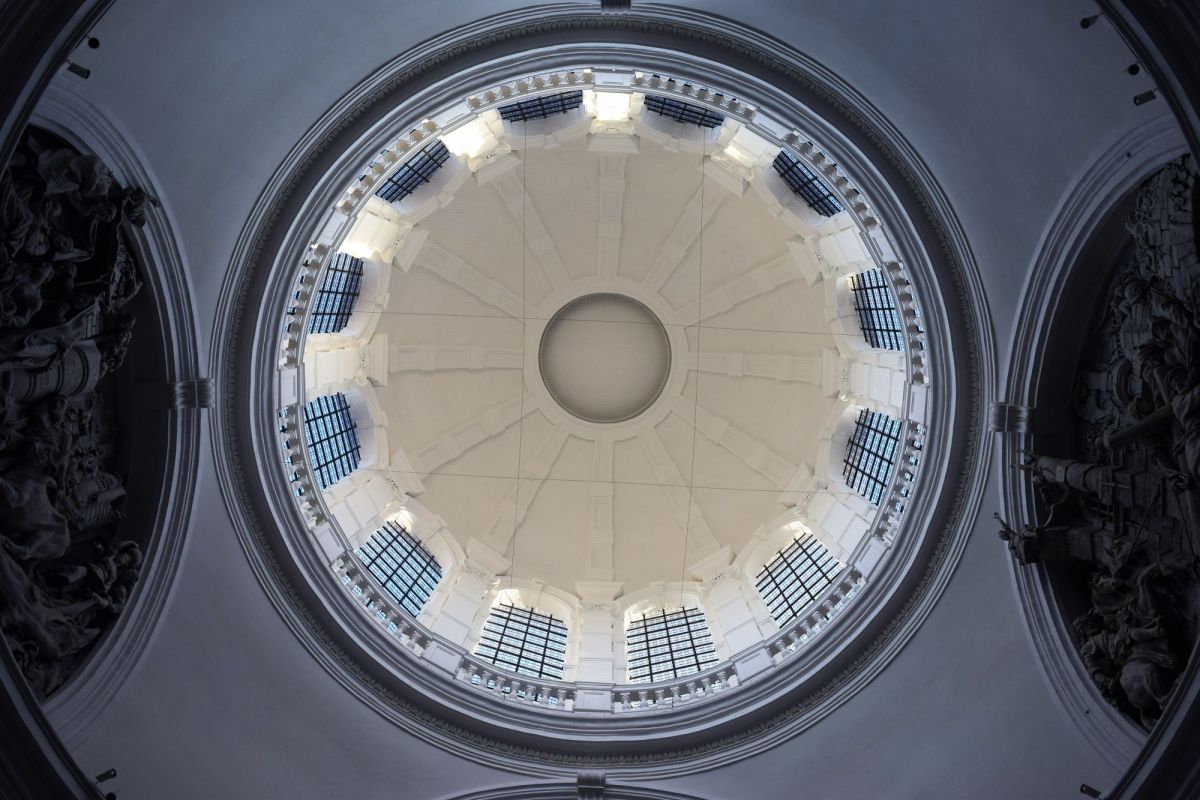
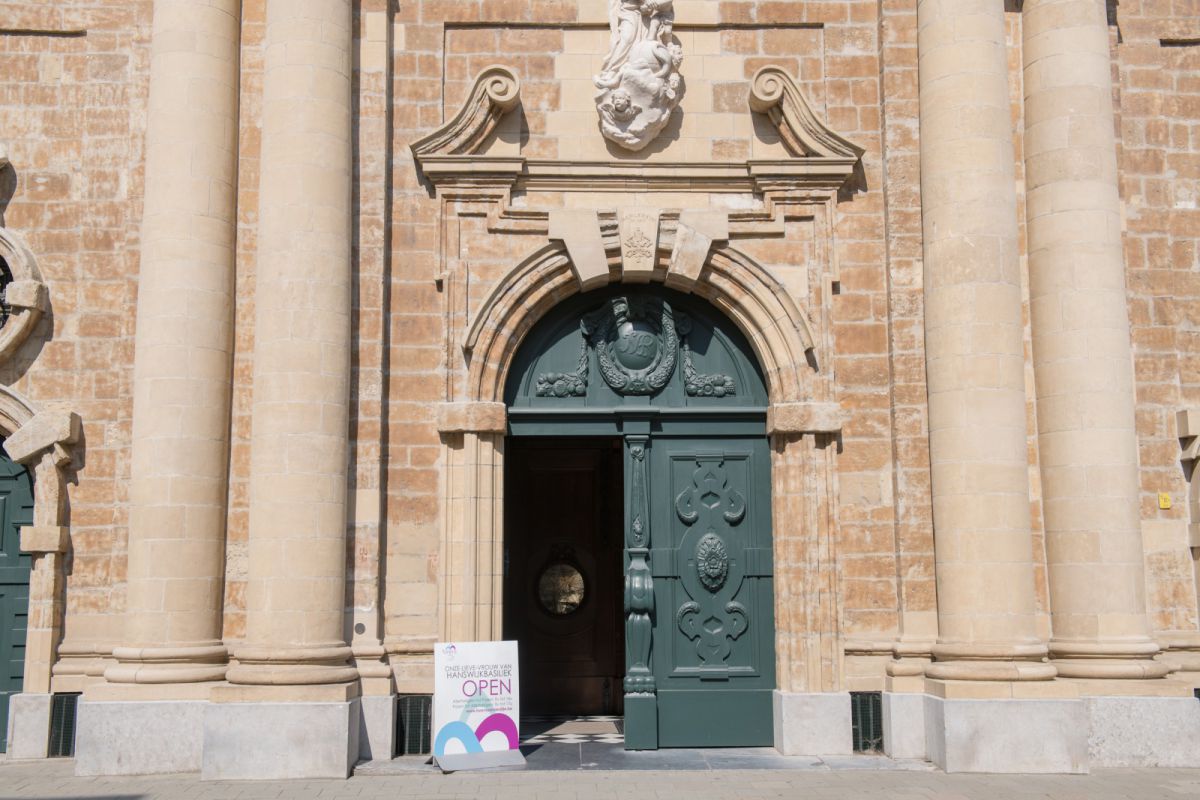
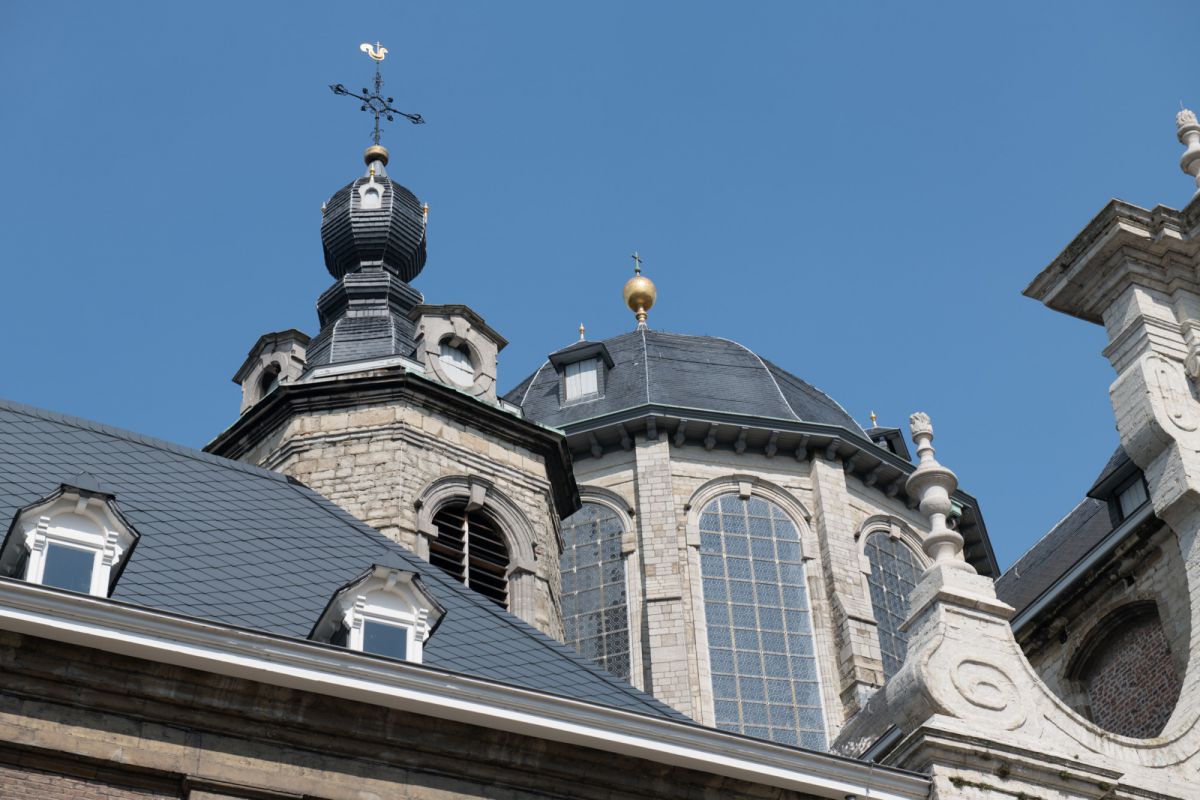
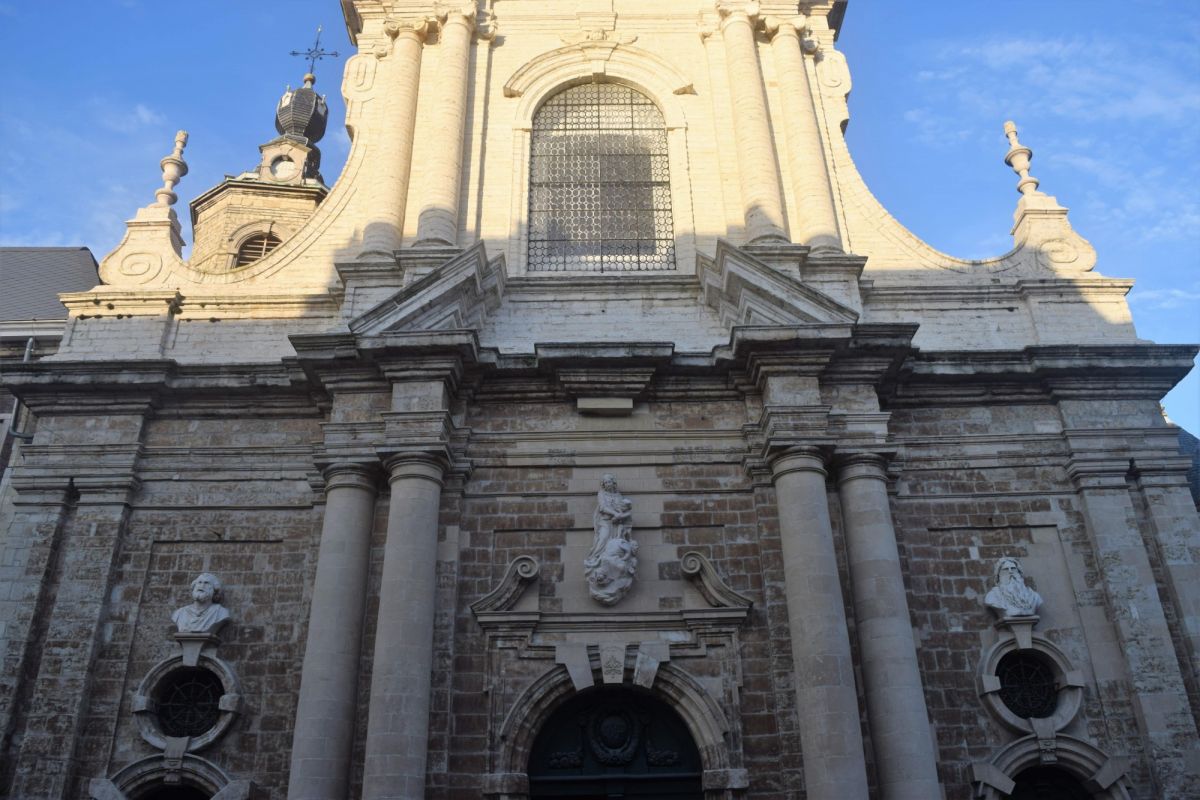
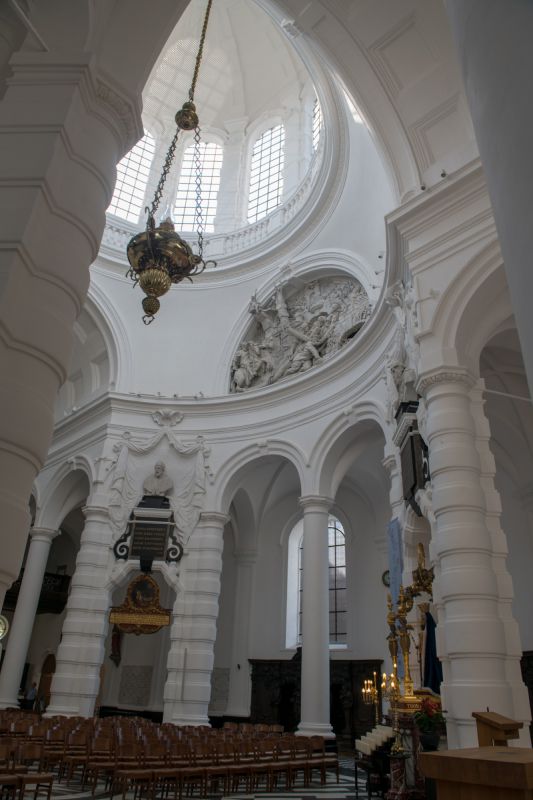
The baroque church, as a place of pilgrimage, was designed by Lucas Faydherbe and built between 1663 and 1681. The church has a unique ground plan, combining 3 aisles with a central building. It is one of the first domed churches in the Low Countries.
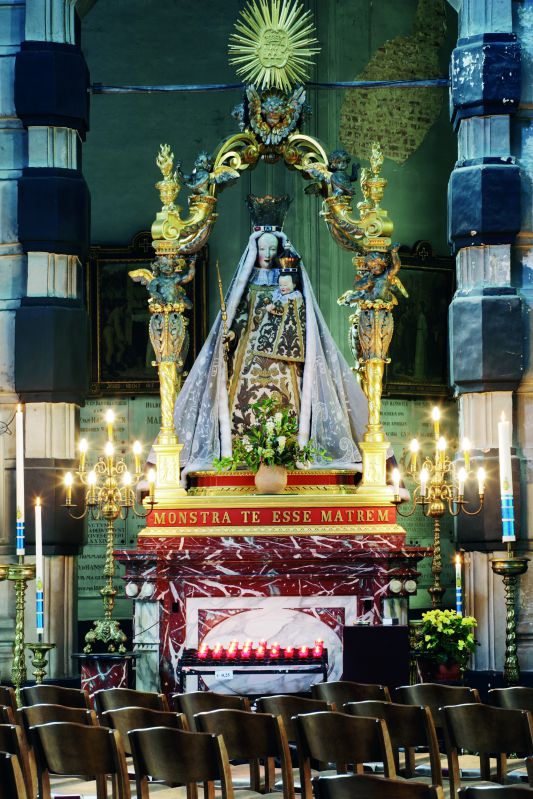
Since 988 A.D. the miraculous statue of the Holy Mary is central to the church’ interior. According to legend, a heavily loaded ship stranded on the shores of the river Dijle, and became afloat again only after a statue of the Holy Mary was brought to the river shore in the district of Hanswijk. The people’s conclusion was that the Holy Mary wished to be worshipped in that spot.
When Malines was ravished by the plague in 1272 the people carried the statue in procession to the cathedral of St. Rumbold and the plague ended a few days later. Since then the Hanswijk procession is held yearly in grateful remembrance.
Started in 1738, at the 750th anniversary of the start of the devotion, a Hanswijk cavalcade is held every 25 years, a unique historical pageant last organised in 2013.
The church of Hanswijk was granted the status of basilica on October 6th 1987 by pope John Paul II in recognition of its function as important place of pilgrimage (988-1988).
The basilica of Our Lady of Hanswijk is one of 7 historic churches in Malines, promoted by Torens aan de Dijle, in cooperation with the city of Malines.
KIKIRPA : Photo-library online


Photos





Media
Remarkable elements

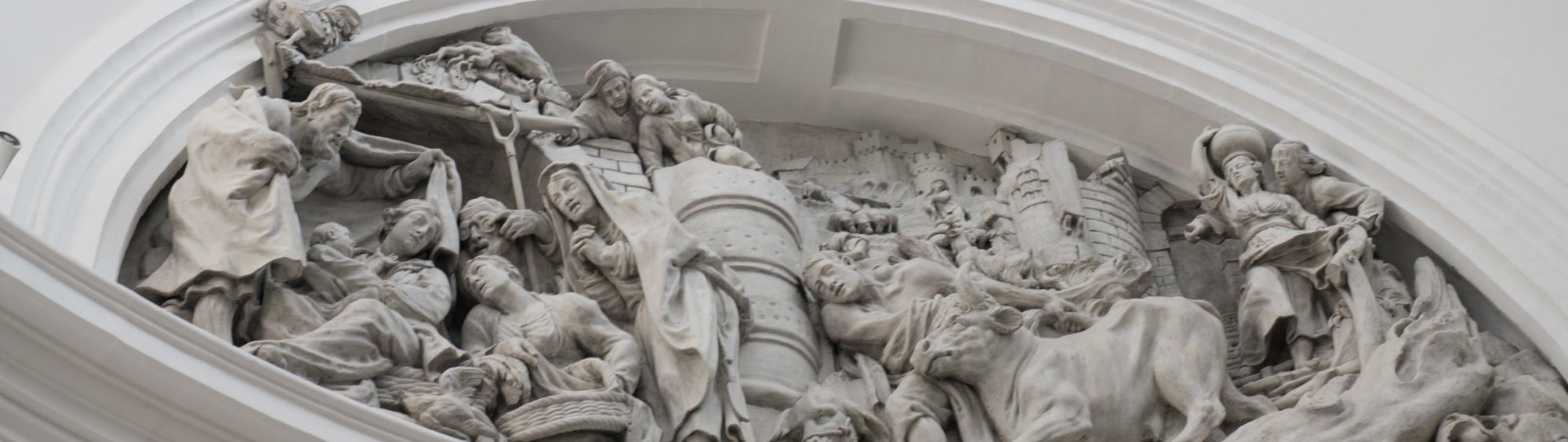
Images in relief underneath the dome
Two big bas-relieves adorn the space above the columns of the rotunda. They display Christ carrying the cross and the adoration of the shepherds. Until the bombings of World War II everyone assumed they were carved out of sandstone, but in fact this type of stone would have been too heavy and the ingenious architect Faydherbe placed bas-relieves to solve this problem. It wasn’t until the damaged relieves were restored that this deception was discovered.
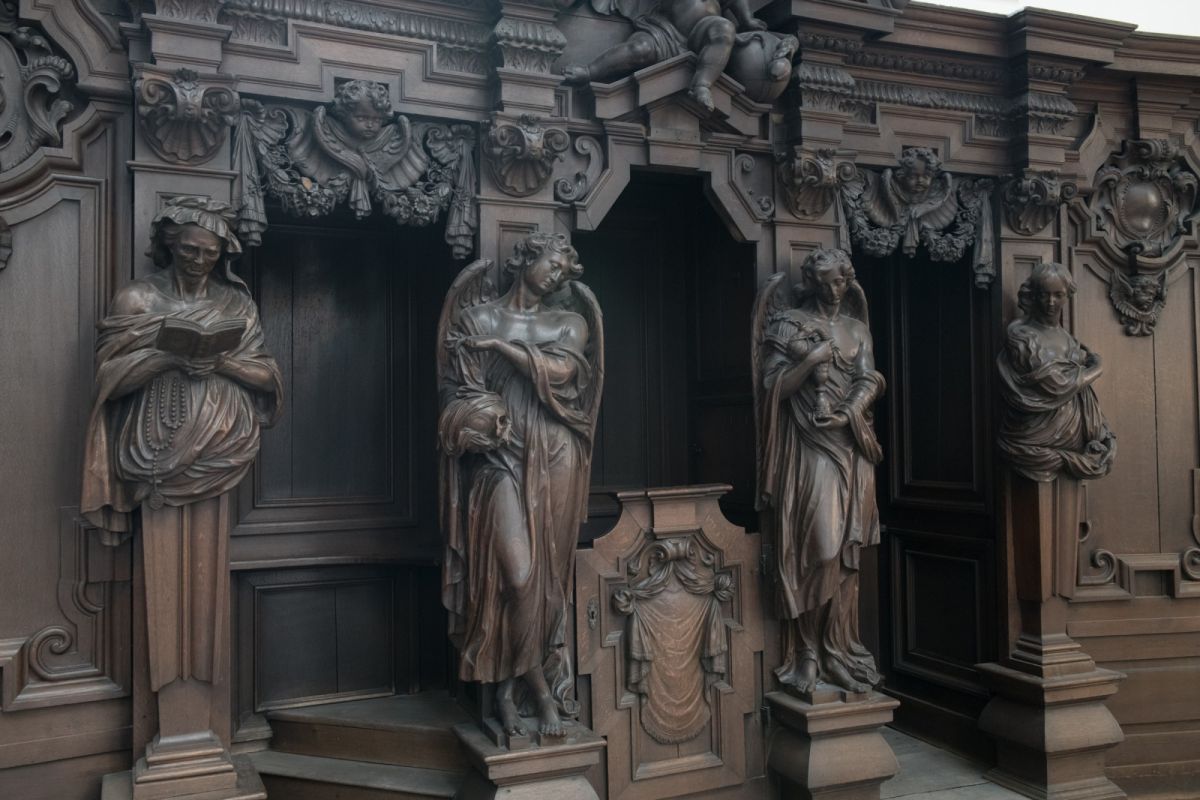
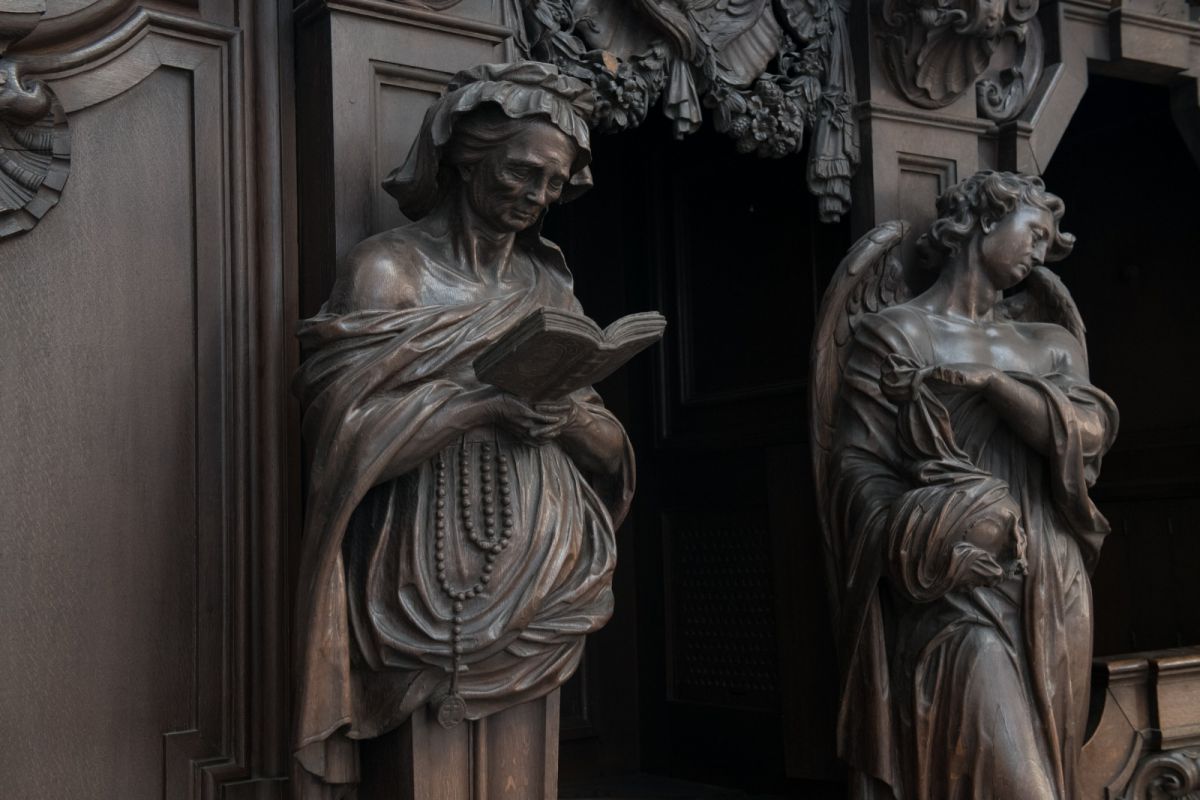
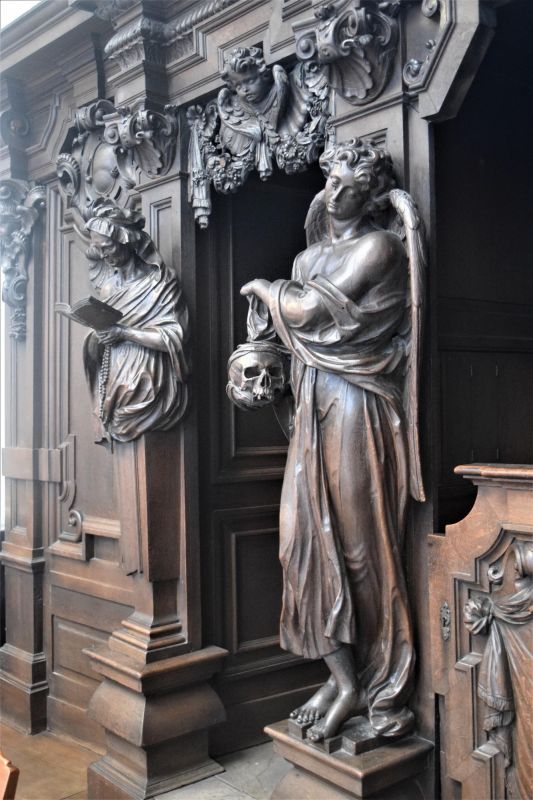
Confessionals at the hands of Jan-Frans Boeckstuyns (1650-1734)
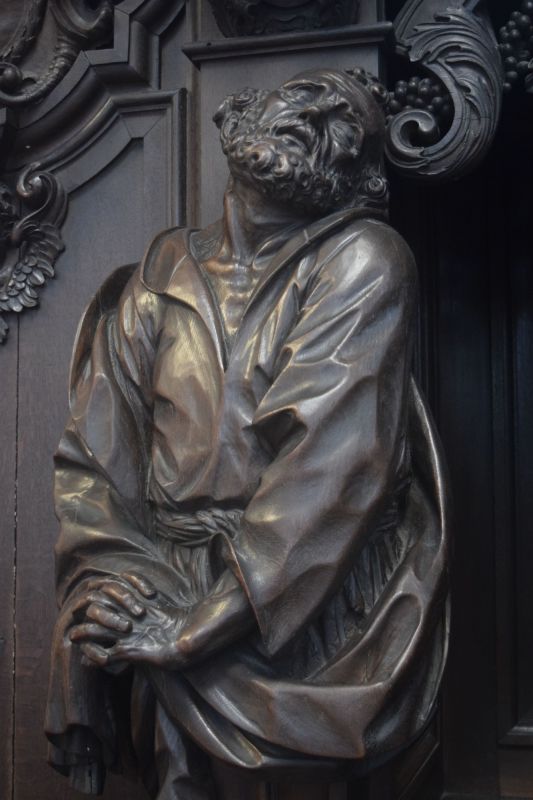
Some confessionals are attributed to Jan Frans Boeckstuyns. The northeastern one shows four opposites: Death, Last Judgment, Paradise and Hell. The northwestern depicts the repentant Peter, an angel with INRI, another with Veronica’s veil, and St. Jerome. The southeastern is simpler and of unknown origin. The pediment shows the Virgin holding the Child who crushes the serpent.
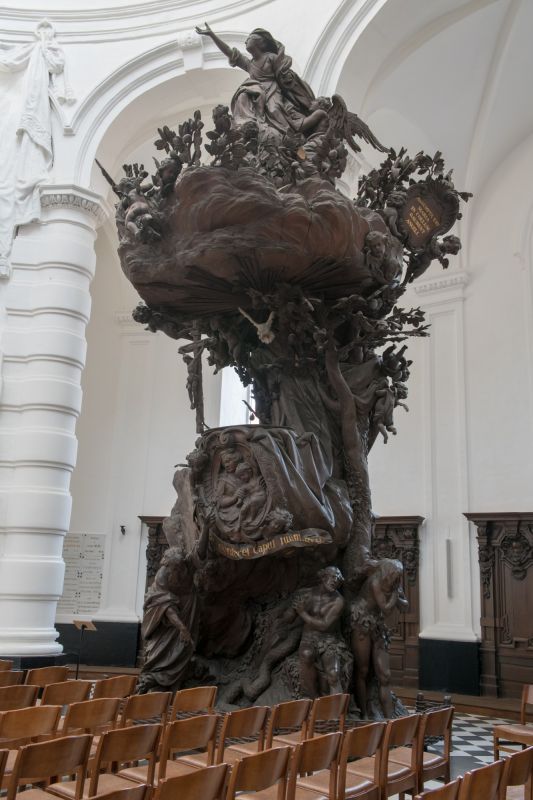
Pulpit of Theodor Verhaegen (1701-1759)
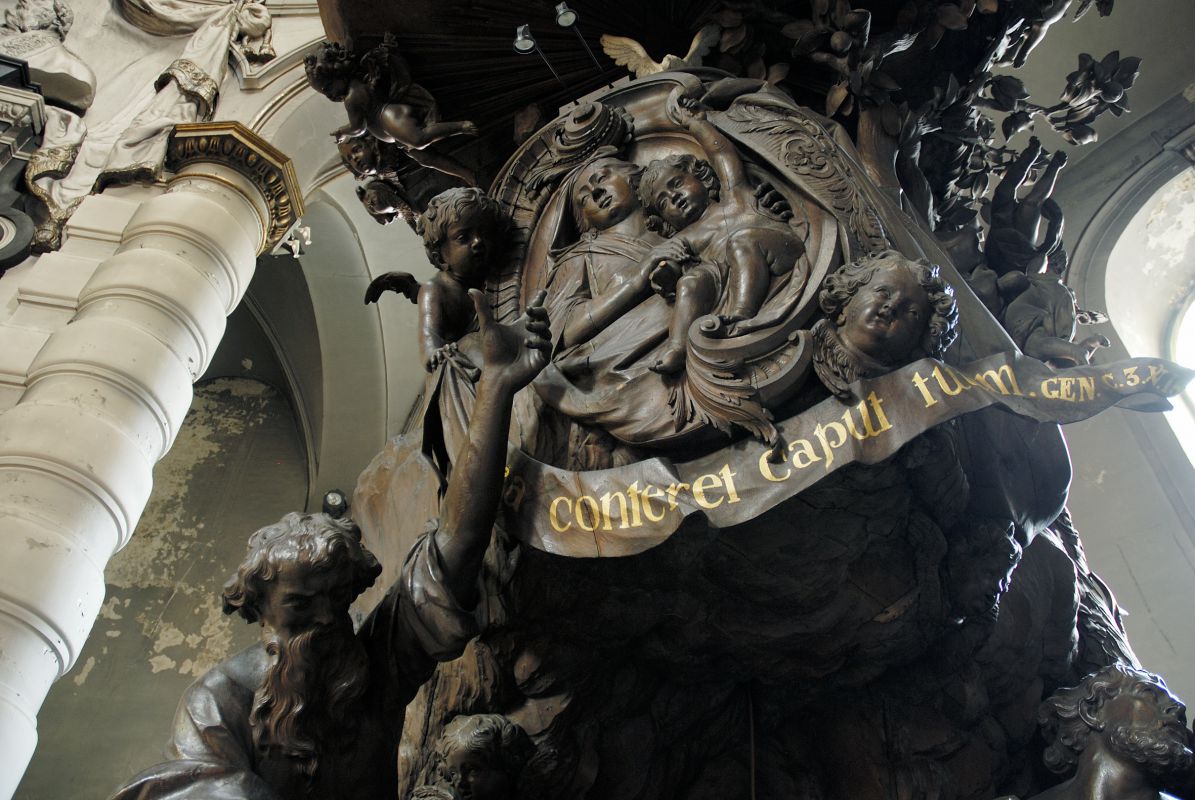
This pulpit, ordered in 1743 for 4000 guilders with major support from Alexander Jozef Rubens, was carved in 1746 by Mechlin sculptor Theodoor Verhaegen. It depicts mariology: Adam and Eve after the Fall, cast from paradise by Jahweh, who points to a medallion of Mary and child. Above, Mary’s assumption rises among angels under a tall tree and flowing drapery.
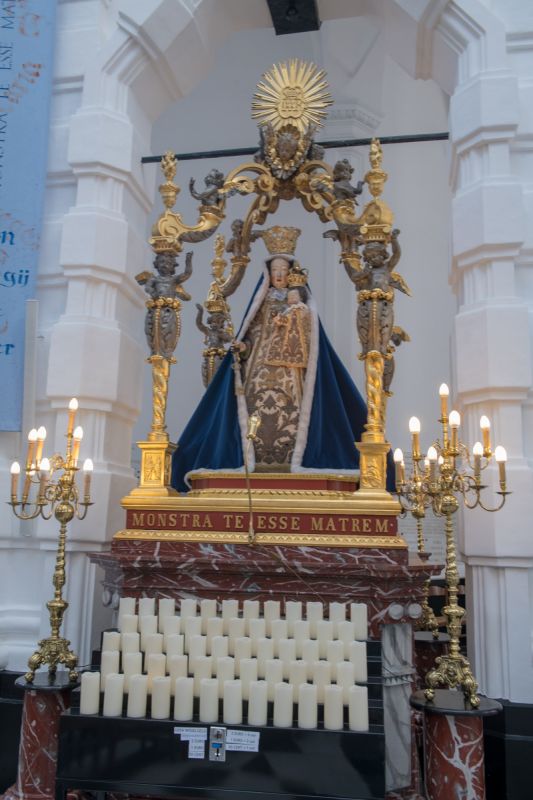
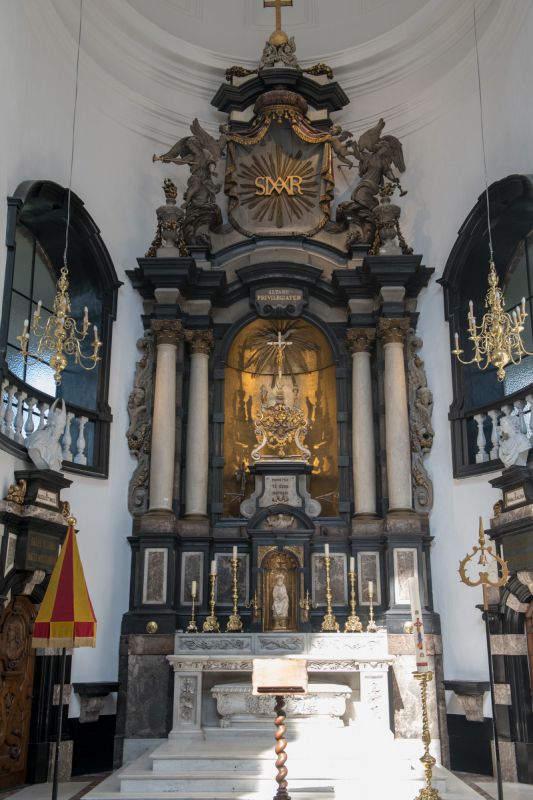
Statue of the Holy Virgin Mary
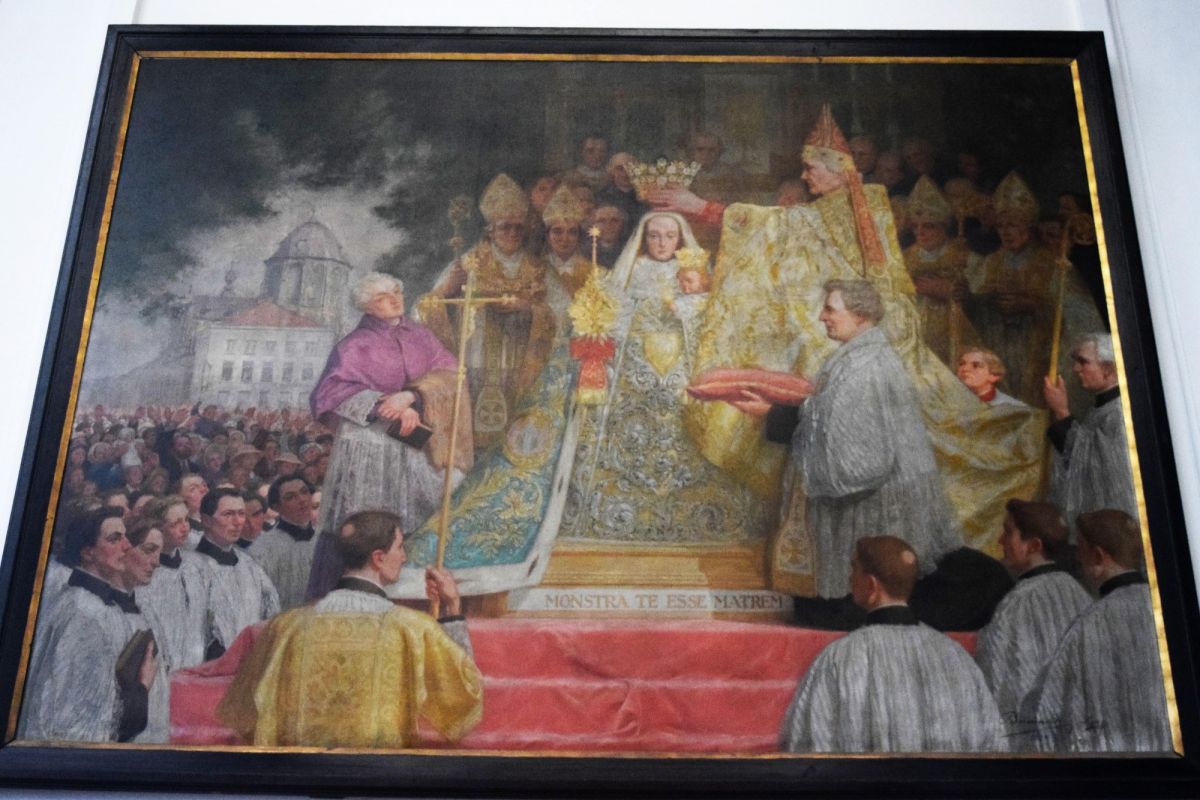
A ship stranded in Hanswijk in the 10th century and moved only after a statue of the Virgin Mary was unloaded, which people saw as a sign that she wished to stay there. The statue was placed in a nearby chapel that soon became a pilgrimage site, first mentioned in 1263. The original statue vanished in the 16th century; the current walnut figure shows Mary with a scepter and Jesus holding an apple, and is carried yearly in the Hanswijk procession.
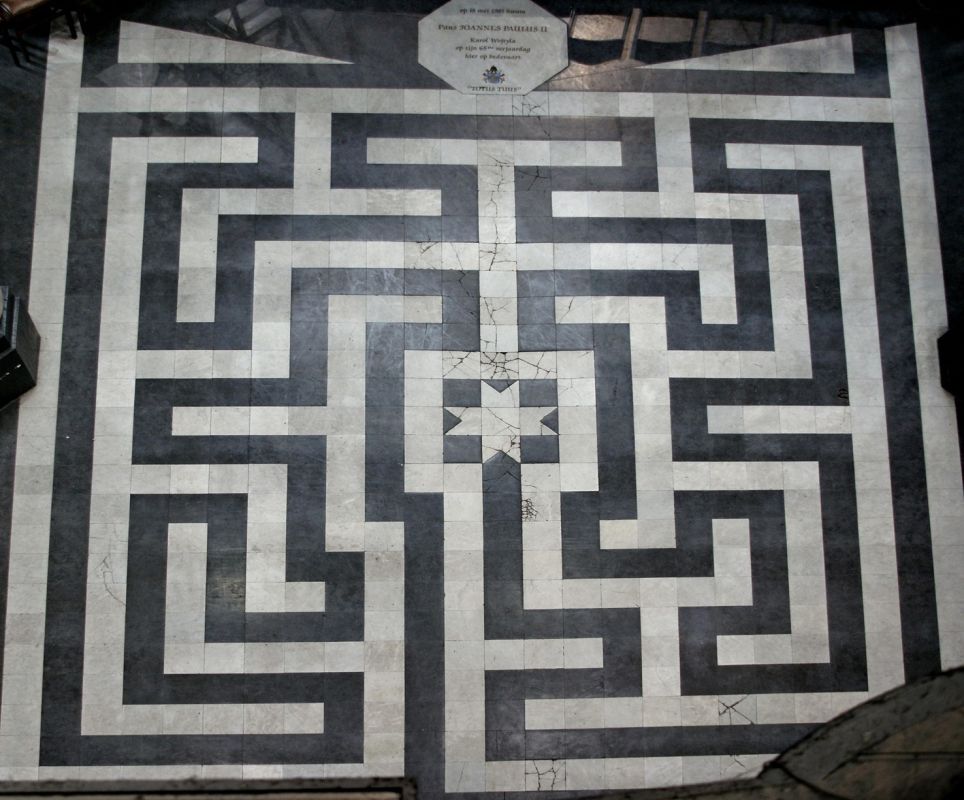
Labyrinth of Hanswijk
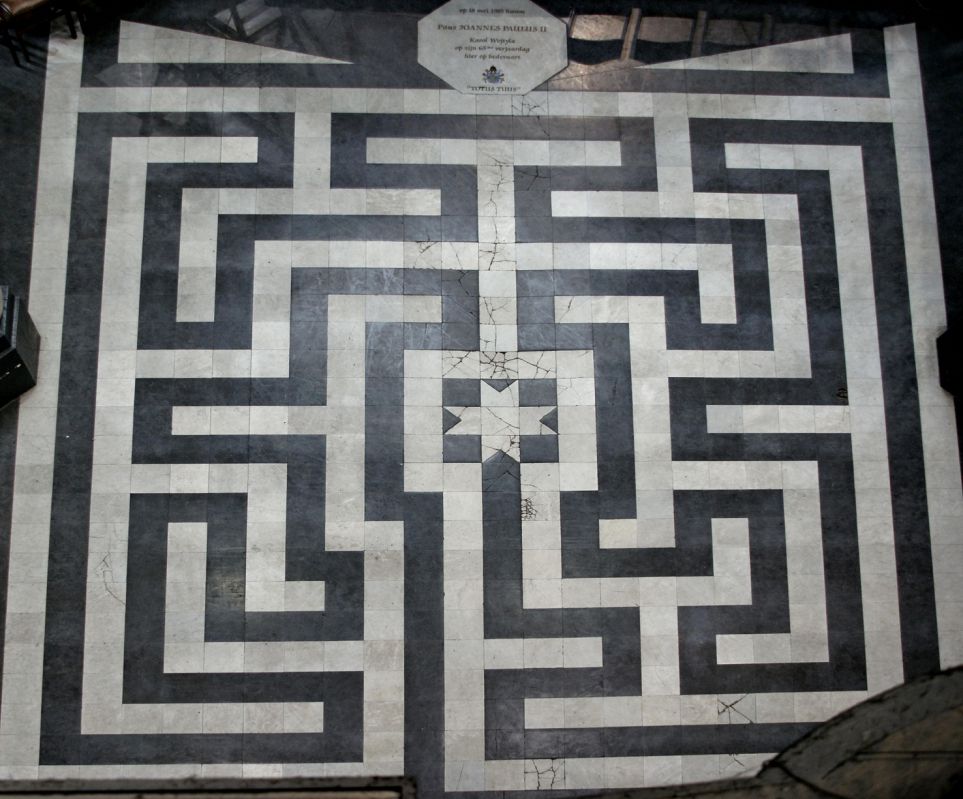
The floor of the Hanswijk Basilica features a labyrinth, a symbol long used in churches for spiritual reflection. Its winding path represents Christians staying true despite trials, guided by God. Walking it becomes an inner journey, traditionally done on one’s knees. Popular in the Gothic era, famous examples include Amiens and Chartres. The Hanswijk labyrinth, likely from the 19th century, is a rare surviving treasure.
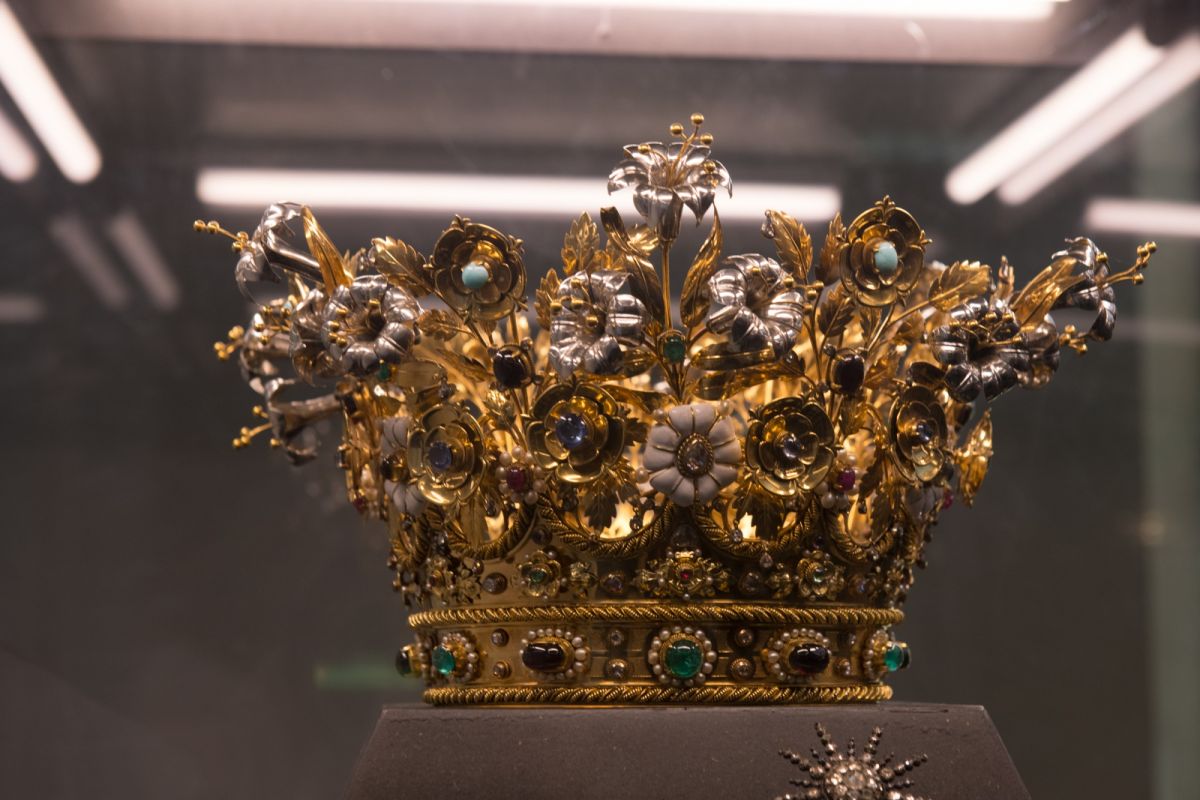
Donations to Our Lady of Hanswijk
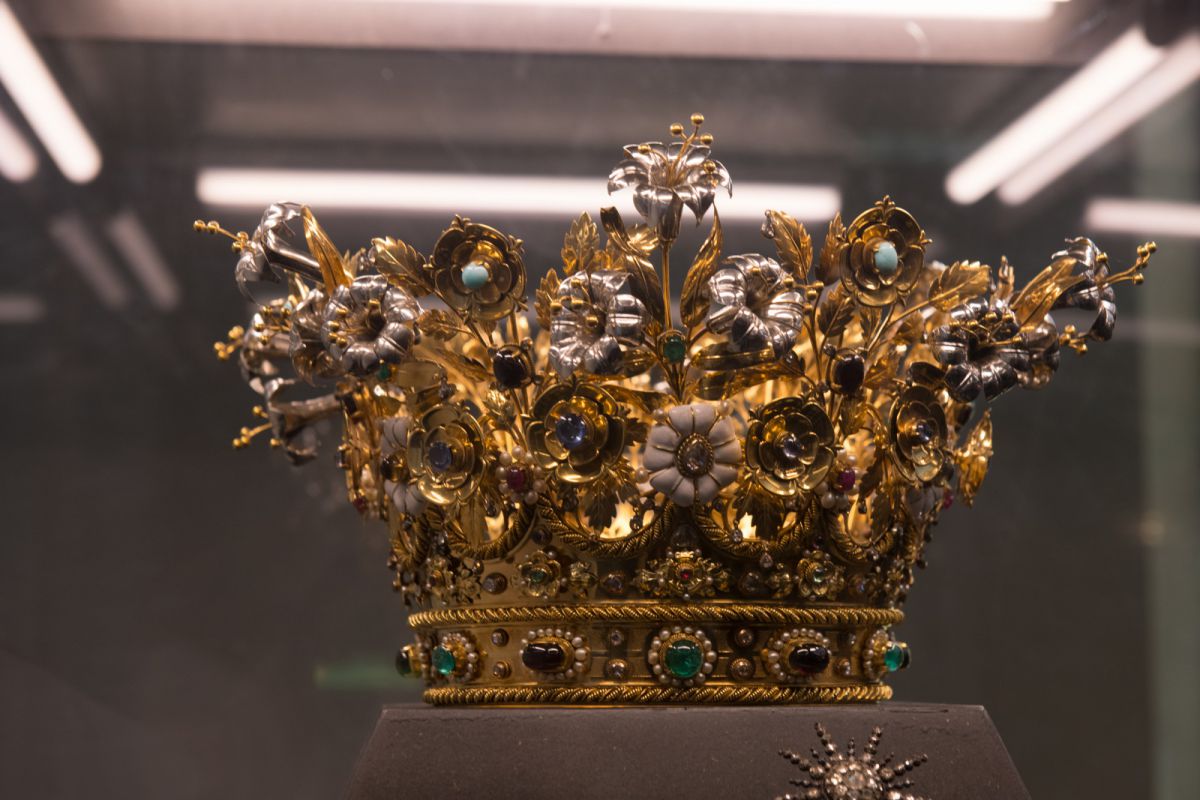
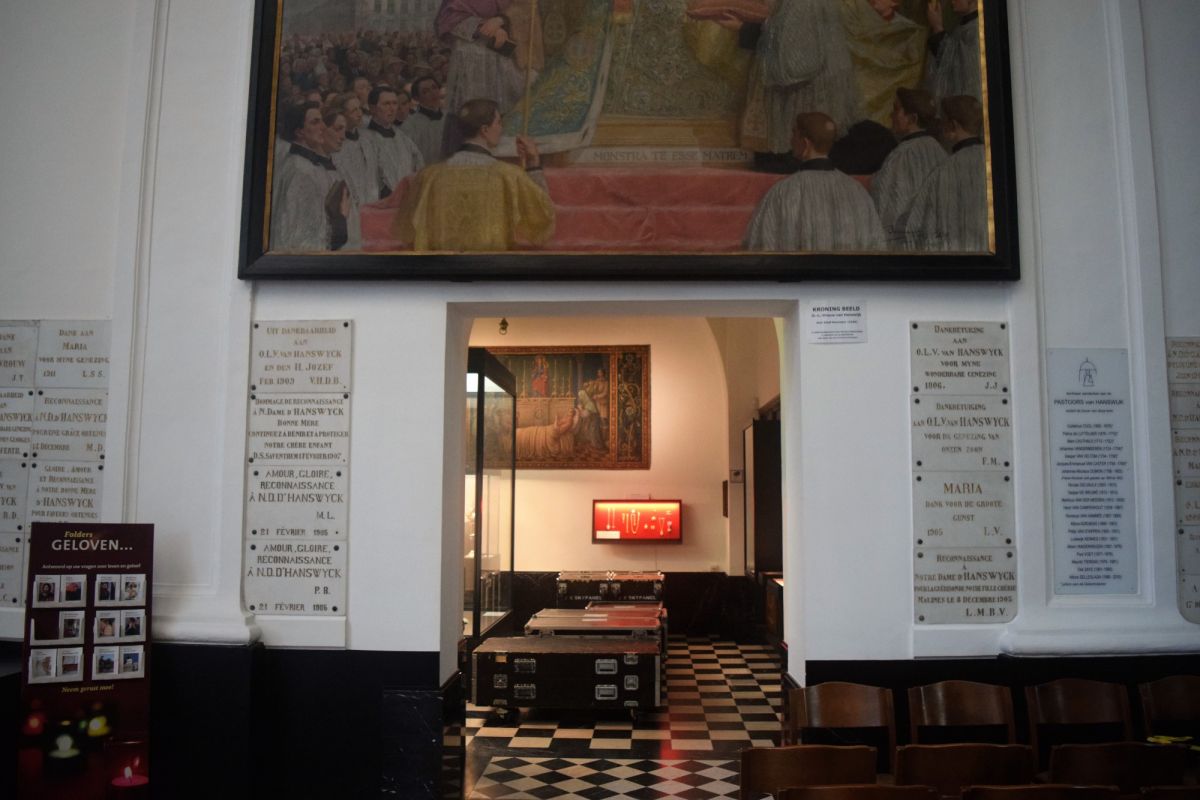
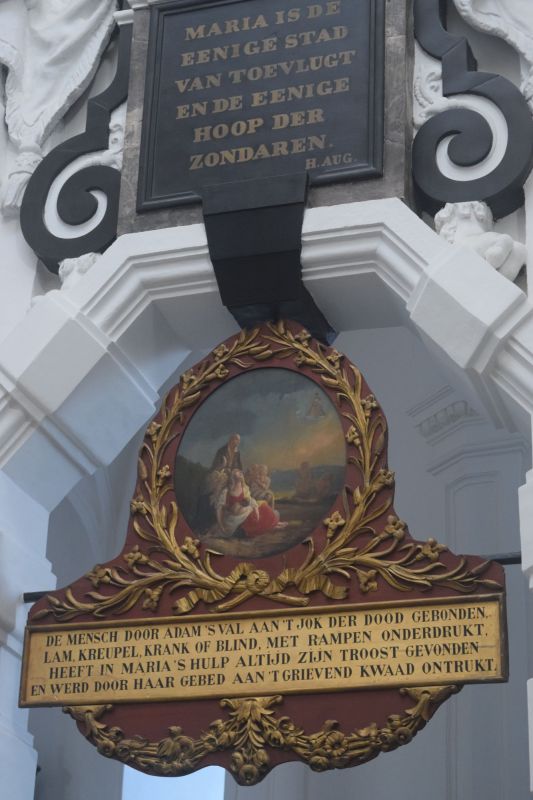
The parish of Hanswijk received many donations honoring Our Lady, including crown jewels funded by Mechlin residents and a rich collection of chalices, vessels, and jewelry offered in gratitude. Its ex votos include paintings, plaques, stools, and small figures, a tradition from 15th century Italy. Hanswijk’s collection is notable for its mainly child portraits, reflecting Mary’s traditional care for the young.