Saint Maria
Place de l'Eglise
71240 Beaumont-sur-Grosne
Church | XII | Romanesque | Catholic Church


Map
Opening hours
01 April - 31 October
Mon 9.00 - 19.00
Tue 9.00 - 19.00
Wed 9.00 - 19.00
Thu 9.00 - 19.00
Fri 9.00 - 19.00
Sat 9.00 - 19.00
Sun 9.00 - 19.00
01 November - 31 March
Mon 9.00 - 17.00
Tue 9.00 - 17.00
Wed 9.00 - 17.00
Thu 9.00 - 17.00
Fri 9.00 - 17.00
Sat 9.00 - 17.00
Sun 9.00 - 17.00
Religious offices
Description
The Benedictine abbey then built a priory adjoining the church. Under the abbacy of Saint Hugh, a monk named Gerard lived there. Returning from a trip to Rome, he was attacked by bandits, robbed of all his possessions and imprisoned in a tower in the heart of a mountainous region. After much suffering, he managed to escape and retired to Beaumont.
It was there, according to Abbot Pierre le Vénérable in his Book of Miracles, that a remarkable event took place. On the feast day of the Circumcision of the Lord, while Gerard was celebrating Mass with great fervour, he witnessed an extraordinary vision. At the moment of elevation, a child appeared, reaching out to him. At his side stood the Virgin Mary, full of maternal tenderness, and an angel assisting at the sacrifice. The angel addressed him with these words: ‘Why are you surprised? This child you see rules Heaven and Earth.’
The vision then disappeared, leaving Gerard to finish the service, deeply moved by this spiritual experience, which contributed to the lasting renown of the sanctuary of Beaumont.

Photos



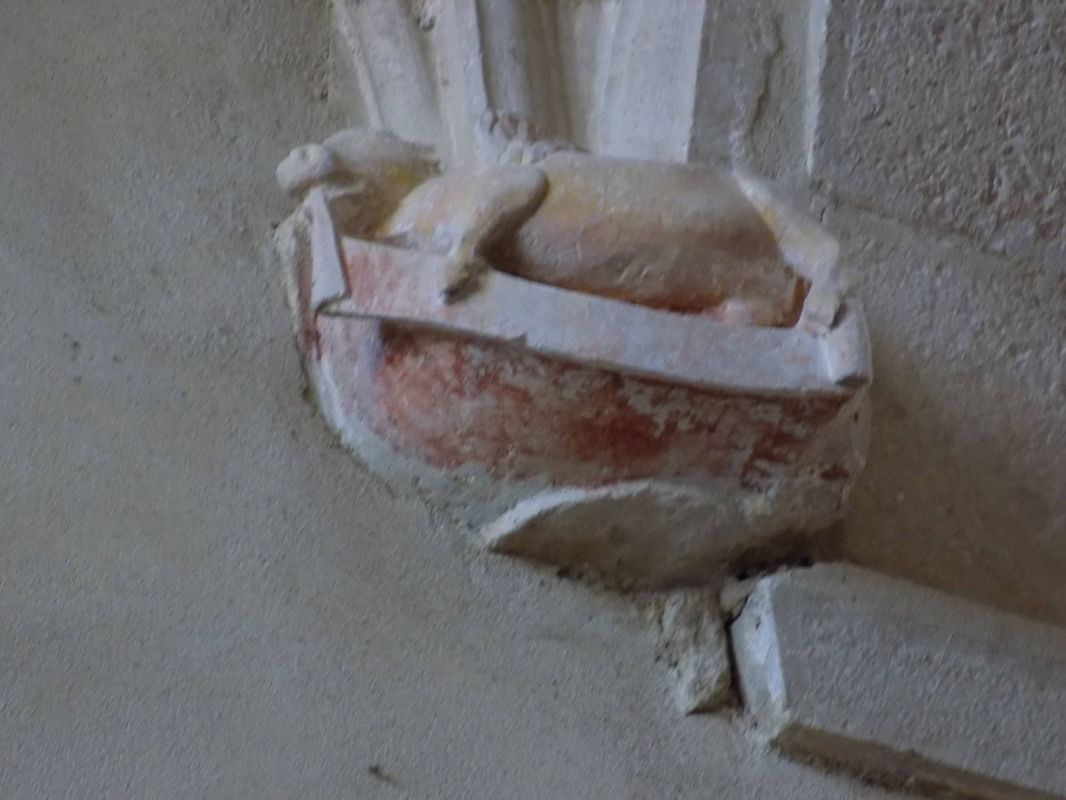
Remarkable elements
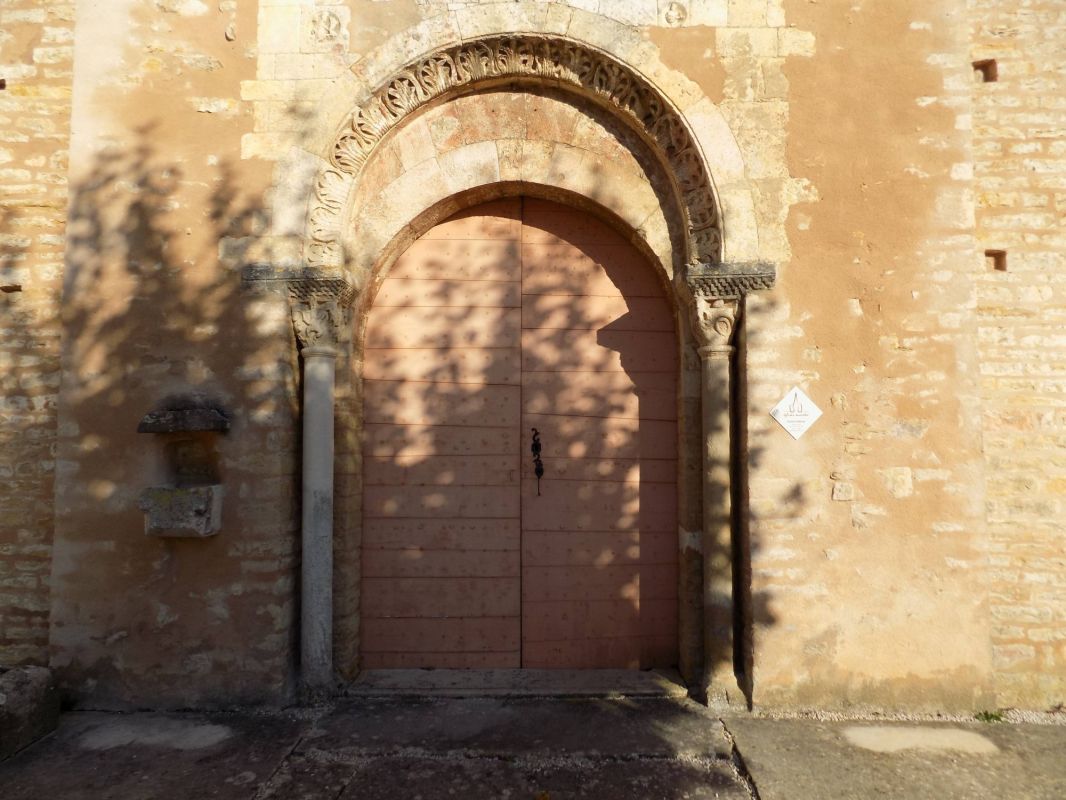
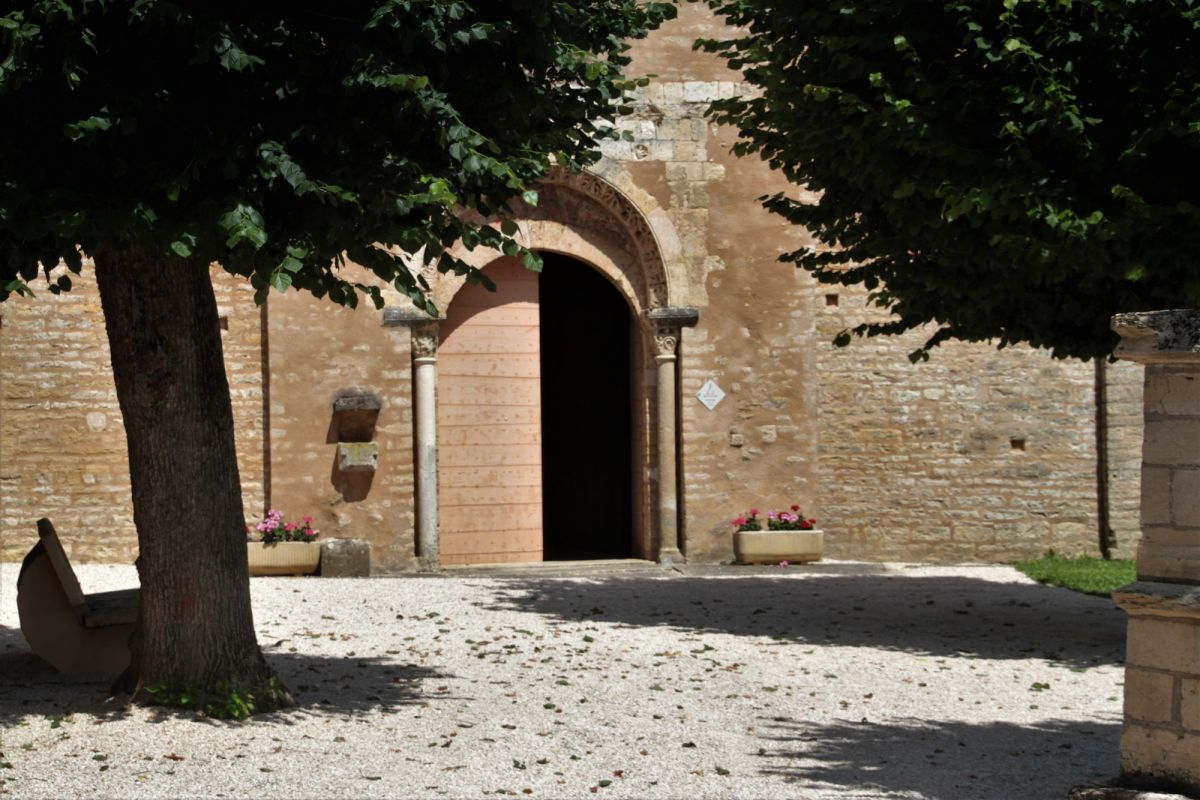
Romanesque portal
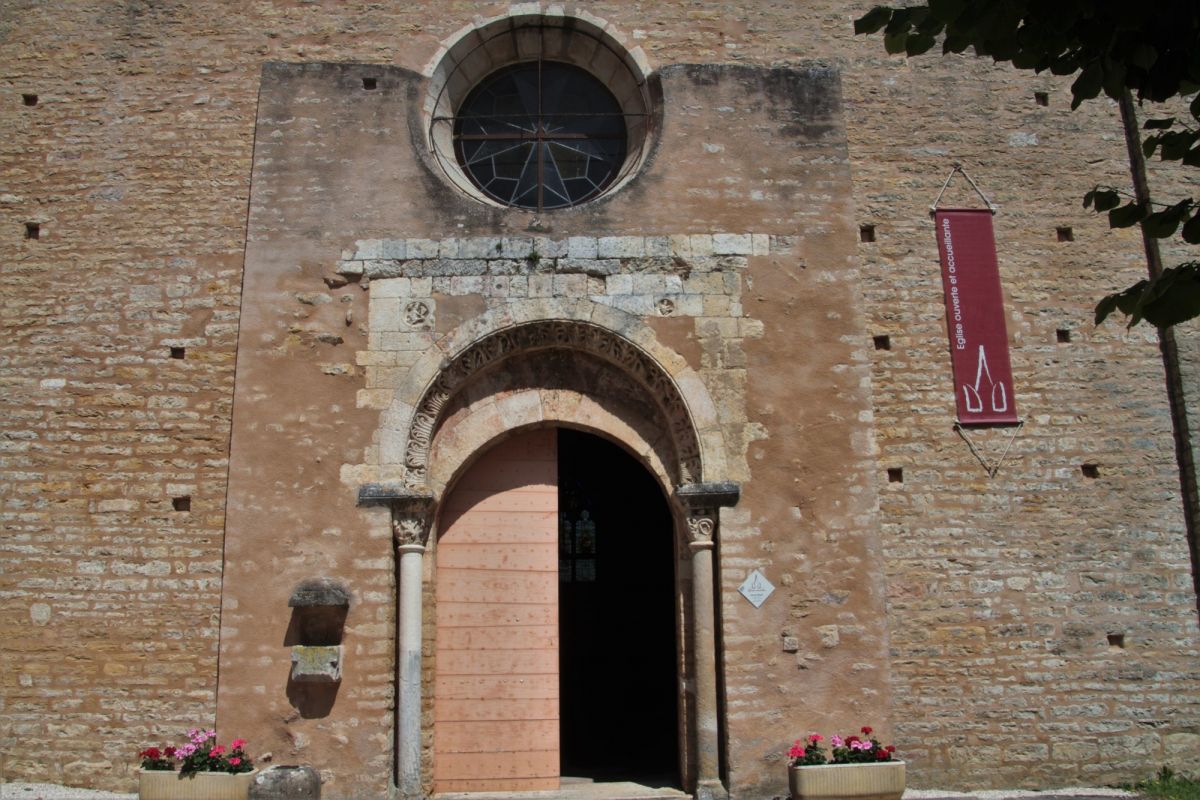
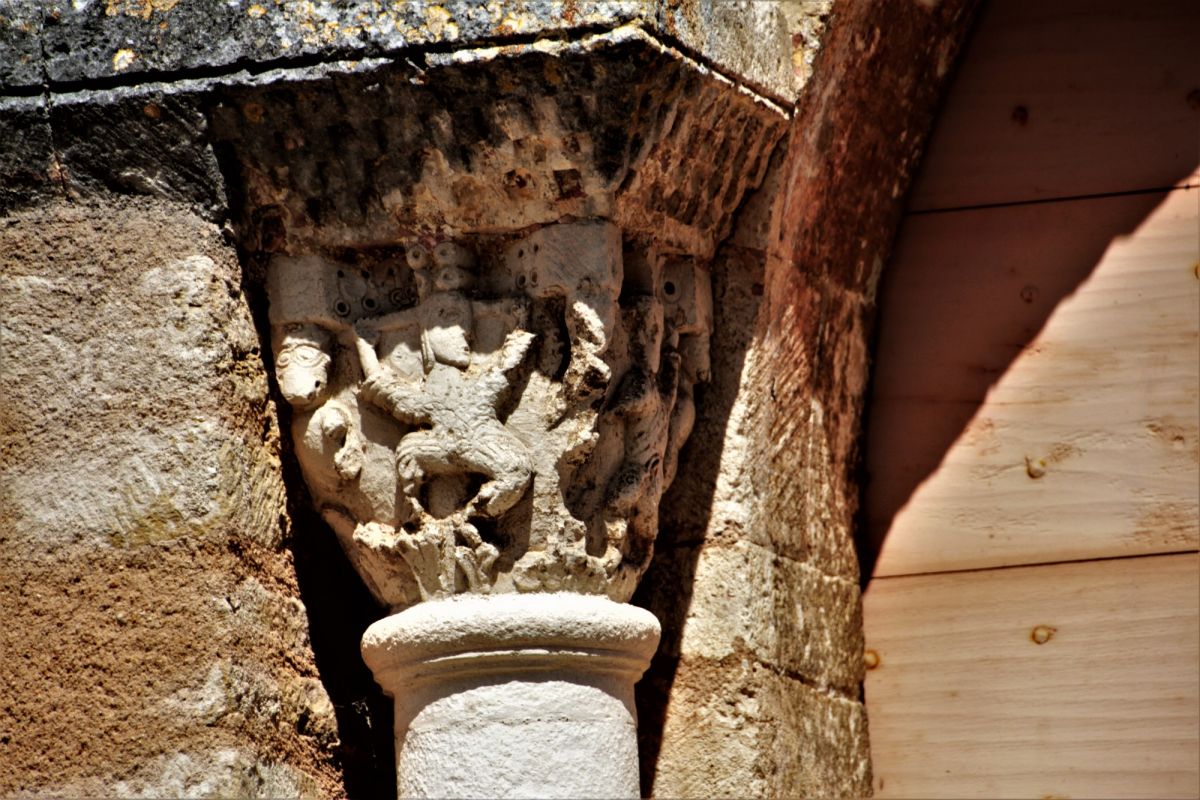
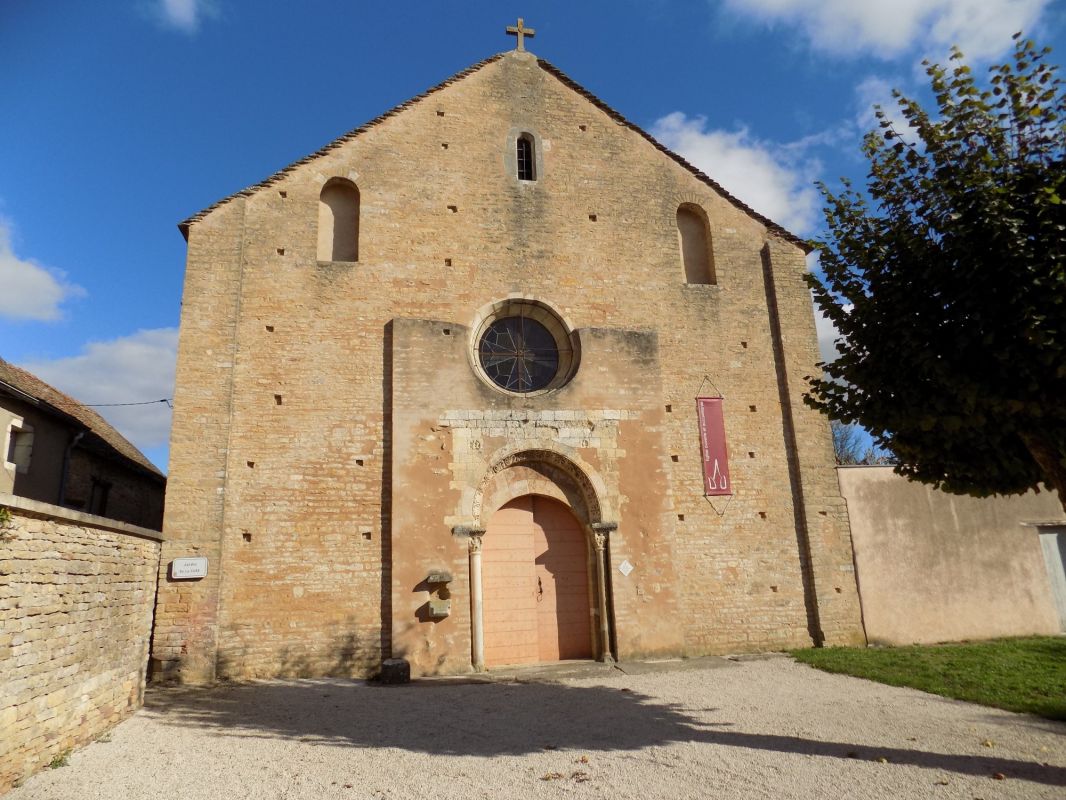
This portal is distinguished by its semicircular arch without a tympanum. The archivolt, decorated with acanthus leaves, rests on two impost blocks adorned with checkerboard patterns, which are themselves supported by capitals carved with figures and animals, set on slender columns. Numerous traces of polychromy remain, recalling the original rich colours. This portal has been listed as a historic monument since 3 March 1986.
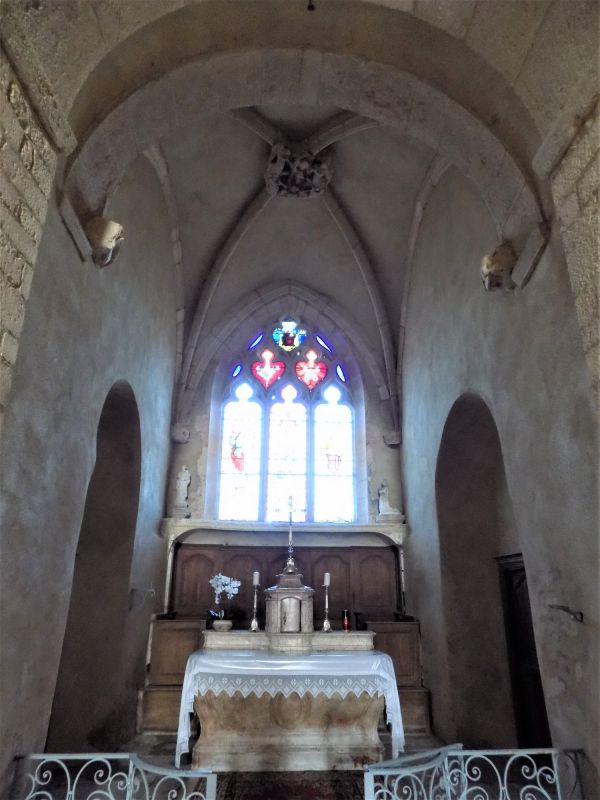
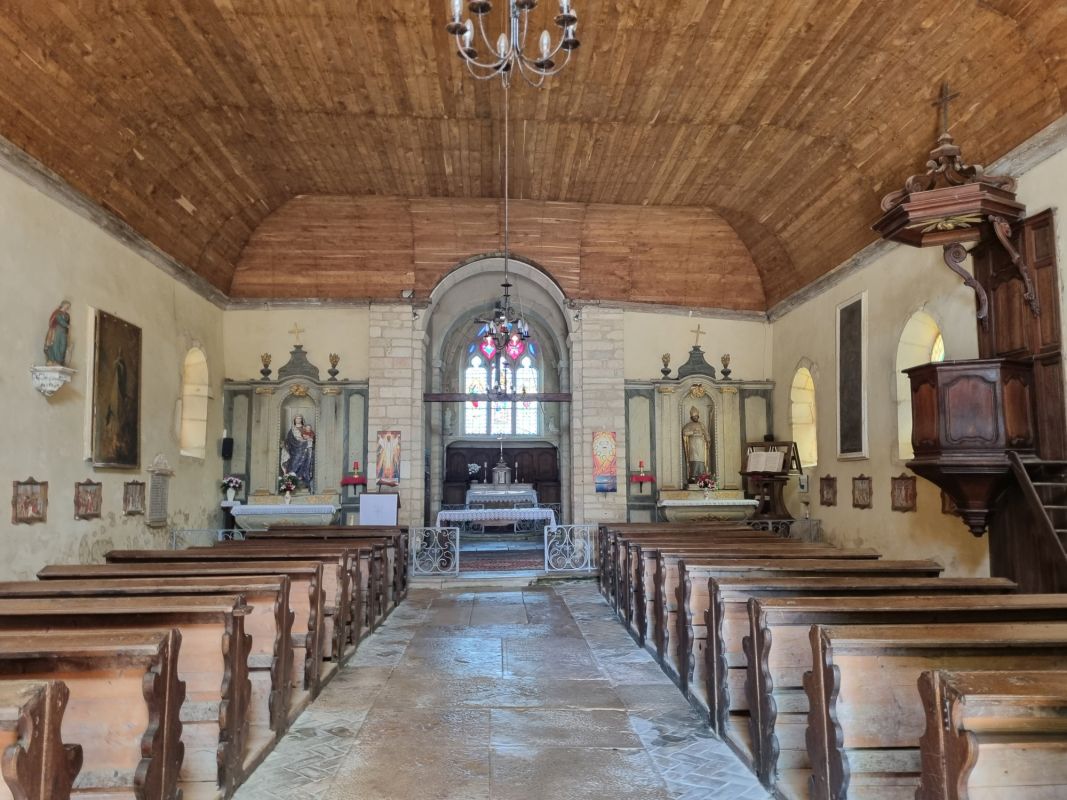
Gothic choir
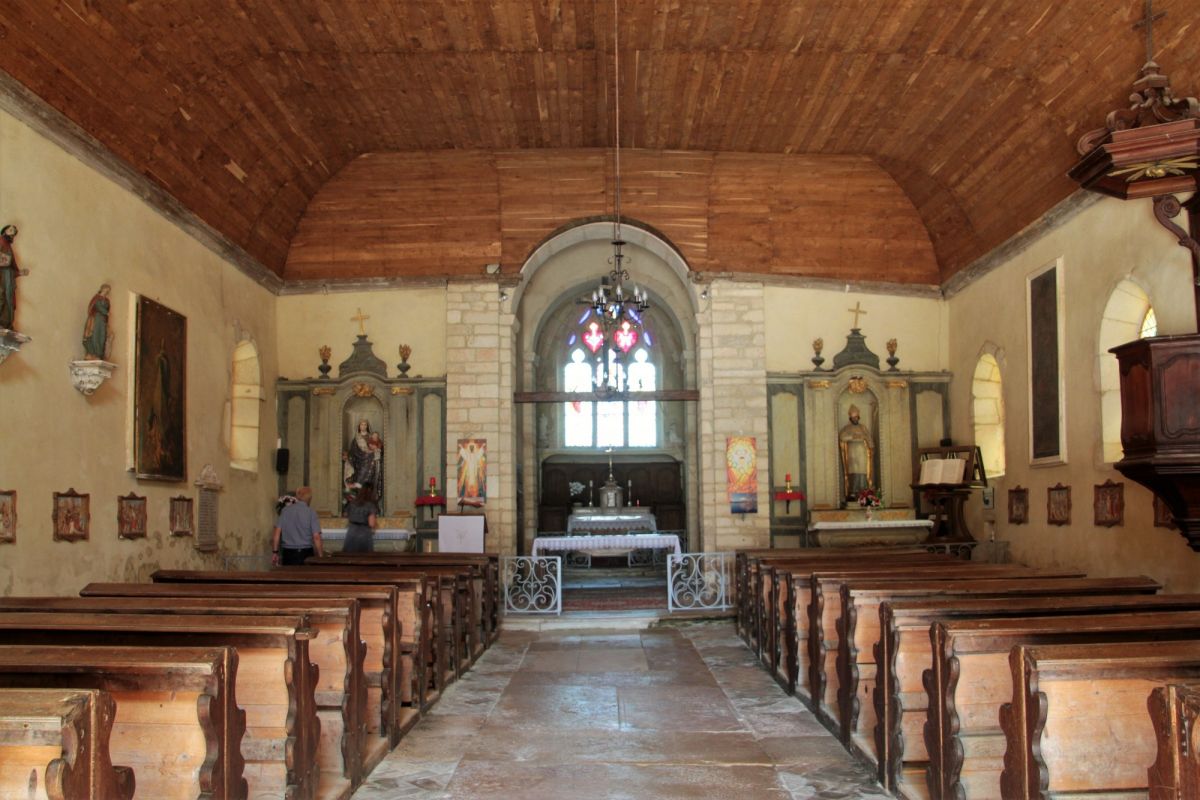
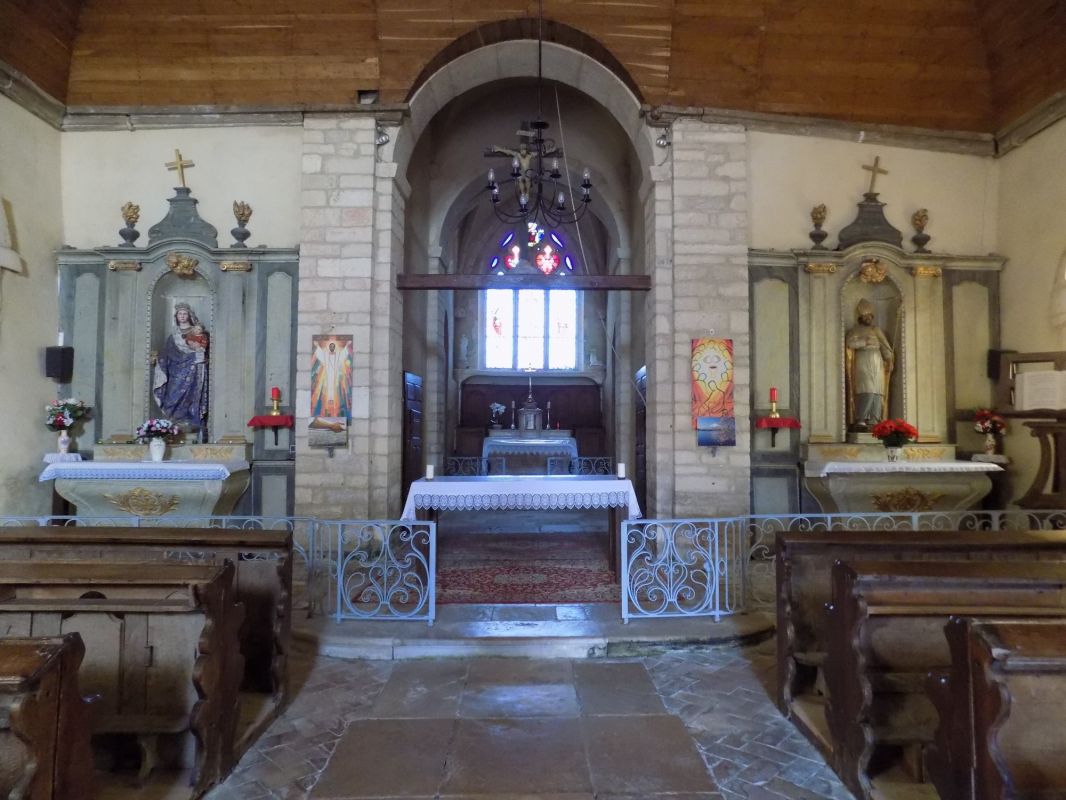
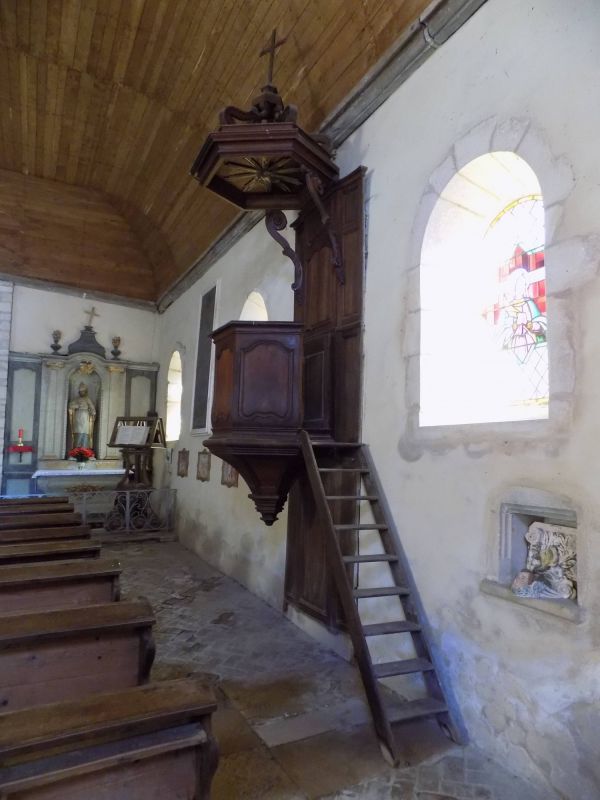
Originally built on a basilica plan, the church had a semi-circular vault, two side aisles and a semi-circular apse. Burned down during the Wars of Religion, it was rebuilt: the vaults were replaced by panelled ceilings and the pillars were removed. A Gothic choir with a flat chevet was then built, lit by a large mullioned window decorated with a 19th-century stained-glass window depicting the crowned Virgin and Child, surrounded by Saint Anne and Saint Joseph. The keystone depicts Christ in glory, surrounded by angel musicians.

Circular headstone
The deceased is buried standing upright. It bears the inscription engraved around an escutcheon: "Cy-gist Regnée de Préfontaine, daughter of Jehan de Préfontaine and Catherine de Tavannes, lady of Varchamps, de la Coulonne and de Beaumont in part, who died in September 1527".

The symbols of the four evangelists
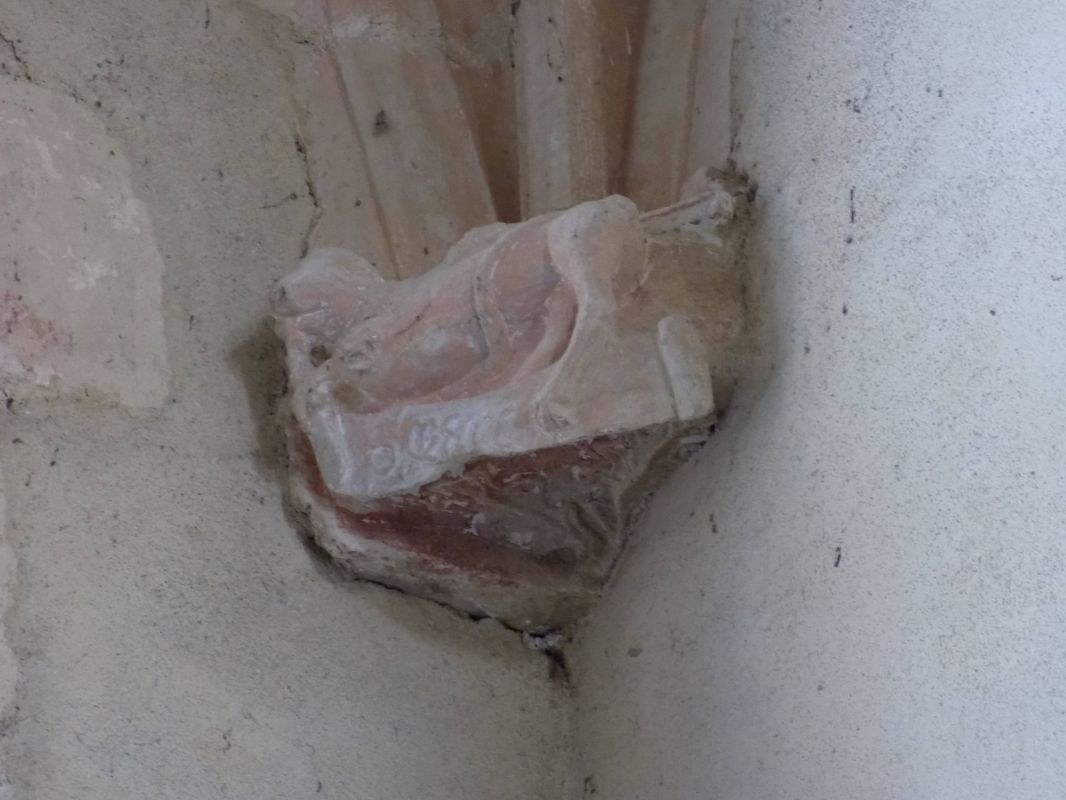
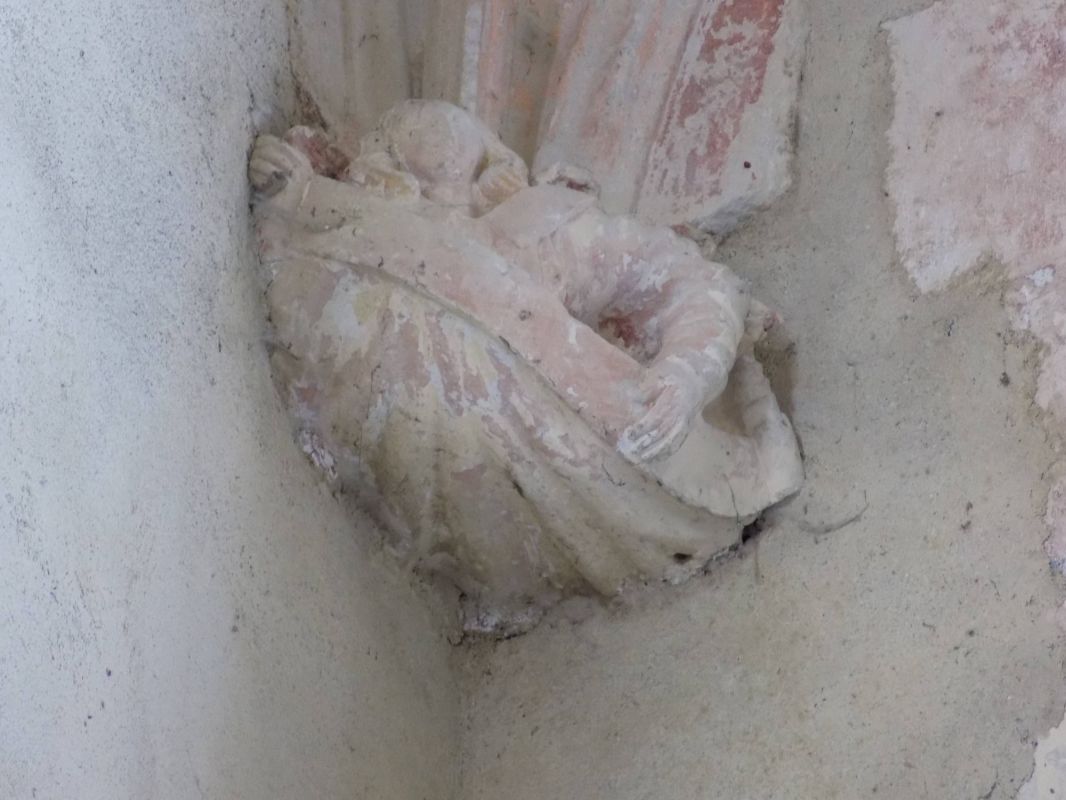
The first is like a lion and refers to Mark. The second is like a young bull and is the symbol of Luke. The third has a man's face and represents Matthew. The fourth is like an eagle in flight and represents Jean.
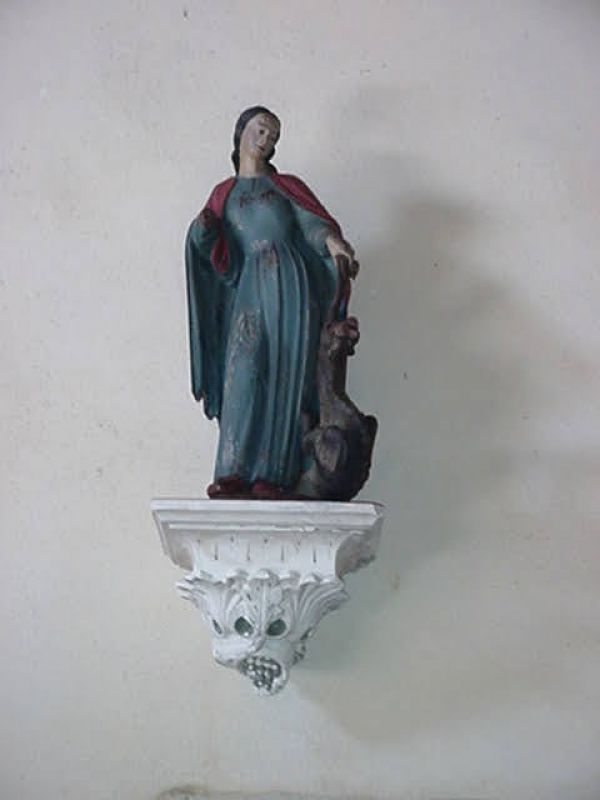
Three polychrome wooden statues
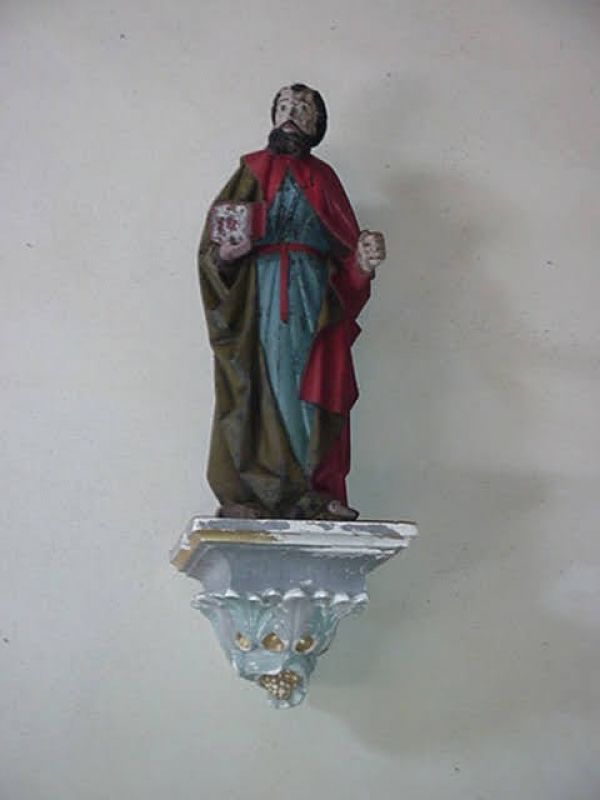
Saint Martha, Saint Paul, Saint Agnes.
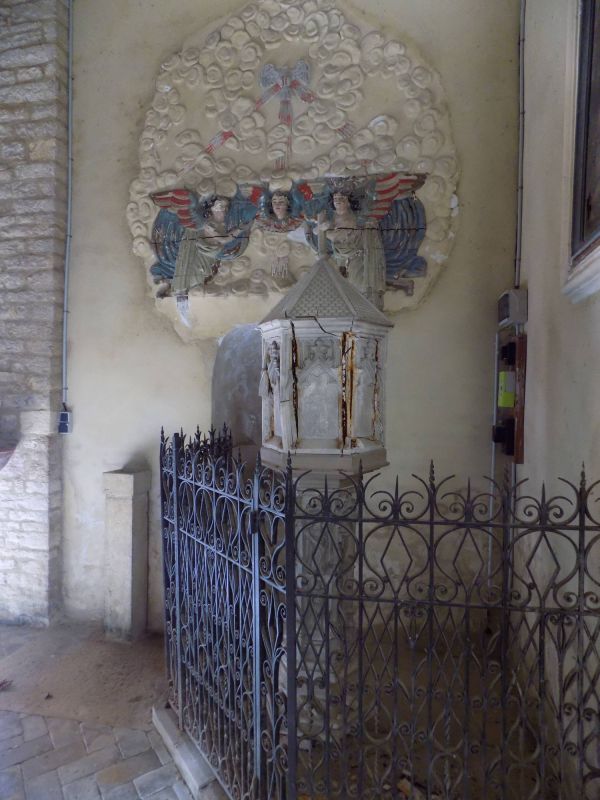
Baptismal font
The baptismal font was made from the remains of a funerary monument of René d'Amoncourt, abbot of de la Ferté in the 16th century. The hexagonal pillar is furnished with a double row of niches in which statuettes in high relief representing characters holding phylacteries were placed. On the wall, a stucco glory shows the dove of the Holy Spirit gushing out of the heavenly clouds with three polychrome angels.