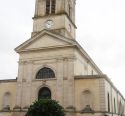
Saint Eulalia
rue Thomas d'Aunou 93
61500 Aunou-sur-Orne
Church | XII-XIV-XIX | Romanesque | Catholic Church


Map
Opening hours
01 July - 31 August
Mon 10.00 - 18.00
Tue 10.00 - 18.00
Wed 10.00 - 18.00
Thu 10.00 - 18.00
Fri 10.00 - 18.00
Sat 10.00 - 18.00
Sun 10.00 - 18.00
15 December - 06 January
Mon 10.00 - 17.00
Tue 10.00 - 17.00
Wed 10.00 - 17.00
Thu 10.00 - 17.00
Fri 10.00 - 17.00
Sat 10.00 - 17.00
Sun 10.00 - 17.00
Religious offices
Description
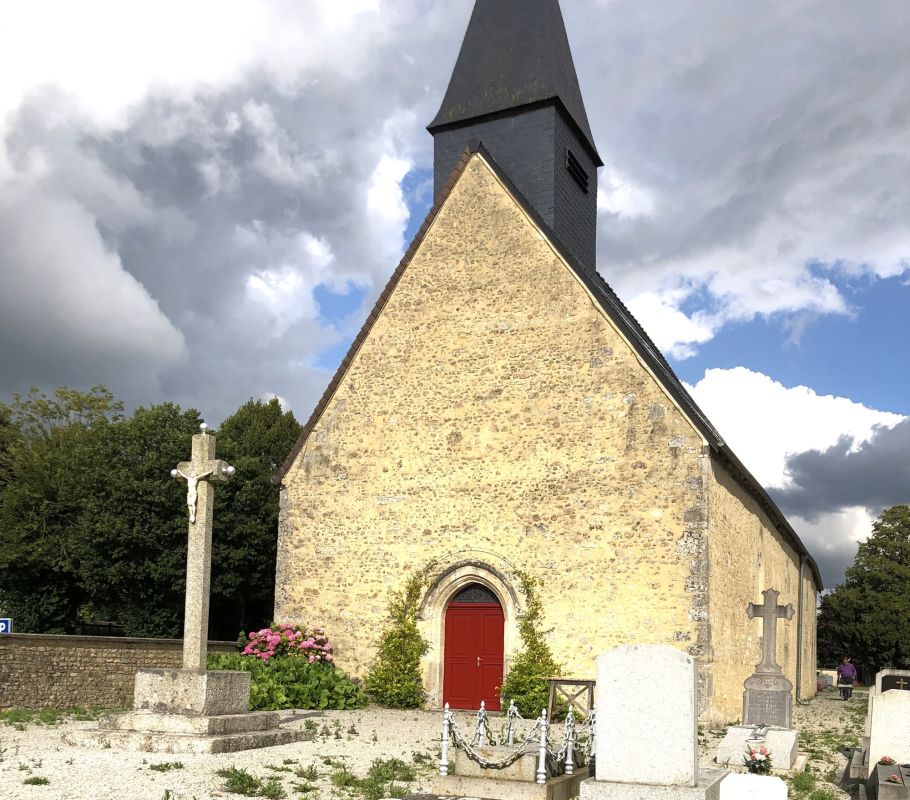
Donated in 1060 by Roger II de Montgomery and Mabile de Bellême to the nearby abbey of Saint Martin of Sées, it has a single nave ending in a flat chevet lit by a triplet that replaced a cul-de-sac apse in the 13th century. Dating from the Romanesque period, it has retained walled bays on the north façade and a doorway on the south side. Its openings, including the large portal and its geminated Gothic windows, bear witness to major changes in the 13th century. The bell tower was rebuilt around 1830.
Translated with DeepL.com (free version)
Photos
Remarkable elements
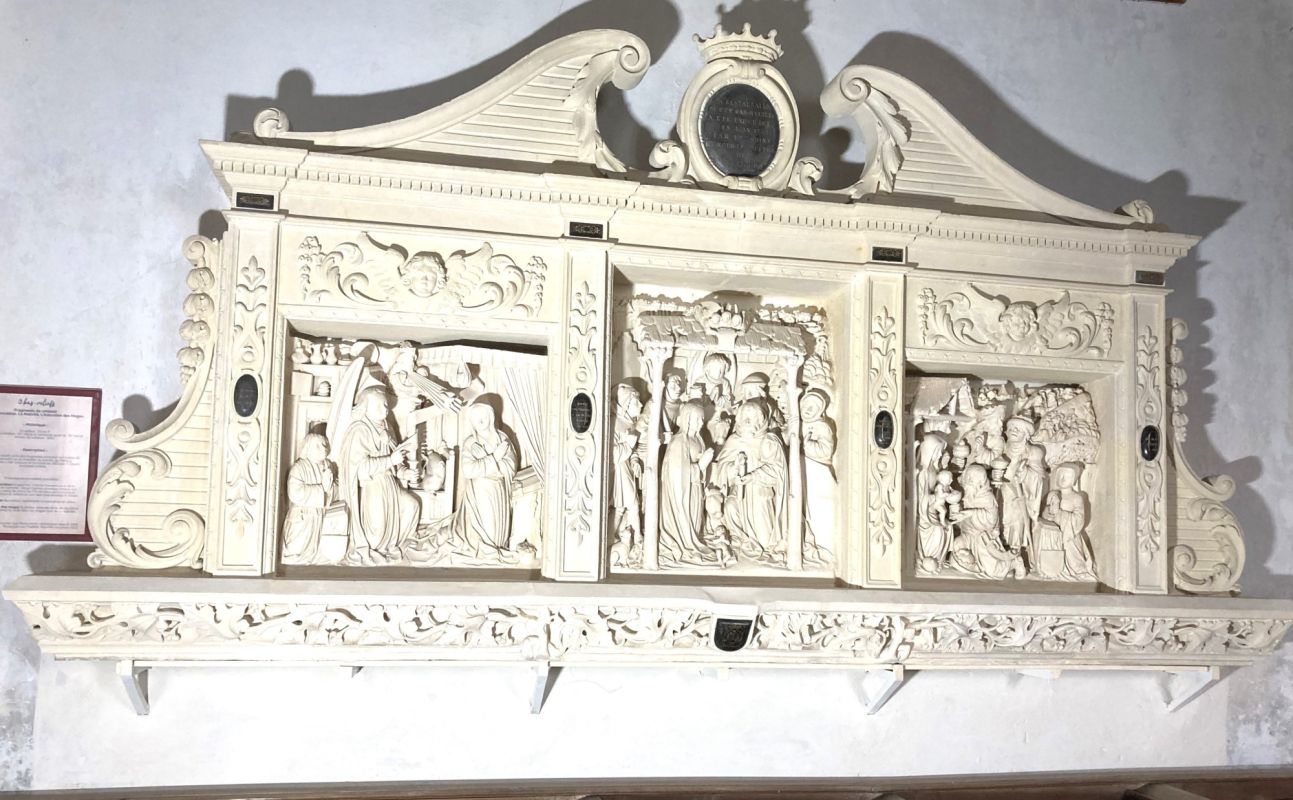
Low relief
Three scenes from the Nativity cycle – the Annunciation, the Adoration of the Shepherds and the Adoration of the Magi – follow one another in this ‘altarpiece’ composed in 1862 when these elements were transferred from the chapel of the Médavi manor house. Similar to the work produced by workshops in the Loire region in the 16th century, these limestone bas-reliefs are set in a richly sculpted frame using Renaissance ornamental motifs.
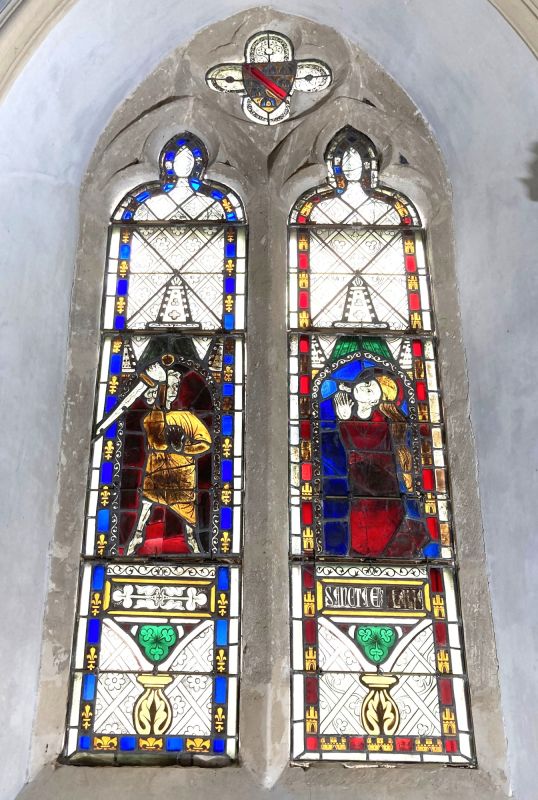
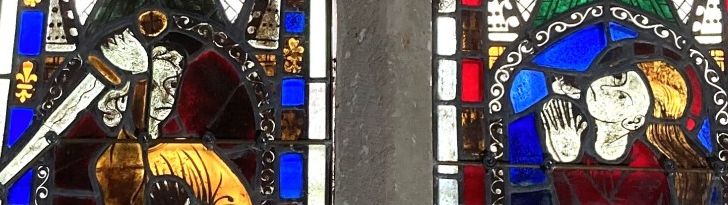
Stained glass window of sainte Eulalie
The only remaining example of the original stained glass windows destroyed by hail in 1846 and listed as a historic monument, this stained glass window is believed to be the work of the same workshop that created some of the windows in Sées Cathedral at the end of the 13th century. Composed of figures set against a grey background and bordered with fleurs-de-lis and Castilian castles, it depicts the beheading of Eulalie, a Spanish martyr whose cult was well established in France in the early Middle Ages.
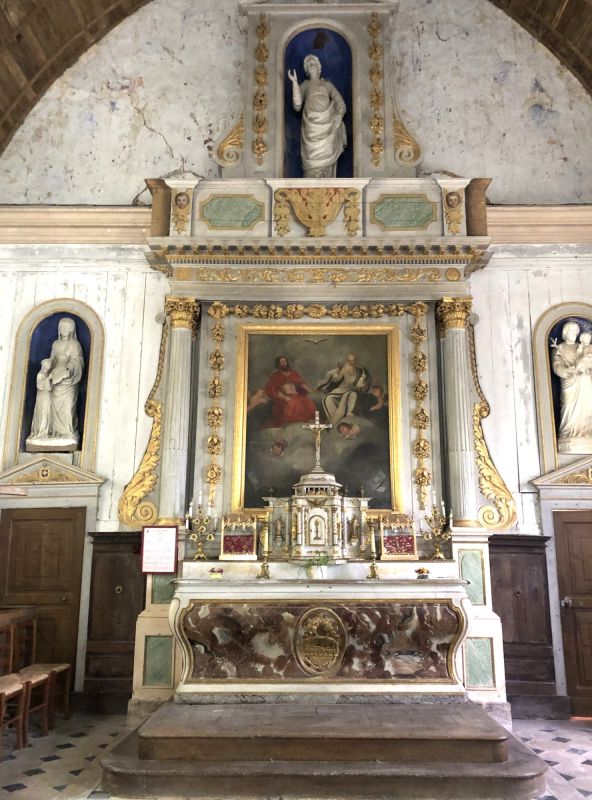
High altar
Made of painted and gilded wood, it consists of an altarpiece from the second half of the 18th century, a 17th-century winged tabernacle and a tomb altar decorated with a medallion featuring the mystical lamb. Two Corinthian columns flank the central panel of the altarpiece, decorated with garlands, acanthus leaves and foliage. A niche houses a stone statue of Saint Eulalie. The painting, signed by Charles Louis Dufresne and dated 1699, illustrates the dogma of the Trinity.
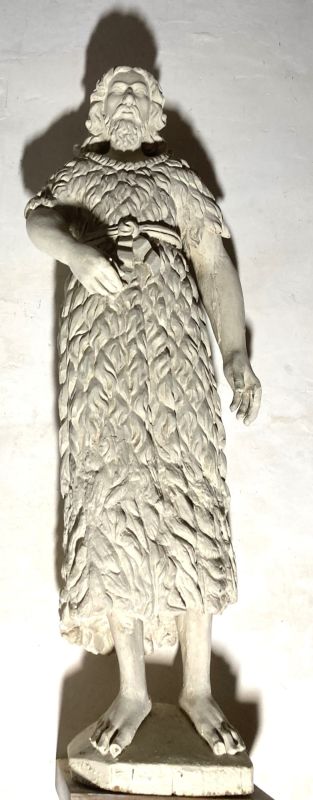
Statue of Saint John the Baptist
Made of carved oak, this statue of the saint wearing a large camel's hair tunic is part of local folk art.
Translated with www.DeepL.com/Translator (free version)
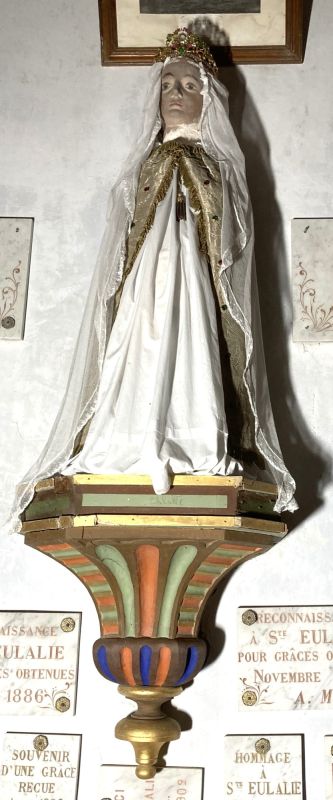
Statue of Saint Eulalie
Discovered in 1804 in a ploughed field, she suffered greatly from her time in the open ground, and her clothes disguise her state of decay. She is invoked against childhood illnesses, Eulalie having been martyred in Spain at the age of 12 according to her legend dating from the 8th century.
Listed as a historic monument.
Translated with www.DeepL.com/Translator (free version)
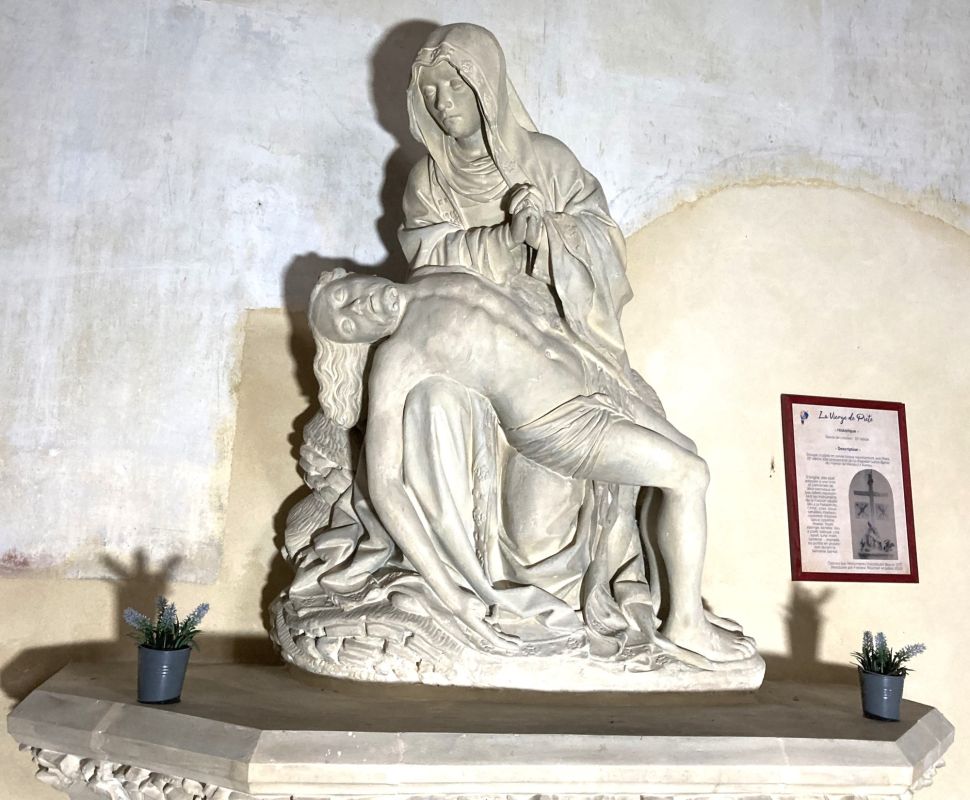
Virgin of mercy
This 16th-century white stone sculpture, listed as a historic monument, is the centrepiece of the collection. The Virgin's pained expression and Christ's resigned posture, with his peaceful face and slumped body, are the work of an artist who mastered his medium. The group is said to have been commissioned in memory of her husband for the widow of Raoul de Mallard, who was killed in battle at Marignan, and comes from the chapel of the Médavi manor house, consecrated in 1531.