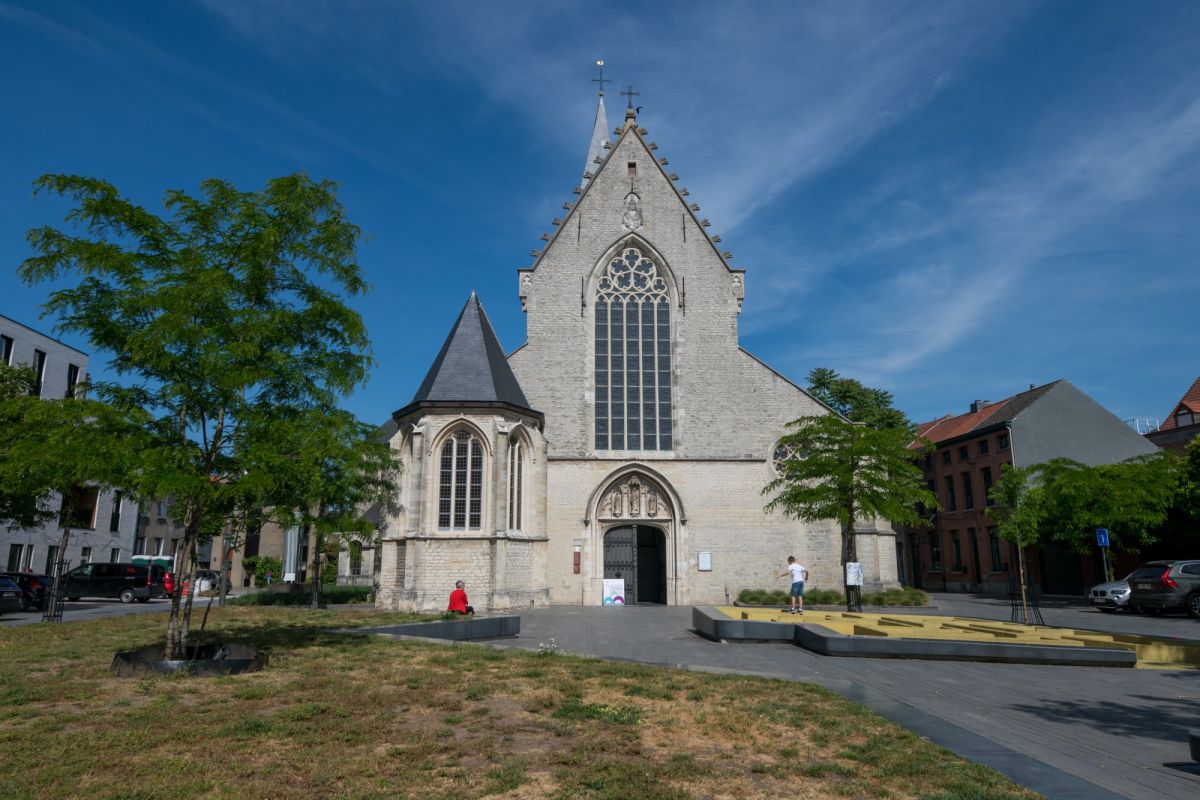
Saint Catherine
Sint-Katelijnestraat
2800 Mechelen
Church | 1343 | Gothic | Catholic Church

Map
Opening hours
01 April - 31 October
Mon -
Tue 13.00 - 17.00
Wed 13.00 - 17.00
Thu 13.00 - 17.00
Fri 13.00 - 17.00
Sat 13.00 - 17.00
Sun 13.00 - 17.00
01 November - 31 March
Mon -
Tue 13.00 - 16.00
Wed 13.00 - 16.00
Thu 13.00 - 16.00
Fri 13.00 - 16.00
Sat 13.00 - 16.00
Sun 13.00 - 16.00
Guided tour
Religious offices
Description
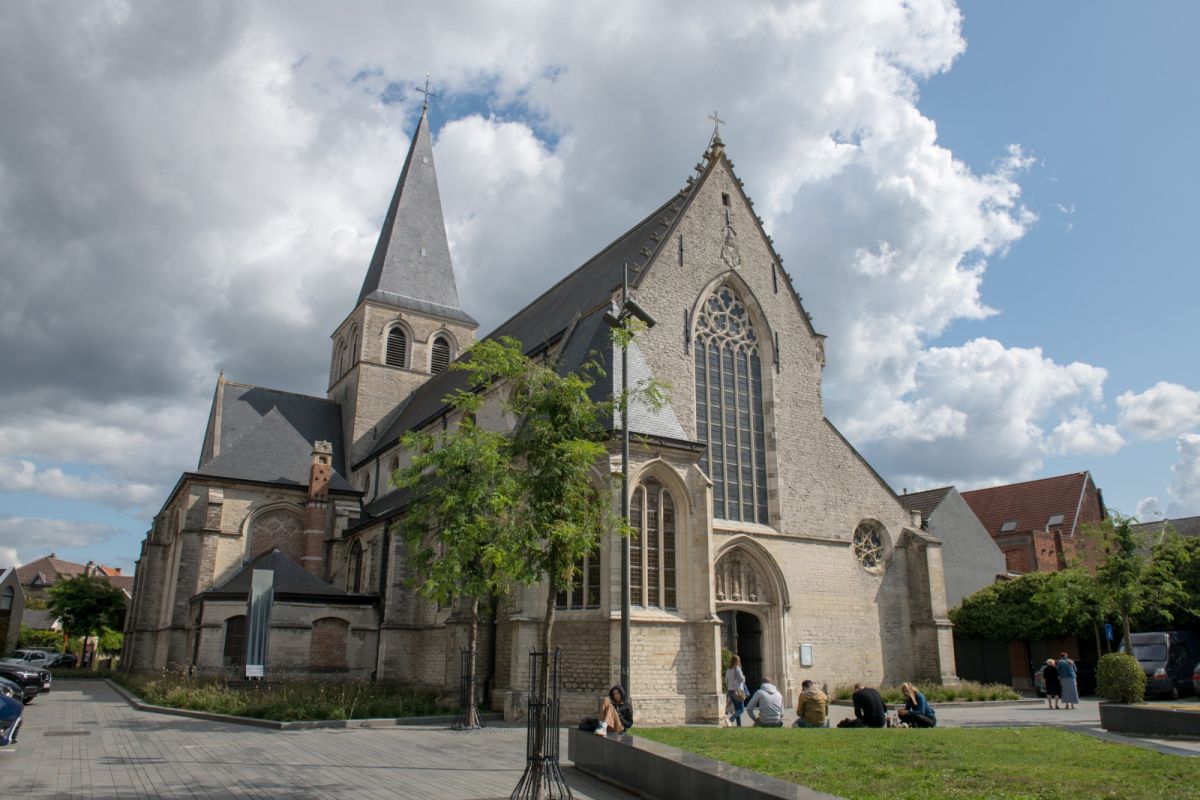
During the Reformation wars (1572–1580) the church suffered heavy damage. Restoration began in 1585, and in the 16th and 17th centuries the interior was enriched with valuable furnishings and artworks. In the early 16th century the Fontes Chapel was added along the north aisle, and in 1643 Isabella Danesin financed the Chapel of St. Joseph, for which the renowned Malines architect Lucas Faydherbe designed a marble Baroque altar.
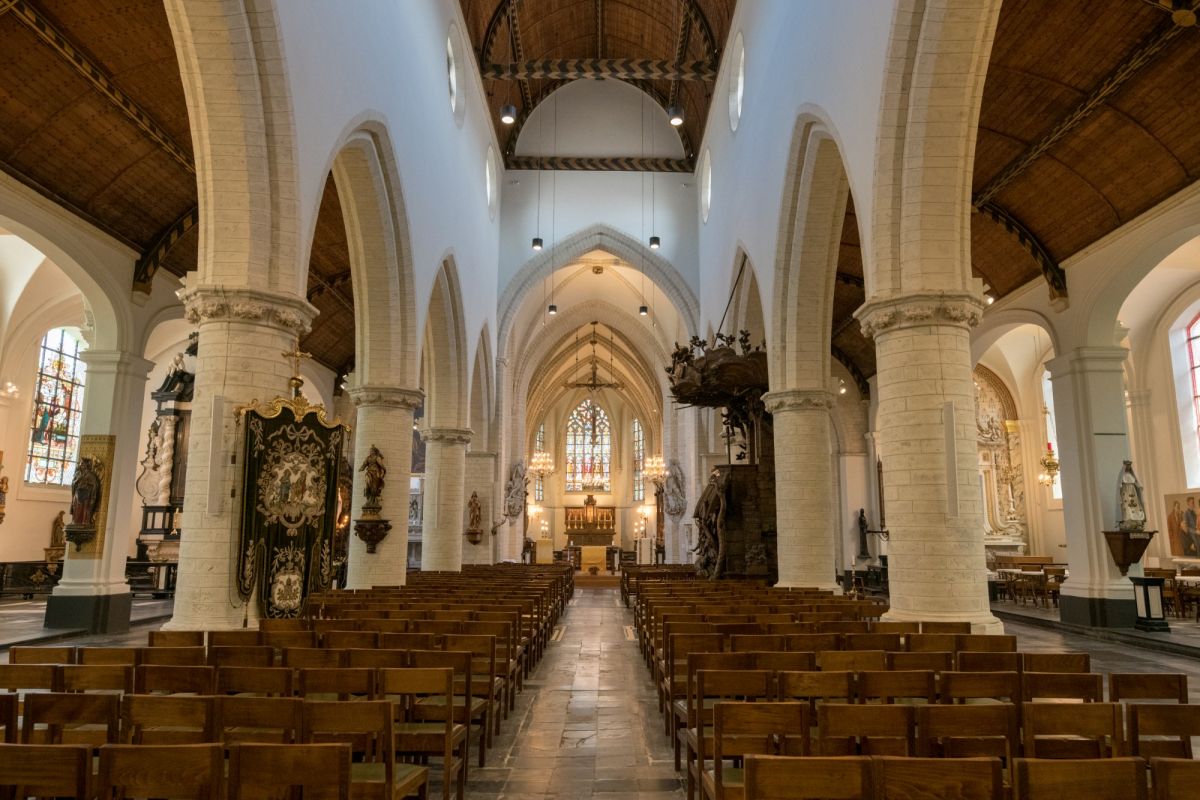
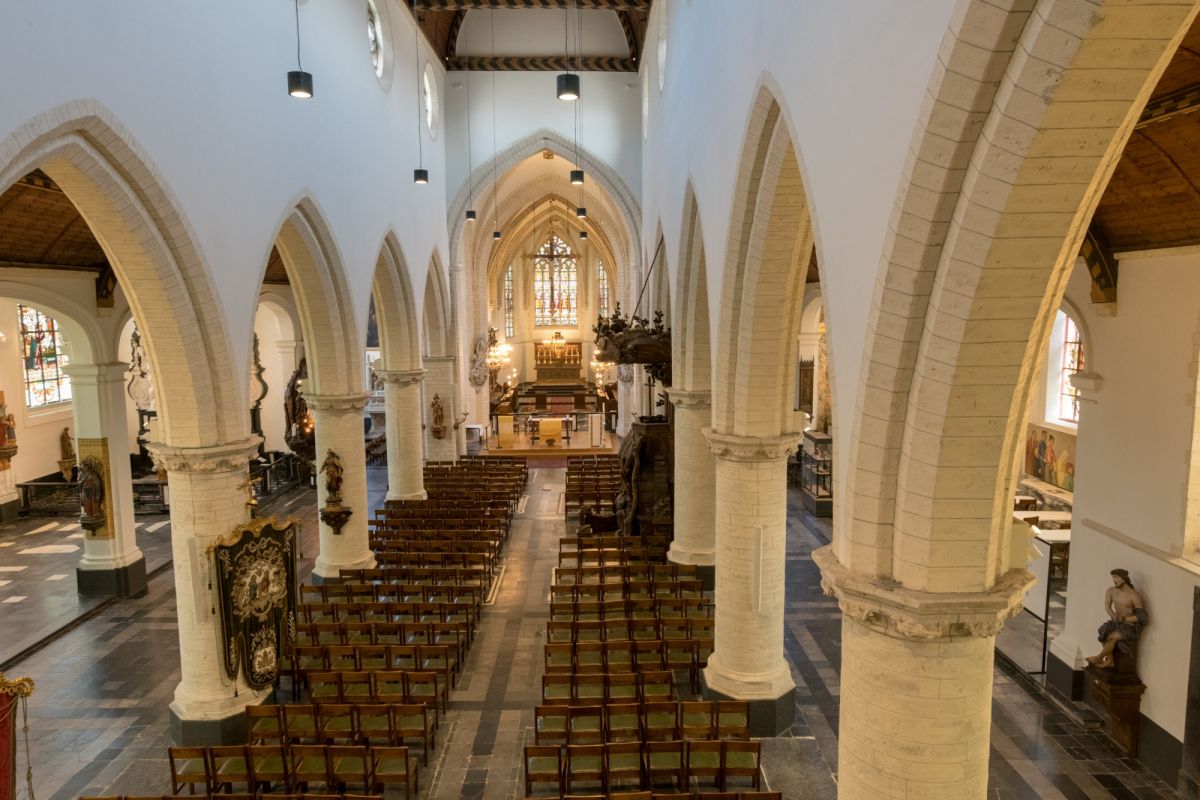
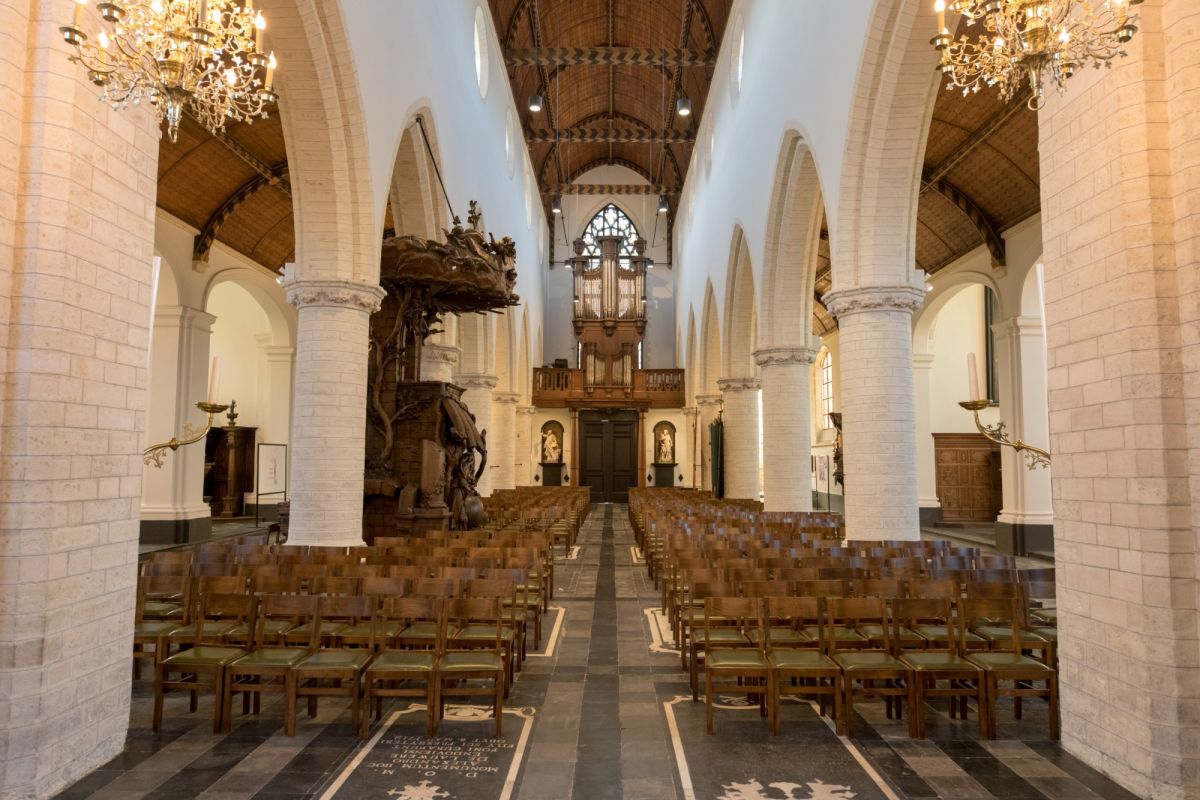
Between 1770 and 1775 the church underwent major renovation under church master Carolus Van Pijperzeel. Stone arches were built to support the Gothic wooden vaults of the nave and transepts. The family also funded new flagstones, an organ loft with a Van Peteghem organ, new choir stalls, and a pulpit by Pieter Valckx (1734–1785), illustrating devotion to saints such as St. Catherine and St. Anthony.
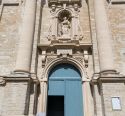
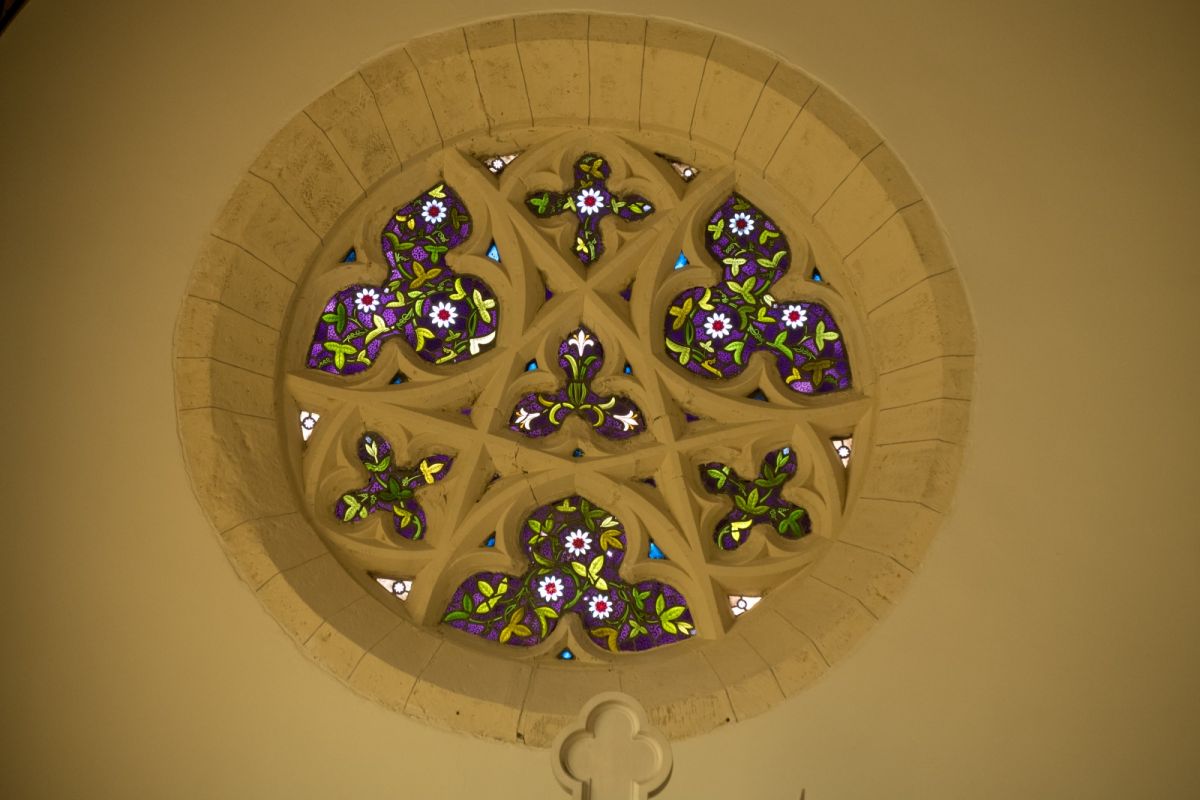
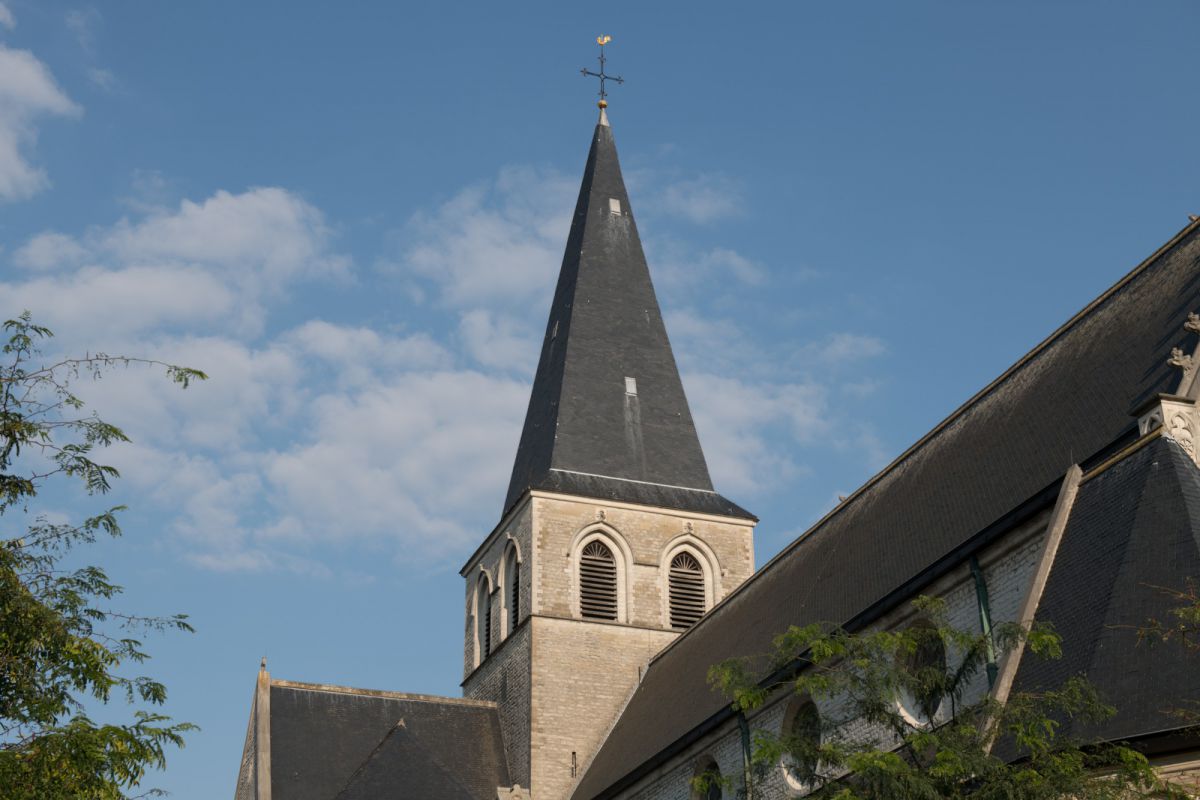
St. Catherine, who refused to renounce her Christian faith, was tortured on a wheel. The church recalls this through twelve rosette windows in the nave and a large rosette in the façade.
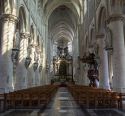
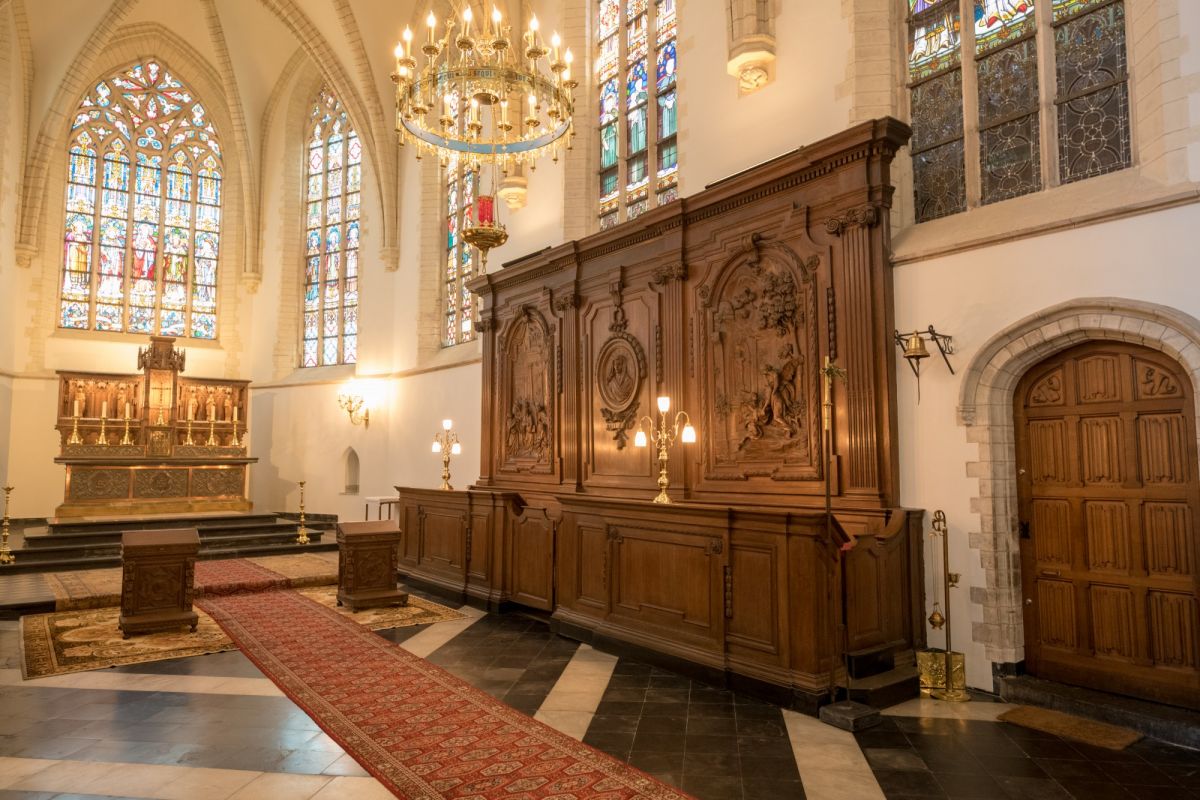
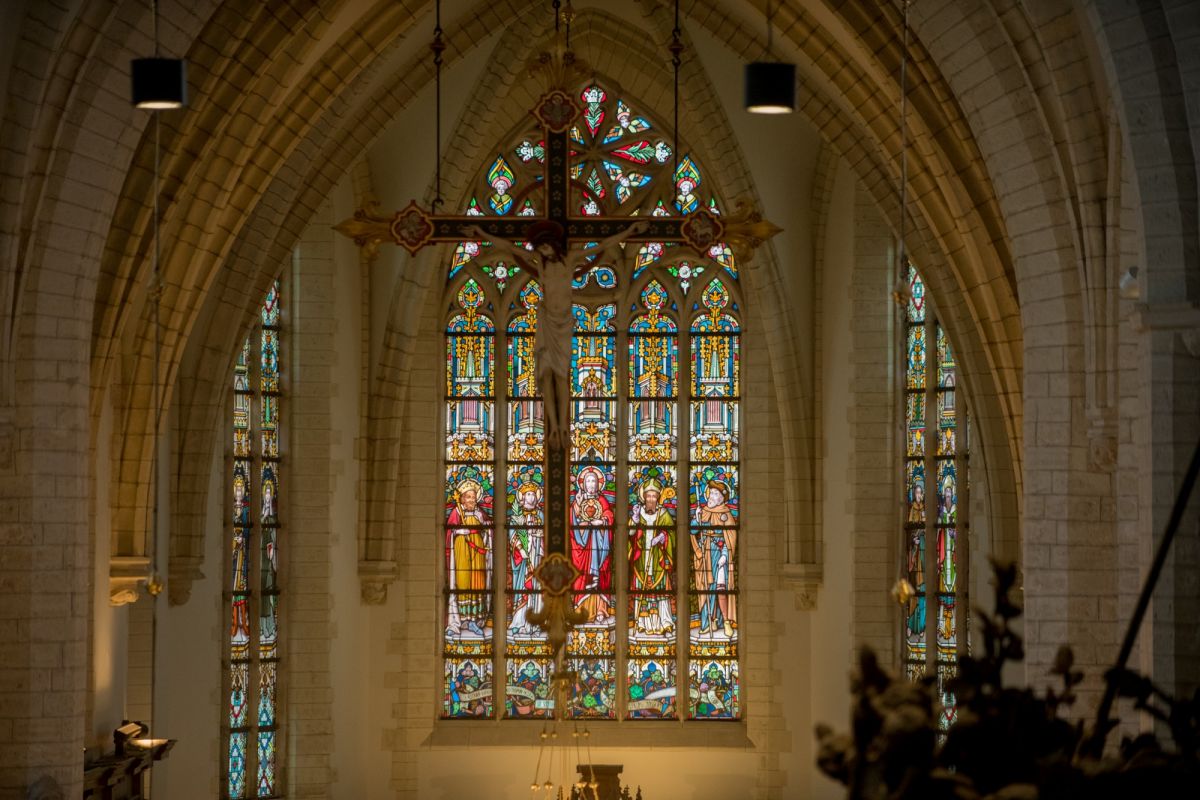
At the end of the 19th century the decision was made to restore the church’s medieval character and replace the rich interior with a neo Gothic one. Architect Frans Baeckelmans designed the project, executed by Philippe Van Boxmeer of Malines, giving the church its present appearance.
Saint Catherine’s is one of seven historic churches in Malines, promoted by Torens aan de Dijle vzw in cooperation with the city.
KIKIRPA : Photo-library online


Photos


Remarkable elements
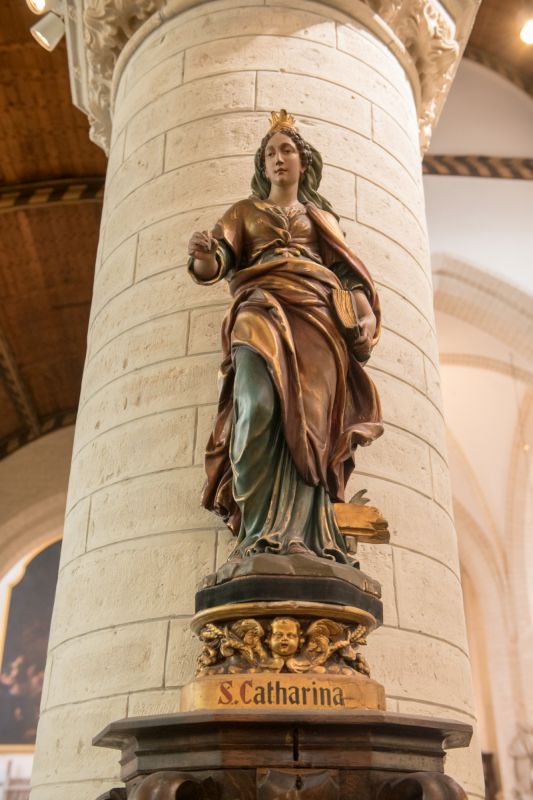
Statue of Saint Catherine
The statue of Saint Catherine, made in the late 16th century and attributed to Mechelen sculptor Thomas Hazart, depicts the Roman era martyr. Legend says she refused to abandon her Christian faith and was condemned to die on a spinning wheel, which miraculously broke. She was then beheaded, and milk flowed from the wound, said to have driven the plague from the city.
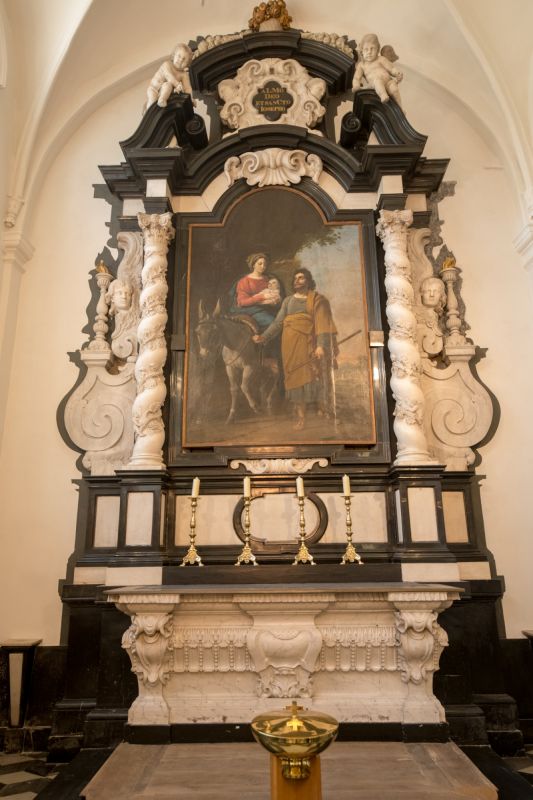
Chapel and altar of Saint Joseph
Remarkable in the St Joseph's Chapel with its stone vault is the baroque altar in white and black marble from ca. 1650 - pay particular attention to the two twisted columns - is by Lucas Faydherbe (1617-1697). It is the oldest altar we know of his. The original painting by Jacob Jordaens has been replaced by a 19th-century "Flight to Egypt" by Jos Paelinckx (1781-1839). Joseph plays a central role in this story, one of the few times in the gospel.
Translated with www.DeepL.com/Translator
Pulpit
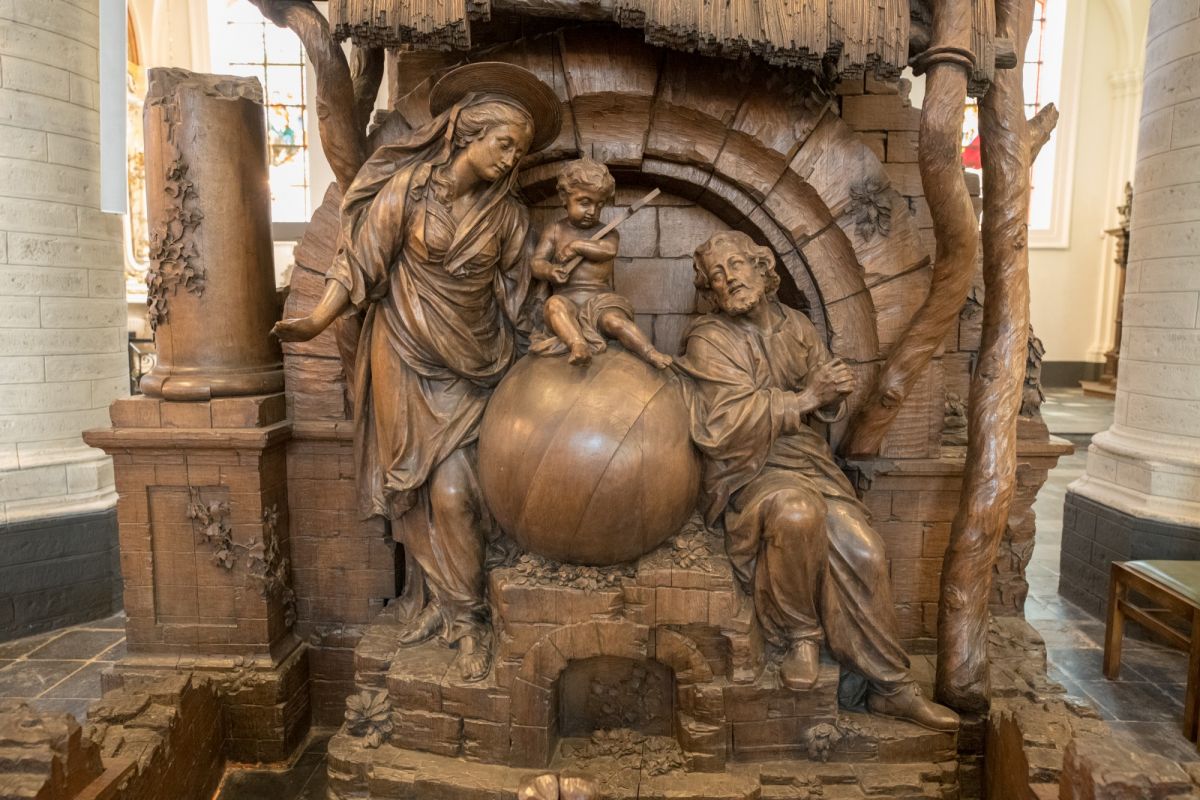
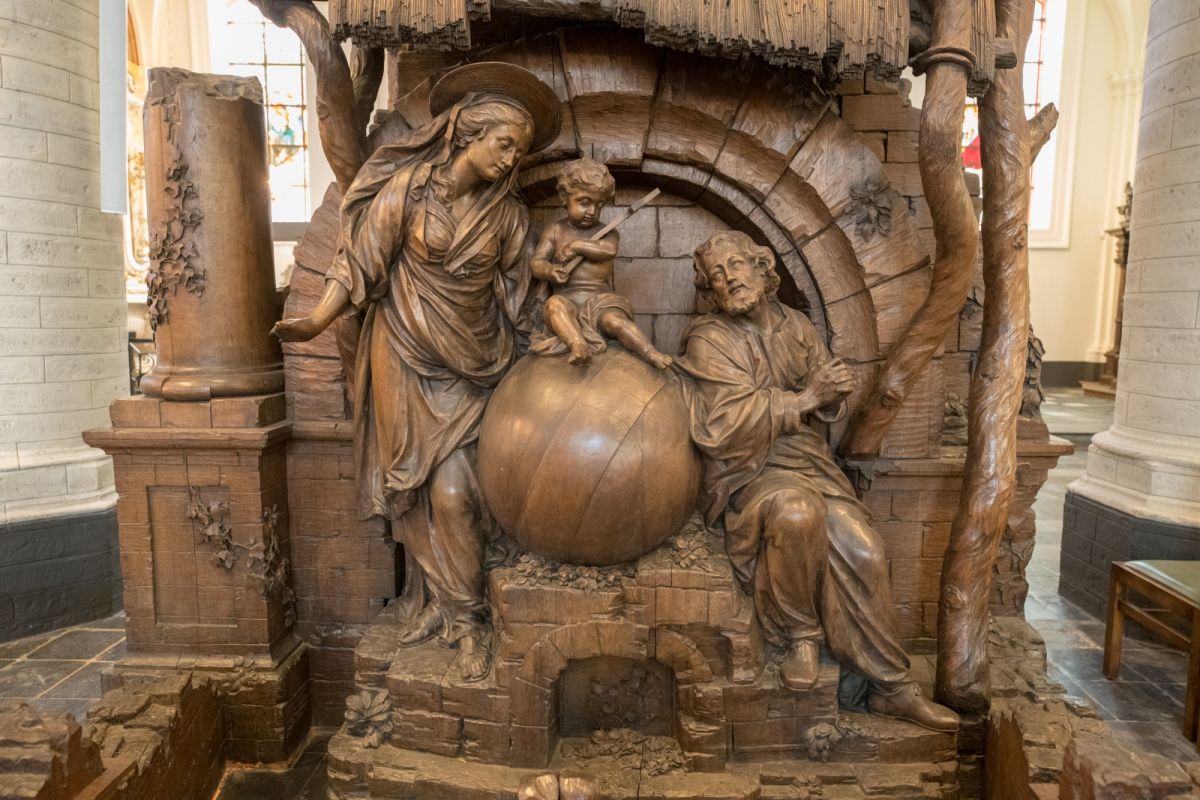
The pulpit (1774) is a work by the Malinois Pieter Valckx (1734-1783), based on a design by Theodoor Verhaegen (1700-1759). The Holy Family seeks shelter under a thatched roof, in the ruins of a temple. Jesus sits on the globe between Joseph and Mary, holding a cross in his arms. Angels and clouds hover between the tree branches that form the sounding board. They were angels who broadcast the Good News at Christ's birth. Also on the pulpit the Good News was proclaimed.
Translated with www.DeepL.com/Translator
Confessionals
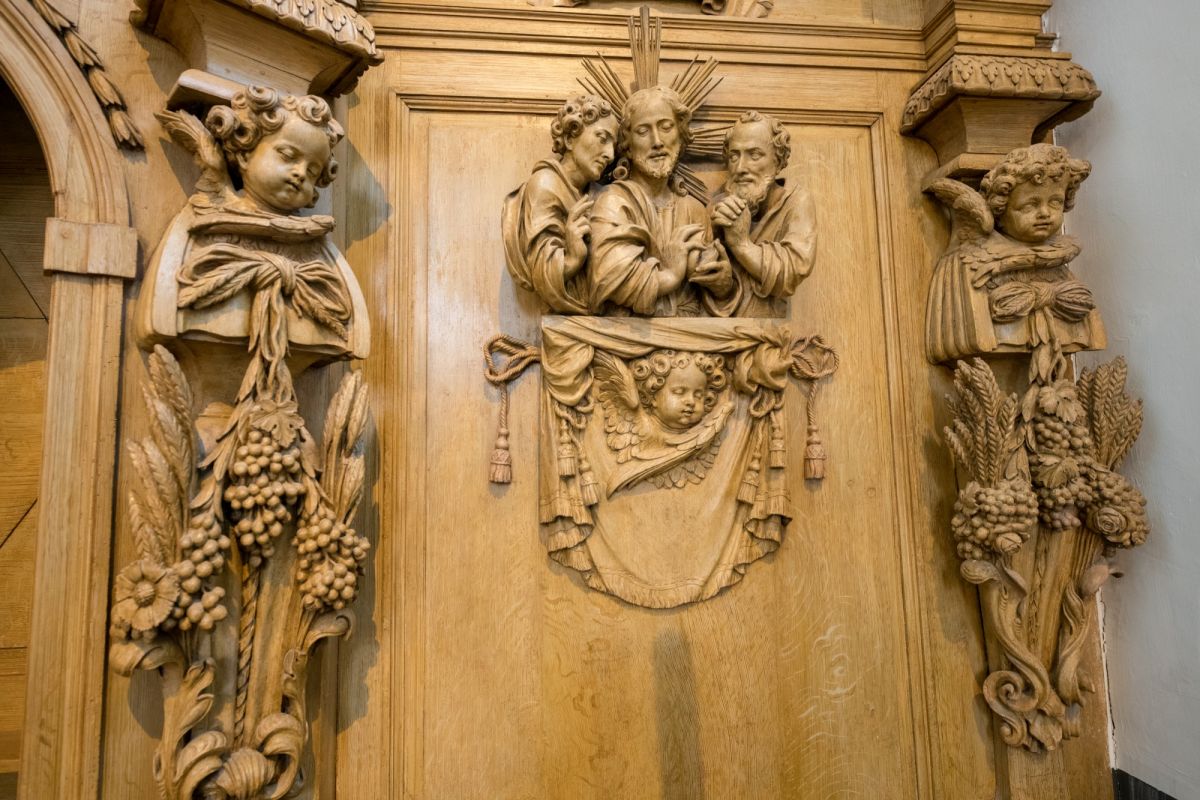
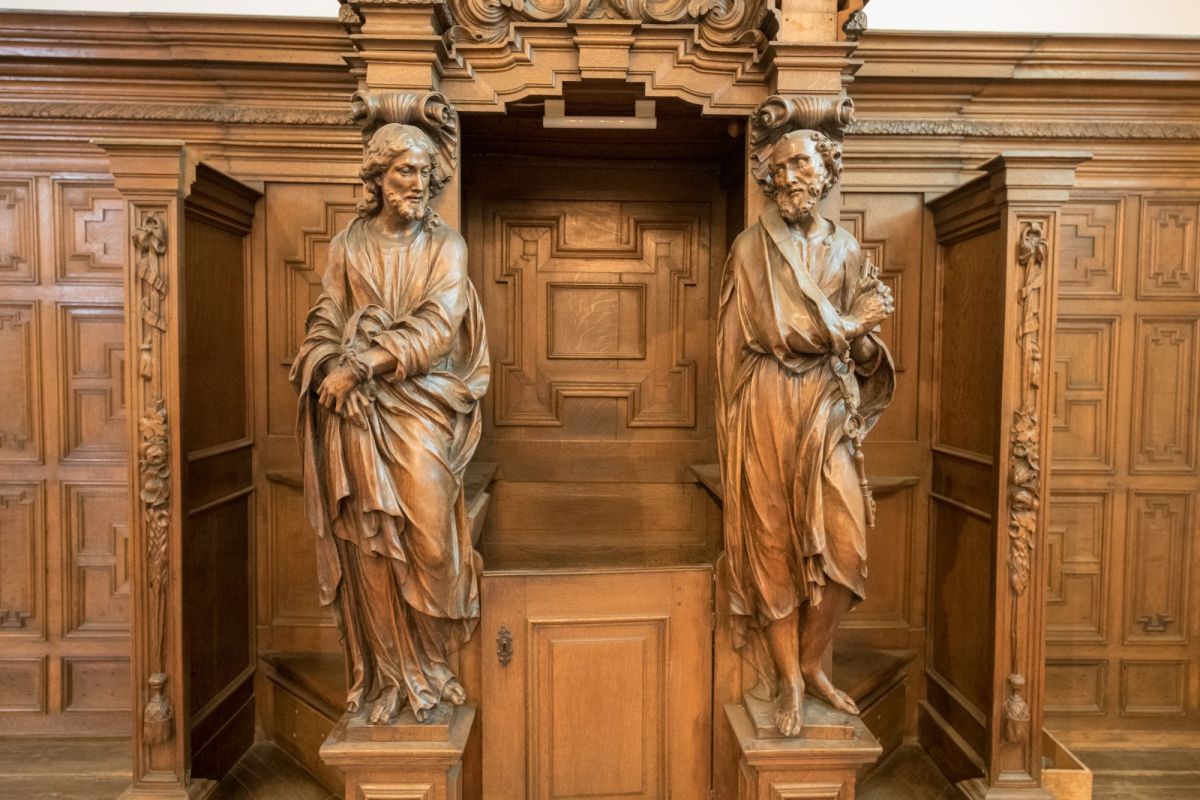
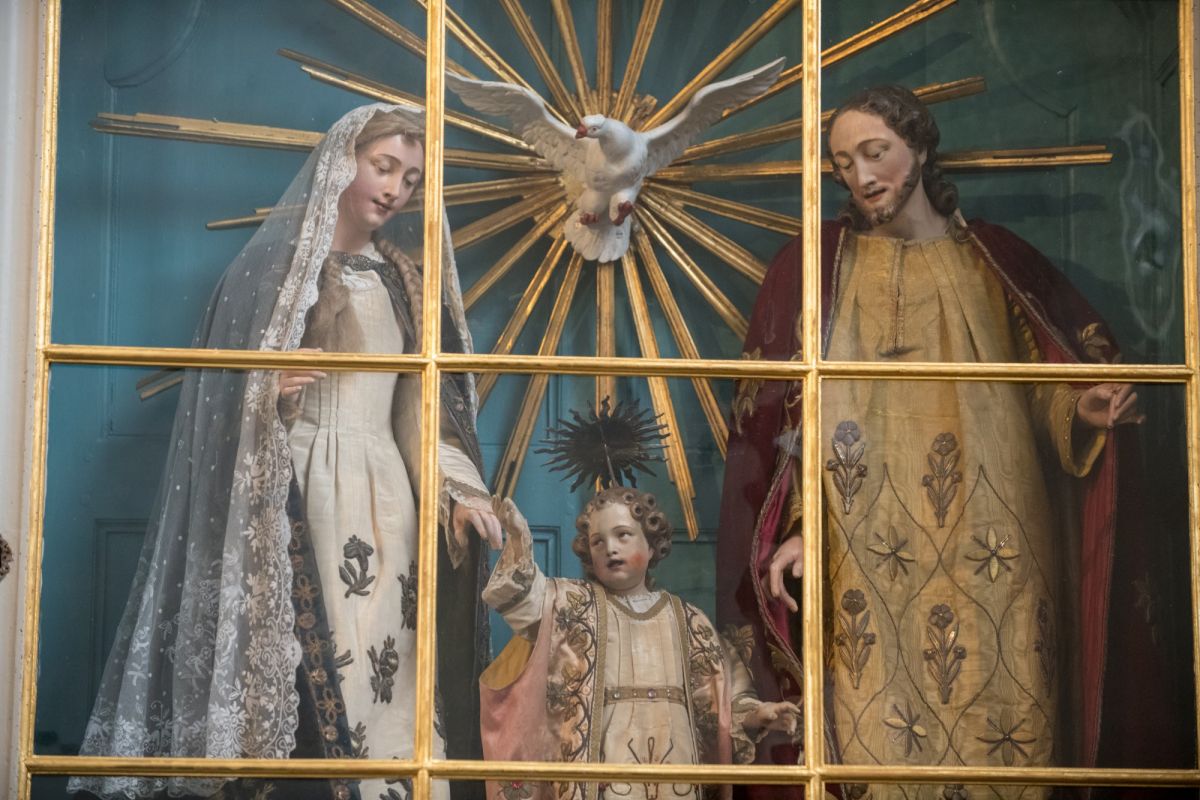
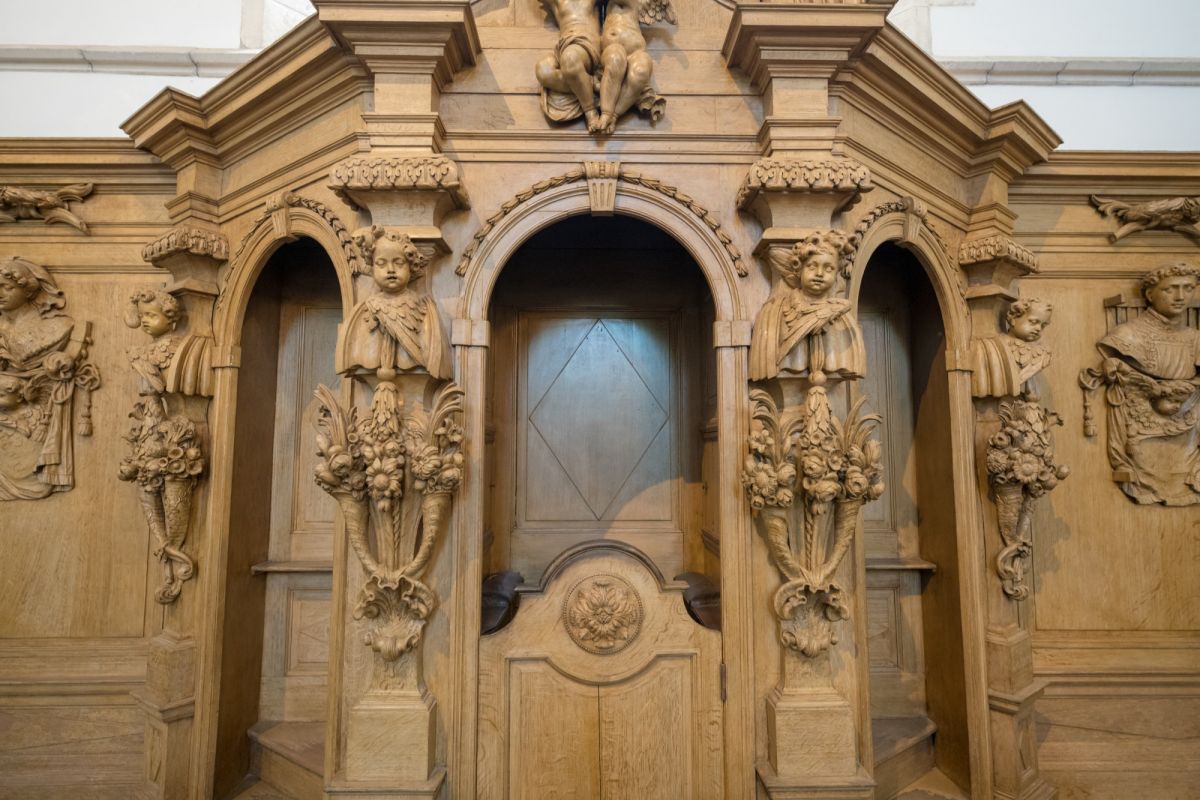
The church houses confessionals from the late 17th century by Nicolaas Van der Veken (1637–1709), a pupil of Lucas Faydherbe. Their classical symbolism focuses on sin and redemption. The sculptures were reused in 1817. Van der Veken also created the 1659 wooden Holy Family: finely finished polychrome heads and hands contrast with the rougher bodies, meant to be dressed.

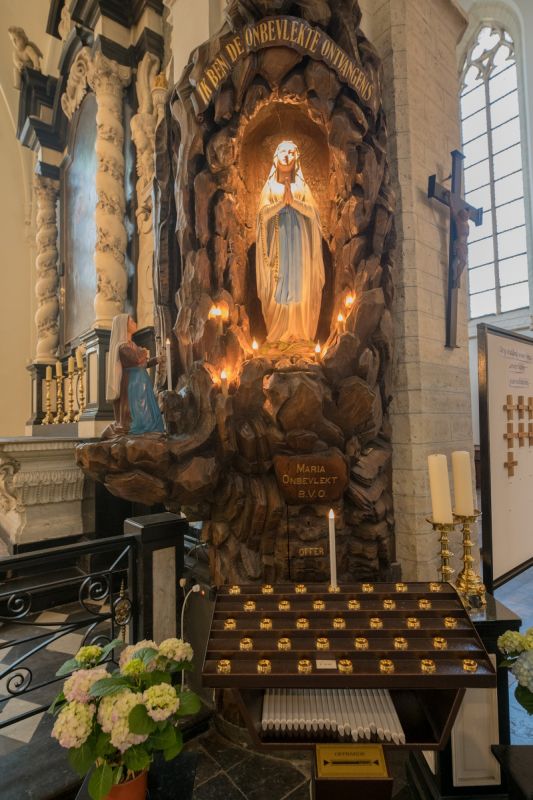
Cave of Lourdes
In 1858, the Blessed Virgin appeared to 14 year old Bernadette Soubirous in Lourdes. Soon after, many replica caves were built in Flanders, outdoors and in churches. Marian devotion grew, reinforced by the 1854 dogma of the Immaculate Conception. Such popular devotion, often among the poor and children, was used by the Church against modern unbelief. This cave in the Katelijnekerk was consecrated on 11 February 1937.
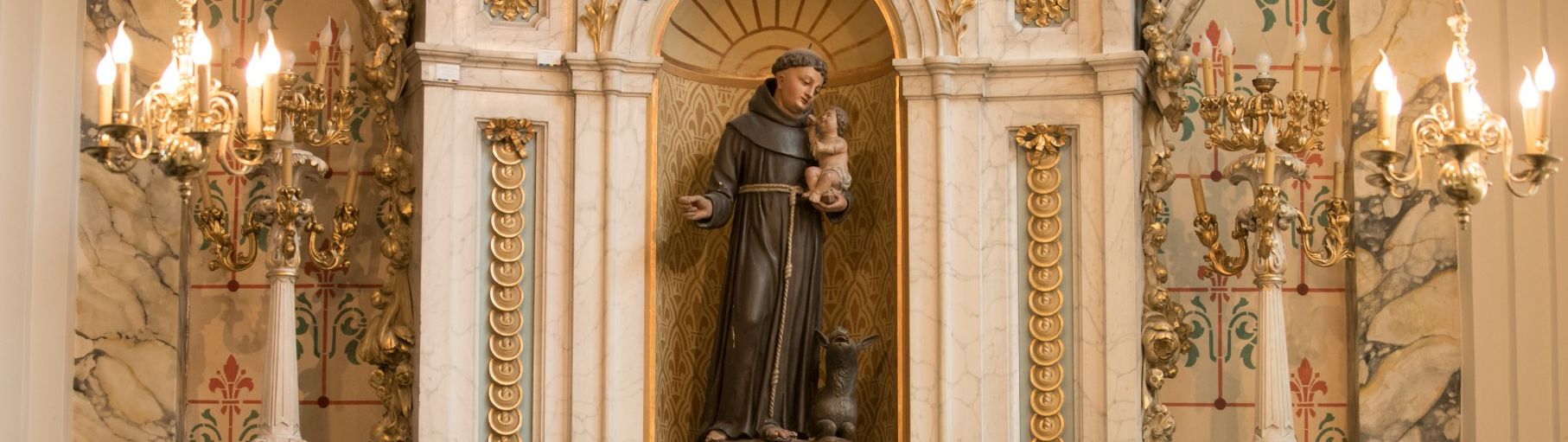
The Chapel of Anthony
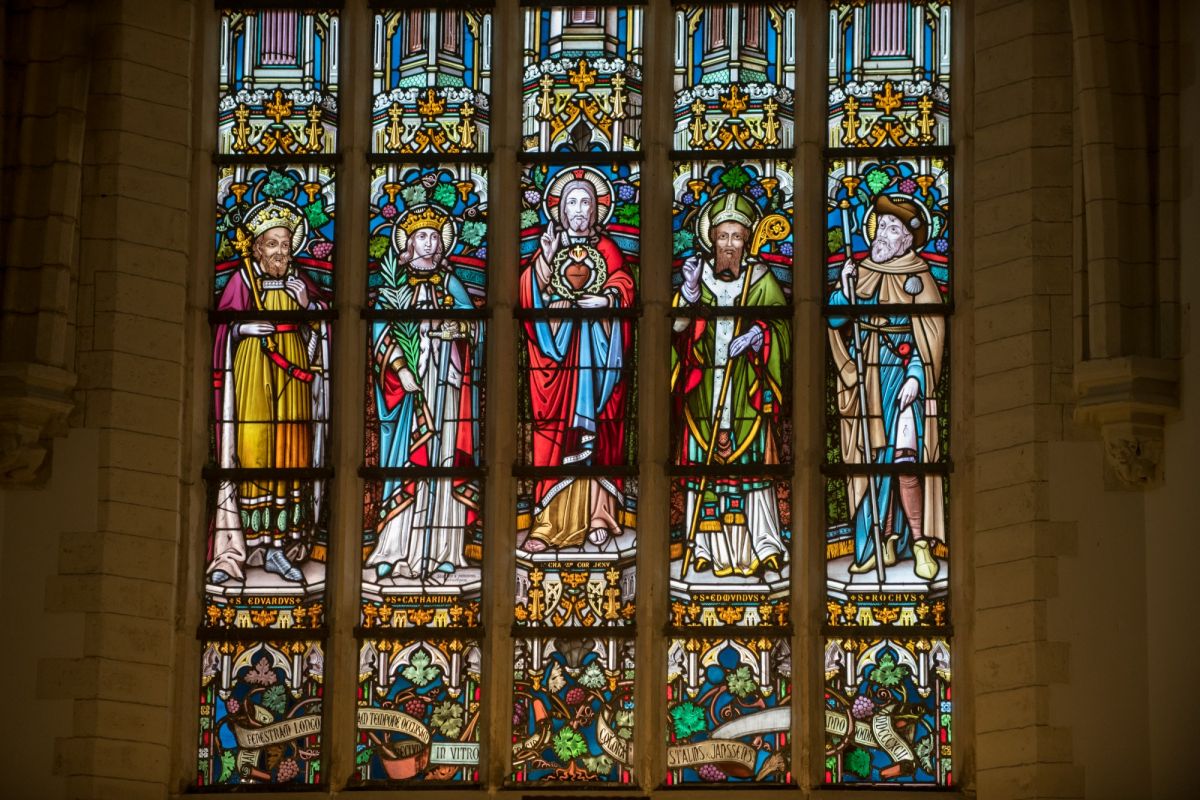
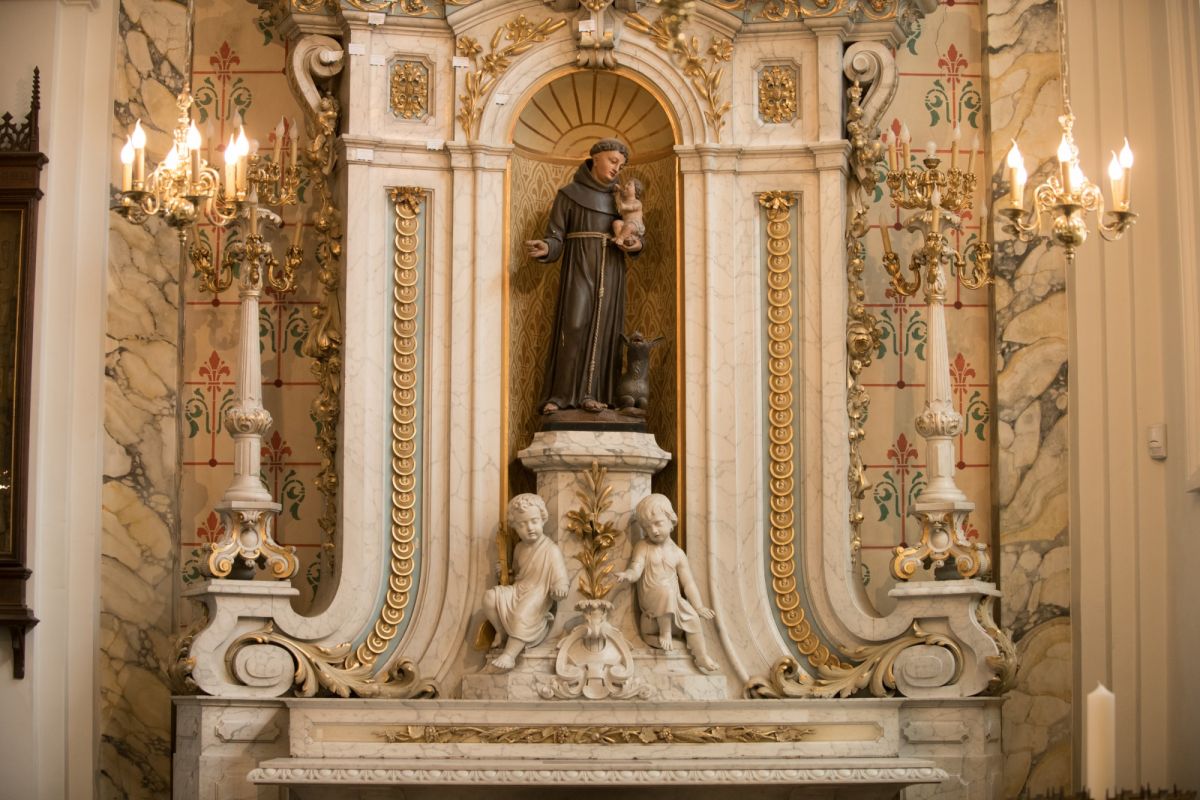
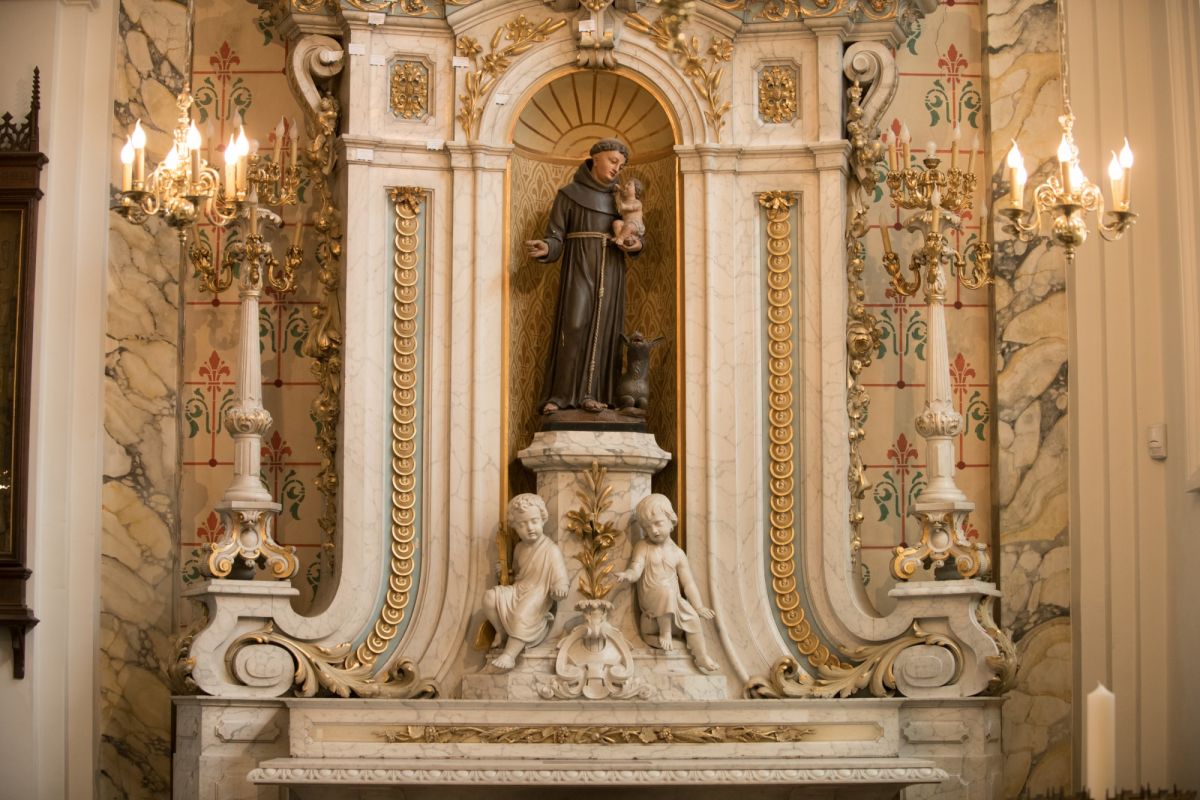
Like Saint Joseph, Anthony has a chapel in the church, built in 1834 and standing symmetrically across the street. Its altar and stained glass windows honor the saint. Anthony of Padua (1195–1231), a Franciscan of Francis of Assisi’s time, inspired many stories: a count saw him holding a radiant child, and a thief returned his stolen Bible after prayer. This is why he is invoked to find lost objects.