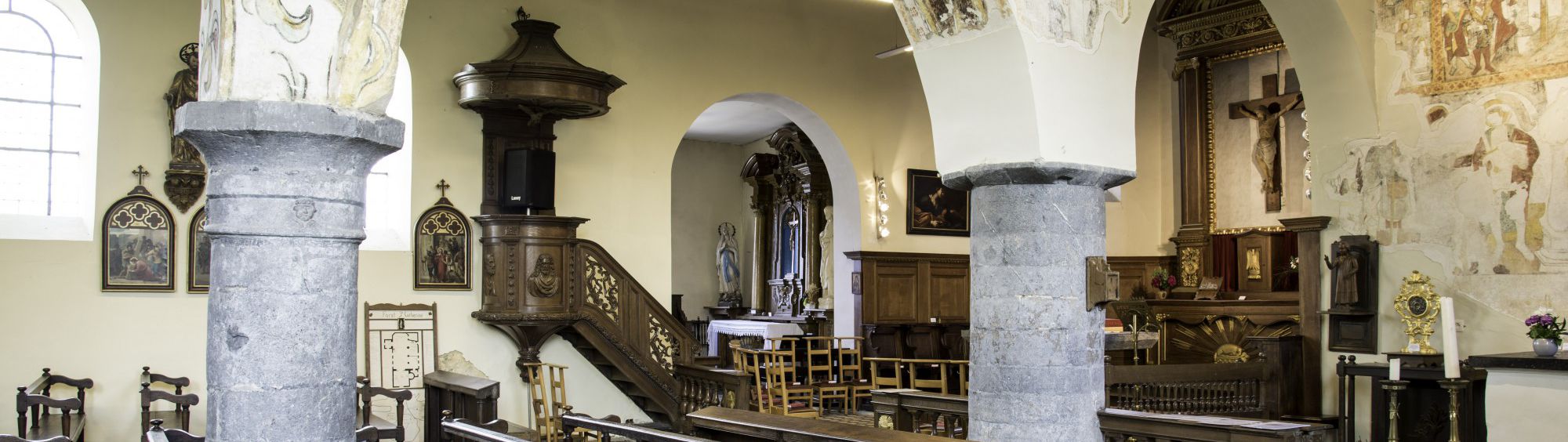
Sainte Catherine
Place de Forêt-Village
4870 Forêt-Village (Trooz)
Church | XIII-XVII | Romanesque | Catholic Church


Map
Opening hours
01 July - 31 August
Mon -
Tue -
Wed -
Thu -
Fri -
Sat -
Sun 14.00 - 18.00
Open every Sunday afternoon in July and August, from 2pm to 6pm, until 23 August inclusive.
Guided tour
Religious offices
Saturday evenings on the 2nd and 4th Sundays of the month: 17.00
See the updated timetable on the website of our partner Egliseinfo
Description
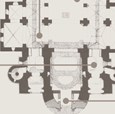
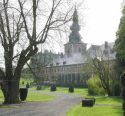
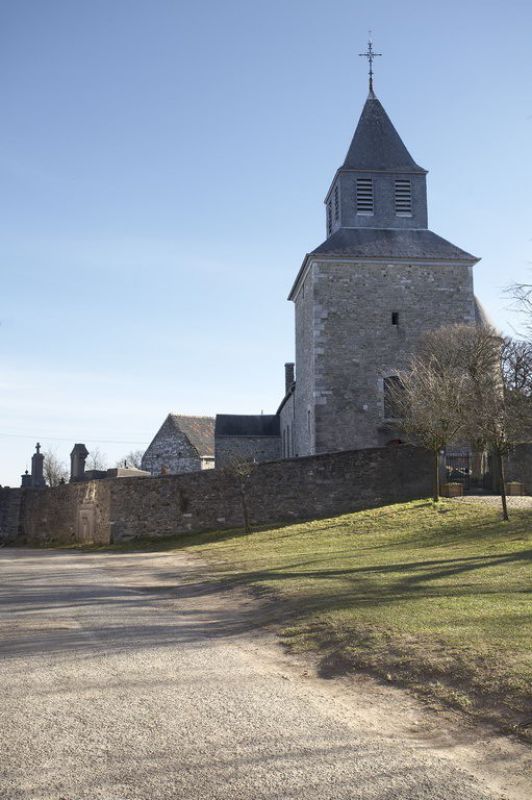
The oldest part of this beautiful church is Romanesque dating probably from the 11th century. It is a building with a single nave with the choir from 1684 to which a side chapel and a massive fortified tower, rebuilt in 1954, have been added.
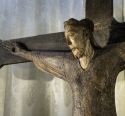
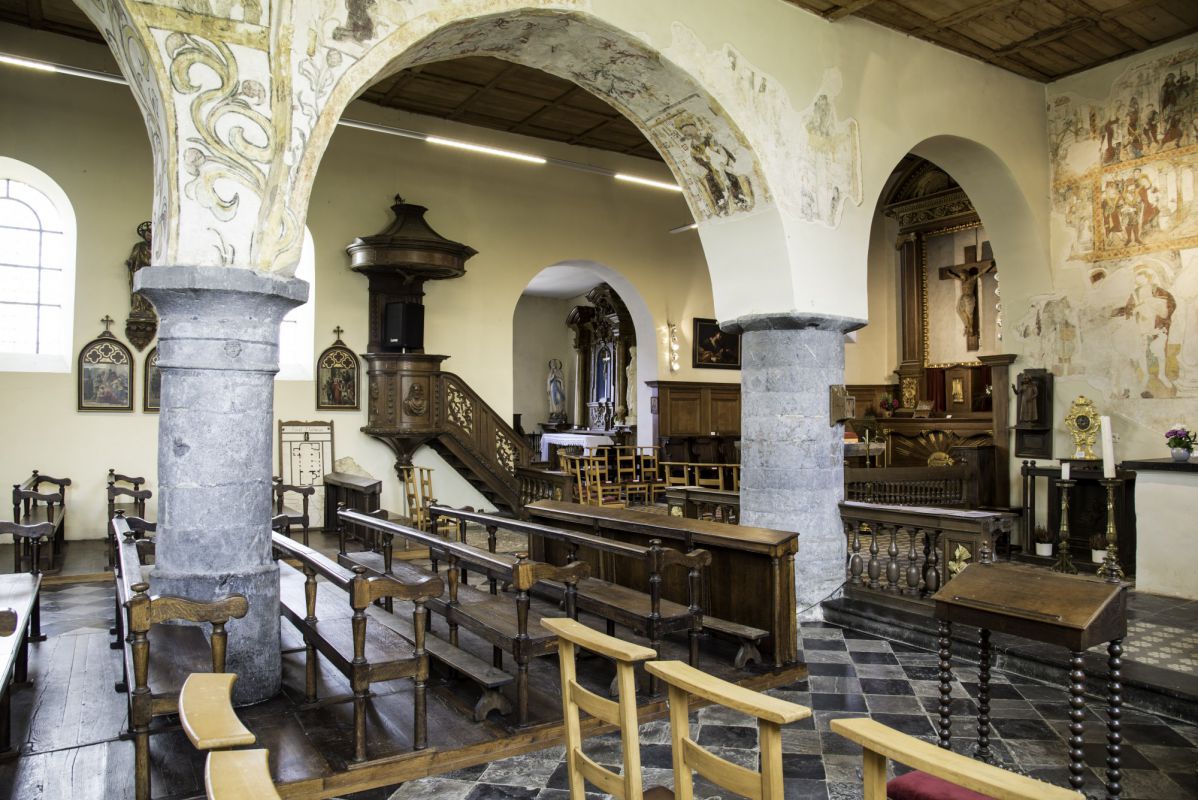
The interior has been renovated well and contains a 14th-century polychrome Christ and several murals depicting the martyrdom of Saint Barbe from 1540-1560.
At the rear of this small country church, showcases exhibit the prehistoric finds in the region.The village History Group had no place to show them but visitors can admire them due to the collaboration with Saint Catherine's church.

Photos





Remarkable elements
Wall paintings
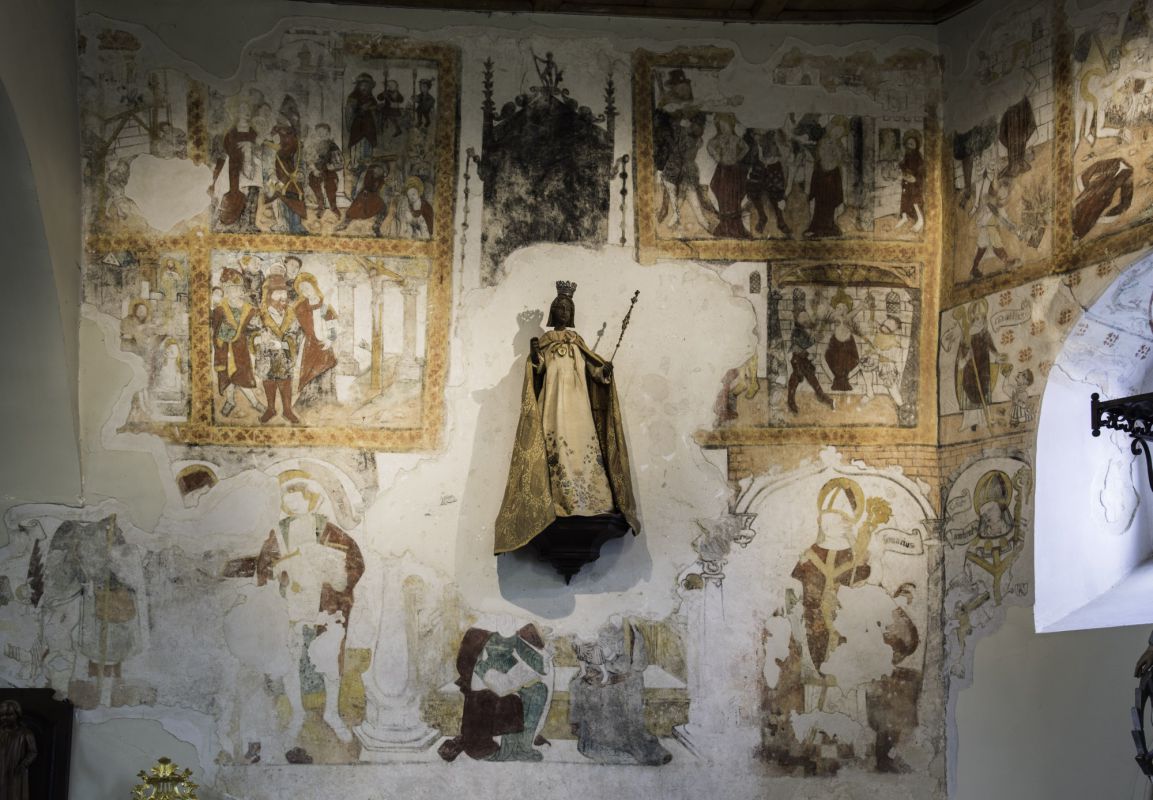
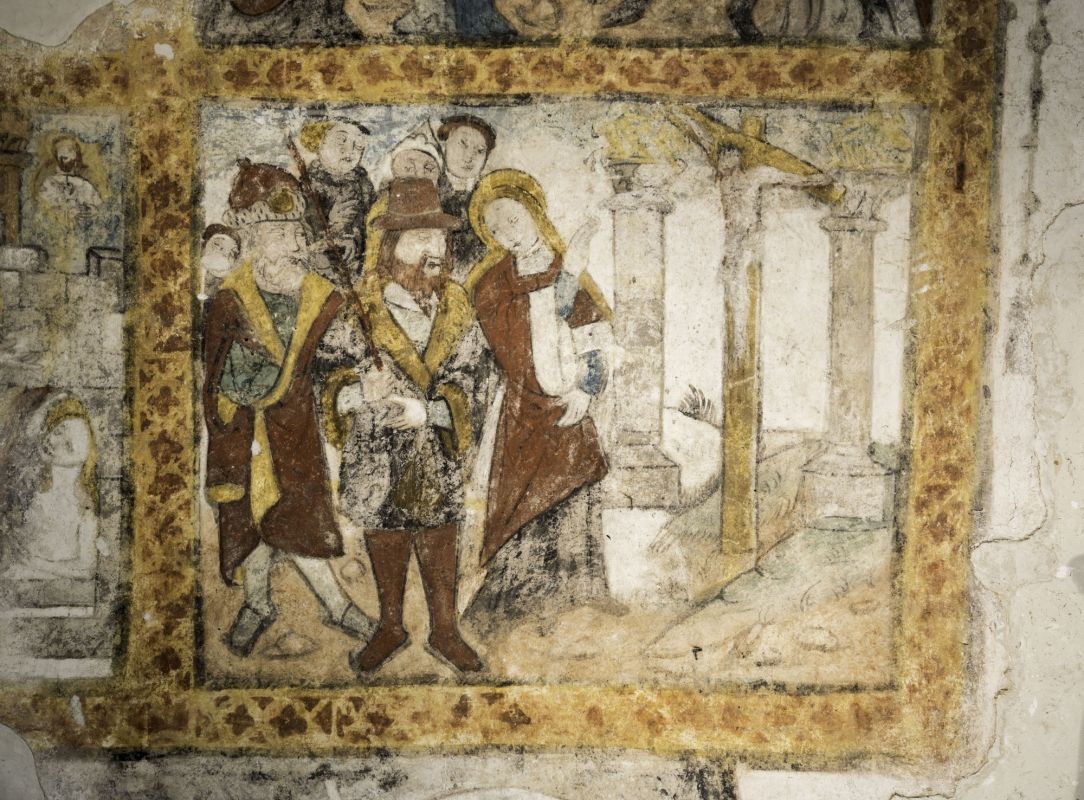
These 16th century mural paintings form a true early comic strip, mainly depicting Saint Barbara’s martyrdom. Similar works adorn the arches of the church’s three pillars. Anne Dudant dated them to 1540–1560, though those between the second and third columns seem by another, perhaps local, and possibly later artist. Their technique makes them both rare and extremely fragile.
Pillars
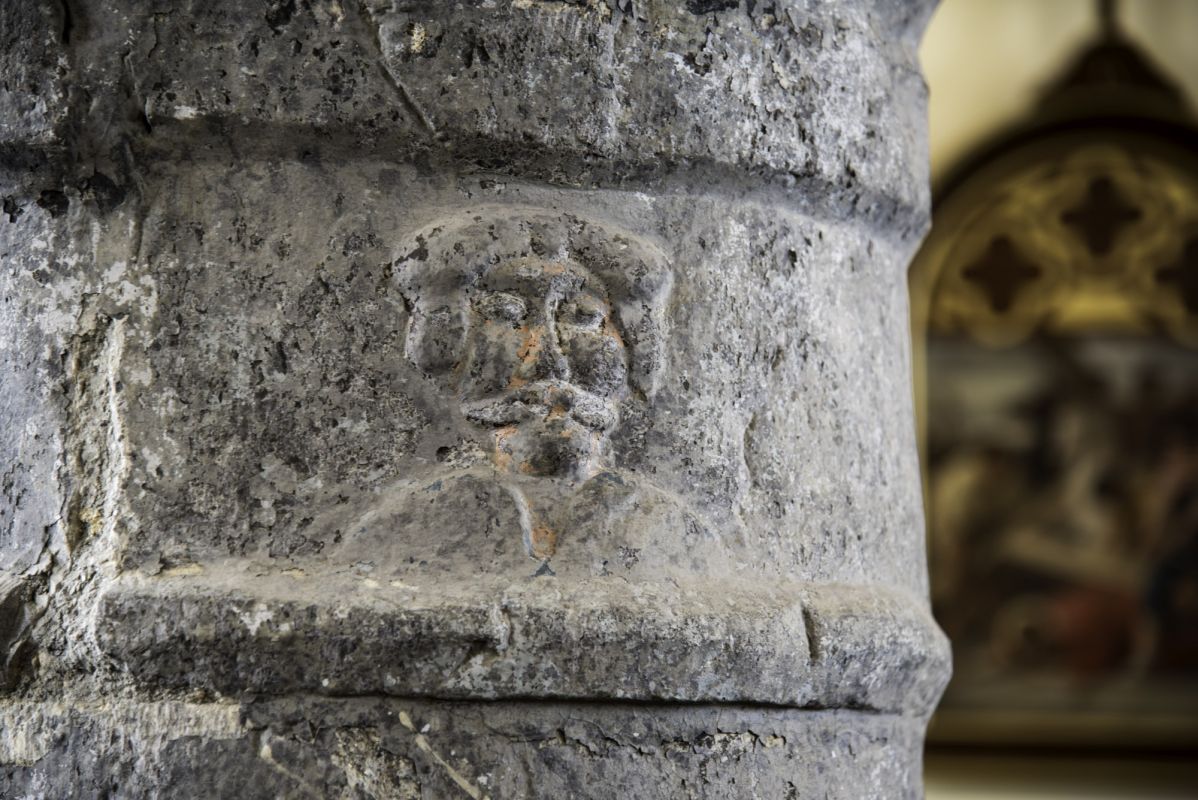
Two columns are surmounted by capitals with human figures, dated by IRPA in the 16th century. Oral tradition says they are older. Traces of polychrome paint. They alone would deserve a thorough study to date them with more certainty.
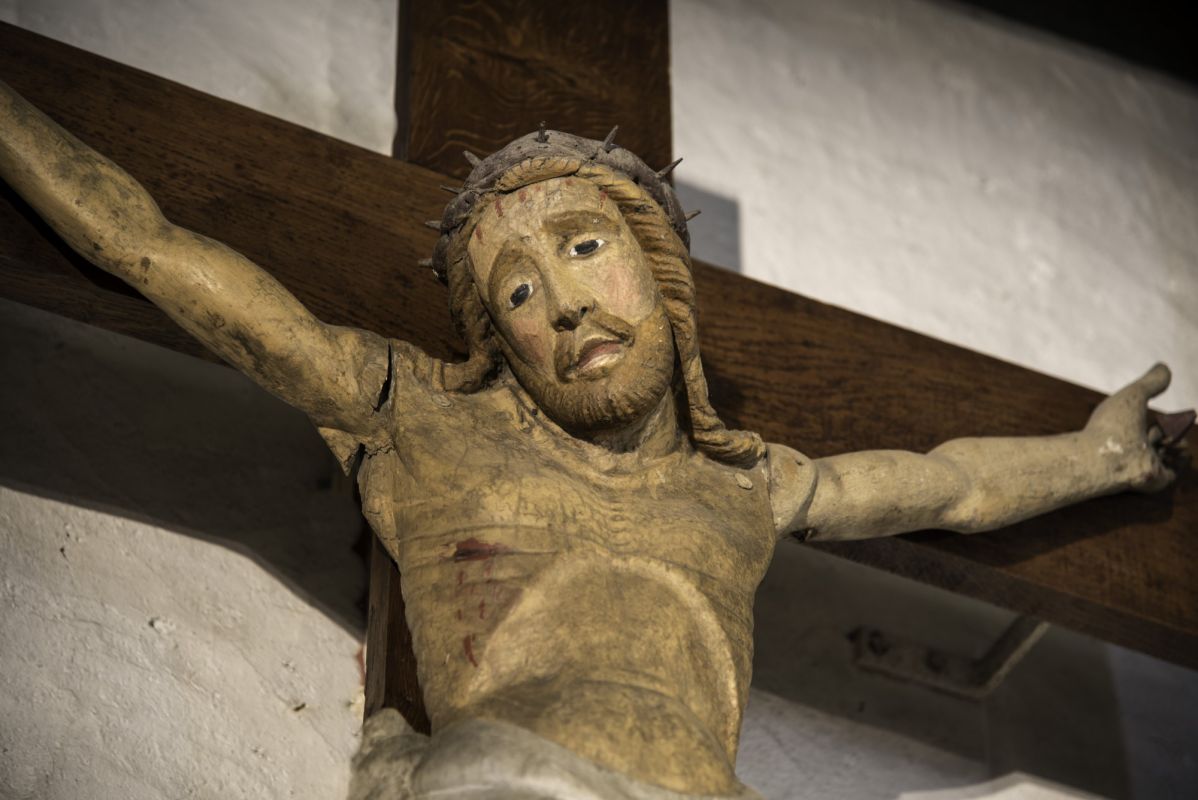
Polichrome Christ
Probably dating from the 14th century, this Christ was originally located at the front of the choir. It was placed in the main altar to replace a missing painting. The cross is recent.

Theotheque library
This arch shaped stone tabernacle, dated between 1594 and 1640, shows floral motifs and two angels. Once placed in the main altar, it was later secured and built into the tower beside tombstones with coats of arms. A tabernacle stores consecrated hosts and is usually part of the main altar or set in the choir. Though also found in nearby churches like Beaufays and Soiron, such a theoteek remains rare.
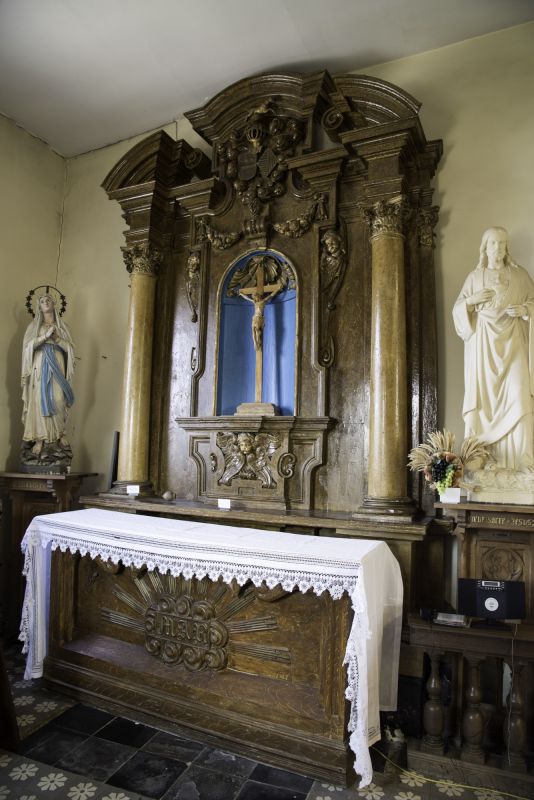
Altar Louis XIII
This altar, dated 1645, had hidden the wall paintings since the second half of the 17th century. It was moved to the left transept (formerly the sacristy) after the fortuitous discovery of the wall paintings in 1947. With its interrupted pediment and acanthus leaves, we have a fine example of religious furniture from the first half of the 17th century in our regions. Note the presence of a coat of arms with a helmet (cavalry helmet emblematic of chivalry).
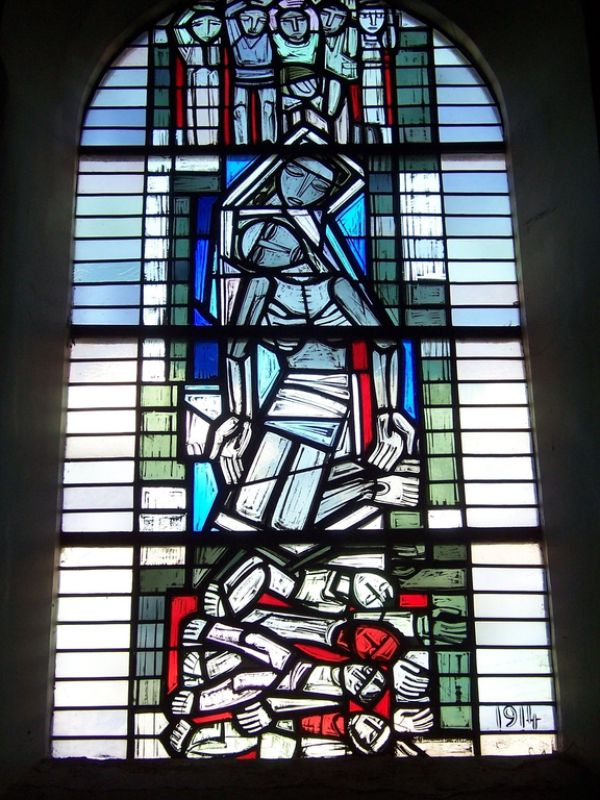
Stained-glass windows
The two stained-glass windows decorating the choir of the church were made by the artist-glazier Louis Jacvquemart (1916-1972). They are intended to preserve the memory of the two series of martyrs of Forêt: those of 5 and 6 August 1914, when 15 fellow villagers were slaughtered by the invaders, and those of 6 September 1944, when 60 members of the resistance were shot by the Germans in the courtyard of the castle of Forêt.