
Saint Martin
Rue Gossec
6440 Vergnies (Froidchapelle)
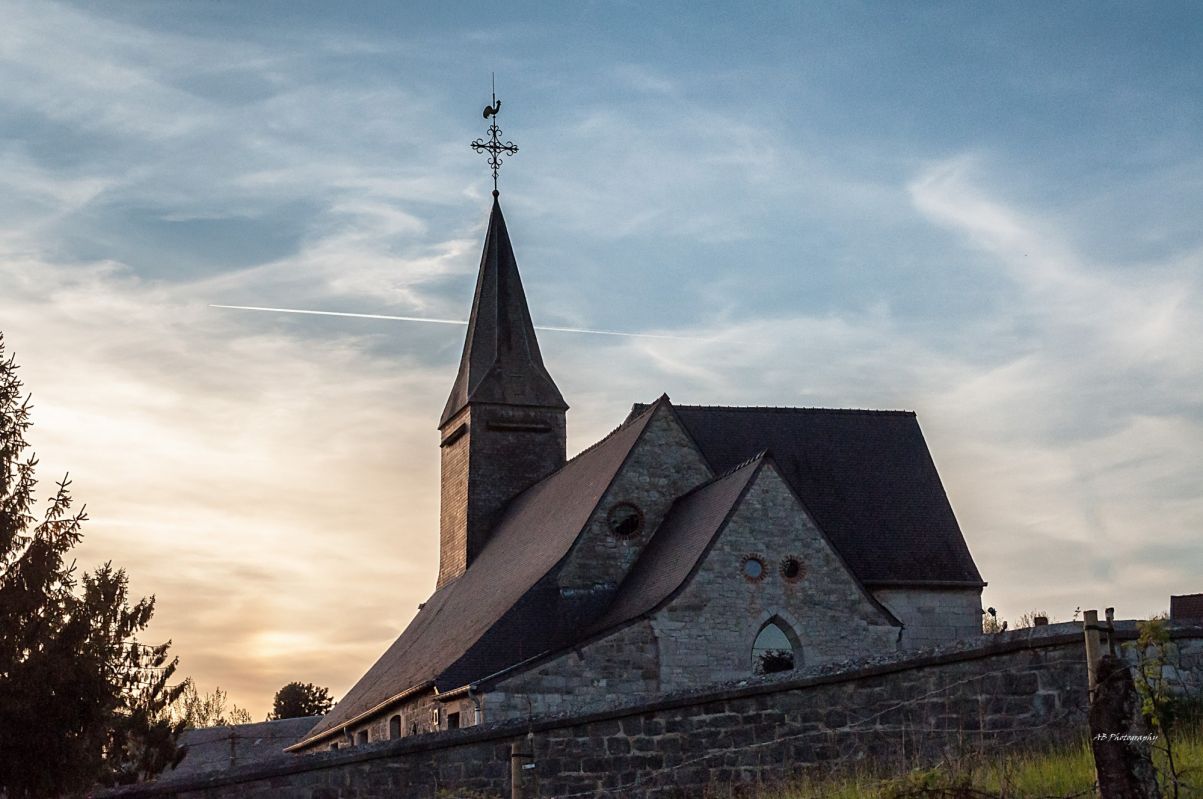
Church | 1202 | Romanesque, Gothic | Catholic Church


Map
Opening hours
01 March - 31 October
Mon -
Tue -
Wed 14.00 - 17.00
Thu -
Fri 14.00 - 17.00
Sat 10.00 - 16.00
Sun 10.00 - 16.00
01 November - 28 February
Mon -
Tue -
Wed -
Thu -
Fri -
Sat 10.00 - 16.00
Sun 10.00 - 16.00
Guided tour
Religious offices
Description
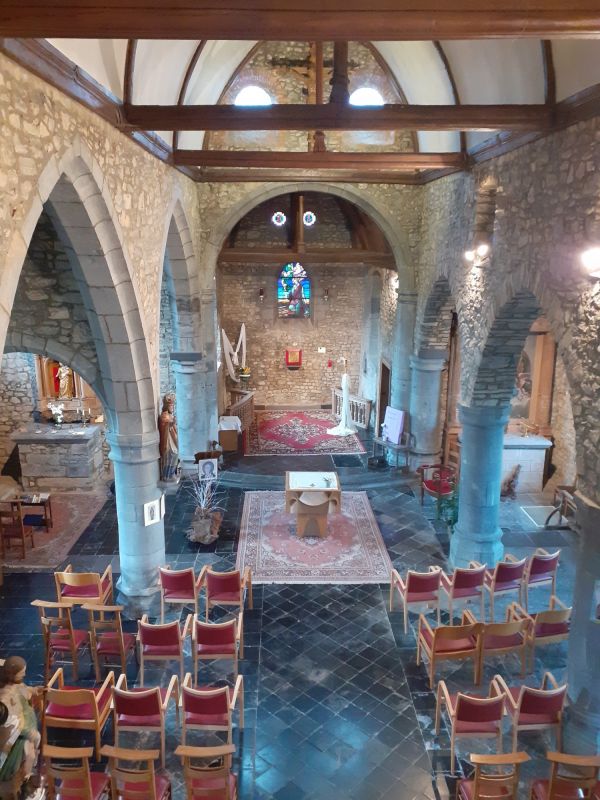
Note the font and the baptismal font in blue stone, the Way of the Cross in engravings from the 19th century, the wooden Christ carved above the altar, a painting of the crowning of the Virgin, the statues of Saints Martin, Eligius and Roch, a confessional and an altarpiece of the Virgin (Louis XV), numerous tombstones, stained glass windows from the 20th century.
KIKIRPA : Photo-library online

Photos
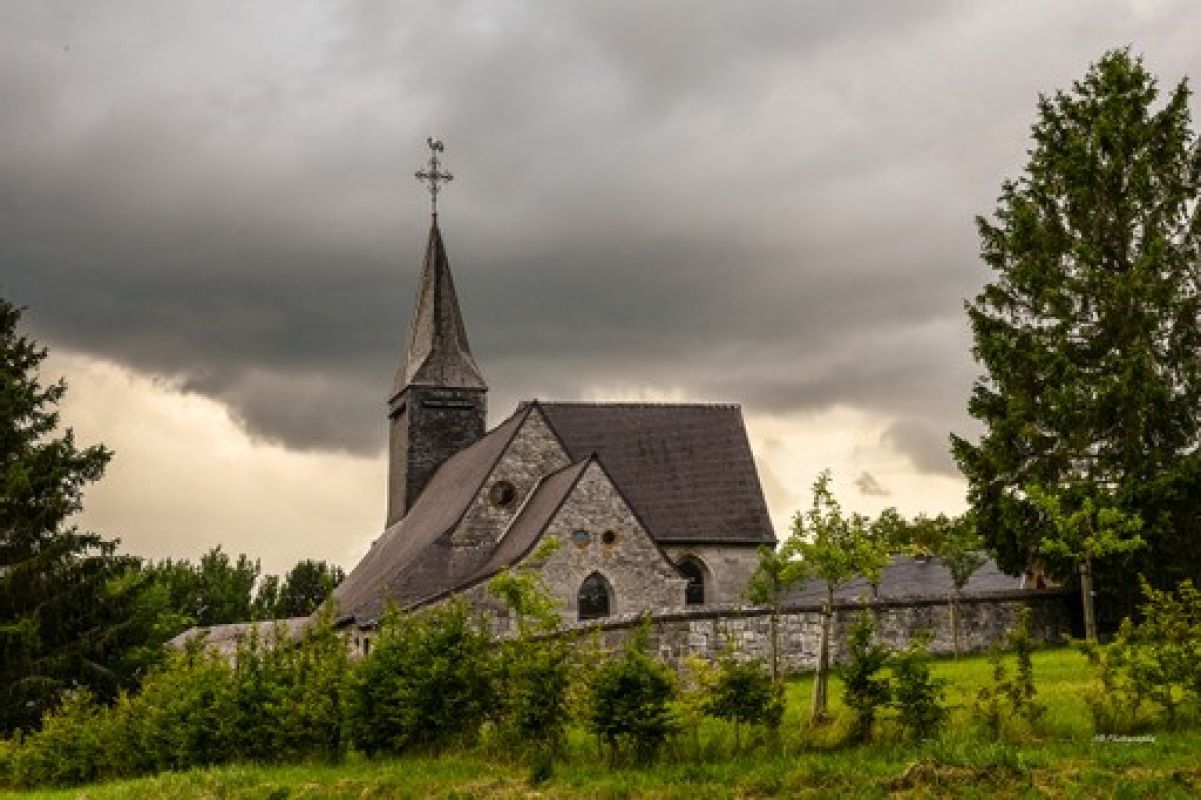
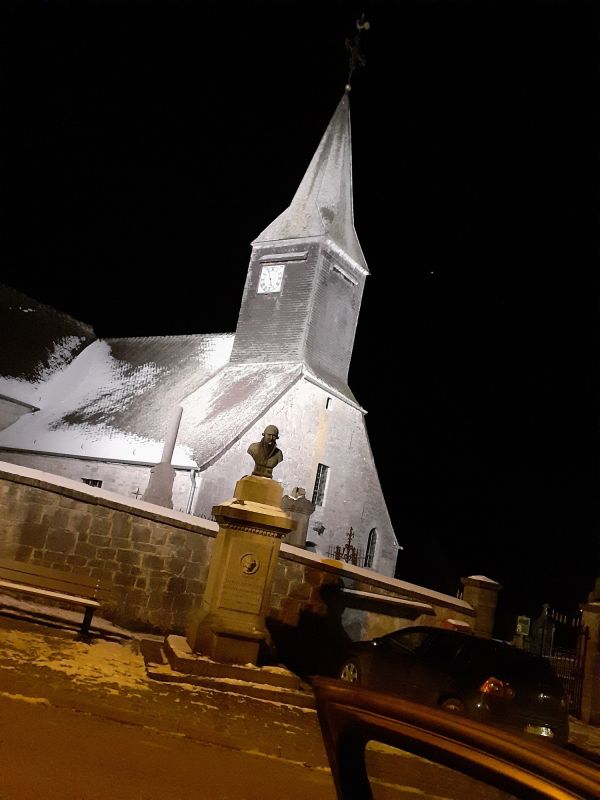
Remarkable elements
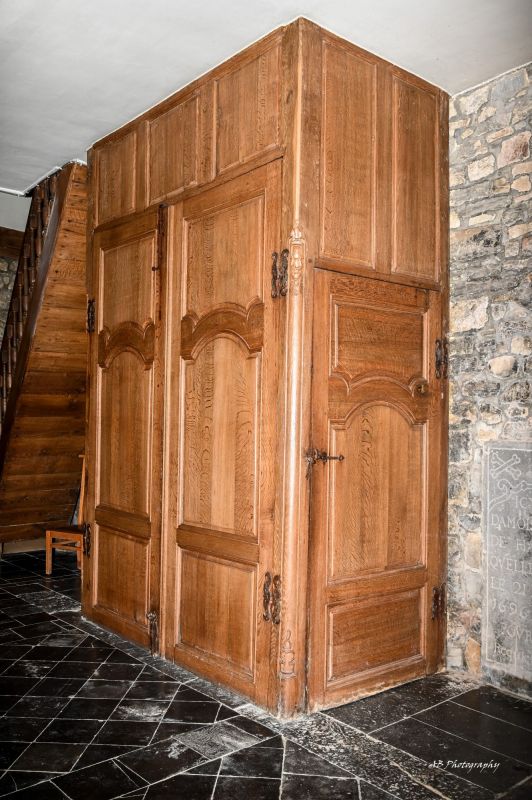
Entrance drum
A very sober four-leaf drum, with one leaf on each side and two juxtaposed at the center, in a style reminiscent of Louis XV, marked by asymmetry and a “gendarme's hat” motif, but without rocaille decoration. Each door has three superimposed asymmetrical curved panels. The rear doors match the central double door. The rounded, molded corner jambs feature slight decoration at the feet and heads of the side doors.
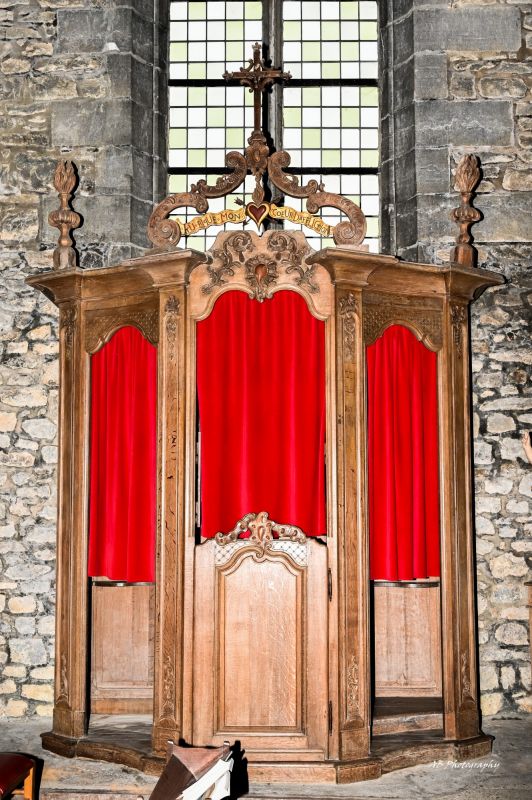
Confessional and chronogram 1768
Made of oak, in the Louis XV style, known as the rocaille style (C curves, gadroons, flowers, fruits, shells, foliage). The reading of the bichrome chronogram allows to date the piece of furniture in 1768.
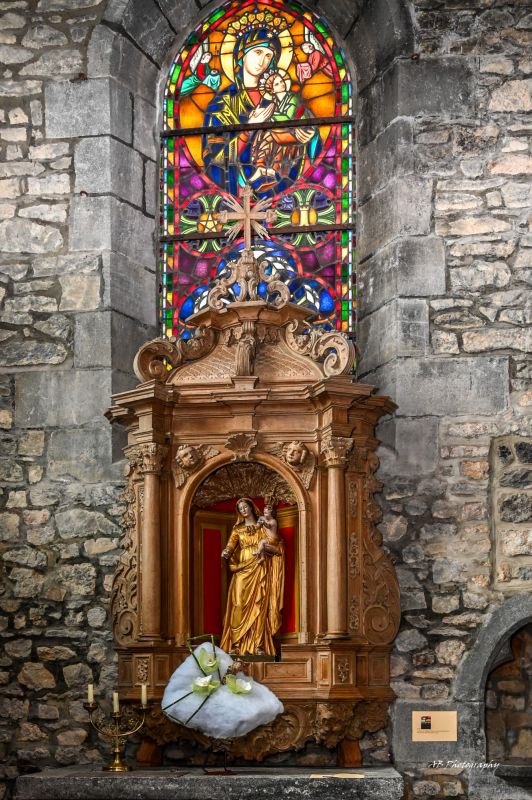
Altarpiece of the Holy Virgin
Altarpiece of the Virgin : oak niche altarpiece in the Louis XV style (rocaille style: curves, shells, palmettes and acanthus leaves). First half of the 18th century.
Statue of the Virgin : decorating the niche, this statue has replaced the original, which has disappeared. It represents the Virgin and Child. It is made of gilded polychrome wood and should have been sculpted between 1791 and 1810.

Christ on the cross and stained glass window
Christ on the cross: gothic carved wood, height: 150 cm
1501-1600: the cross
1791-1810: the Christ
Stained glass window: made between 1922 and 1948, after a drawing by Louis Buisseret, a famous Hainaut painter.

Altarpiece of St Nicolas
Carved oak altarpiece dated 1623, in French Renaissance style. Two fluted, ringed columns with Corinthian capitals support an entablature topped by a niche framed by caryatids. From 1627 to 1630, Jean Blampain served as rector, funded by the Rond family, castle owners who were buried there. The altarpiece was later moved to the main church after the side chapels were demolished in the 19th century.

Carved blocks and mouldings along the north side
In carved wood, representing the apostles and several saints. 22 figures, three of which have disappeared. This collection (1550-1600) is rare if not unique.
Moulding: a perpendicular piece of wood, twinned and used to maintain several other pieces of a frame assembly.
Carved block: term used in carpentry to describe a piece of wood positioned horizontally and forming a strut with the foot of a crossbeam.