Saint Martin
Place Paul de Saint-Just
62610 Autingues
Church | 1742 | | Catholic Church


Map
Opening hours
01 January - 31 December
Mon 15.30 - 17.00
Tue
Wed 10.30 - 12.30
Thu
Fri 15.30 - 17.00
Sat
Sun
except the 4th Sunday of July
Guided tour
Religious offices
first Saturday of the month
Description
On the outskirts of the Caps et Marais d’Opale Regional Nature Park, between the port of Calais and the Monts de Flandres, the commune of Autingues lies on the Via Francigena, a pilgrimage route linking Canterbury to Rome. It is this area, near Guines – then an English town – and Ardres, a French town, which has remained famous for having been the setting of the famous ‘Camp of the Golden Cloth’ meeting between Francis I and Henry VIII of England in 1520.
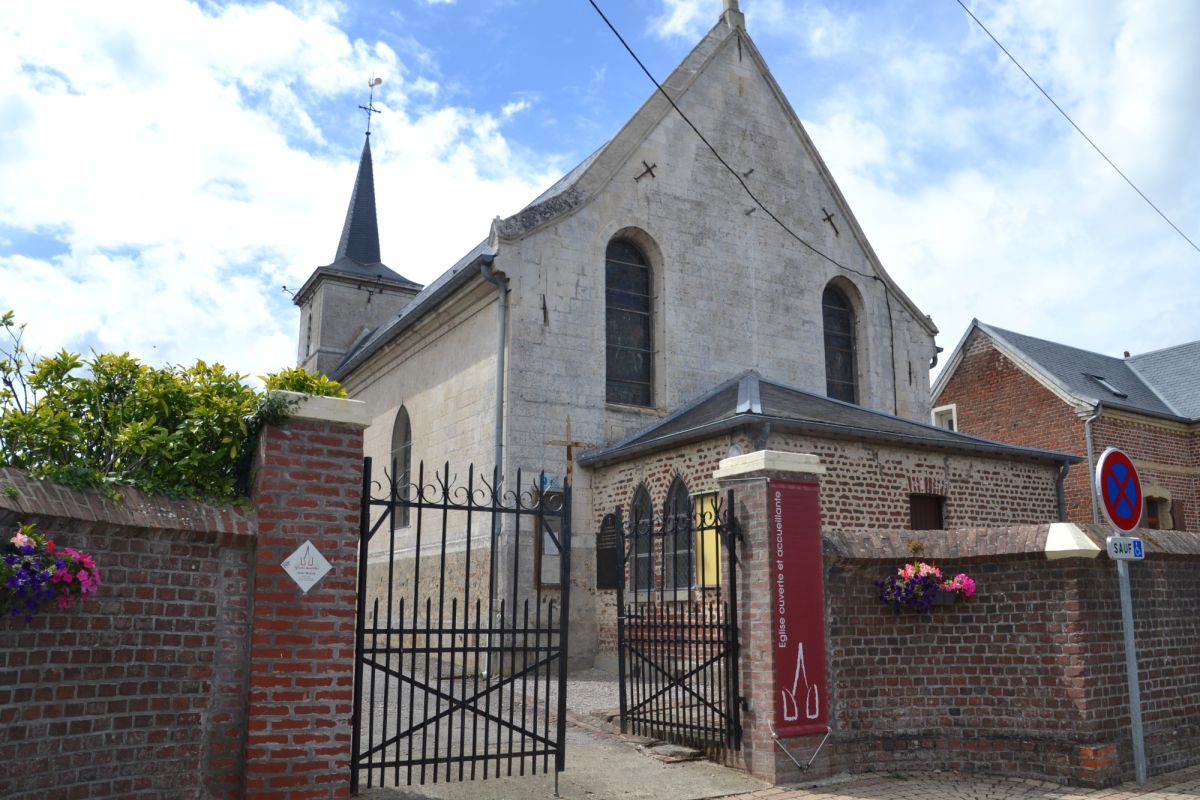
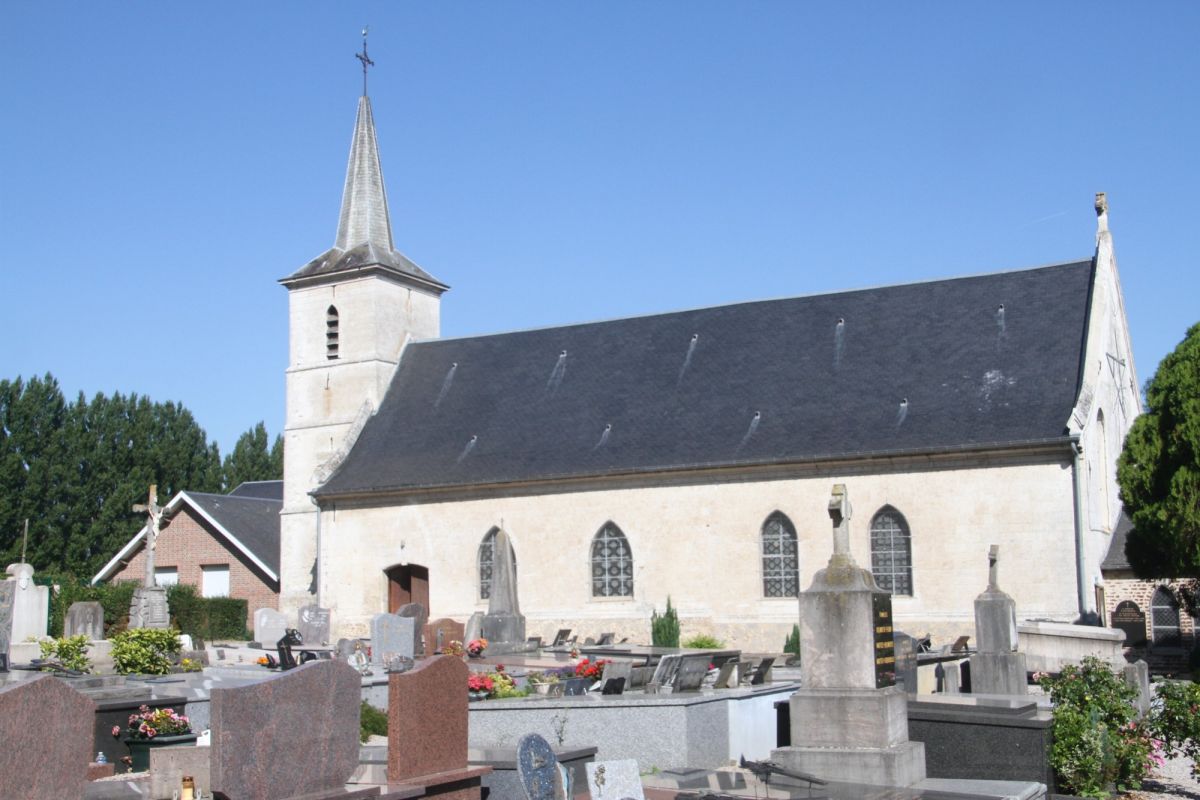
The church in Autingues is dedicated to two patron saints: Saint Martin, the original patron, to whom Saint Louis was added in the 17th century following the closure of the neighbouring leper colony, whose chapel had been dedicated to the holy king. The present building, constructed from local limestone rubble, dates from the mid-18th century, as evidenced by the date 1742 clearly visible on the bell tower.
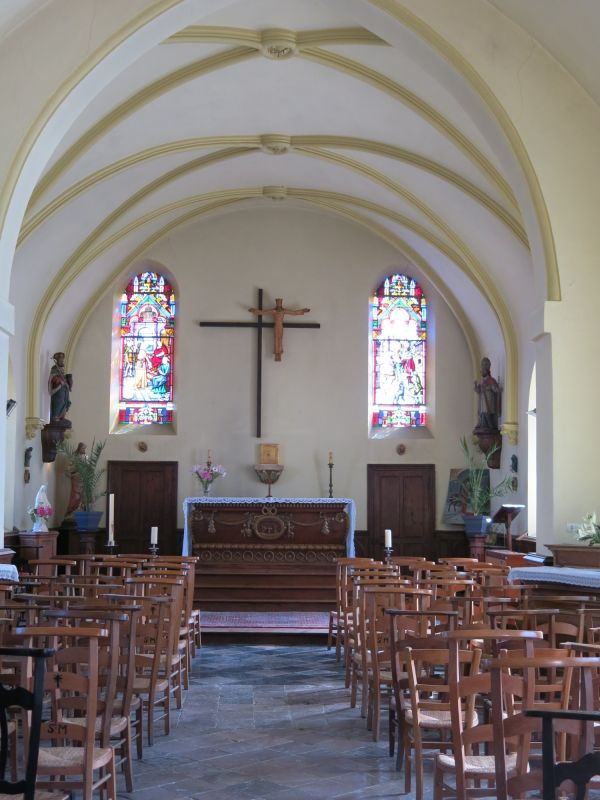
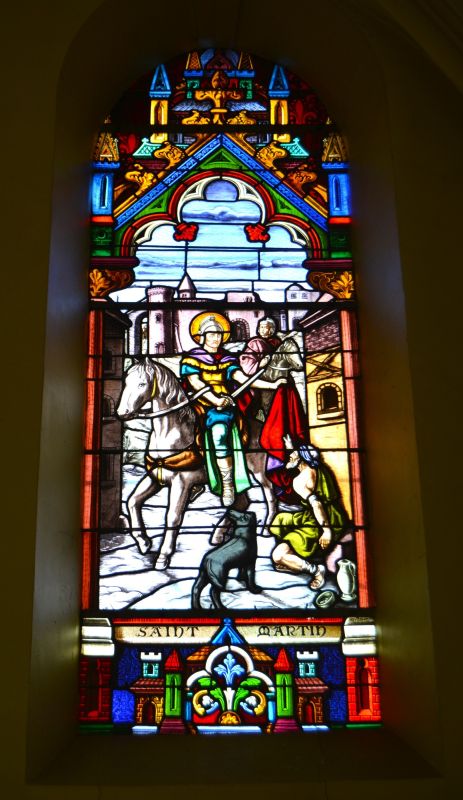
Inside, the chancel features a fine high altar and late 19th-century stained-glass windows depicting Saint Eulalia and Saint Martin. Visitors can also admire two elm wood statues (Saint Martin and Saint Louis in his coronation robes) and terracotta works from the studio of contemporary artist Nicole Hemard (the Risen Christ and the Stations of the Cross).
Translated with www.DeepL.com/Translator (free version)

Photos
Remarkable elements
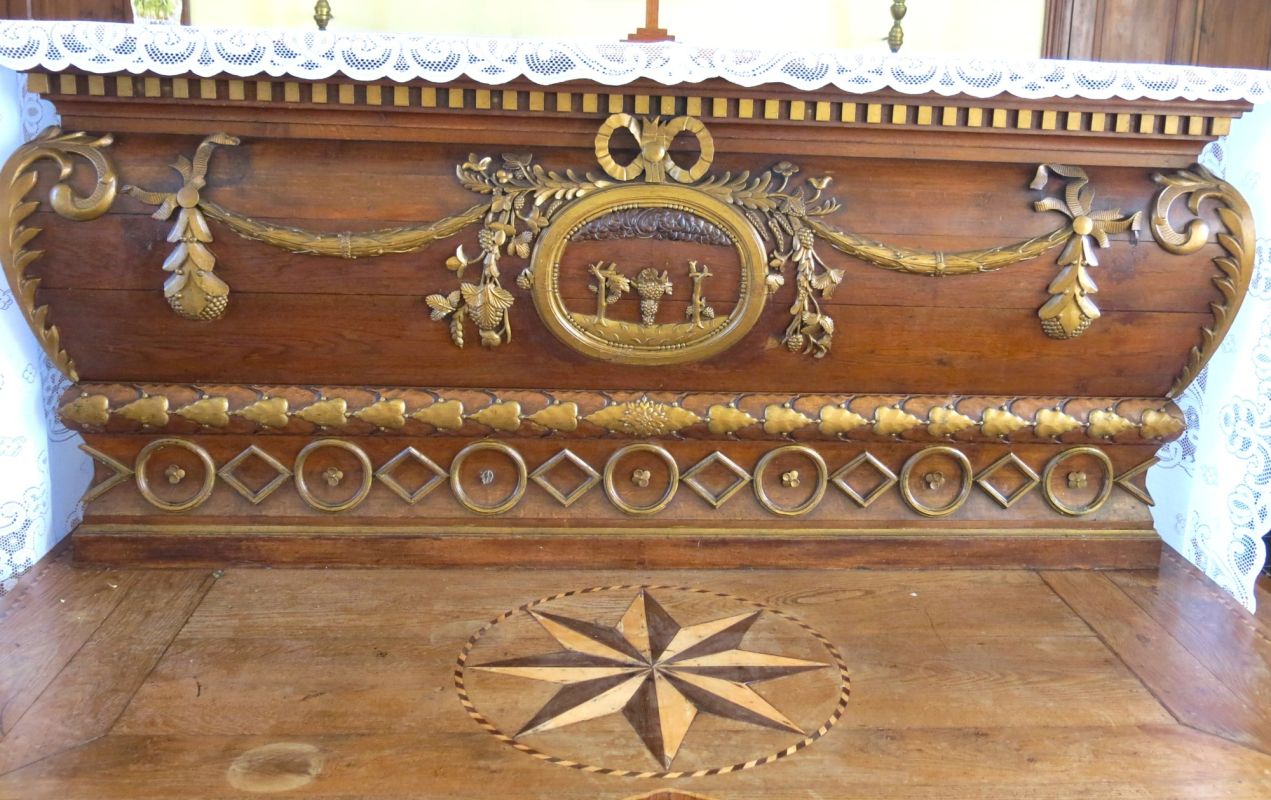
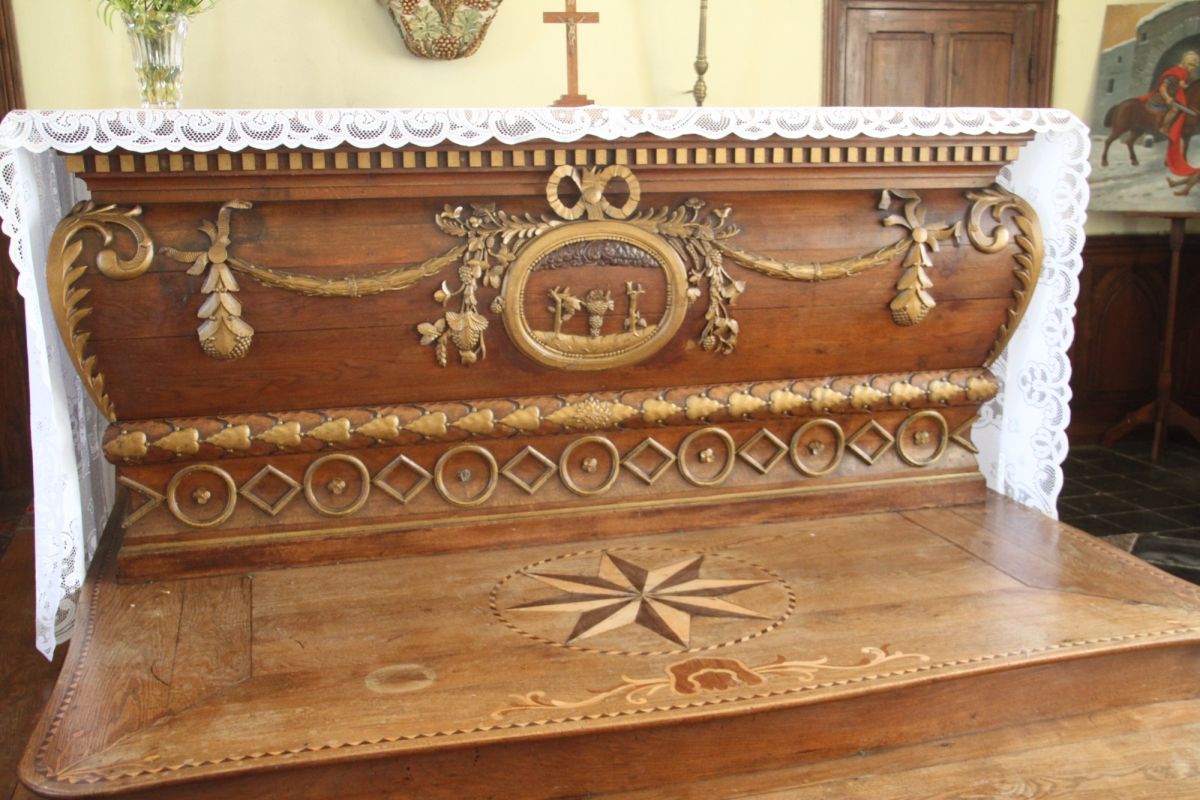
Furnishings (Listed building – 1974)
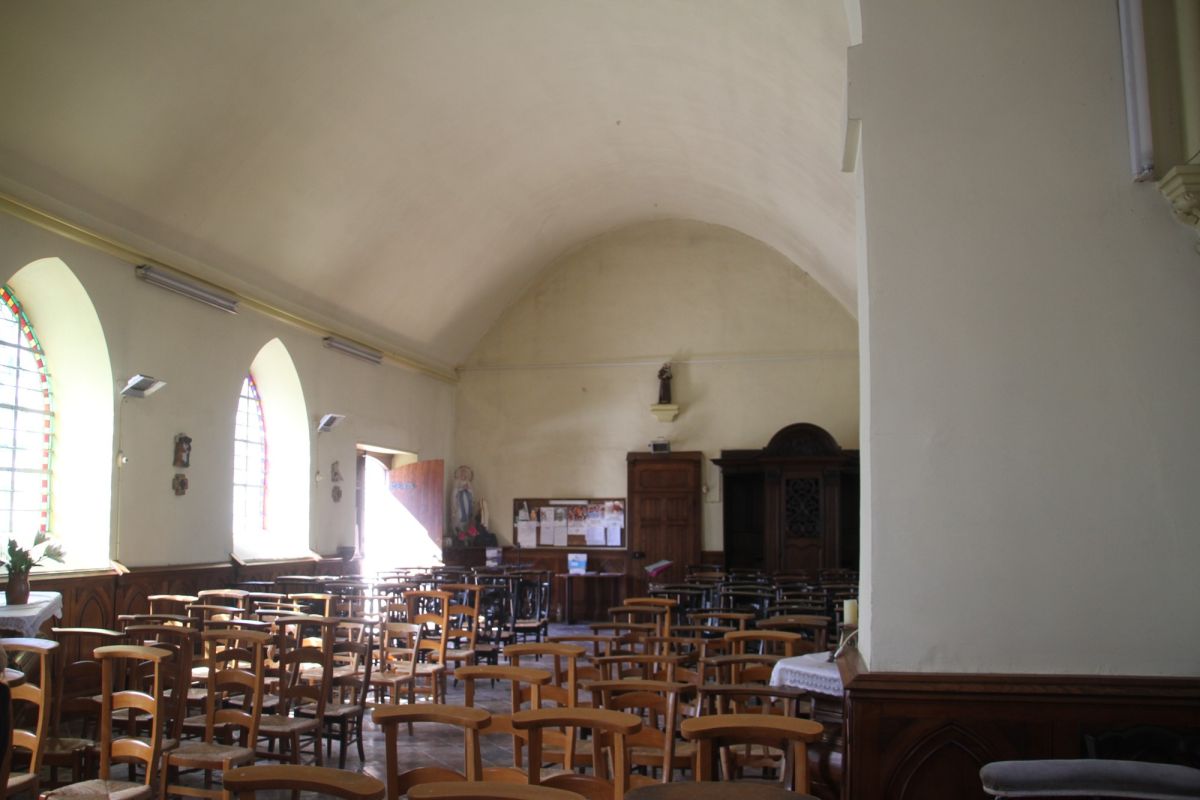
The church’s furnishings consist of a 19th-century high altar, 18th-century side altars and a confessional.
Whilst the side altars are of simple design, the confessional features a carved medallion depicting Saint John the Baptist holding a cross. As for the high altar, a medallion at the centre of the altar table depicts the cluster of Canaan (or cluster of the Promised Land), accompanied by a decoration of vines, ears of wheat and foliage.
Translated with www.DeepL.com/Translator (free version)
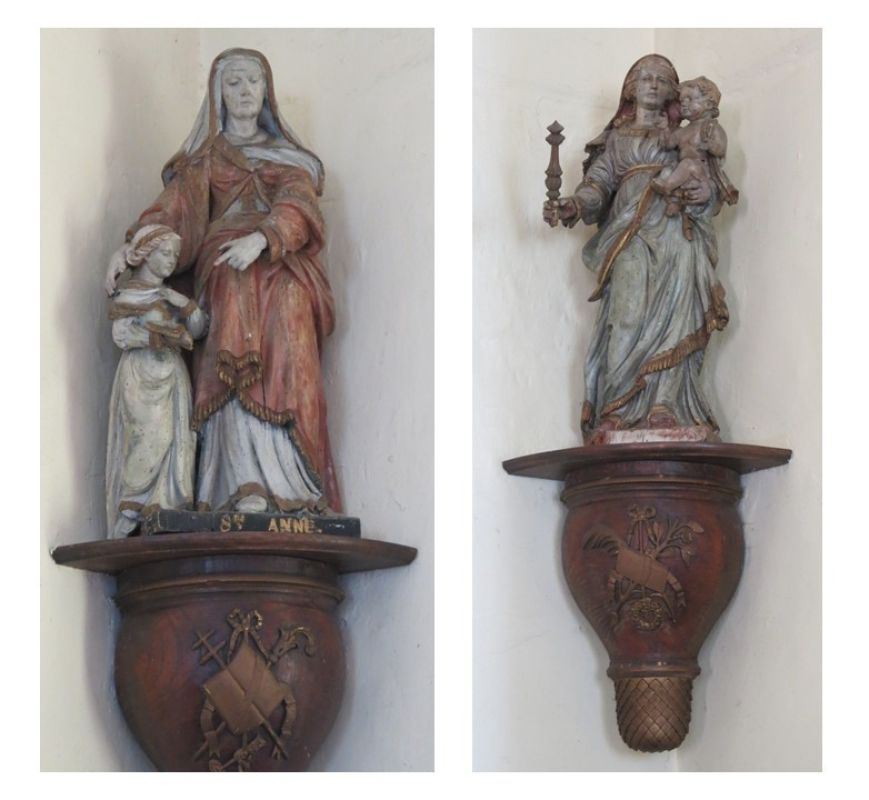
Statues of Saint Anne and the Virgin and Child (Listed building – 1974)
Carved and painted in 18th-century wood, one of these statues depicts Saint Anne teaching the Virgin to read, whilst the other shows the Virgin holding the Child in her left arm and a sceptre in her right hand.
Translated with www.DeepL.com/Translator (free version)
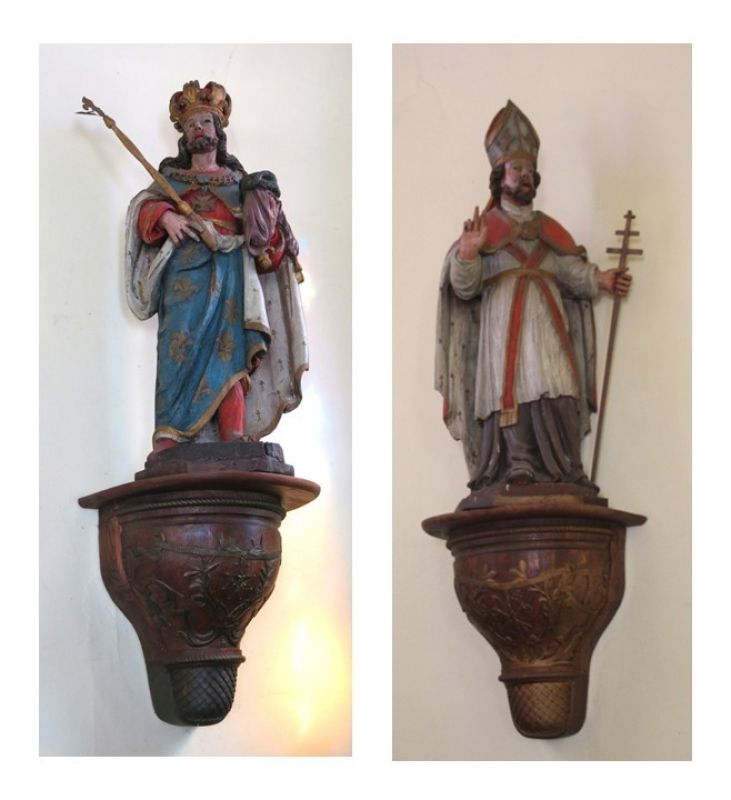
Statues of Saint Louis and Saint Martin (Listed as a historic monument – 1974)
Carved from 18th-century wood and painted in polychrome, one of these statues depicts the crowned Saint Louis holding a sceptre and wearing a coat of arms featuring the fleur-de-lis, whilst the other is thought to represent Saint Martin. The latter does not depict the saint on horseback cutting his cloak, but rather the bishop giving a blessing, wearing a mitre and carrying the papal cross.
Translated with www.DeepL.com/Translator (free version)
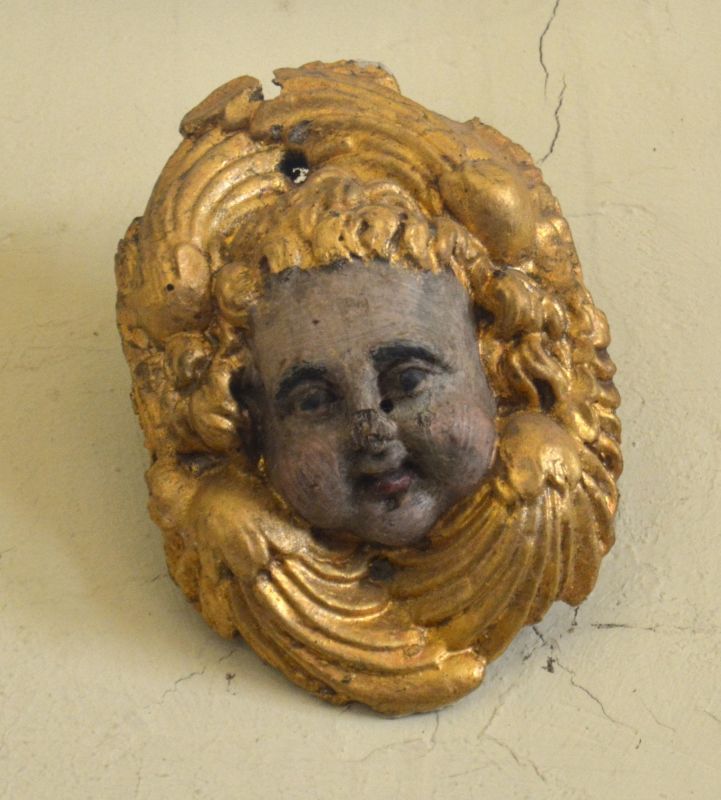
Cherub heads
These two rather chubby cherub heads are thought to come from a dismantled piece of furniture, probably linked to the Dubuisson-Gallois bell-foundry, which was in operation during the second half of the 19th century.
Translated with www.DeepL.com/Translator (free version)
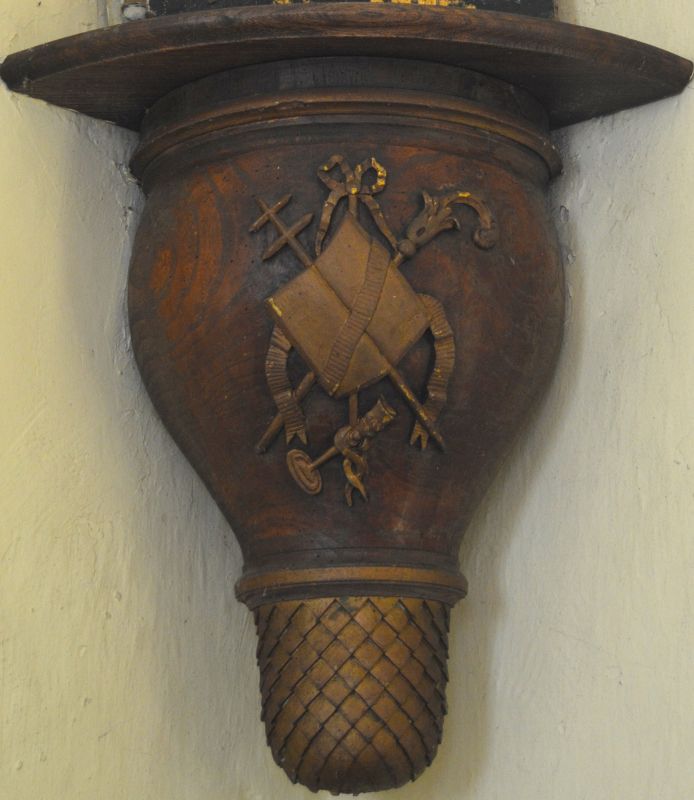
Statue pedestals (Listed as a historic monument – 1974)
Carved from wood, they serve as bespoke bases for four statues: a mitre and crozier for Saint Martin, a star-adorned medal for Saint Louis, a book and a gilded pine cone for Saint Anne, and a wreath of flowers and a branch for the Virgin Mary.
Translated with www.DeepL.com/Translator (free version)
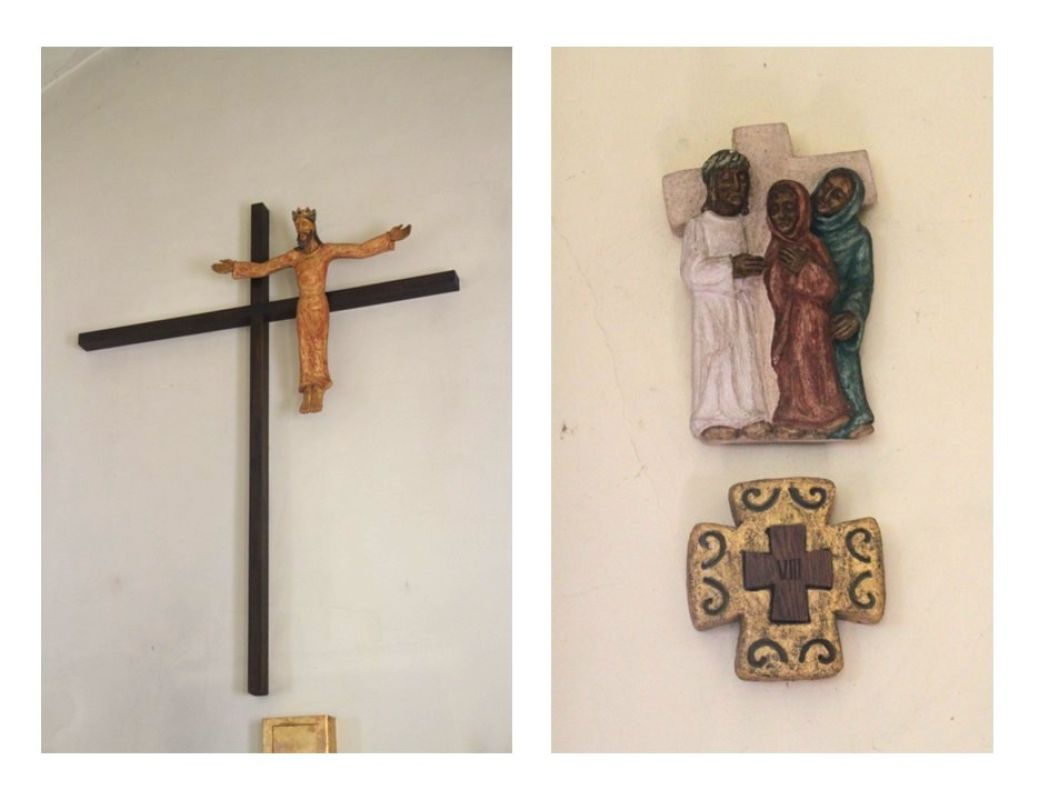
Works by Nicole Hemard
In the 1970s, the church acquired a terracotta work by the artist Nicole Hemard (1936–2018): the Risen Christ, installed in the chancel and accompanied by a Way of the Cross consisting simply of a cross and a number. At the same time, Nicole H. created the Stations of the Cross in clay and wood for the church at Pont d’Ardres. The building was subsequently deconsecrated, and the church at Autingues took in the 14 stations of this series, which blend perfectly with the numbered crosses.