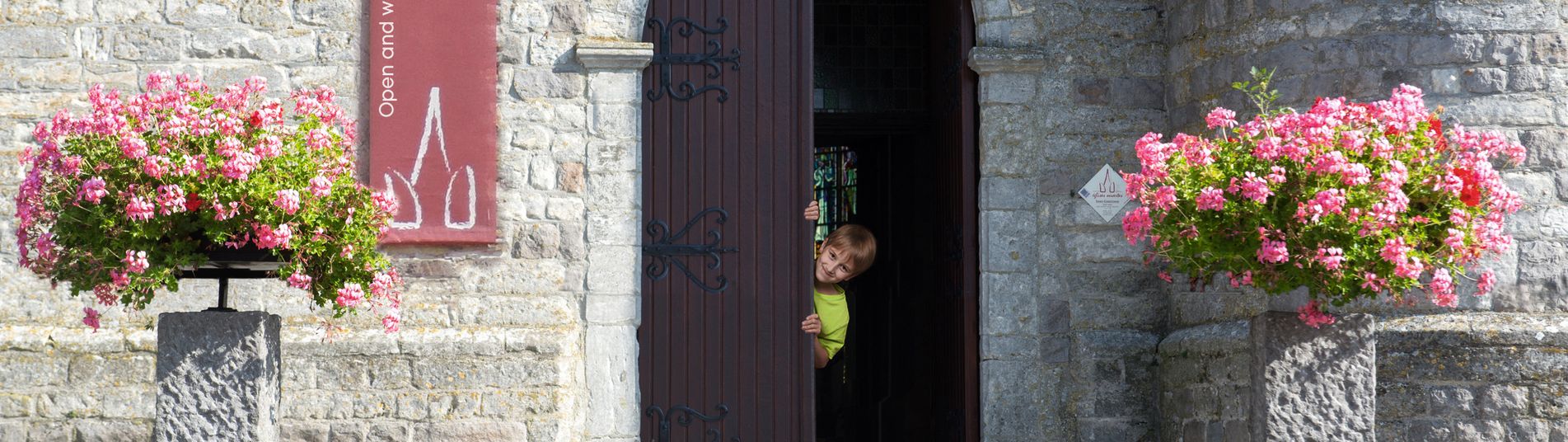
Saint Amandus
Bloemendalestraat 1
8730 Sint-Amandus (Beernem)
Church | 1644 | Gothic | Catholic Church


Map
Opening hours
01 November - 31 March
Mon 9.00 - 17.00
Tue 9.00 - 17.00
Wed 9.00 - 17.00
Thu 9.00 - 17.00
Fri 9.00 - 17.00
Sat 9.00 - 17.00
Sun 9.00 - 17.00
01 April - 31 October
Mon 9.00 - 18.00
Tue 9.00 - 18.00
Wed 9.00 - 18.00
Thu 9.00 - 18.00
Fri 9.00 - 18.00
Sat 9.00 - 18.00
Sun 9.00 - 18.00
Religious offices
Description
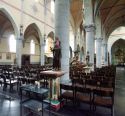
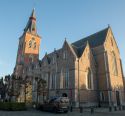
The result is a brick structure beneath a tent roof, with a baptismal and funeral chapel. The tower has four clocks, two louvered windows, and is supported at each corner by tapering buttresses. In the nave, the bluestone pillars and the wooden pointed barrel vault are prominent features. The neo-Gothic altars, pews, and the choir stalls date from 1901. Two confessionals are from 1784, while the other two are replicas. The church is home to a Van Peteghem organ from 1852.
On the first and fifth Sundays of each month, Mass is celebrated at 11 am in the church, and every Wednesday and Friday, a weekly service is held at 9 am in the sacristy. Choir practices, school Masses, and catechesis are held in Beernem. The church is open for concerts and exhibitions; the meeting room for church-related gatherings. Heritage groups often visit the church together with the cemetery that features 19th-century funerary monuments in neo-Gothic and neoclassical styles. The church is accompanied by a rectory within an enclosure, accessible via a bridge.
Photos

Remarkable elements
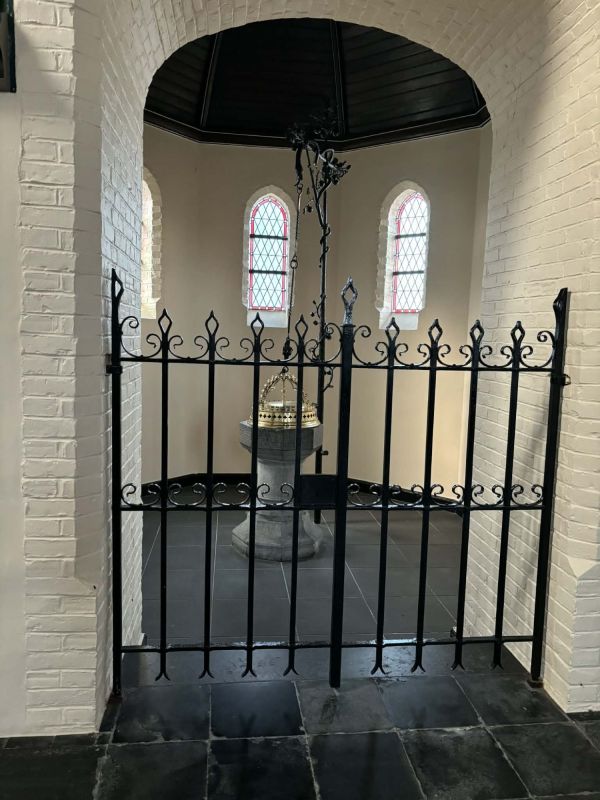
Baptismal chapel
Baptismal chapel designed by R. Schelstraete, built against the church’s north wall by pastor Louwyck. The central limestone baptismal font, octagonal in shape, was a gift from Israël Jansens, Englishman and commander of the Zuidleie canal diggers. Gothic lettering recalls his wife and children (1619). Only the tub is original; the base was renewed in 1900‑1902 and a neo‑Gothic lid tops it.

Winged altar
Our Lady of Perpetual Help : Neo-Gothic winged altar in honor of Our Lady of Perpetual Help with a panel on each side with images of angels. Originally, there were two three-armed small brass candlesticks attached to the woodwork.
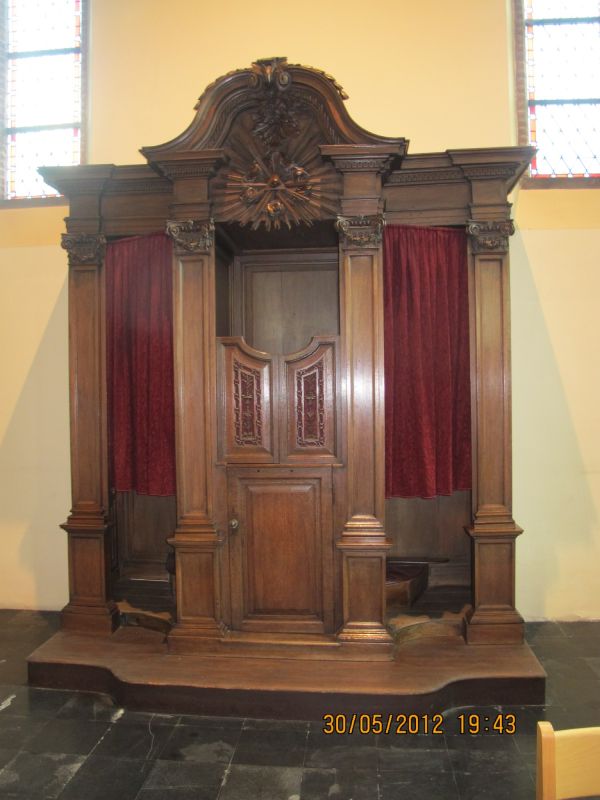
Confessionals
These confessionals are said to be a replica of the two older confessionals from 1784 that are located in the transepts. The precise information about their exact date, their commissioner, or creator remain unknown to date.
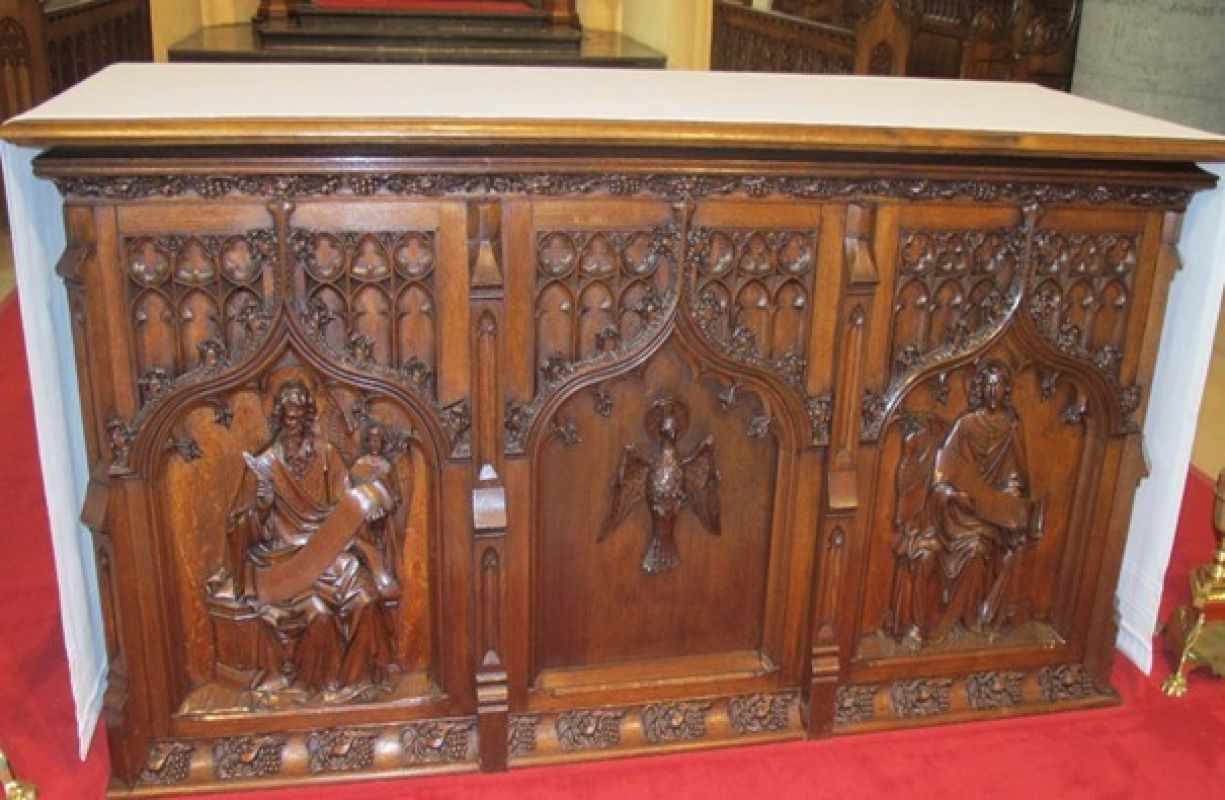
Working altar
Made from the panels that once formed the base of the original neo-Gothic pulpit. The pulpit is said to also have been a design by baron Emmanuel de Béthune and was created in 1901 to replace the old pulpit by J.B. Gillis from 1792. The panels of the working altar depict the four evangelists with their respective attributes.

High altar
High altar donated by pastor Clarebout in 1901 and designed by baron de Béthune. The neo‑Gothic polychrome altar has a blue limestone top resting on four columns with bas‑reliefs of a candlestick, a reliquary, and showbread. A gilded tabernacle stands below a Calvary group. Two angels flank it, and the open section shows the Feeding of the Multitude and the Last Supper.
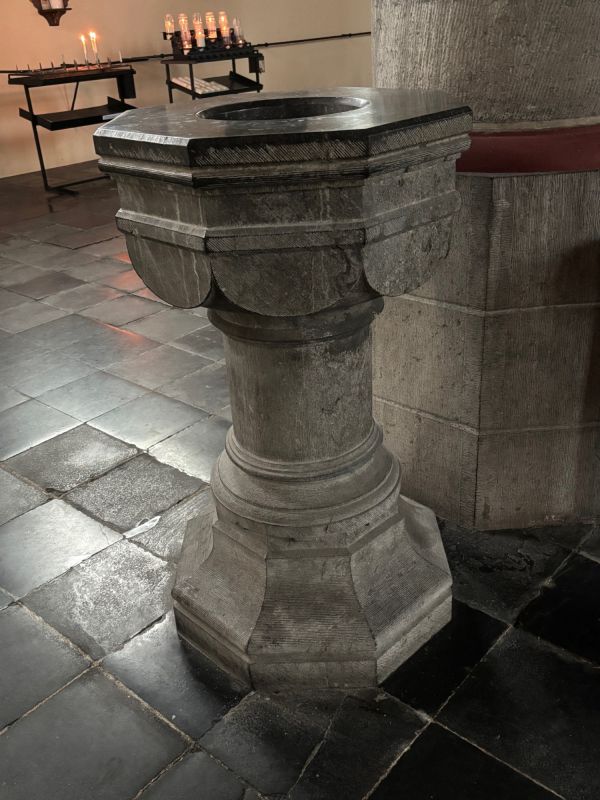
Holy water font
Holy water font in blue limestone, made in connection with the church’s reconstruction campaign in 1902.