
Our Lady
Foucher Aubert
61150 Écouché-les-Vallées
Church | XII & XIV-XVI | Gothic, Renaissance | Catholic Church


Map
Opening hours
01 January - 31 December
Mon 9.00 - 18.00
Tue 9.00 - 18.00
Wed 9.00 - 18.00
Thu 9.00 - 18.00
Fri 9.00 - 18.00
Sat 9.00 - 18.00
Sun 9.00 - 18.00
Description
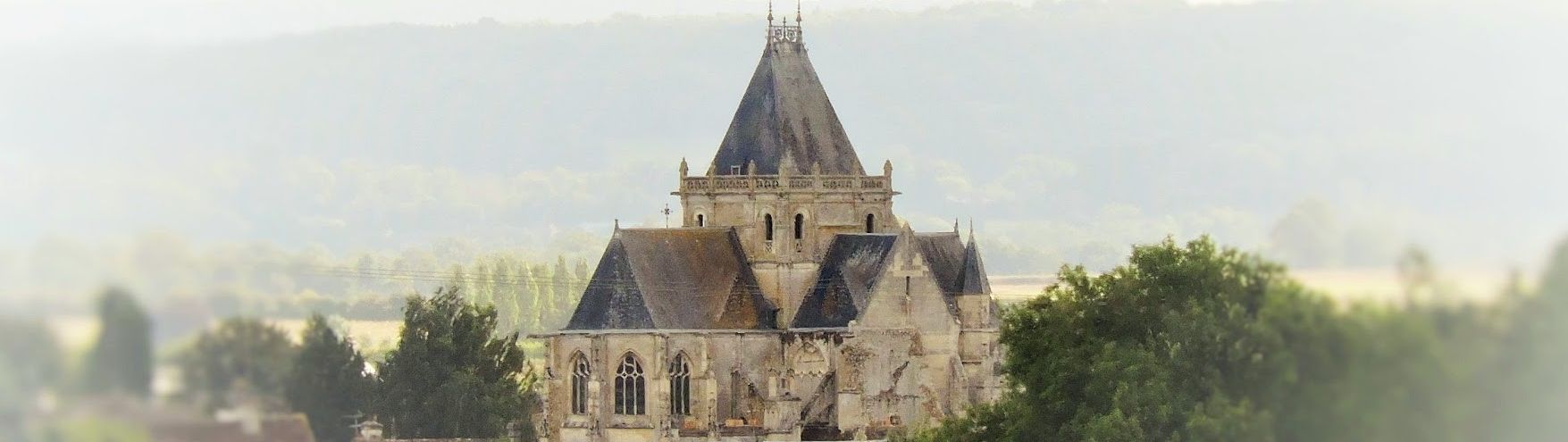
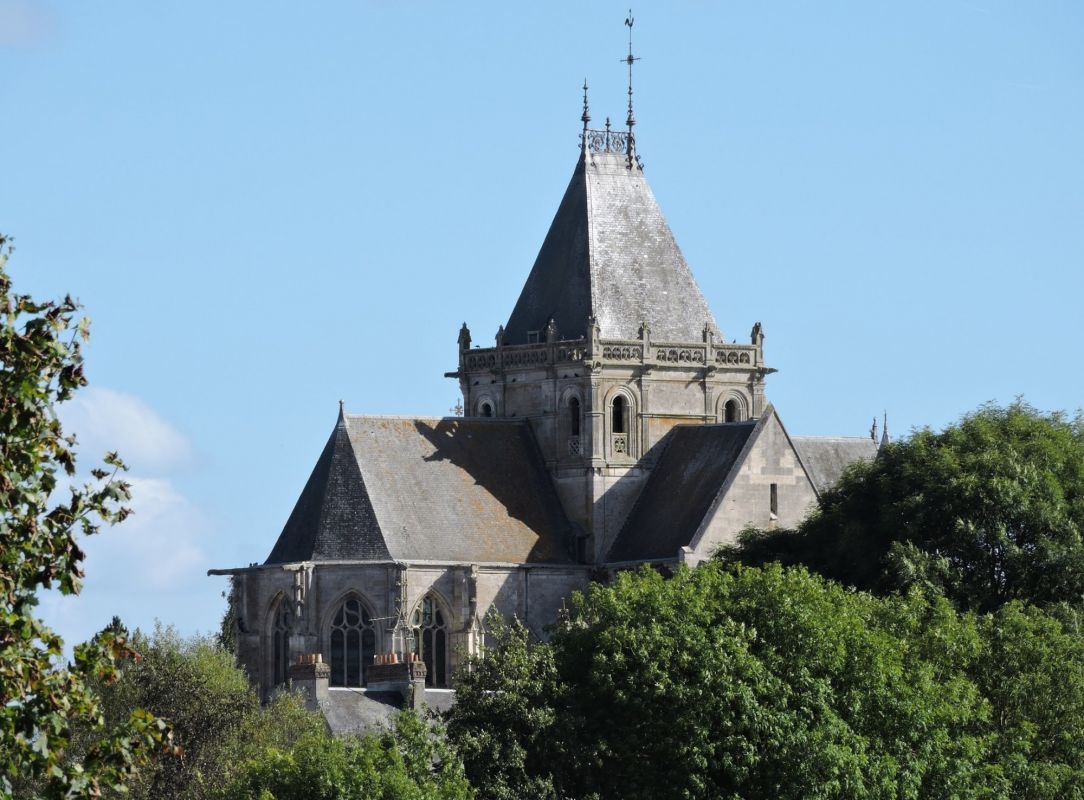
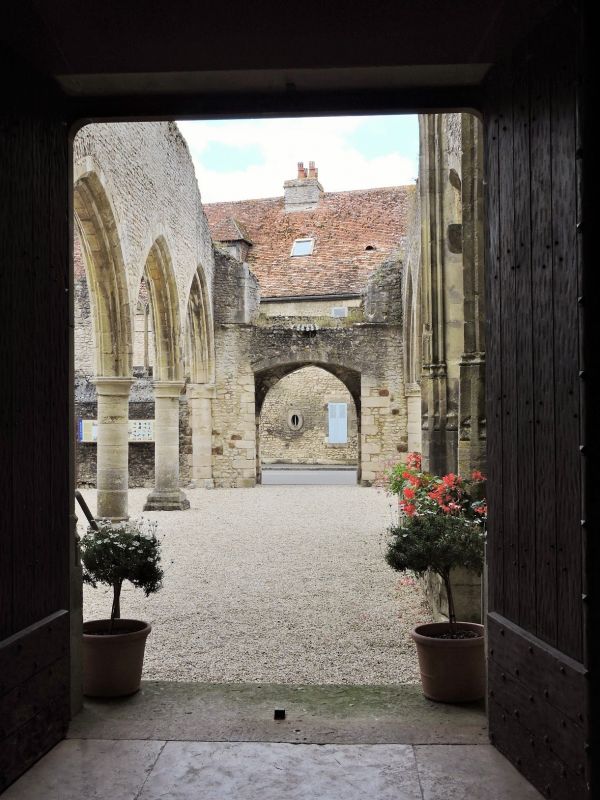
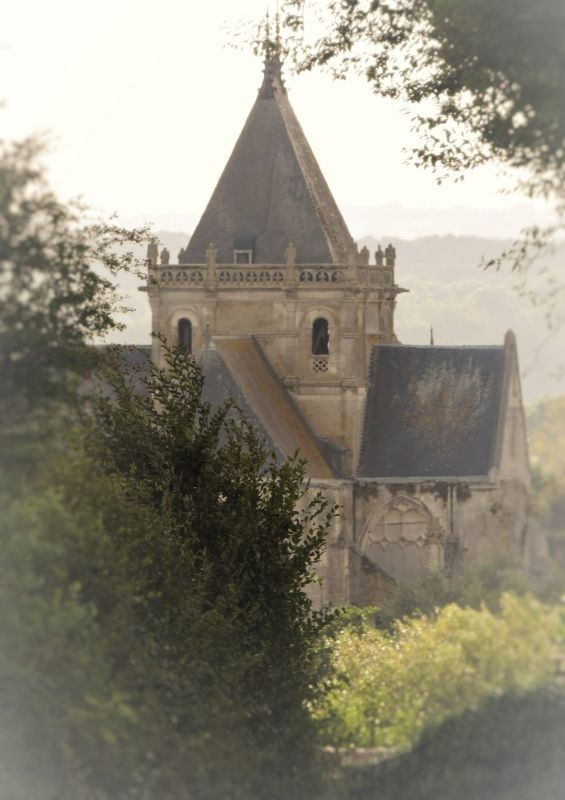
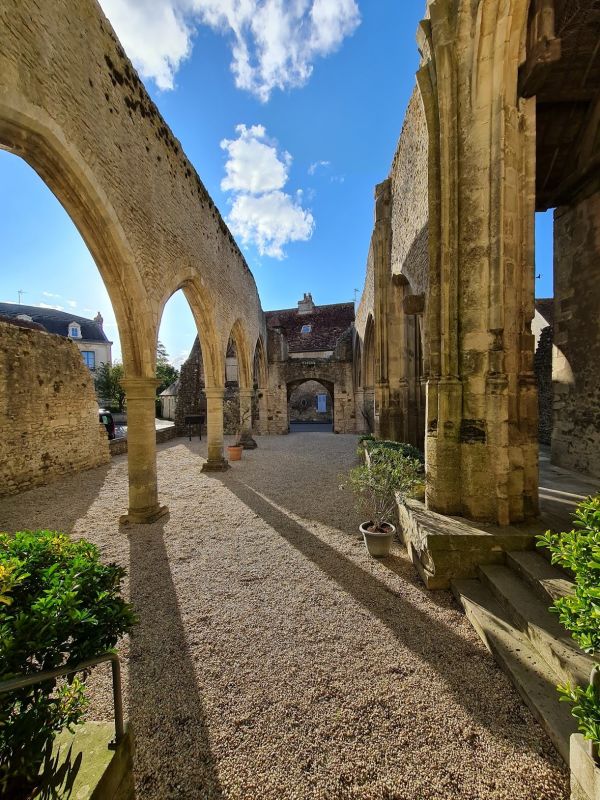
Built during the 12th century, then continued during the 15th and 16th centuries, its history is not well-documented. Those discovering it for the first time are surprised by its composition and the presence of important ruins. In reality it is two churches. The new one, majestic, whose sanctuary and transept were the only parts to be finished, and the old church of which only the ruins of the nave and a wall of the belfry tower remain. Threatening to fall apart between the two wars, it was decided due to the distance in relationship to the new sanctuary , and its uselessness, to abandon it. The archaeological presentation of the ruins was realised in 1938.
The church was entirely classified as a Historical Monument in 1909. It is actually the object of important restoration projects concerning the whole building, and the interior furnishings with the DRAC and the AENDE ( the Association for the Patrimony of the Church).


Photos

Remarkable elements
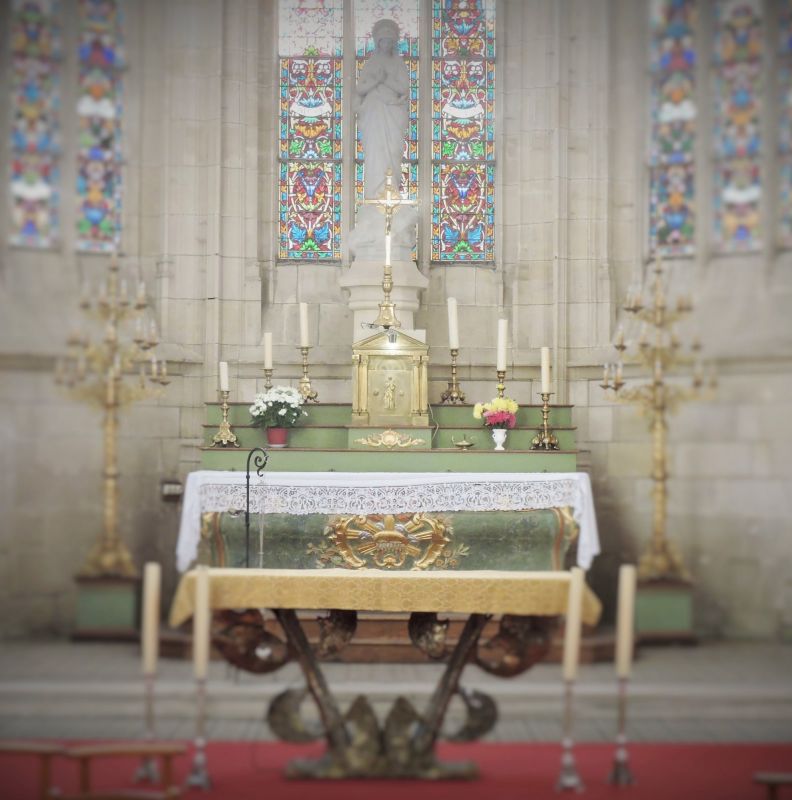
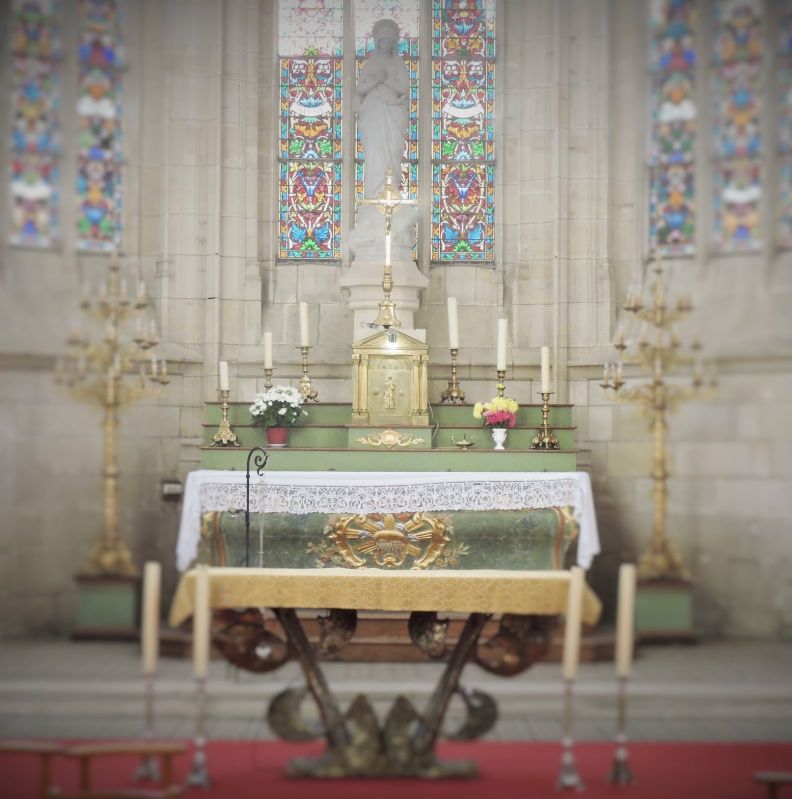
Choir and High Altar
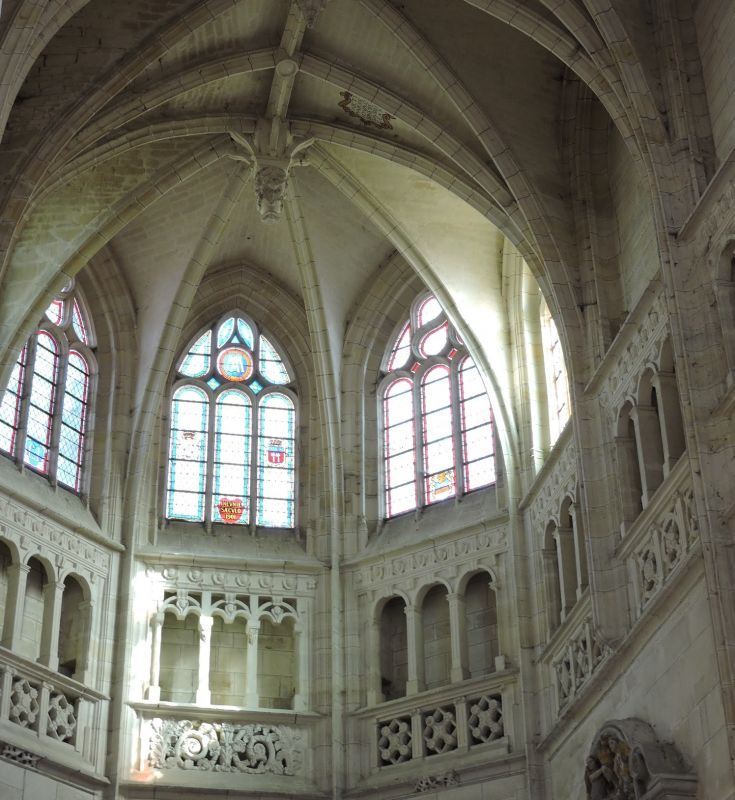
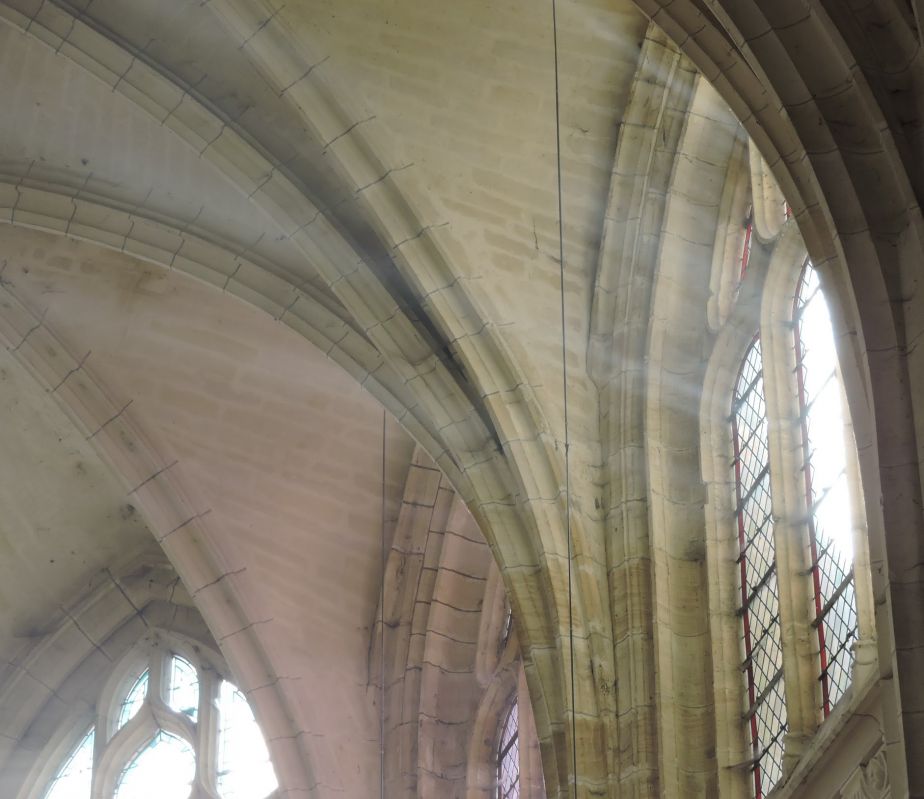
A very beautiful choir, whose magnificent crossing measures 20 metres and encompasses a volume of 20,000 m³ beneath a keystone of great finesse and pillars of rare elegance.
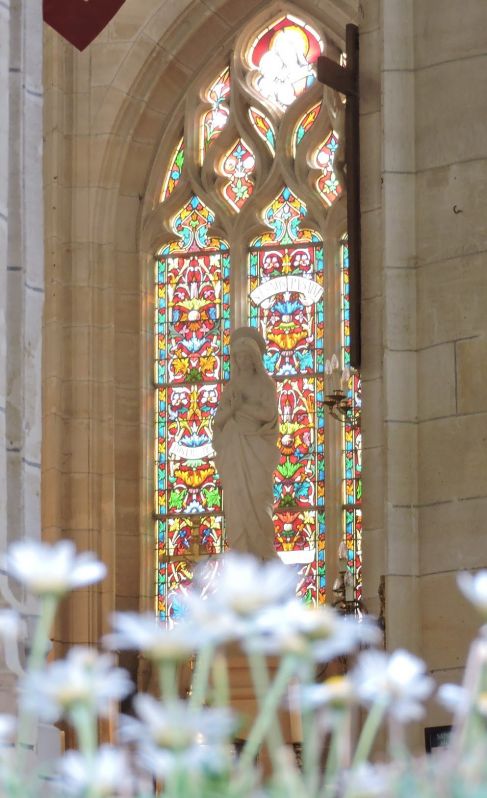
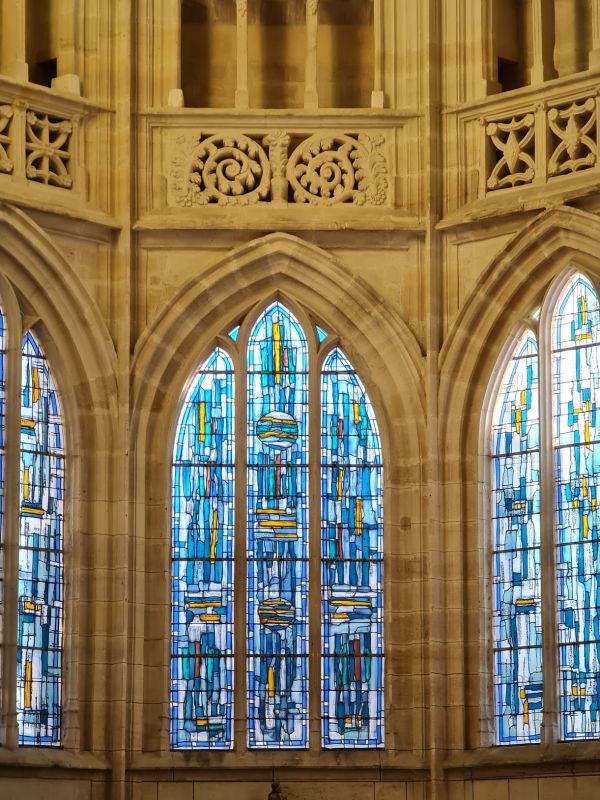
Behind the high altar stood an altarpiece dating from 1690, which was removed in the early 20th century to reopen the three windows and install the statue of Our Lady of Écouché, carved from Carrara marble, in 1915.
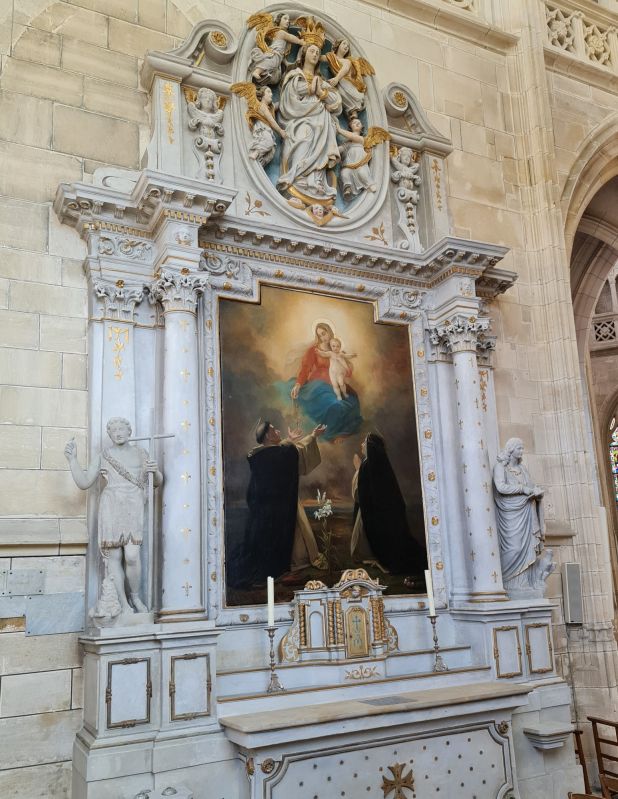
Altar of Our Lady of the Rosary
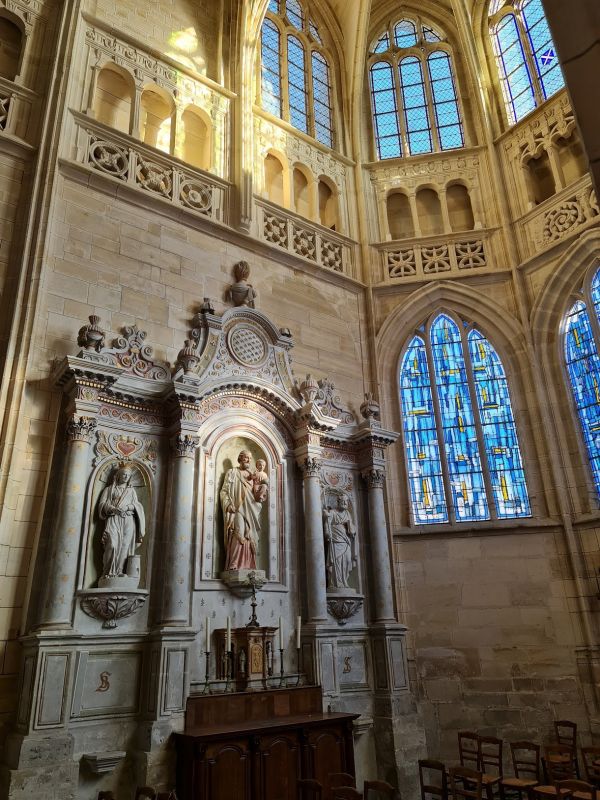
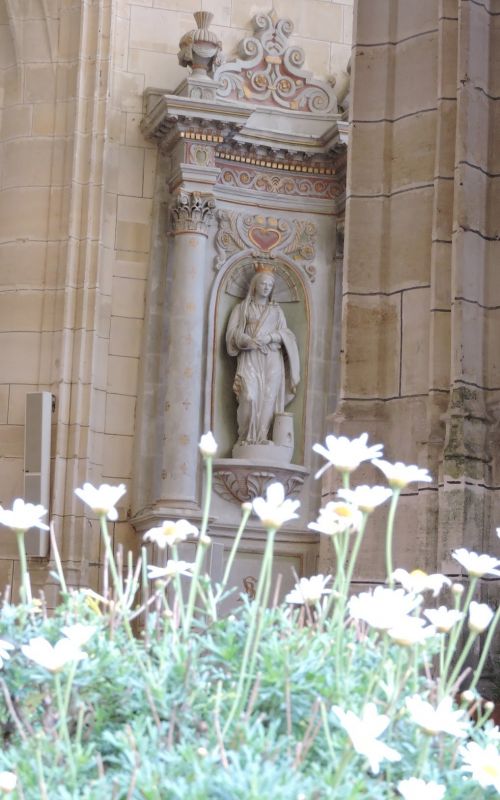
A magnificent 17th-century altarpiece of the Virgin Mary. The current polychrome decoration likely dates from the 20th century. The attic features a medallion depicting the Coronation of the Virgin.
Two statues complete the ensemble: Saint John the Baptist and Saint John the Evangelist.
The central painting depicts the presentation of the Rosary to Saint Dominic in the presence of Saint Catherine of Siena. The work is signed by Louise Eudes de Guimard, an artist born in Argentan in 1827.
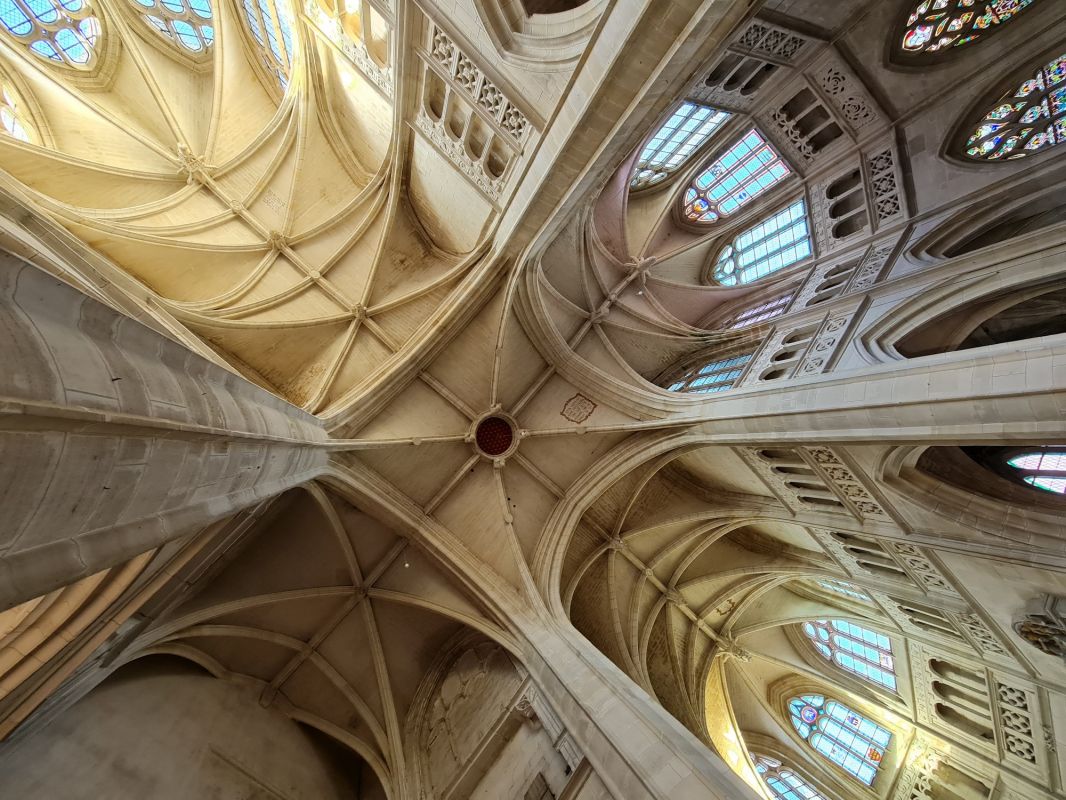
Triforium
A very graceful Renaissance triforium, adorned with balusters carved from limestone, runs along the chancel and transept, which is itself surmounted by a massive Renaissance-style bell tower housing three bells.
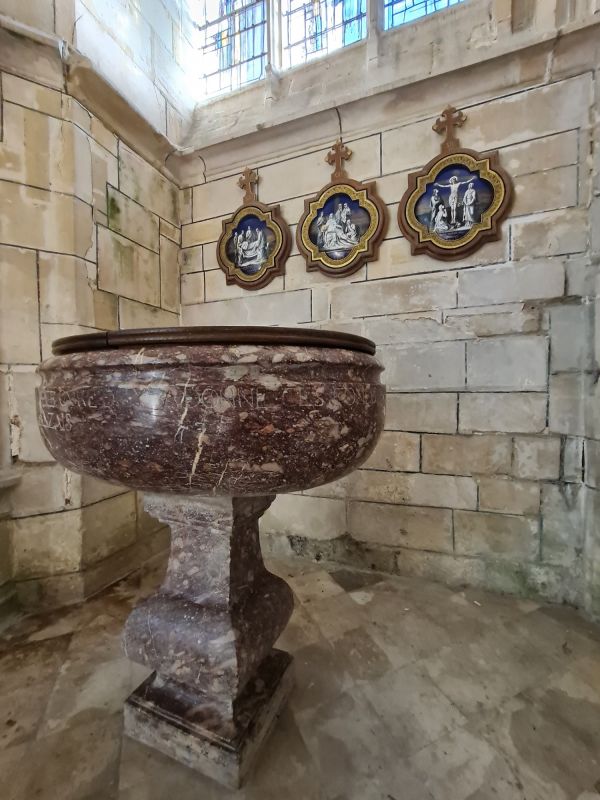
Baptistery
On the right, the red marble baptismal font is carved from a single block. It bears the date of its consecration in 1704 and the name of the donor, the parish priest at the time: Maître Belzal.
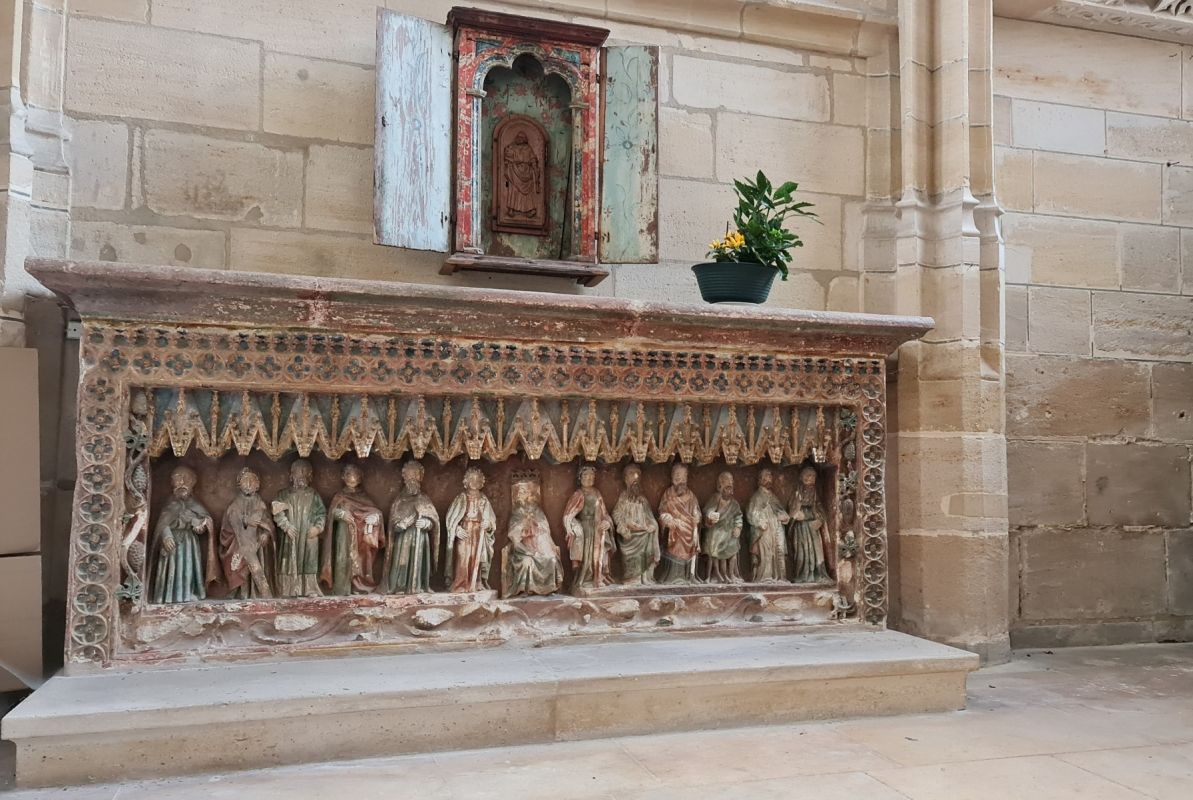
Altarpiece of the Last Supper
Altar of the Blessed Sacrament in polychrome stone, depicting Christ with the 12 apostles. Christ’s head was broken off during the Revolution. This ensemble was part of the altarpiece from the former chapel of the Hôtel-Dieu Saint Mathurin in Écouché. Above it, the tabernacle is made of polychrome wood, with a walnut door dating from the 17th century.
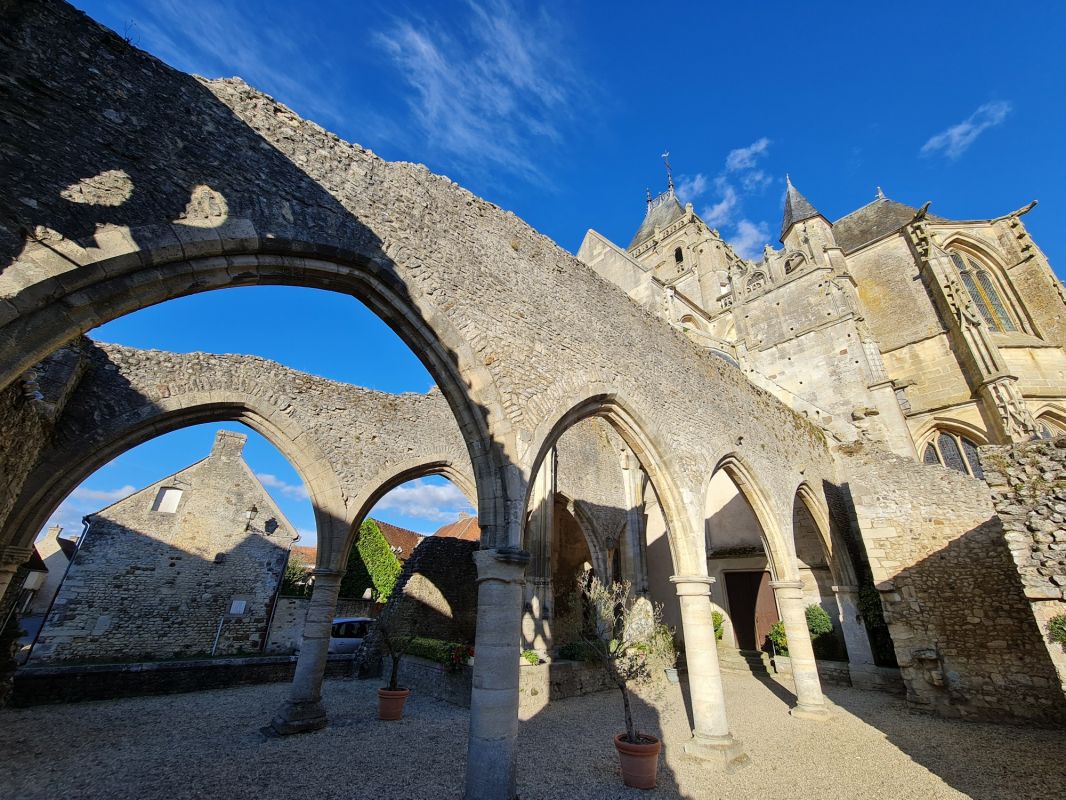
Ruins
The parishioners began building the present church on the site of the old one at the start of the 15th century in order to rival that of Argentan, the neighbouring town. However, it was never completed due to a lack of funding to finish the nave. Work ceased in 1601. At that time, the nave of the old church, the chancel and the beginning of the new church were all intertwined. In 1920, it was decided to preserve the old nave, known as the ‘grange aux chiens’, in its ruined state.
