National Basilica of the Sacred Heart
Basiliekvoorplein 1 (ingang 6) / Parvis de la Basilique 1 (entrée au n°6)
1083 Koekelberg - Ganshoren
Basilica | 1905 | Art deco | Catholic Church


Map
Opening hours
01 April - 31 October
Mon 8.00 - 18.00
Tue 8.00 - 18.00
Wed 8.00 - 18.00
Thu 8.00 - 18.00
Fri 8.00 - 18.00
Sat 8.00 - 18.00
Sun 8.00 - 18.00
01 November - 31 March
Mon 8.00 - 17.00
Tue 8.00 - 17.00
Wed 8.00 - 17.00
Thu 8.00 - 17.00
Fri 8.00 - 17.00
Sat 8.00 - 17.00
Sun 8.00 - 17.00
Panorama
Summer : 9 am - 5.30 pm (last ticket at 5 pm)
Winter : 10 am - 4.30 pm (last ticket at 4 pm)
Admission fees : 8 € per person (6 € per person for groups of min 6 pers).
Modern Religious Art Museum
01/04 - 31/10 : Wednesday to Sunday : 2 pm - 4 pm
01/11 - 31/03 : Fri - Sat - Sun : 2 pm - 4 pm
musea@basilicakoekelberg.be
Guide: annemiegh@gmail.com of +32 475 966 566 (10 days in advance).
Museum Black Sisters
Summer : every wednesday 2 pm - 4 pm and by appointment
The museum is closed in winter.
Full information on the panorama and museums: website of the basilica - info@basilicakoekelberg.be
Guided tour
In Dutch, French or English: info@basilicakoekelberg.be or +32 2 421 16 60.
Religious offices
Monday-Tuesday-Thursday-Friday-Saturday : 9 am (FR)
Wednesday : 8.15 am (FR) • 9 am (NL)
Sunday : 9 am (FR) • 10 am (FR) • 11.30 am (NL)
See the updated timetable on the website of our partner Egliseinfo
Description
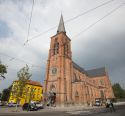
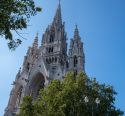
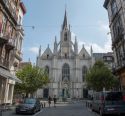
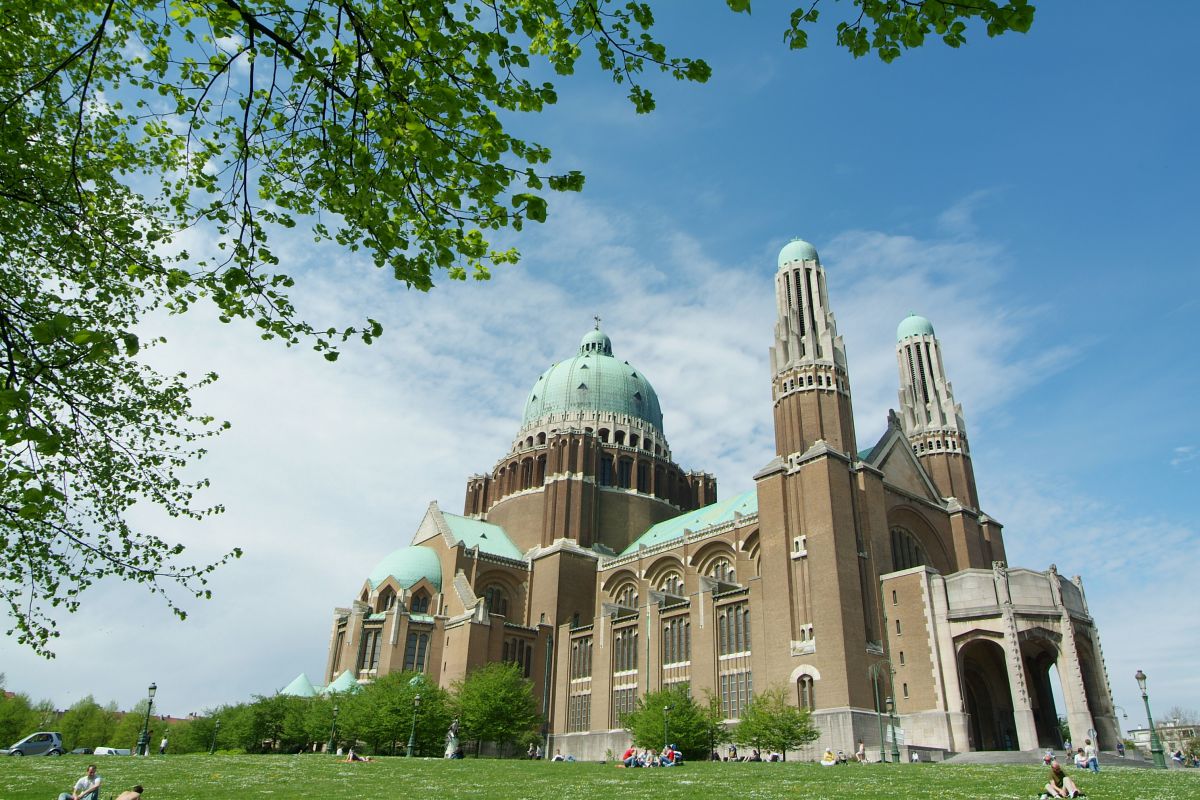
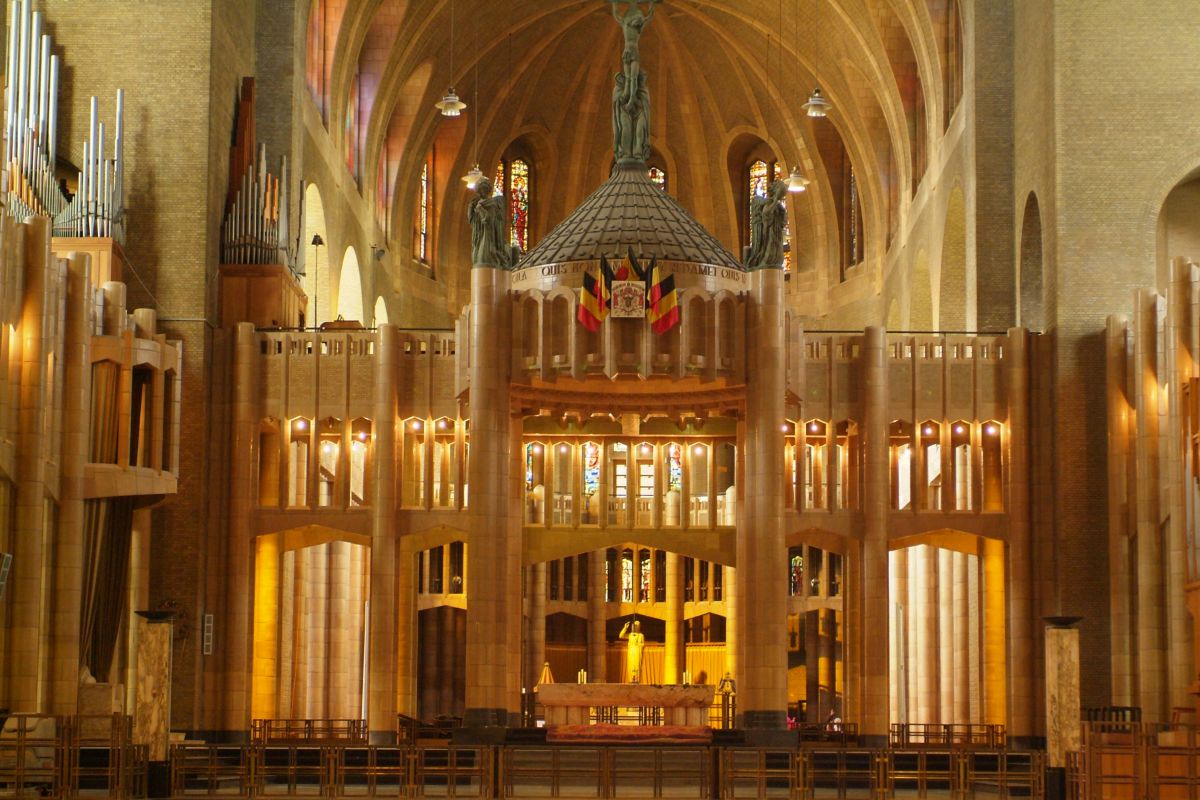
The National Basilica of the Sacred Heart Koekelberg is one of the most important and imposing churches in Brussels. Its dimensions (164m long,107m wide, 93m high) puts it 5th on the list of biggest churches in the world. It is also the biggest art deco building in western Europe, built on a plateau and thus visible from far around.
The idea for a grand national basilica came from king Leopold II, inspired by the church of Montmantre in Paris, France. Construction started in 1905, was interrupted by world war I and was finished in 1970. Cardinal Mercier proclaimed the basilica a National Monument of the Peace.
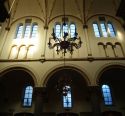
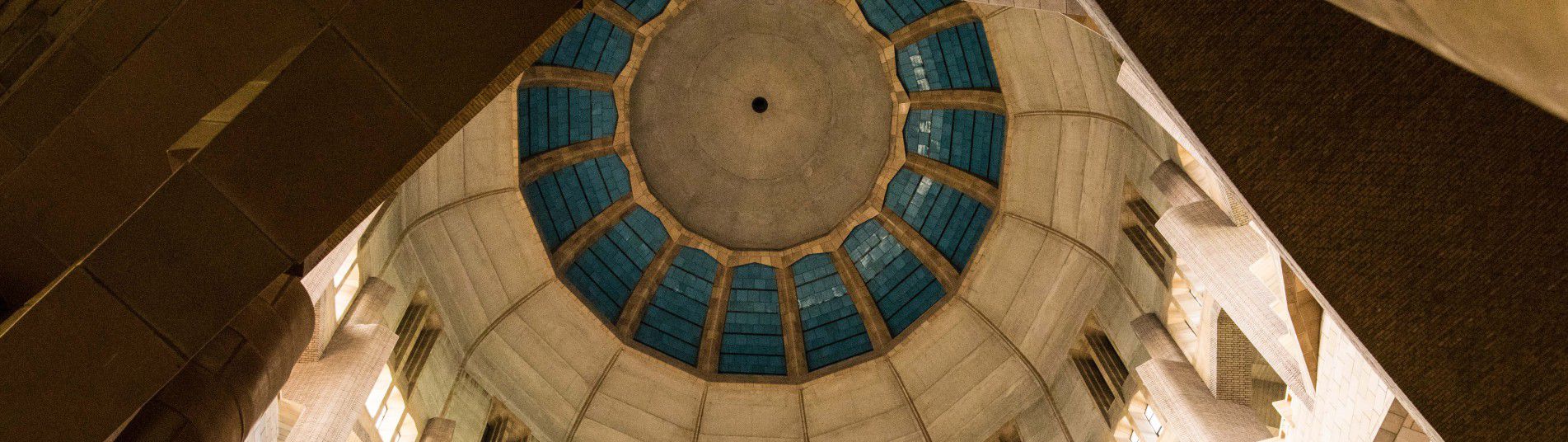
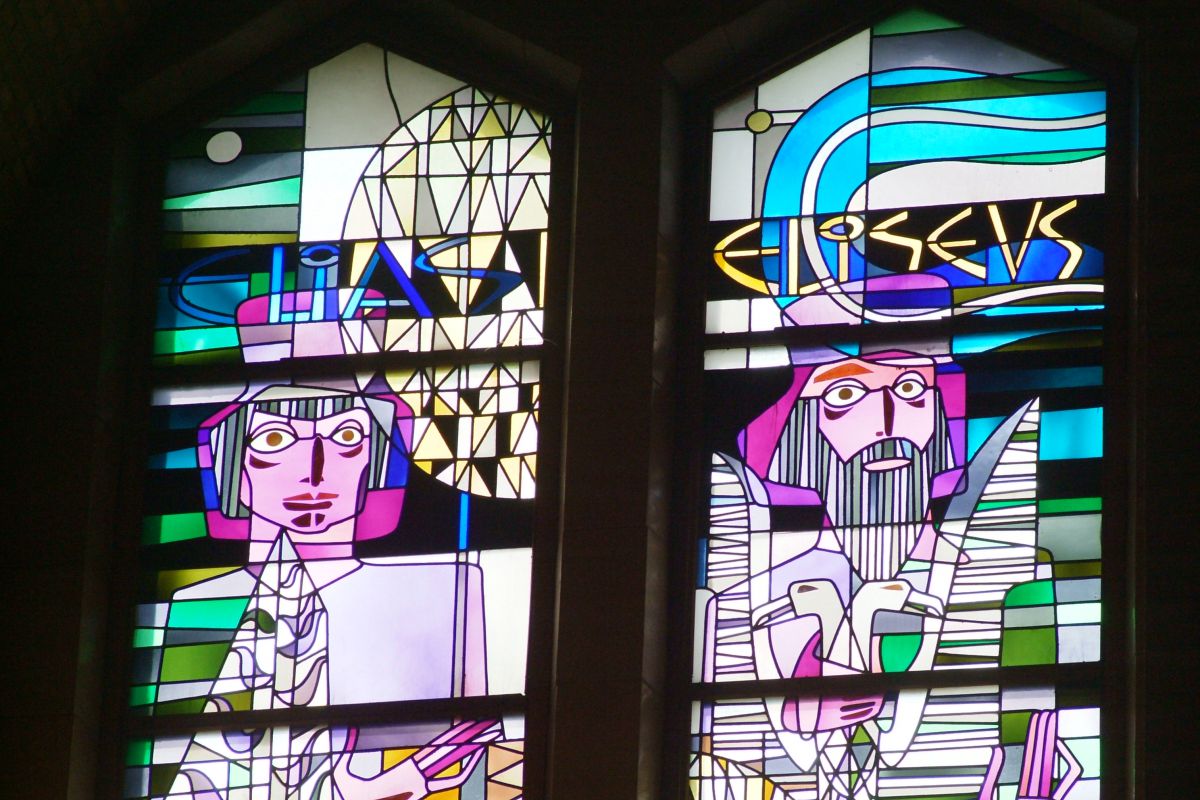
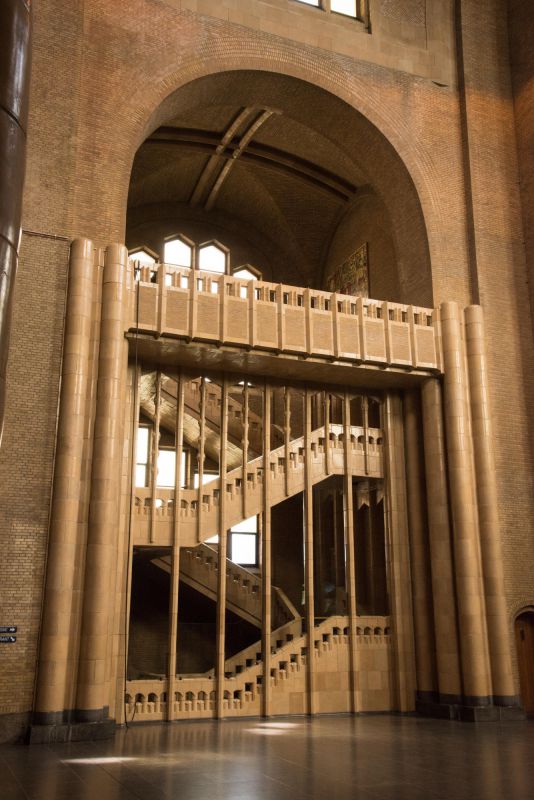
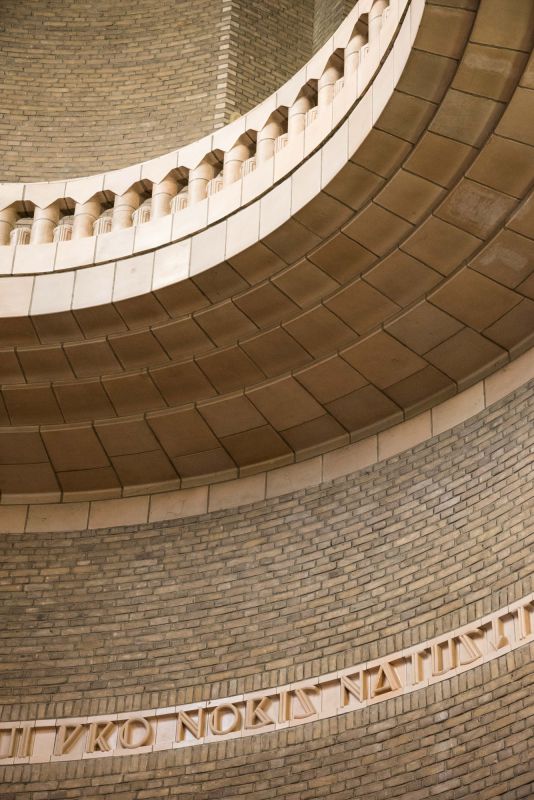
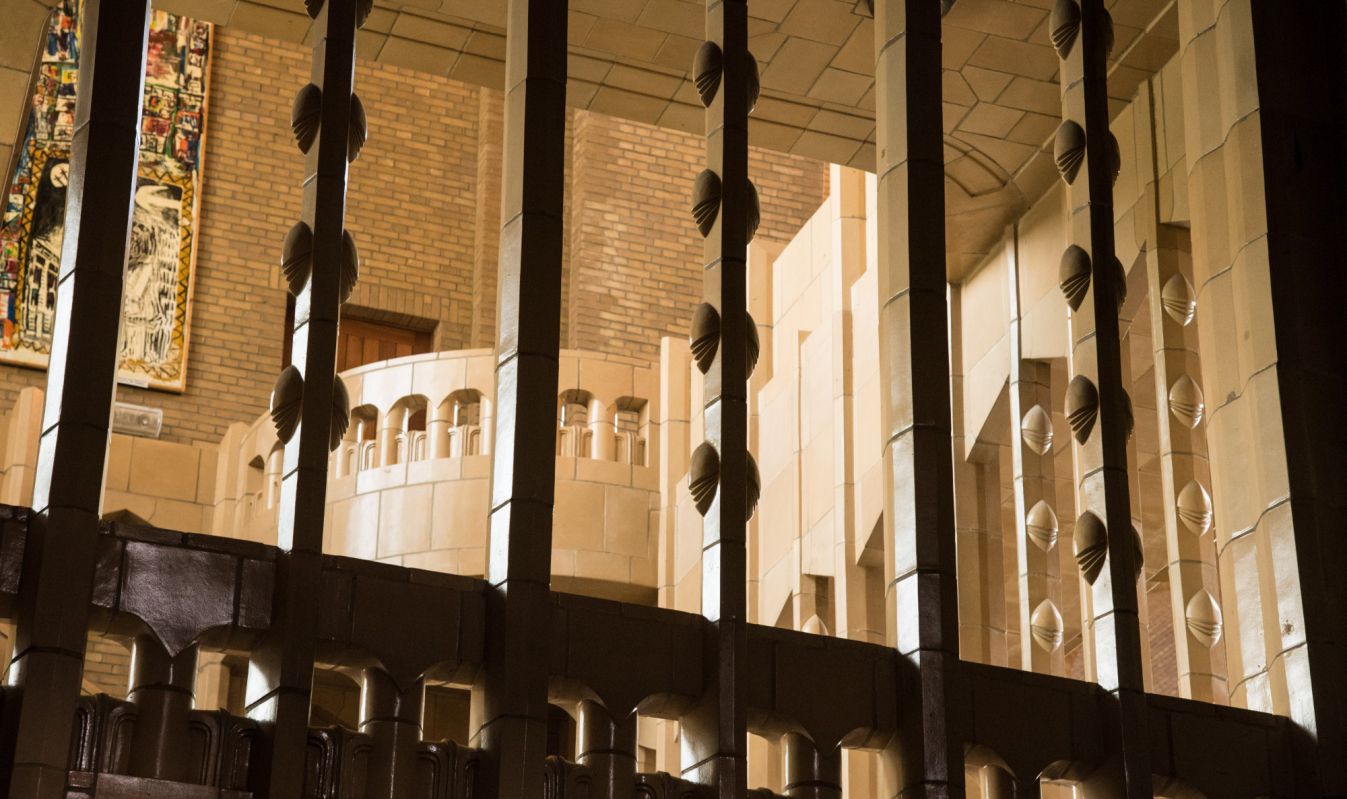
The structure is reinforced concrete, covered by stone or glazed terracotta tiles. The interior provides an open view of the nave and side chapels, stained glass windows donated by catholic organisations and families from around the world.
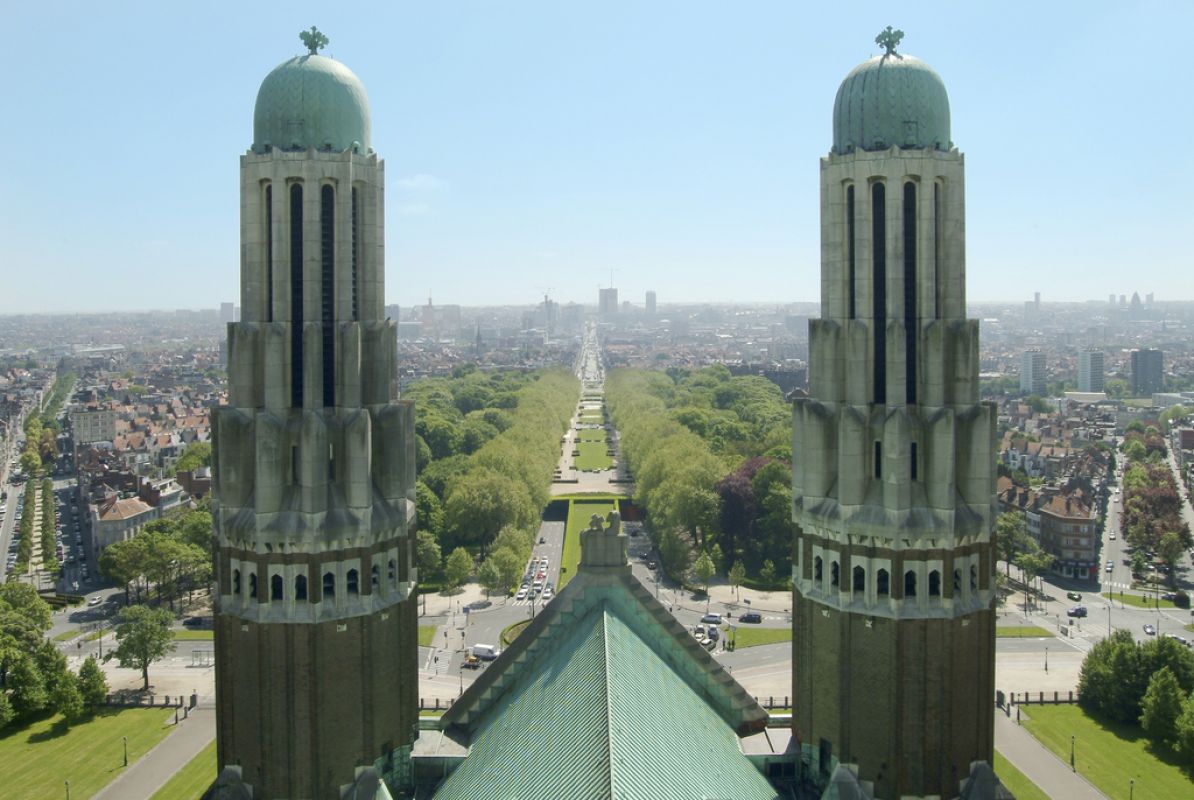
Panorama : at a height of 52,80m, right under the dome of the Basilica, an external gallery allows you to discover a breath-taking view of Brussels and Brabant. On a clear day one can see as far as Mechelen Cathedral and the 'Plan Incliné' of Ronquières.
Koekelberg Basilica houses the Museum of Modern Religious Art in the domed gallery on the 3rd floor. There is an extensive collection of paintings and sculptures by artists for whom religion and spirituality have often been an important source of inspiration....
A new 2016 visitors guide book is available in Dutch, French and English.
KIKIRPA : Photo-library online
Photos


Media
Remarkable elements
Panorama
At a height of 52,80m, right under the dome of the Basilica, an external gallery allows you to discover a breath-taking view of Brussels and Brabant. On a clear day one can see as far as Mechelen Cathedral and the 'Plan Incliné' of Ronquières.
Modern Religious Art Museum
The Basilica of Koekelberg houses the Modern Religious Art Museum of Bruges, where religion inspires artists and Christ remains central. Recent acquisitions enrich the collection: seven lithographs by Manessier on Easter, Càntic del sol by Miró with 31 etchings on Francis’s psalm, and Passage du bleu by Geneviève Asse, a biblical-themed painting.

Black Sisters Museum
The “Black Sisters” stemmed from the medieval Cellites, a Rhineland movement devoted to poverty and care for plague victims. In 1459, Pope Pius II allowed them to adopt monastic rules, most choosing St. Augustine’s, thus becoming “Black Sisters.” A 1465 letter names their Brussels convent. Though small, it was wealthy due to the city’s status. After relocating in 1998, part of their legacy went to the Basilica’s museum.
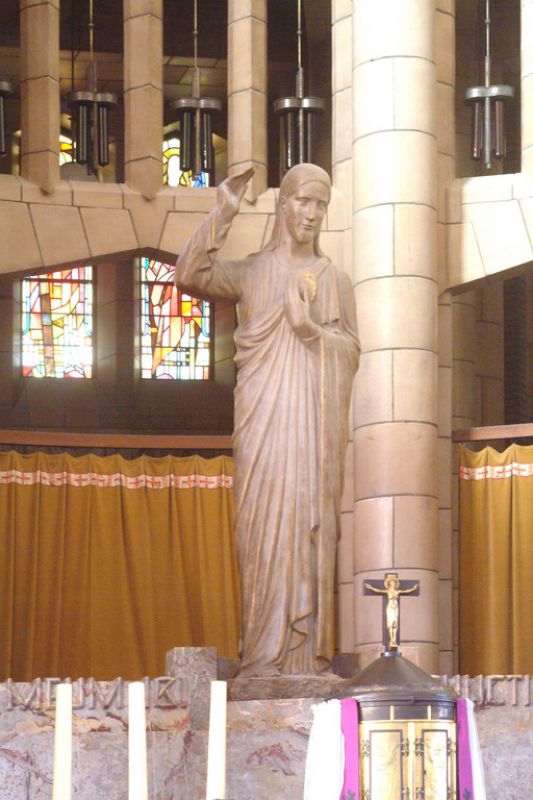
Statue Sacred Heart - George Minne
George Minne, born in Ghent in 1866, studied biblical painting at the Academy of Fine Arts. Introduced to symbolism by Maurice Maeterlinck, he joined the Belgian group “Les XX.” In 1898 he settled in Sint-Martens-Latem, living there until his death in 1941, except for World War I years in Wales. For the Basilica of Koekelberg, he created the Sacred Heart sculpture in the apse and a bronze calvarie outside.
Harry Elstrøm
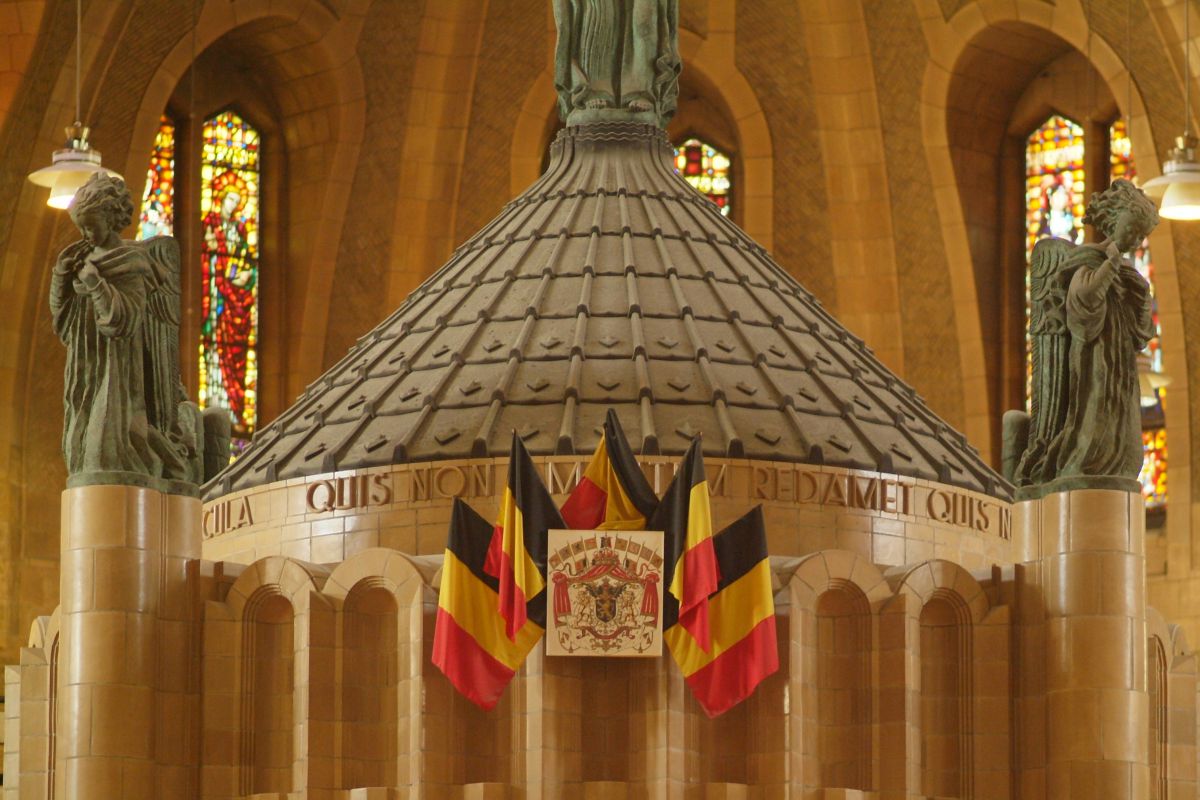
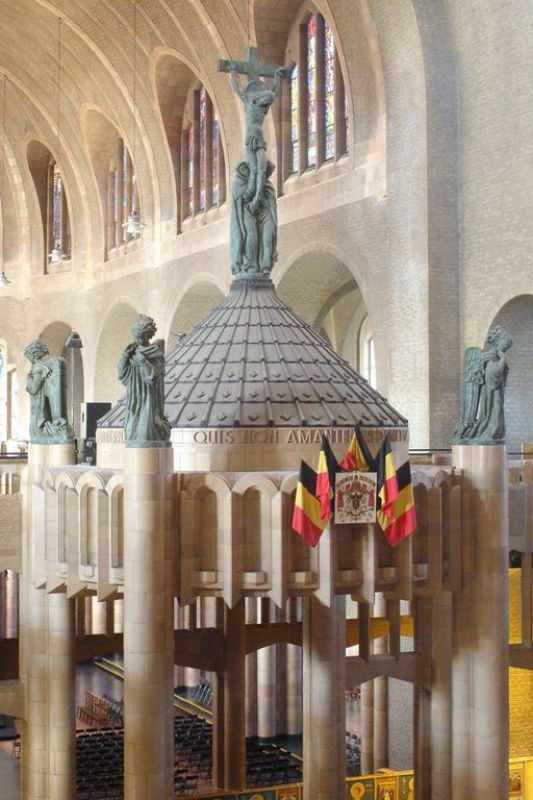
Harry Elstrøm (1906–1993), born in Berlin to a German industrialist and an English author, studied art in Dresden, Rome, and Brussels. Settling in Brussels in 1934, he became known for innovative religious art. He taught sculpture at Saint-Lucas Institute (1940) and later at KU Leuven (1952). His expressionist basilica works include the majestic calvarie with four angels above the main choir and the evangelists above the narthex.
Scale model of the basilica
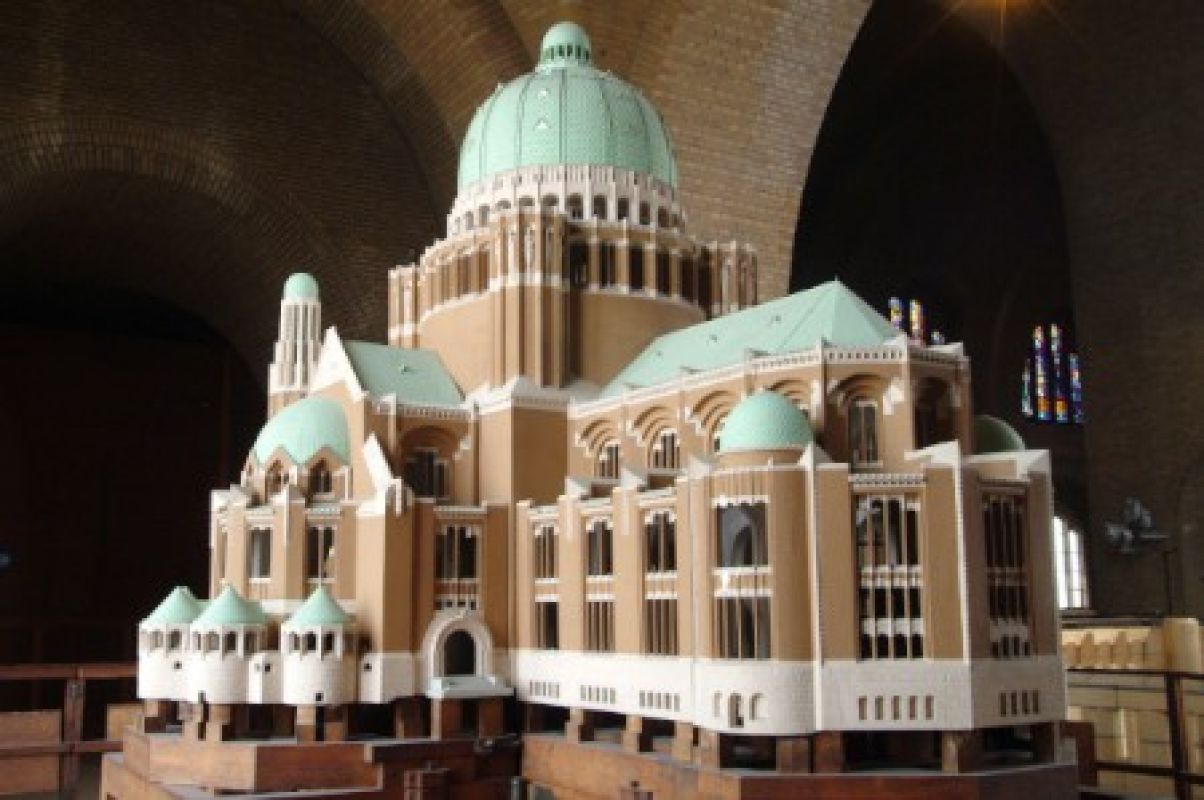
After WWI, Albert Van Huffel (1877–1935) was tasked with designing the Basilica of the Sacred Heart after the costly Langerock project was rejected. From modest origins, he studied arts and practical skills, later working as architect, decorator, and artistic director in Brussels. His style evolved in the 1920s toward simplicity and geometry. In 1921, his basilica model won the Grand Prix in Paris. After his death, Paul Rome continued the project with minor technical changes.