Domain of Mary
Rustoordlei (naast de kerk)
2930 Kaart (Brasschaat)
Marian Domain | 1916 | | Catholic Church


Map
Opening hours
01 April - 30 September
Mon 9.30 - 20.00
Tue 9.30 - 20.00
Wed 9.30 - 20.00
Thu 9.30 - 20.00
Fri 9.30 - 20.00
Sat 9.30 - 20.00
Sun 9.30 - 20.00
01 October - 31 March
Mon 9.30 - 17.00
Tue 9.30 - 17.00
Wed 9.30 - 17.00
Thu 9.30 - 17.00
Fri 9.30 - 17.00
Sat 9.30 - 17.00
Sun 9.30 - 17.00
Description
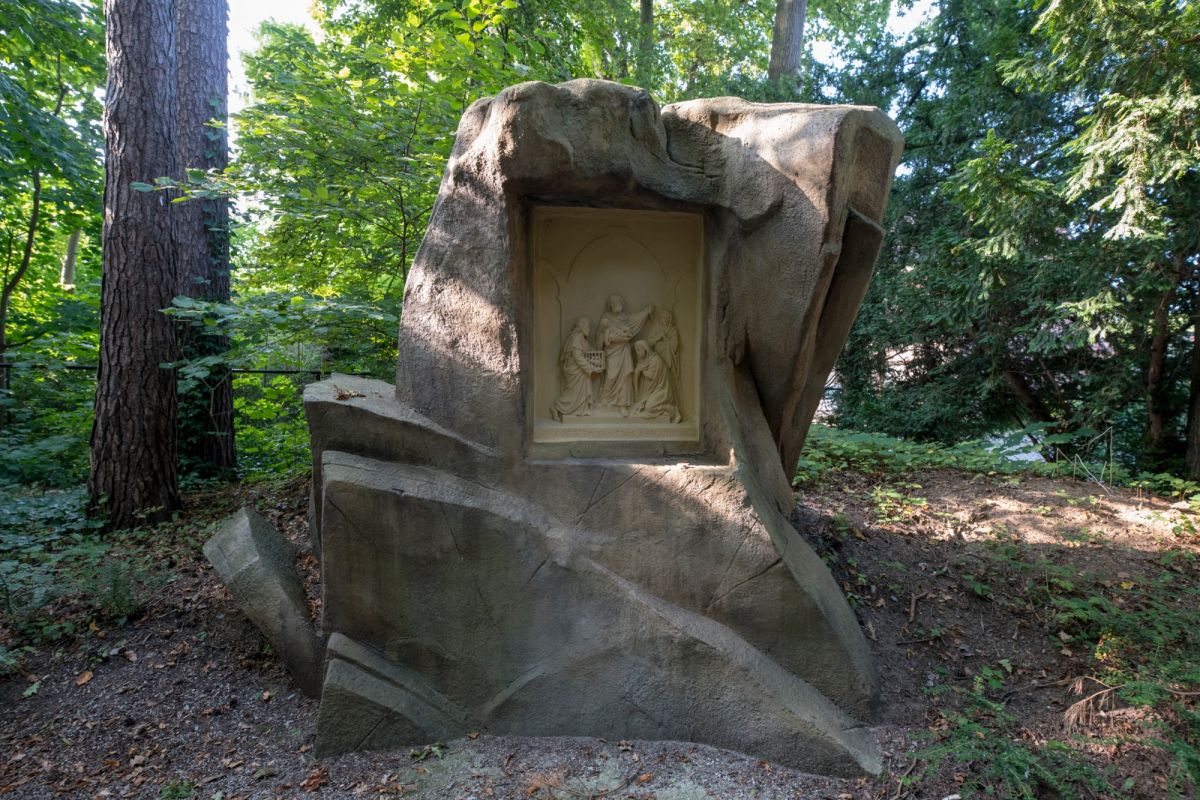
Groundskeeper Antoon Van den Weyngaert selected a six thousand square metre pine covered plot north of the church for the project. The grotto was consecrated on August 15, 1916. One year later, a Way of the Seven Sorrows of Our Lady was added. Sculptor Jozef Lodewijk Jacobin created the stations as bas reliefs set into small concrete rock formations. In 1917, a secluded garden was built, and in front of the Lourdes grotto a pulpit, water source, and pilgrim’s shelter were constructed in rustic concrete.
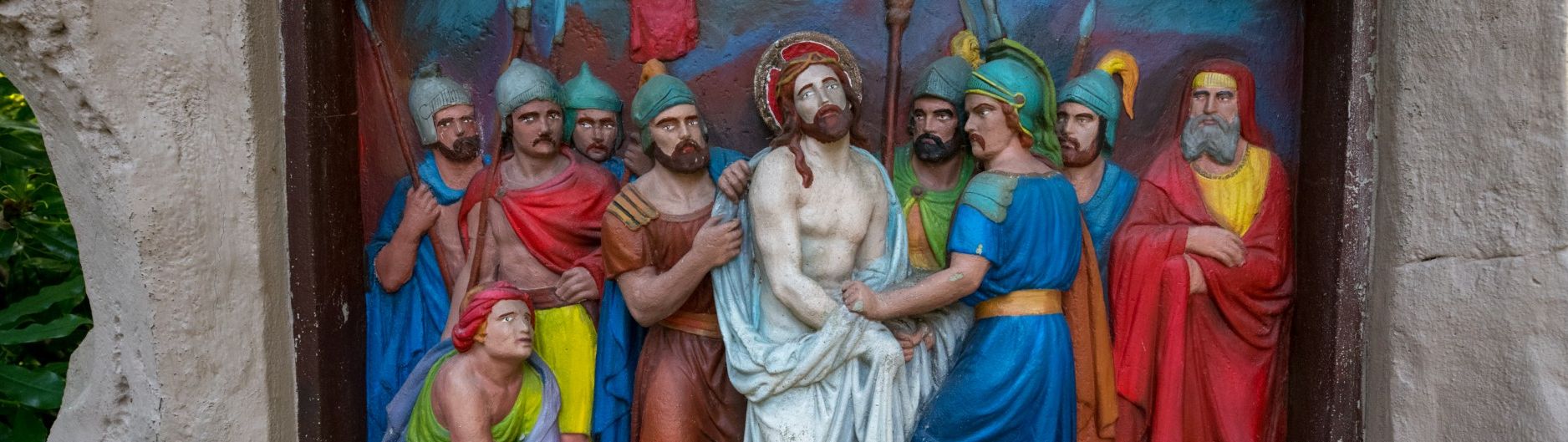
The park expanded further that same year with a Way of the Cross: fourteen stations sculpted by Antwerp artist Jacques Coomans Senior and embedded in concrete rocks by Jacobin. In 1919, Jacobin added a fourteenth station depicting the Entombment of Christ, integrated into the base of the Saint Roch Chapel. The Way of the Cross was consecrated in 1921.
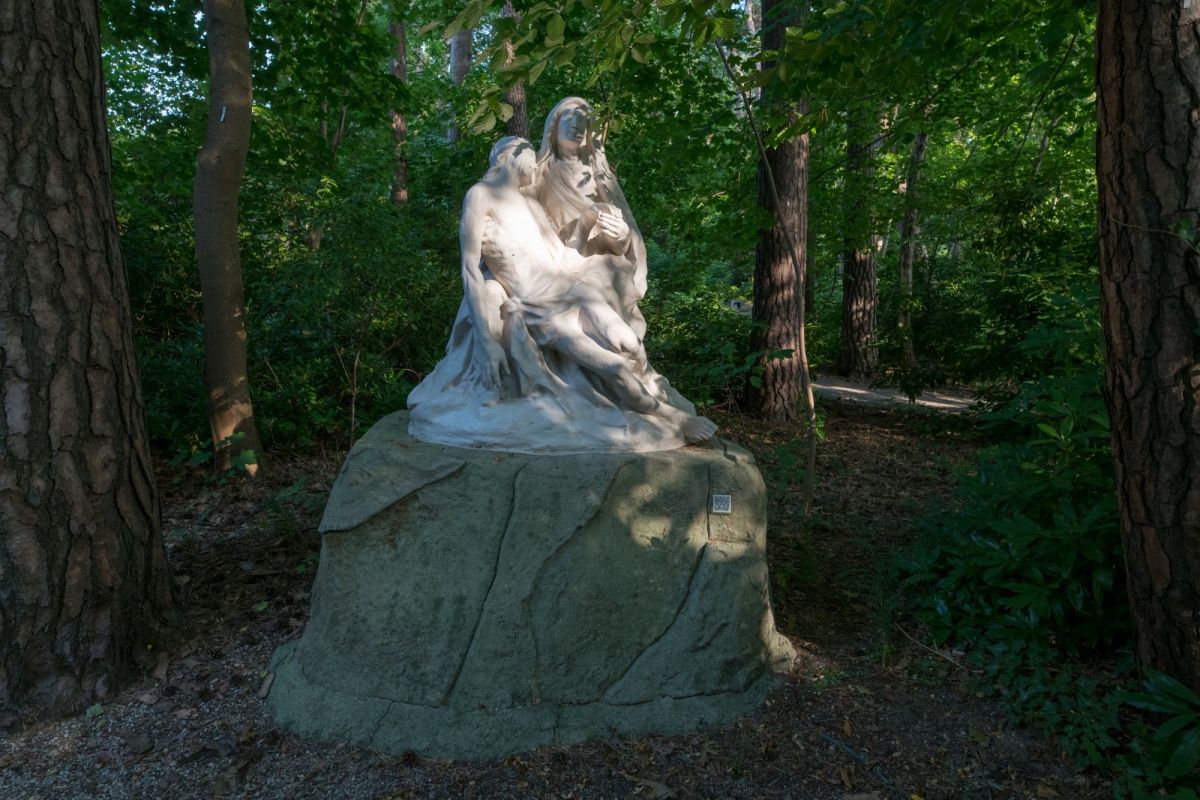
Several restorations followed in the second half of the 20th century. The Tondeleers company restored the site in 1962, and in 1987 the concrete structures of the stations were repaired and partly rebuilt. The polychrome painting of the Way of the Cross reliefs also dates from this period. Statues of Saint Joseph and a pietà were placed at the beginning and end of the Way of the Seven Sorrows.
Mariadomein
Neuw dedication of the Mariadomein
Inventory of Marian Caves

Photos


Remarkable elements
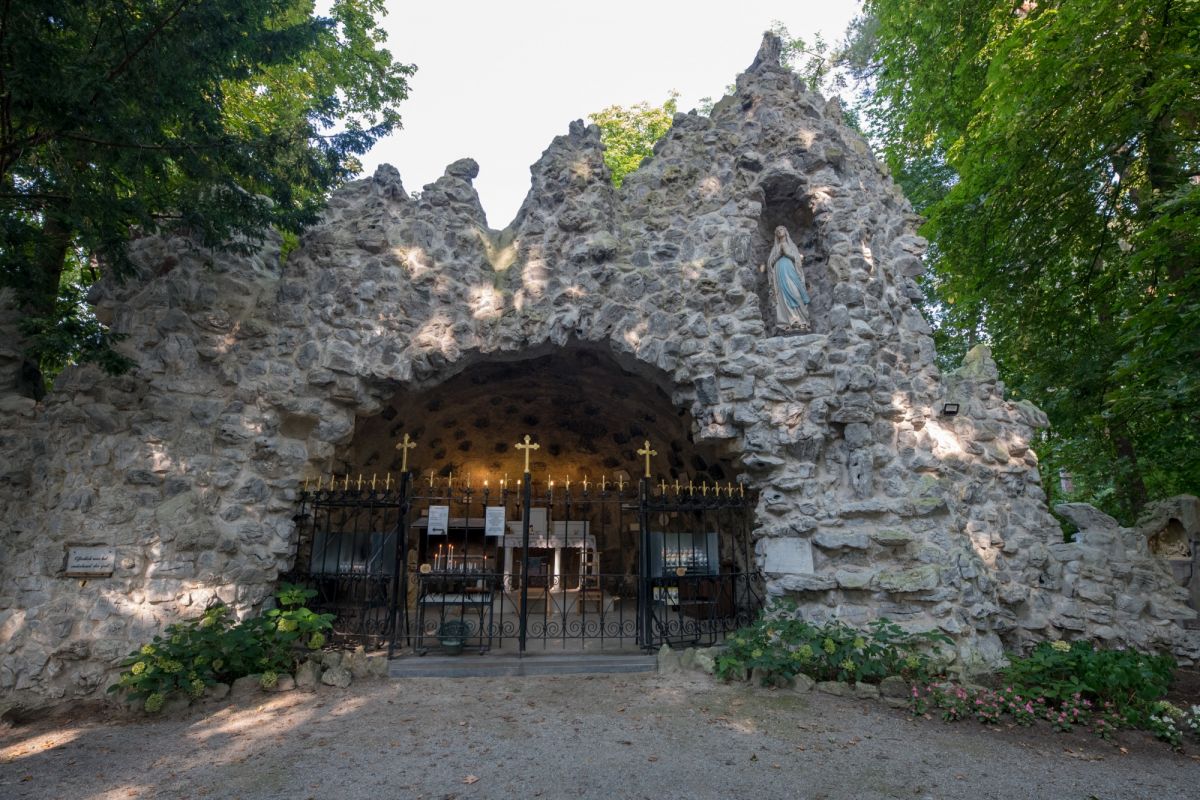
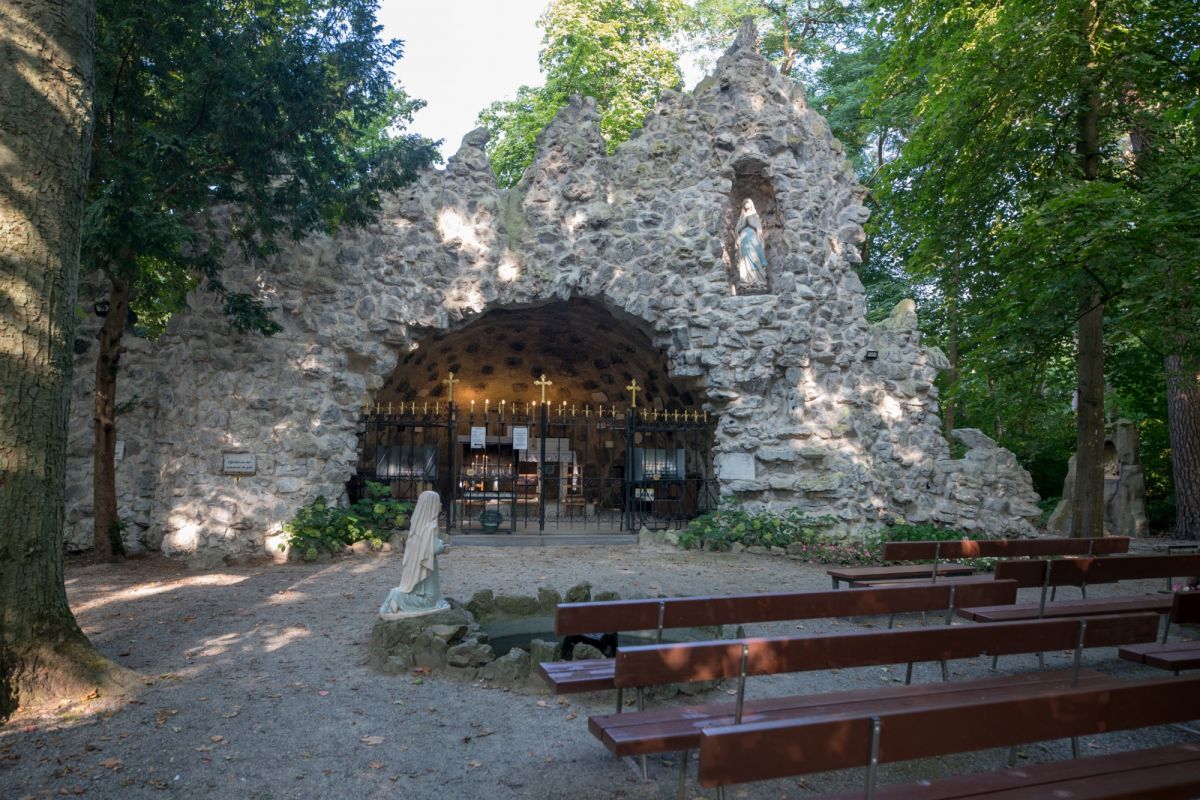
Lourdes Grotto
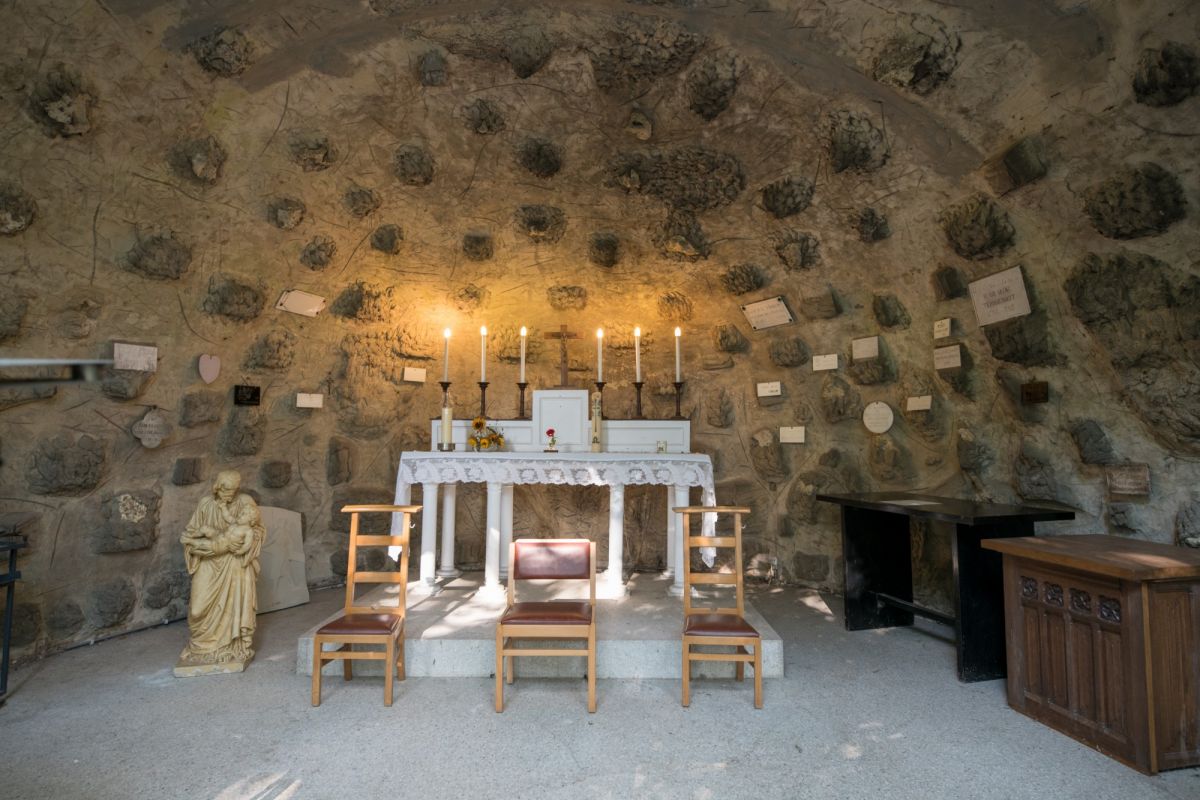
The Lourdes Grotto is an artificial imitation of Mary's grotto in Lourdes. It contains a statue of Mary in a niche, an altar with a granite top and candlesticks, and is surrounded by votive offerings. The grotto has a wrought iron gate, a collection box, and commemorative plaques. Elements such as a spring and collection basins refer to an ancient waterfall. A small adjoining room with a window is integrated into the rock structure.

Pulpit
The open-air pulpit is constructed of rustic cement and rests on a base of natural and artificial stone. It is surrounded by a flowerbed with posts. Six steps with a handrail made of gnarled branches lead up to the pulpit, which is covered with cement slabs and branches. Inside, there are sandstone tiles and a wooden cross. Traces of polychromy are still visible.
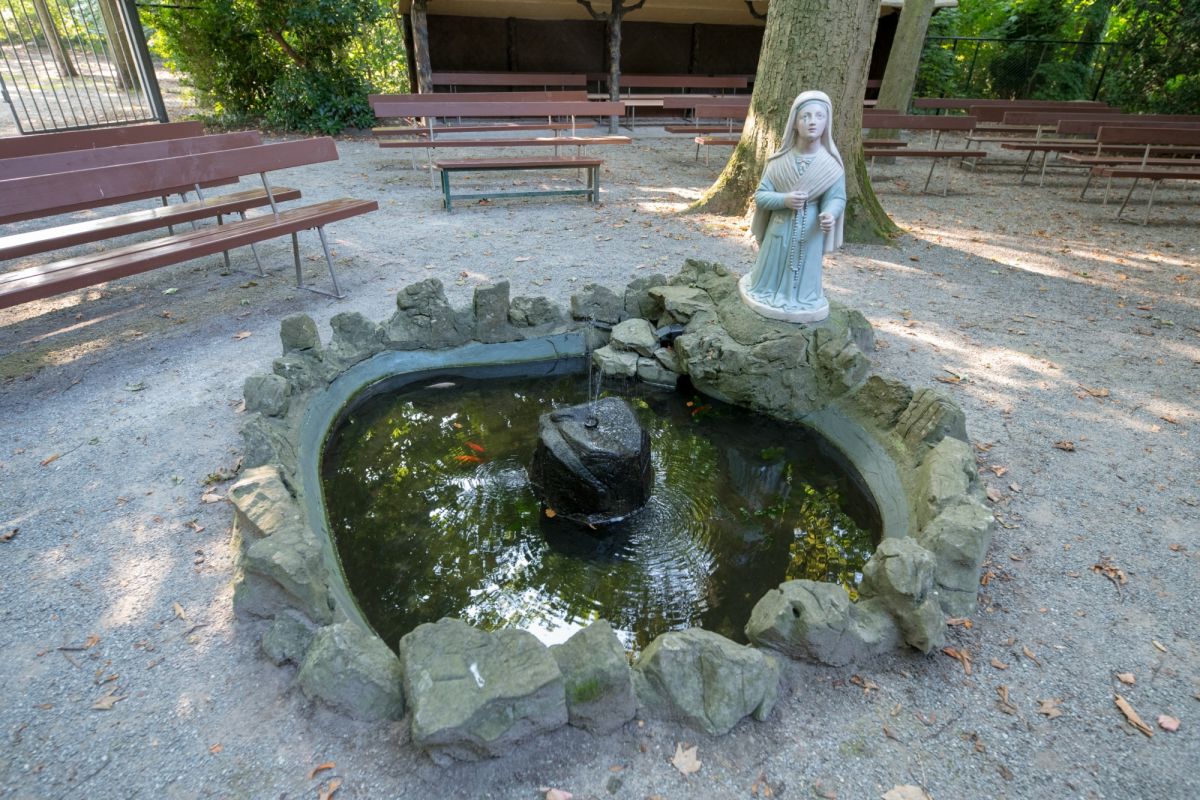
Well
The cave is accompanied by a spring, a small pond at the foot of the cave, lined with blocks of natural stone and featuring a spring in the centre in the form of a boulder from which water bubbles up. On a larger stone stands a polychrome artificial stone statue of Bernadette kneeling.
Way of the cross
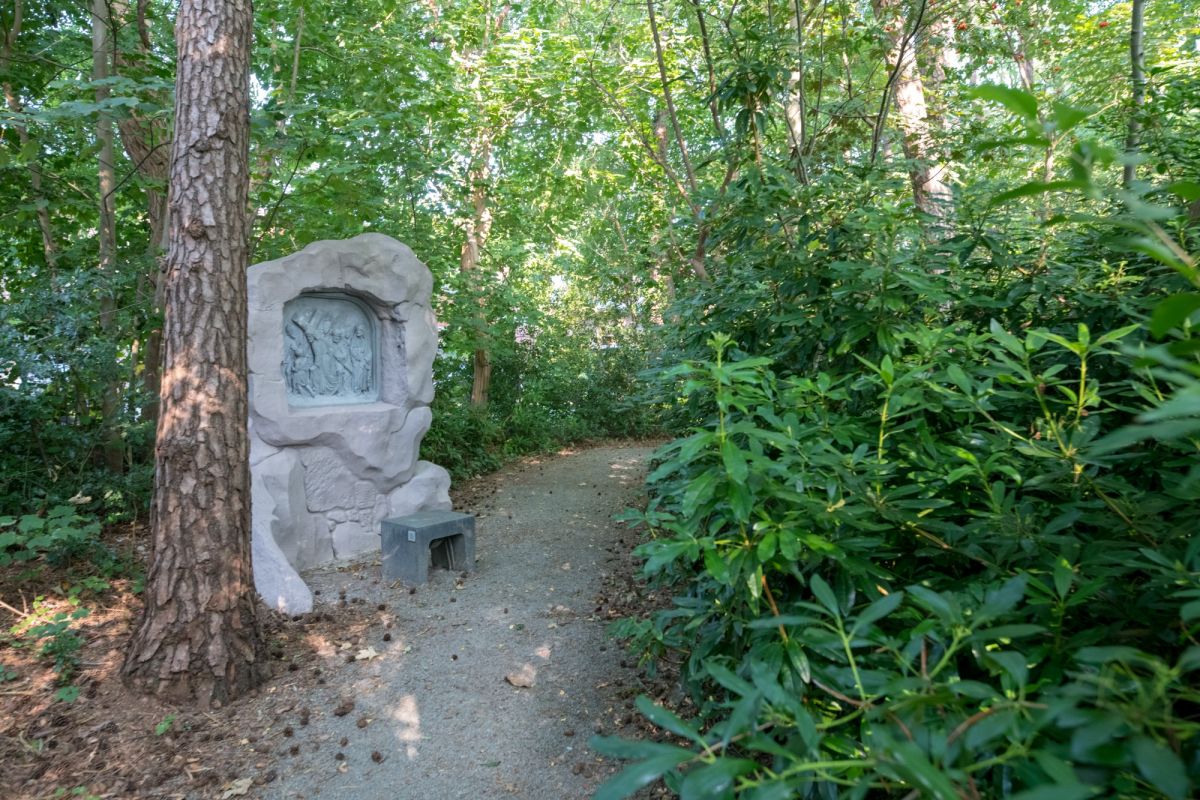
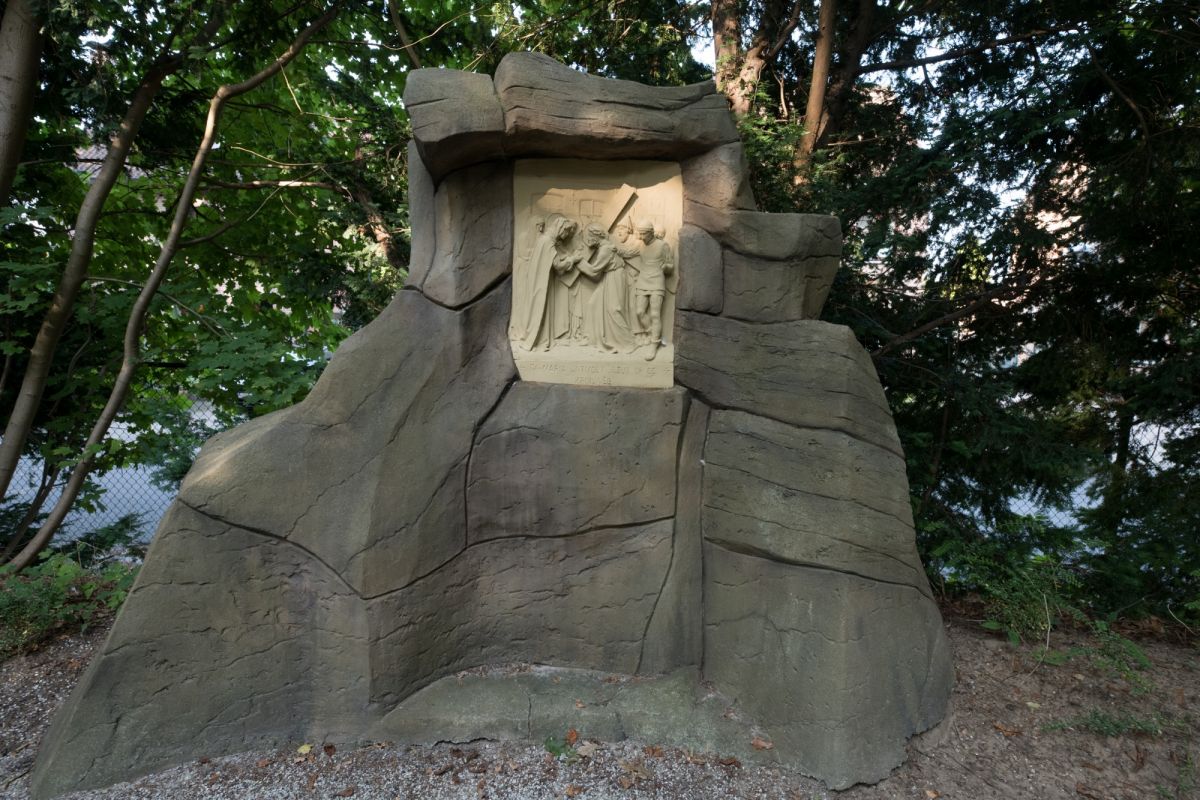
The Way of the Cross has fourteen stations made of rustic cement with bas-reliefs in artificial stone representing rock formations, with the exception of station 14, which is located in the base of the Saint-Roch Chapel. The reliefs are monochrome and accompanied by titles and commemorative plaques. Some bear the signature of Jacques Coomans. Seven stations provide information about their restoration in the 1960s. Station 5 was destroyed during the war and rebuilt.
Garden
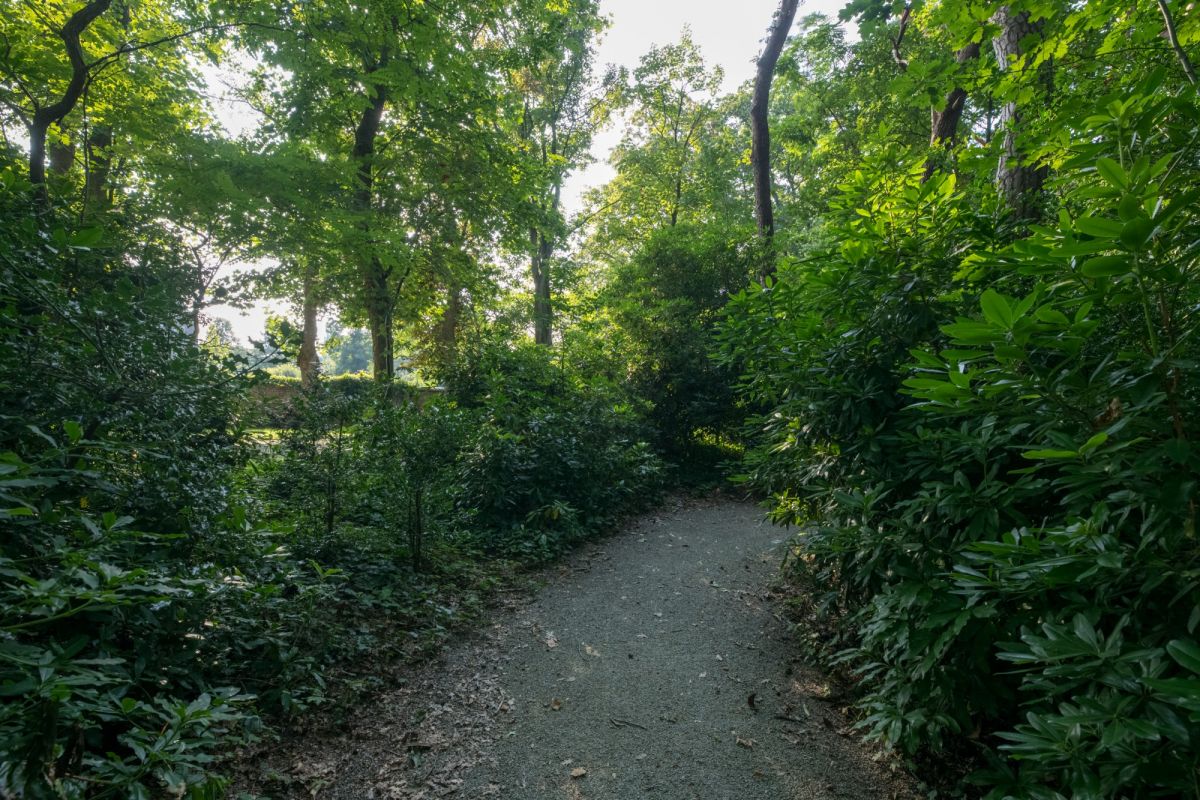
The garden features native and exotic trees and shrubs, with pine trees and rhododendrons as characteristic elements. The pine trees are a reference to the “Brussels forests”. Maples, locust trees and yews are scattered here and there, often in the form of hedges or screens. An old maple tree near Mary's grotto is one of the original plantings. The rhododendrons create an intimate atmosphere, especially around the Way of the Cross.
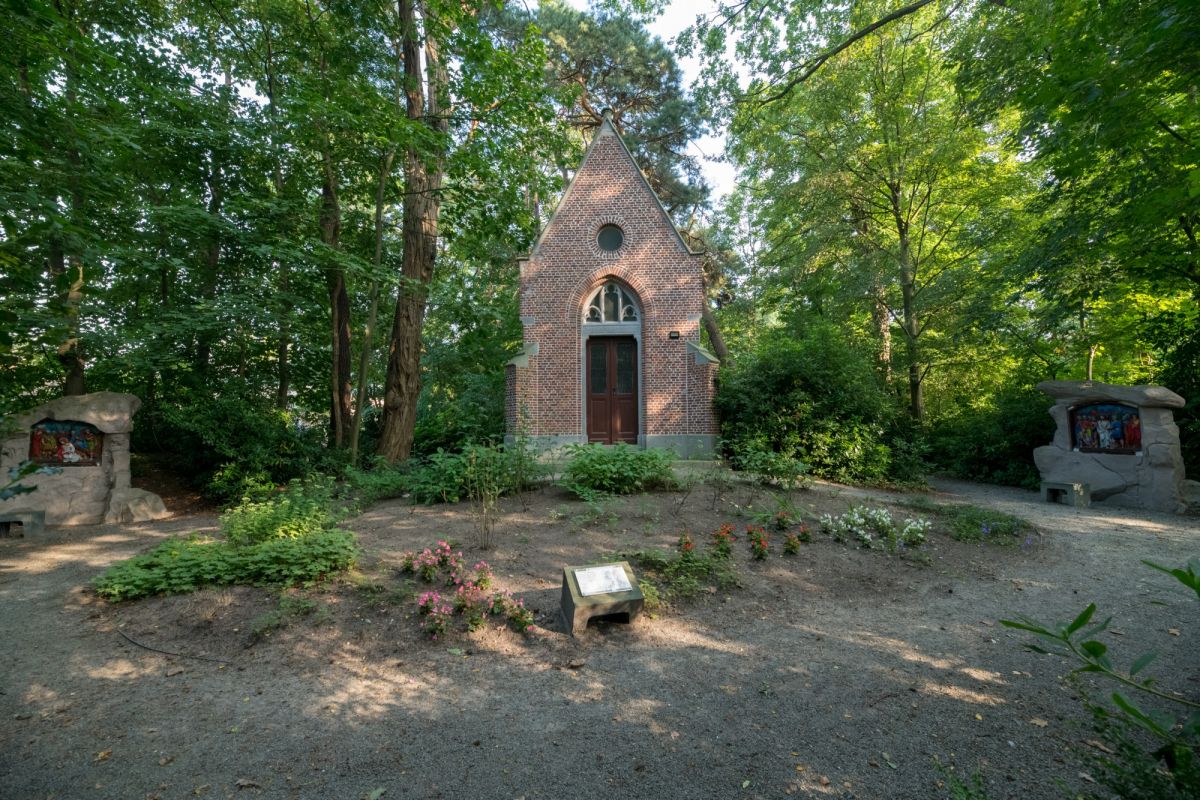
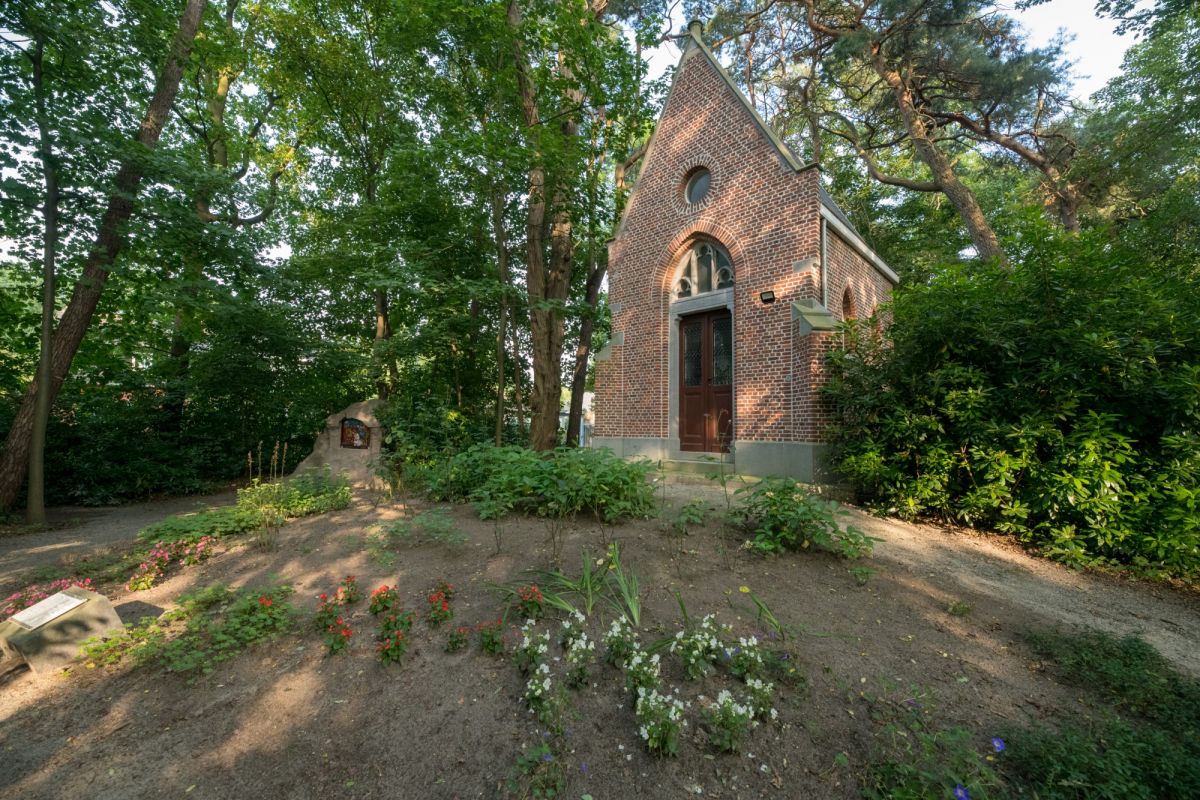
Saint-Roch Chapel
The neo-Gothic Saint-Roch Chapel is a brick building with a natural slate roof and a wrought iron cross. The front façade features a pointed arch doorway, an oculus and buttresses. Various elements are made of artificial stone. The chapel is built on a rock formation into which the 14th station of the Way of the Cross is integrated. There is a cellar beneath the chapel. Inside, the walls are painted and the floor is tiled.