
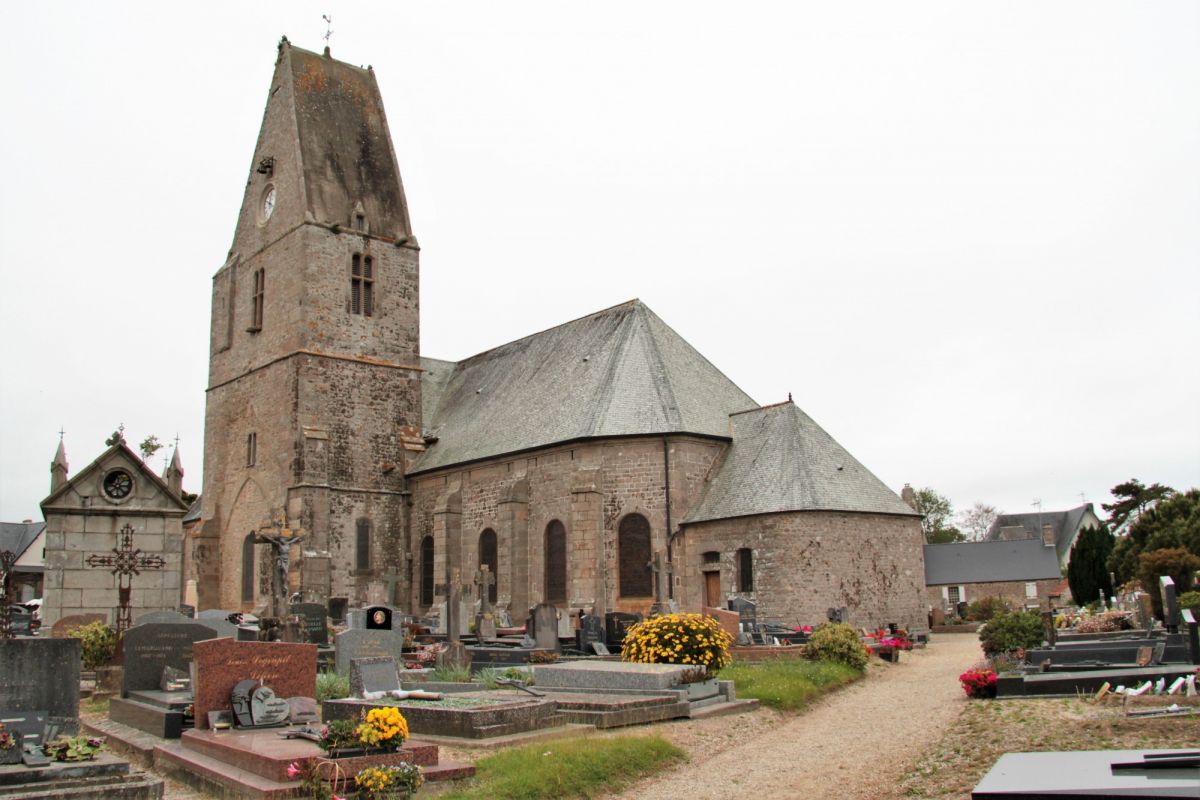
Our Lady
50760 Montfarville
Church | XIIe - XVIIIe siècle | | Catholic Church


Map
Opening hours
01 October - 31 March
Mon 9.30 - 17.00
Tue 9.30 - 17.00
Wed 9.30 - 17.00
Thu 9.30 - 17.00
Fri 9.30 - 17.00
Sat 9.30 - 17.00
Sun 9.30 - 17.00
01 April - 30 September
Mon 9.00 - 18.00
Tue 9.00 - 18.00
Wed 9.00 - 18.00
Thu 9.00 - 18.00
Fri 9.00 - 18.00
Sat 9.00 - 18.00
Sun 9.00 - 18.00
Description
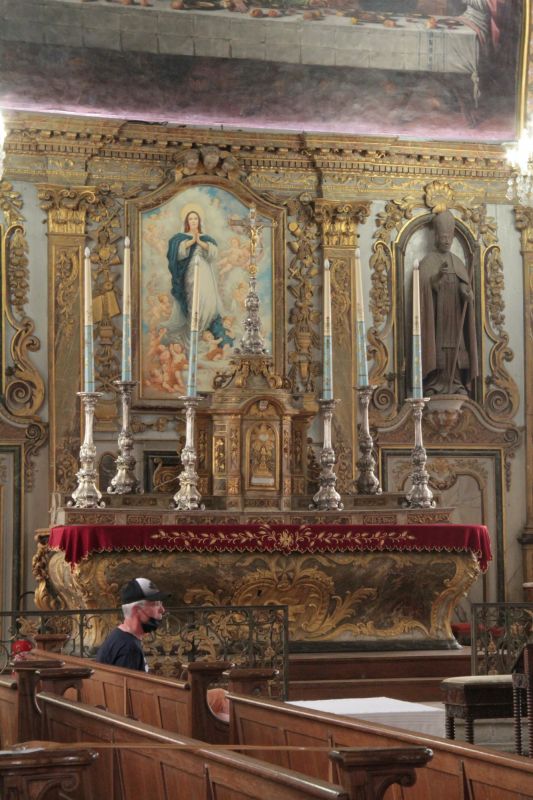
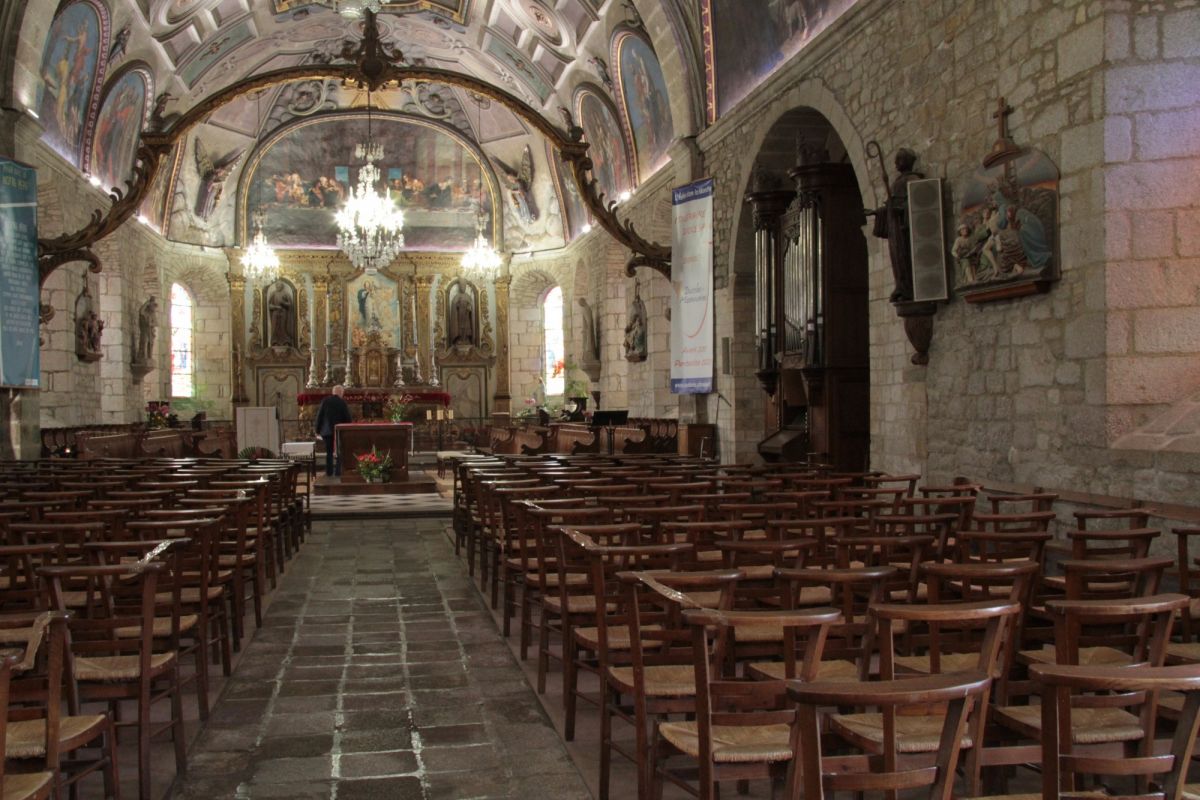
The church was rebuilt in 1763, on the site of the previous gothic church, of which only the chapel called ‘ les cloches’, and the impressive 13th century belfry in gable-roof have been kept. (Gable-roof is a traditional high, two-sided belfry, typical of the Basse Normandie region, where there are 340 examples to be seen in the rural areas).
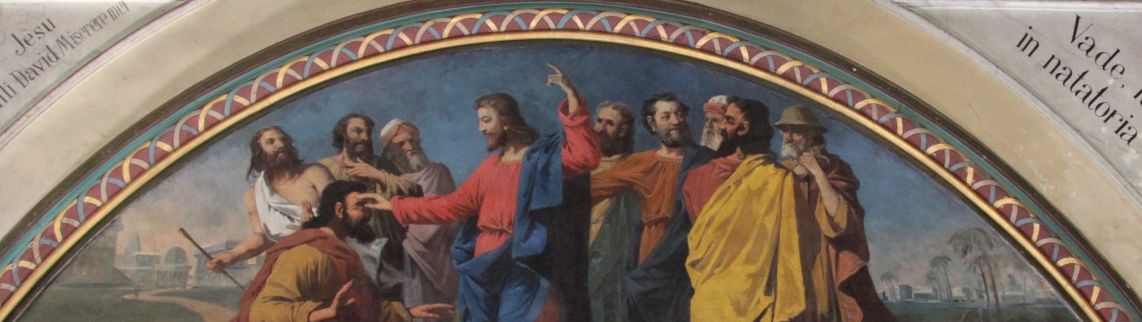
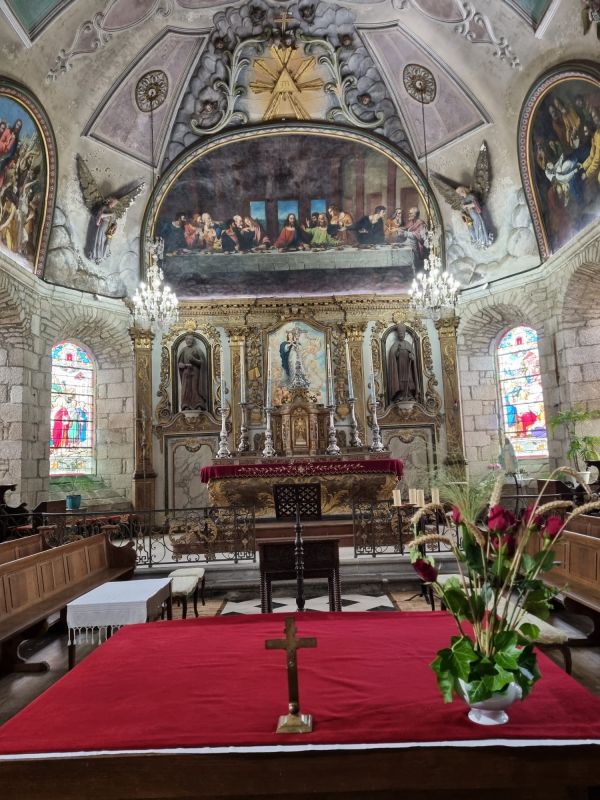
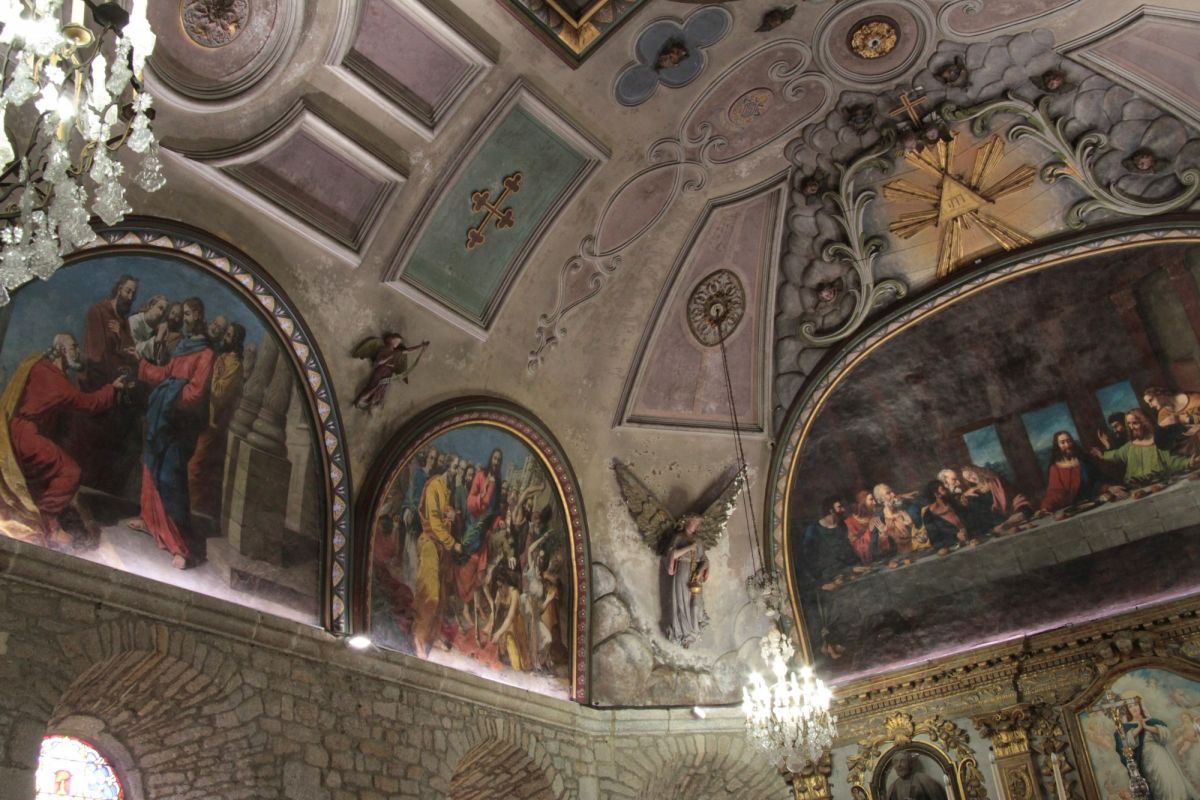
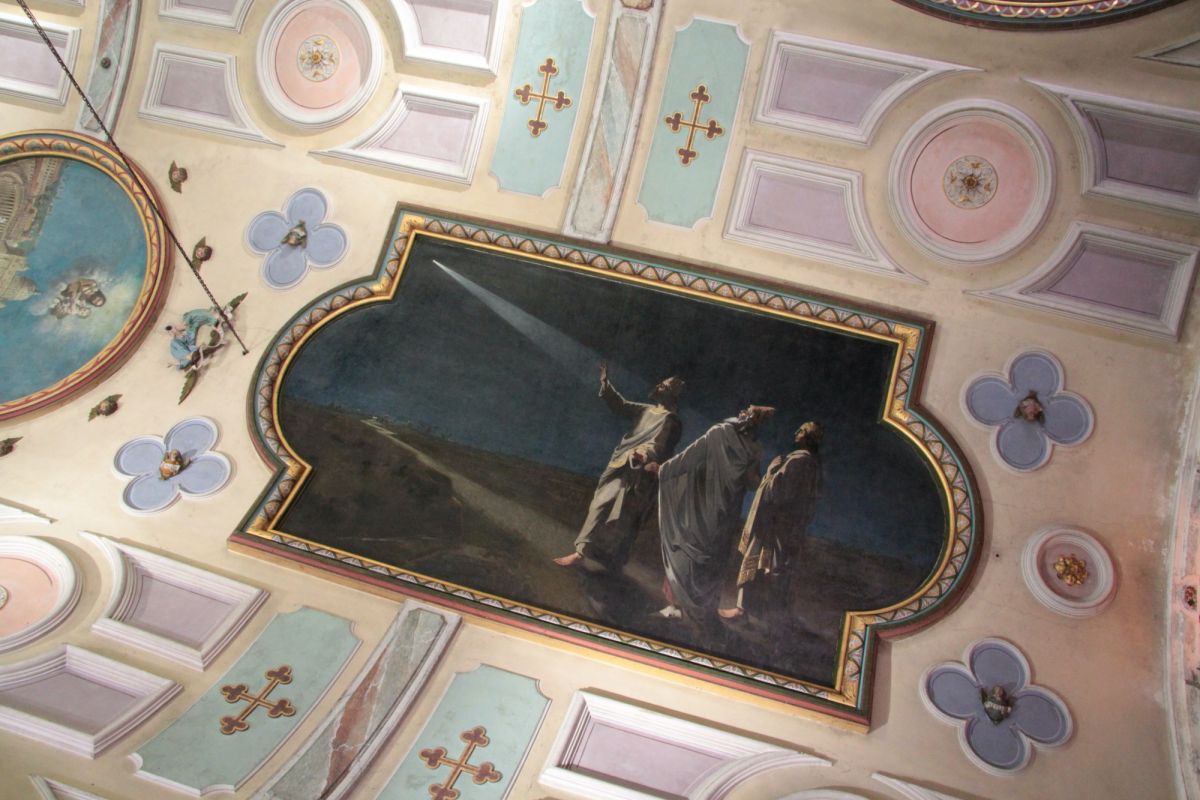
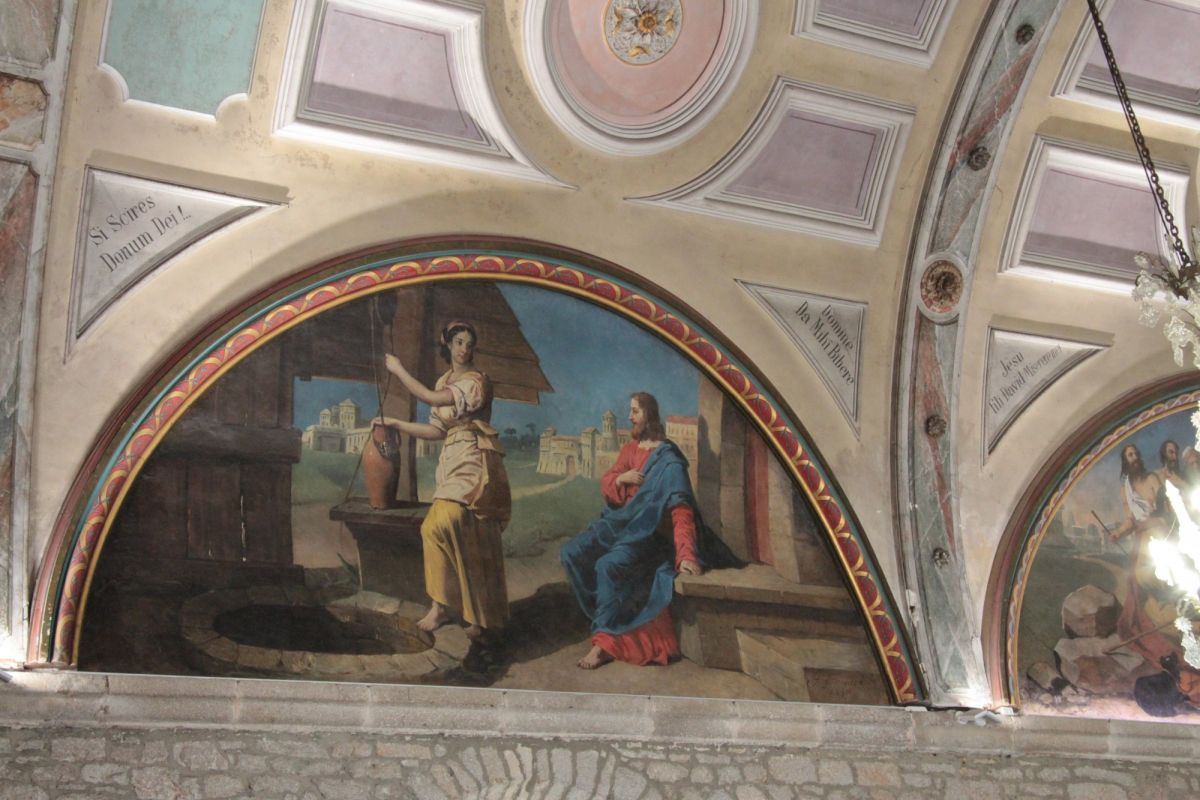
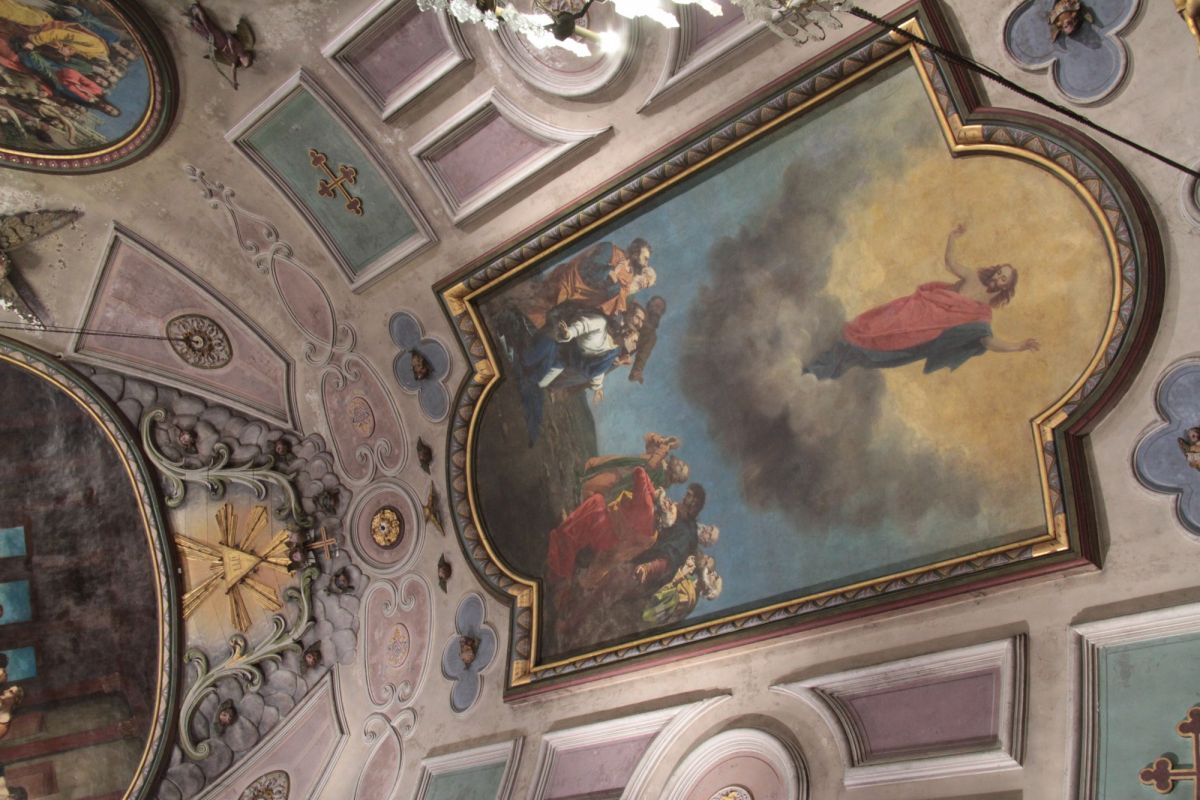
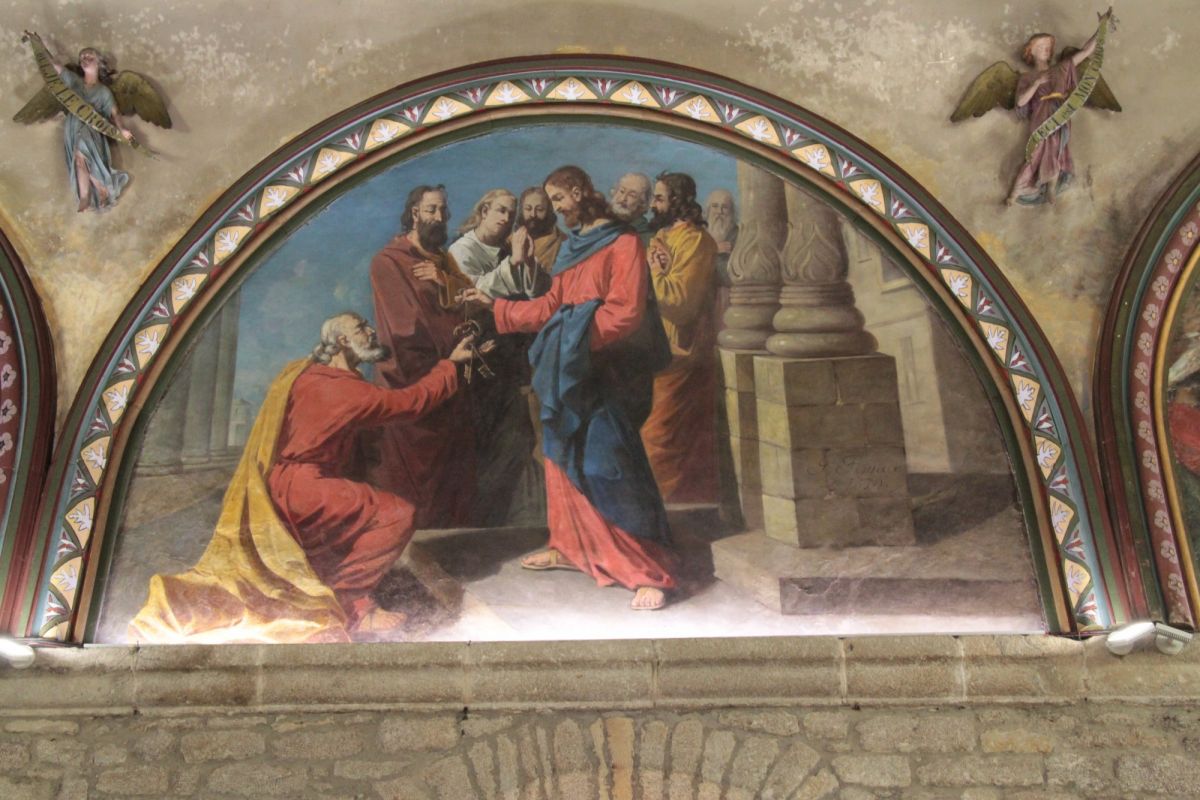
In the 19th century, after a visit to Rome, and more particularly the Sixtine Chapel, the parish priest wished for transformation, and called on Guillaume Fouace, a painter born in Réville, nearby, to decorate the vault of his church with scenes of the life of Jesus and the Virgin. The work was completed later with the installation of stained-glass windows.
Many elements of statuary, and furnishings, complete the whole, and deserve careful attention.


Photos



Remarkable elements

Statue of Our Lady of Consolation
A 14th-century polychrome stone statue of the Virgin and Child.
Legend has it that the statue was buried on the coast in 1793, near Keiry or Landemer, to save it from the ravages of the French Revolution.
After this period, the statue was returned to its place in the church, where it is still greatly venerated.
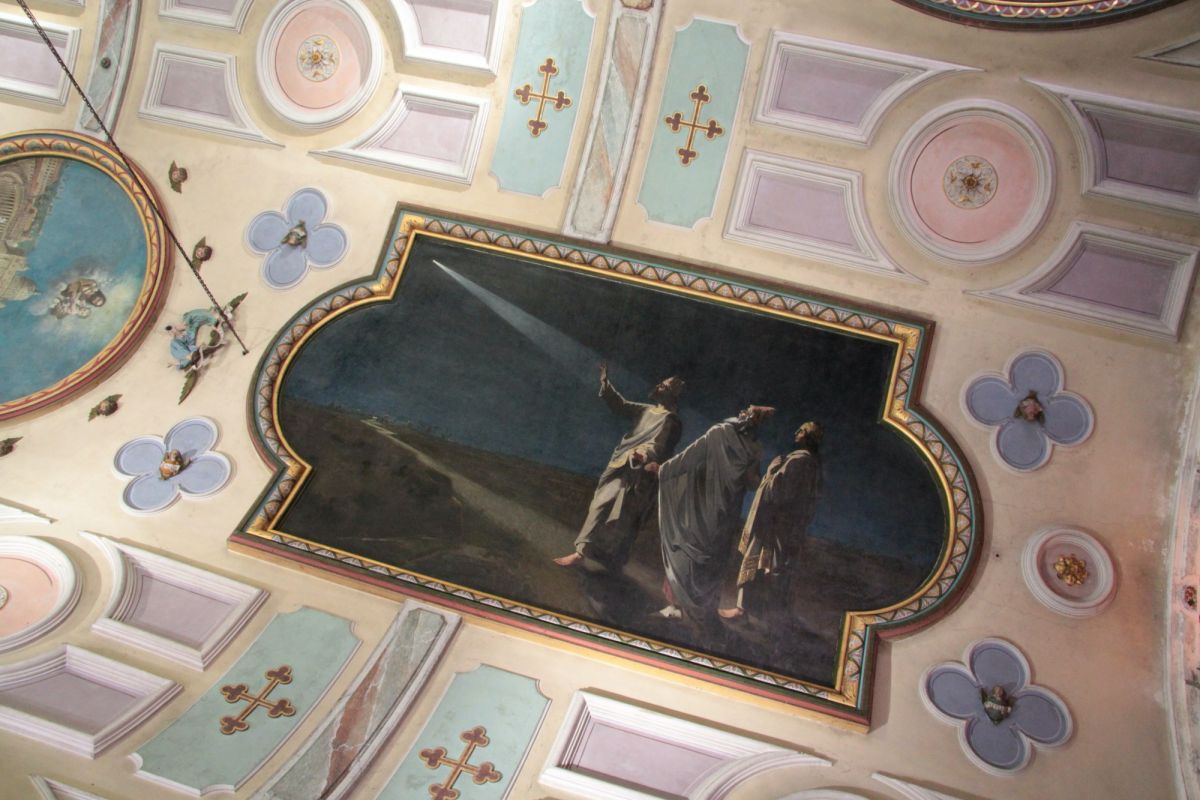
The Paintings of Guillaume Fouace
This monumental ensemble was created during the stay in Montfarville of Abbé Jean-François Goutière, parish priest from 1871 to 1882. Keen to embellish the church, he commissioned local artist Guillaume Fouace to paint a vast cycle of 19 canvases covering nearly 200 m². Completed in three years and mounted on the vaulted ceiling, the work reveals remarkable artistic commitment. Fouace depicted himself in the scene of the miraculous catch and gave the angel of the Annunciation the features of his deceased daughter.
Translated with DeepL.com (free version)
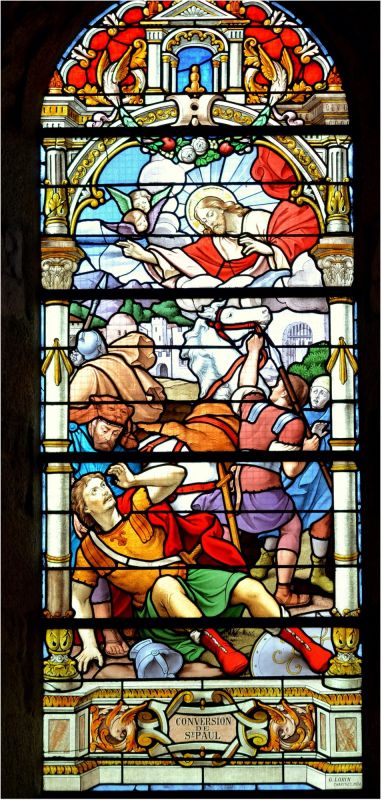
The eight stained glass windows in the choir
The eight stained-glass windows in the chancel and the two in the nave were installed in 1922–1923. They are the work of Charles Lorin, a master glassmaker from Chartres.
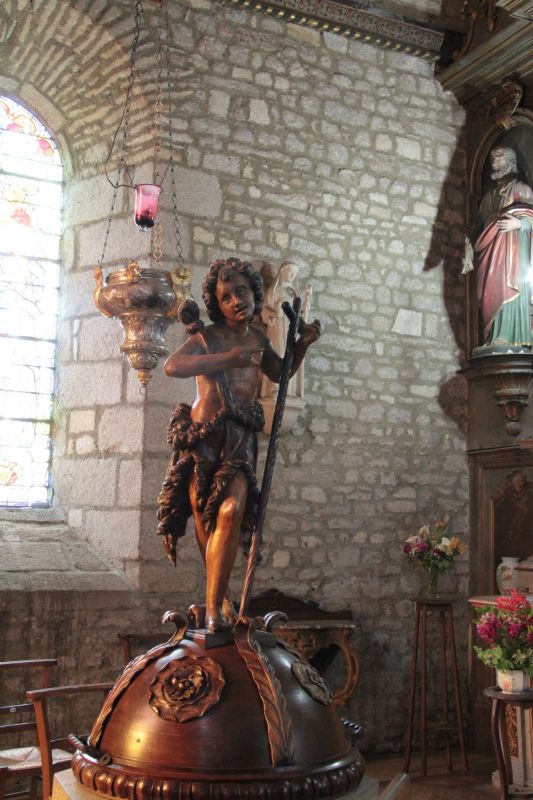
The baptismal font
The ebony lid, depicting Saint John the Baptist, was made in 1765 by a sculptor named Guillaume, originally from Morsalines, who also created the stalls in the choir.
They have been listed as Historic Monuments since 1983.
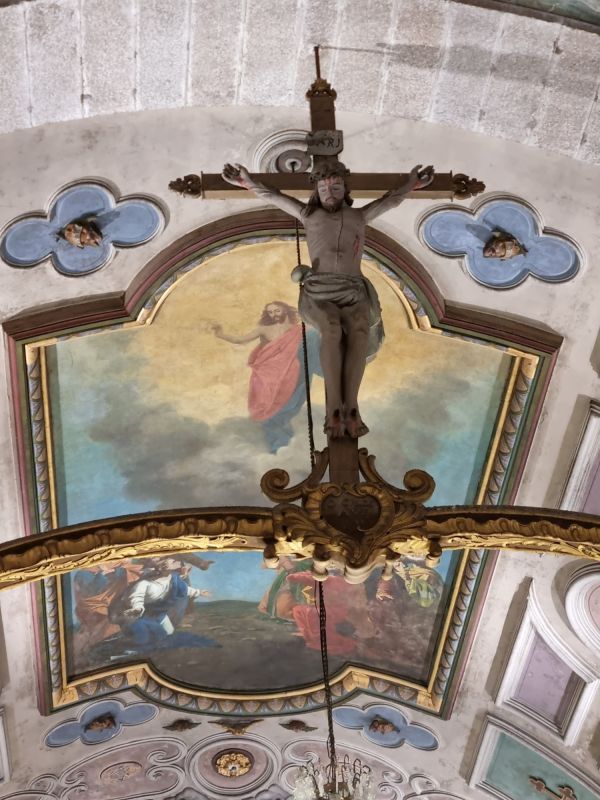
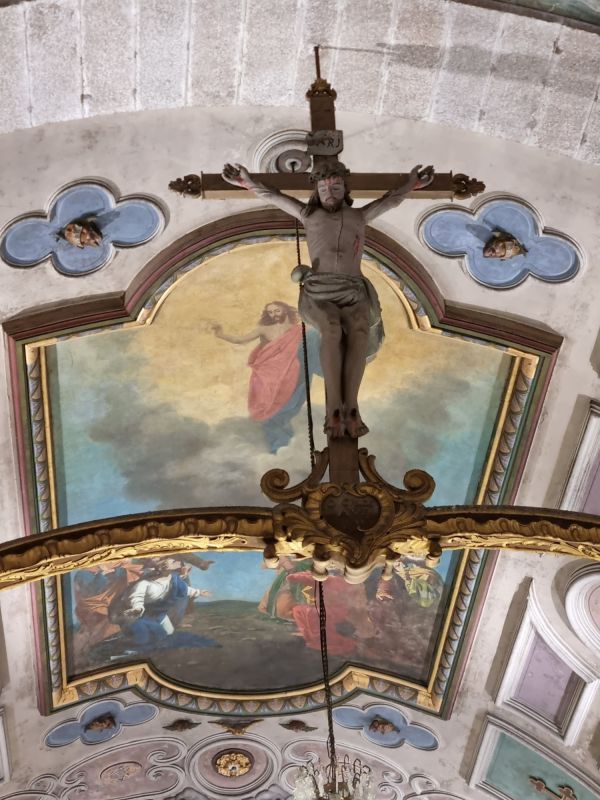
The perque
Name given in dialect to the powder of glory. Made of painted and gilded oak, it was installed in 1765 and supports a 17th-century Norman-style Christ.
It has been protected as a Historic Monument since 1955.

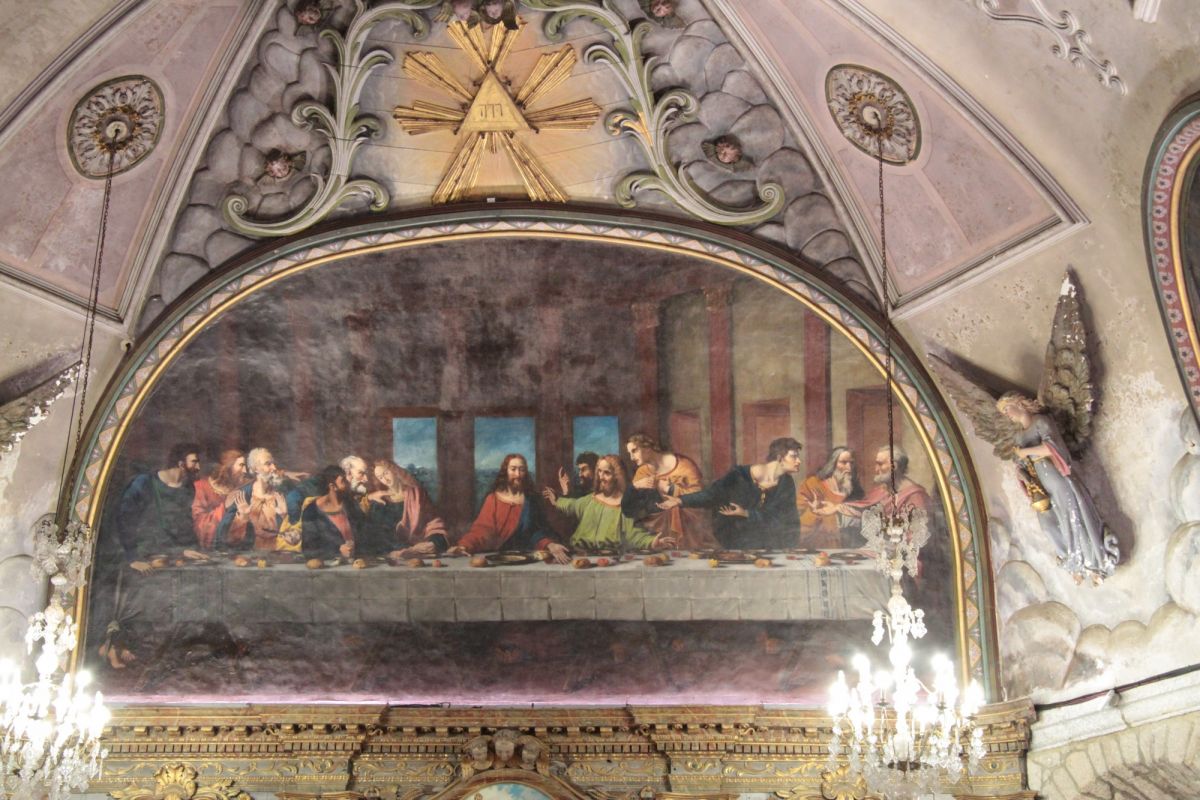
Replica of the Last Supper
The work depicts the life of Mary on the south side and that of Jesus on the north side, while the vault features more specific images such as the March of the Magi and the Sermon on the Mount. The Church is represented by the image of Saint Peter of Rome and Saint Joseph, whom Pope Pius X had just declared patron saint of the universal Church.
The apotheosis is located above the high altar with a replica of Leonardo da Vinci's The Last Supper.