

Our Lady of Liesse
Place du Parvis
02350 Liesse-Notre-Dame
Basilica | 1134 | Gothic | Catholic Church


Map
Opening hours
15 April - 01 November
Mon 8.00 - 18.00
Tue 8.00 - 18.00
Wed 8.00 - 18.00
Thu 8.00 - 18.00
Fri 8.00 - 18.00
Sat 8.00 - 18.00
Sun 8.00 - 18.00
02 November - 14 April
Mon 8.00 - 17.00
Tue 8.00 - 17.00
Wed 8.00 - 17.00
Thu 8.00 - 17.00
Fri 8.00 - 17.00
Sat 8.00 - 17.00
Sun 8.00 - 17.00
For more information, click here...
Guided tour
To discover the heritage of the commune and the church, a little game has been created by the pupils of the IME, click here...
Religious offices
Description
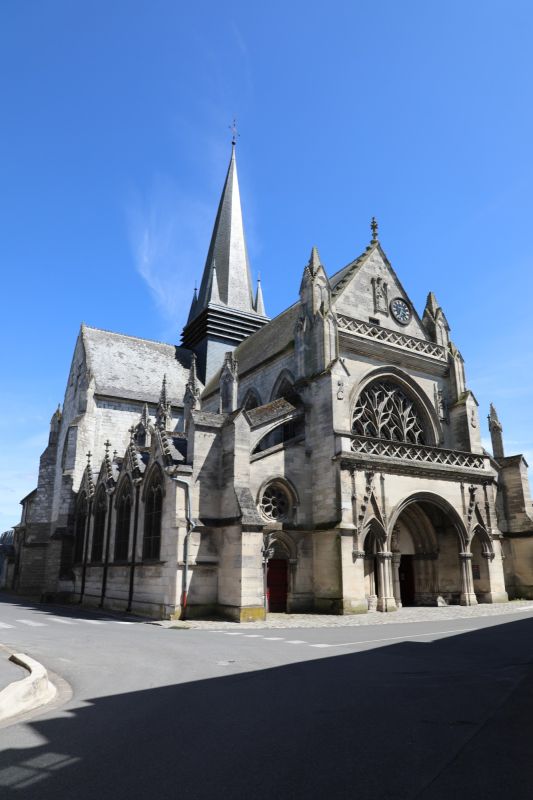
A few kilometres from Laon, near Marchais, owned by the Princes of Monaco, the Basilica of Notre-Dame de Liesse has been welcoming pilgrims since the 12th century.
The legend of this village, then called Lience, has its roots in the Holy Land in 1134. Three brothers, knights of Eppe, members of the Hospitaller Order and natives of Marchais, were captured there and held prisoner in Cairo. Princess Ismérie, sent to convince them to renounce their faith, was ultimately converted to Christianity thanks to a statue of Mary that miraculously arrived in the prison. The brothers named it ‘Notre-Dame de Liesse’ because it brought joy and jubilation.
Ismérie helped the knights to escape and fled with them. After falling asleep on the banks of the Nile, they were miraculously transported to a fountain in Lience. As they set off again towards their fiefdom, the statue became so heavy that they realised a sanctuary had to be built on that spot to venerate the image.
The first stones were laid in 1134. The church was rebuilt in 1384 and enlarged in 1480 to become the flamboyant Gothic building that dominates the town today and was, until the 19th century, one of the main Marian pilgrimage sites in France.
In the Middle Ages, Notre-Dame de Liesse was one of 277 sanctuaries where stillborn children were brought in the hope of a sign of life that would allow them to be baptised. Patron saint of the Capetian dynasty, it was also a place of royal pilgrimage: kings, queens and princes left numerous testimonies of their devotion there.
The church was finally elevated to basilica status in 1923 and is now protected as a historic monument.


Photos




Remarkable elements

The Black Madonna
The current statue, made of ebony by Charles Buisine, dates from 1857 and replaces the statue burnt down in 1793. It contains ashes from the original statue.
In August 2024, it will be fitted with a crown made by a jewellery student.
Translated with www.DeepL.com/Translator (free version)
The altarpiece
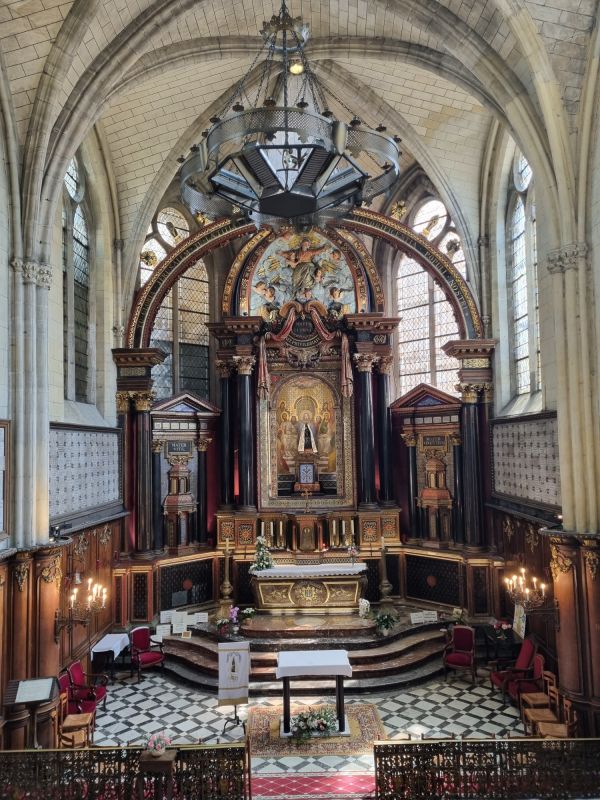
The Italian Renaissance altarpiece (1610) was a gift from Marie de Médicis, wife of Henri IV and originally from Florence, in thanks for the birth of Louis XIII.
It was restored in 2013 thanks to the generosity of the Knights Hospitallers of the Order of Malta.
Translated with www.DeepL.com/Translator (free version)
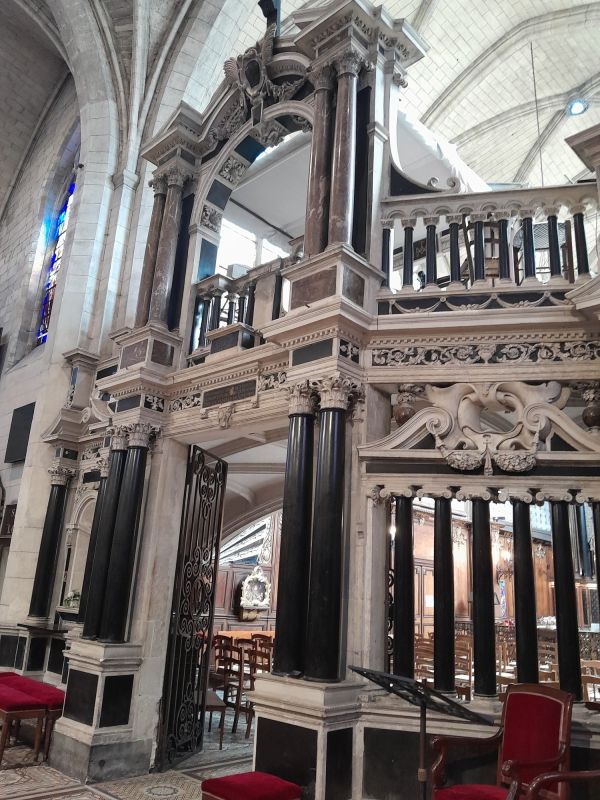
The rood screen
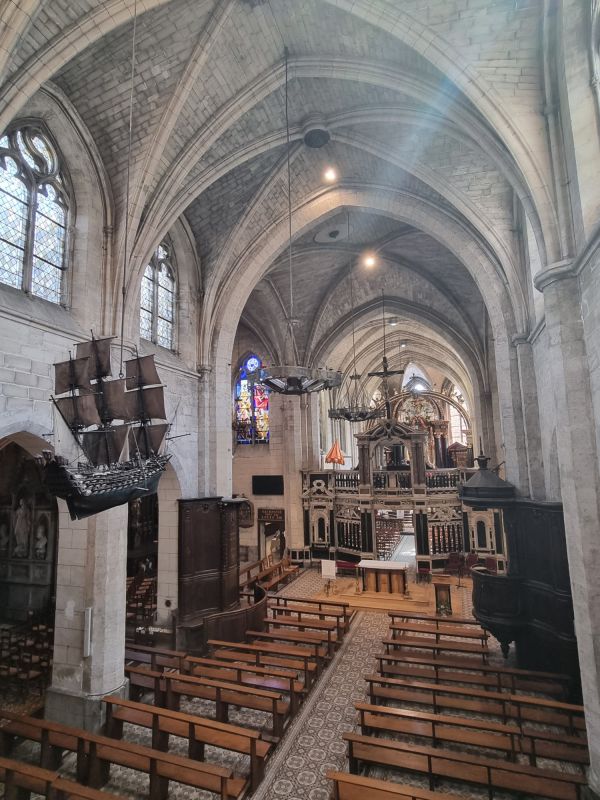
The rood screen, built in 1616, is a stone monument separating the congregation from the clergy, from which the Epistle and Gospel were proclaimed. The rood screen in the basilica of Liesse-Notre-Dame was donated by Marguerite de Gonzague, wife of Henri II of Guise-Lorraine.
Today, rood screens are a rarity in French churches, disappearing little by little in the 18th and 19th centuries, sometimes giving way to simple railings to delimit the choir area.
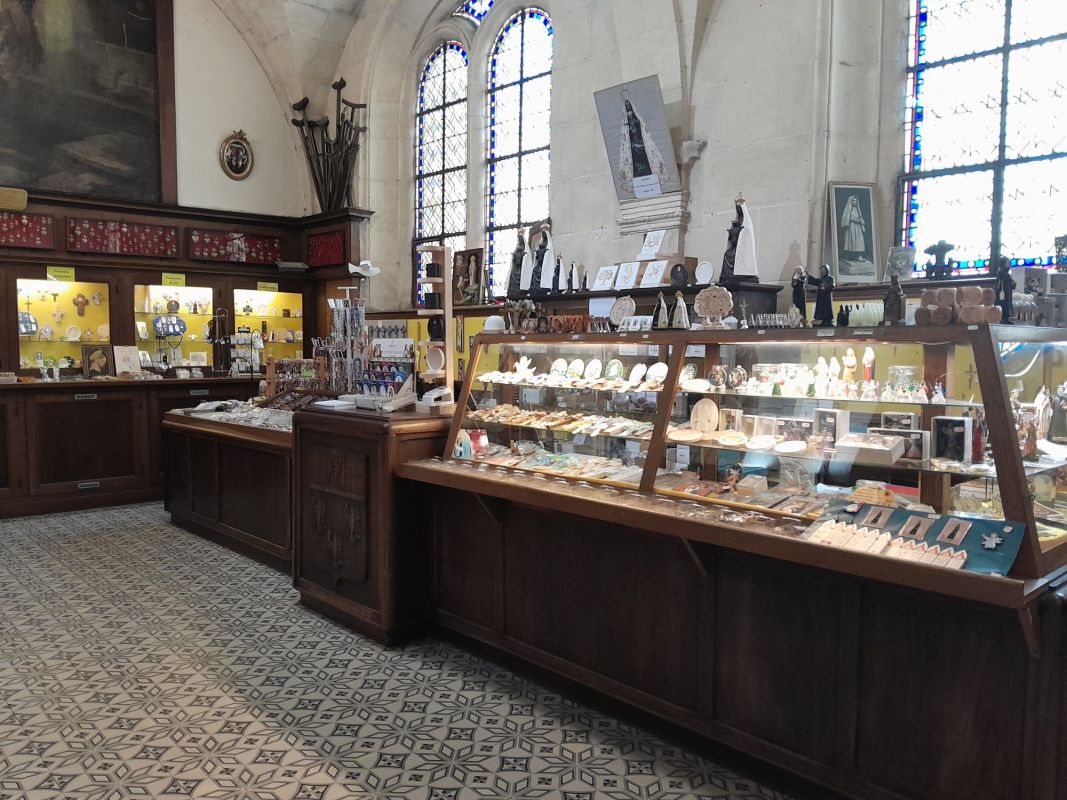
The sacristy of Louis XIII
You'll discover objects that speak of the faith of pilgrims: marble plaques for cures, gilded metal hearts, offered at the crowning of the Virgin in 1857. They bear witness to their gratitude, following a wish (ex-voto): work medals, military decorations, crutches or one of the finest fruits of their activitý.
This area also houses the religious objects shop.
Translated with www.DeepL.com/Translator (free version)

The ship
As you enter the basilica, start by looking up. You will discover a ship, the "Royal Sun", hanging from the vault. It was donated in 1692 by Admiral de Tourville, Knight of Malta, who had asked Notre-Dame de Liesse to protect it during a naval battle from which the crews had emerged alive.
Translated with www.DeepL.com/Translator (free version)

Santa Casa Chapel
This chapel, located just a few metres from the basilica, is decorated with a fresco painted by Pierre-Emilien Grenier, a contemporary artist from the Laon region. It measures 10 m x 4.30 m and tells the story of three brother knights from the House of Eppes (near Laon) and Princess Ismérie, the daughter of the Vizier of Egypt, who converted to Christianity.
Translated with www.DeepL.com/Translator (free version)