Saint Bernard
Mont-des-Cats
59270 Godewaersvelde
Church | 1847 | Classical | Catholic Church

Map
Opening hours
01 January - 31 December
Mon 8.30 - 20.00
Tue 8.30 - 20.00
Wed 8.30 - 20.00
Thu 8.30 - 20.00
Fri 8.30 - 20.00
Sat 8.30 - 20.00
Sun 8.30 - 20.00
Guided tour
+33 6 20 77 82 80
Religious offices
the 1st Saturday of the month : 6.30 pm
one Sunday a month : 9.30 am
Description
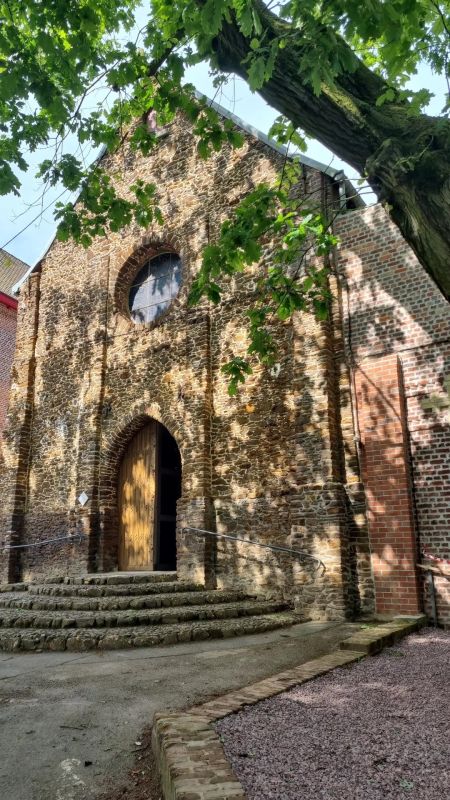
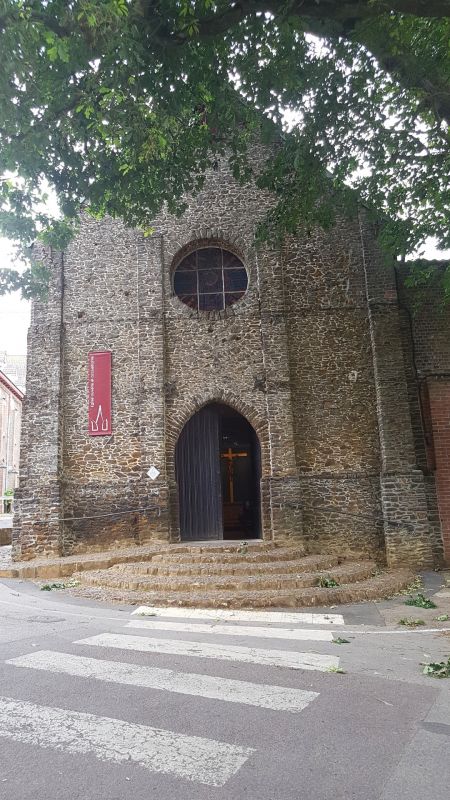
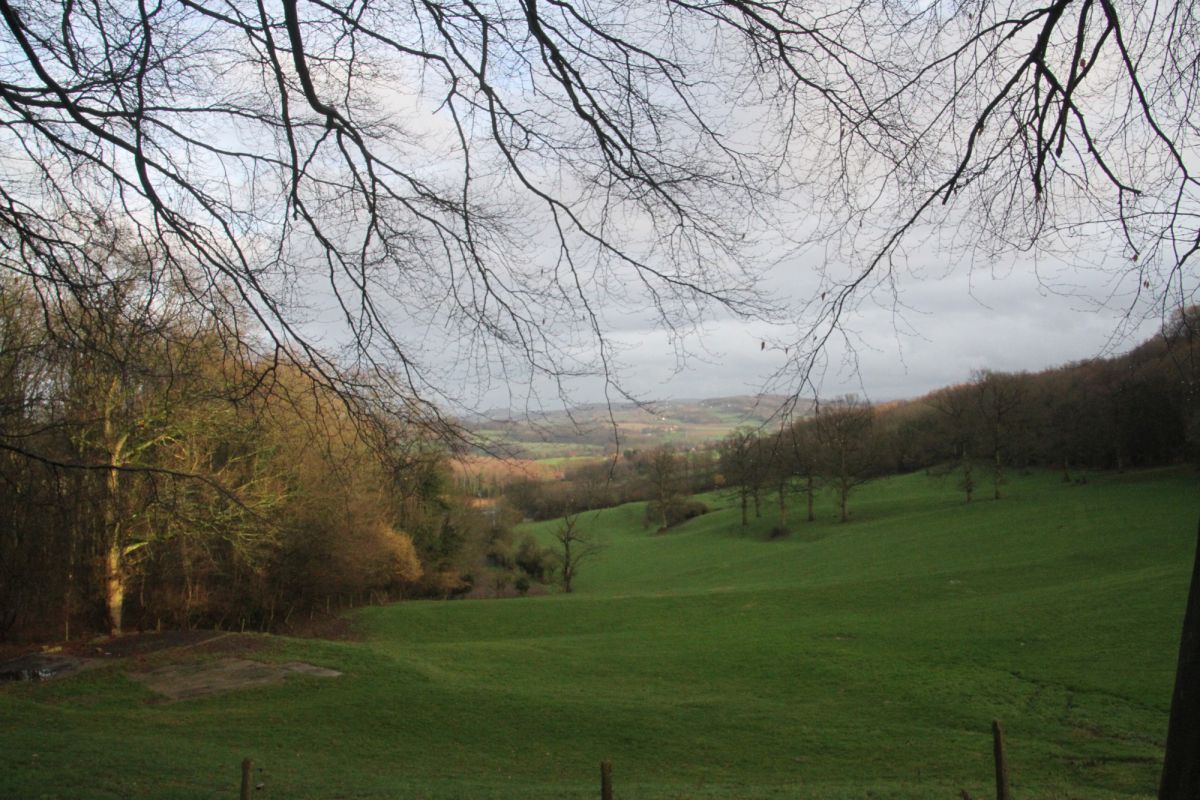
It is on the summit of the grandiose site of the Mont des Cats, overlooking the plains of Flanders, that the church of St. Bernard is to be found, at the entrance of the Cistercian Trappist Abbey of the Mont des Cats.The chapel of St. Constantina, was built in the middle of the 19th century to welcome visitors and the faithful outside the monastery enclosure. Dedicated to St.Bernard at the end of the 20th century, it is also the parish church.
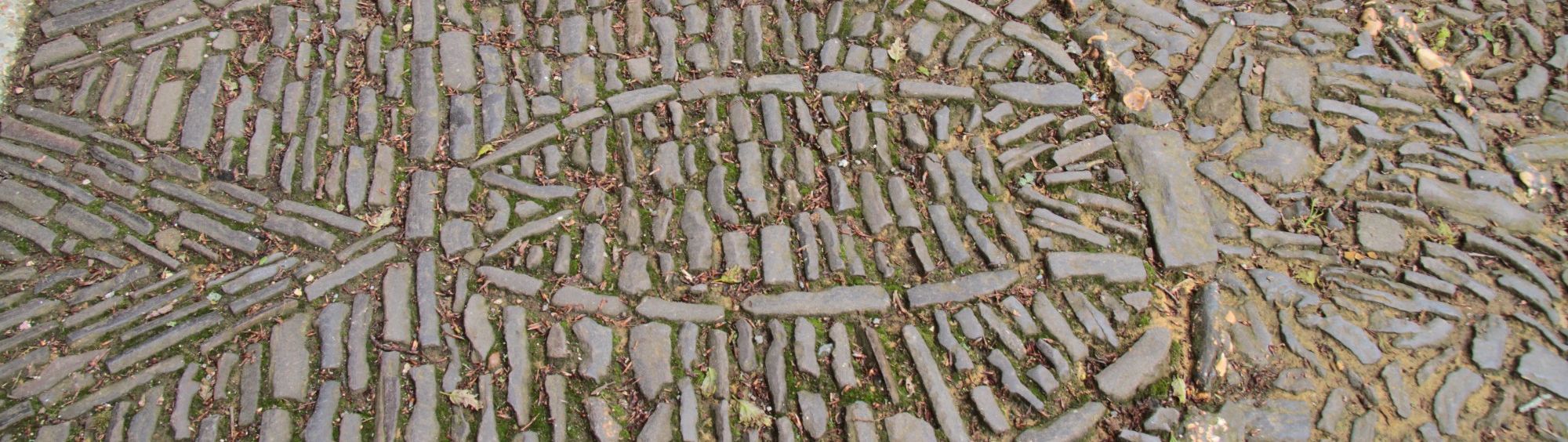
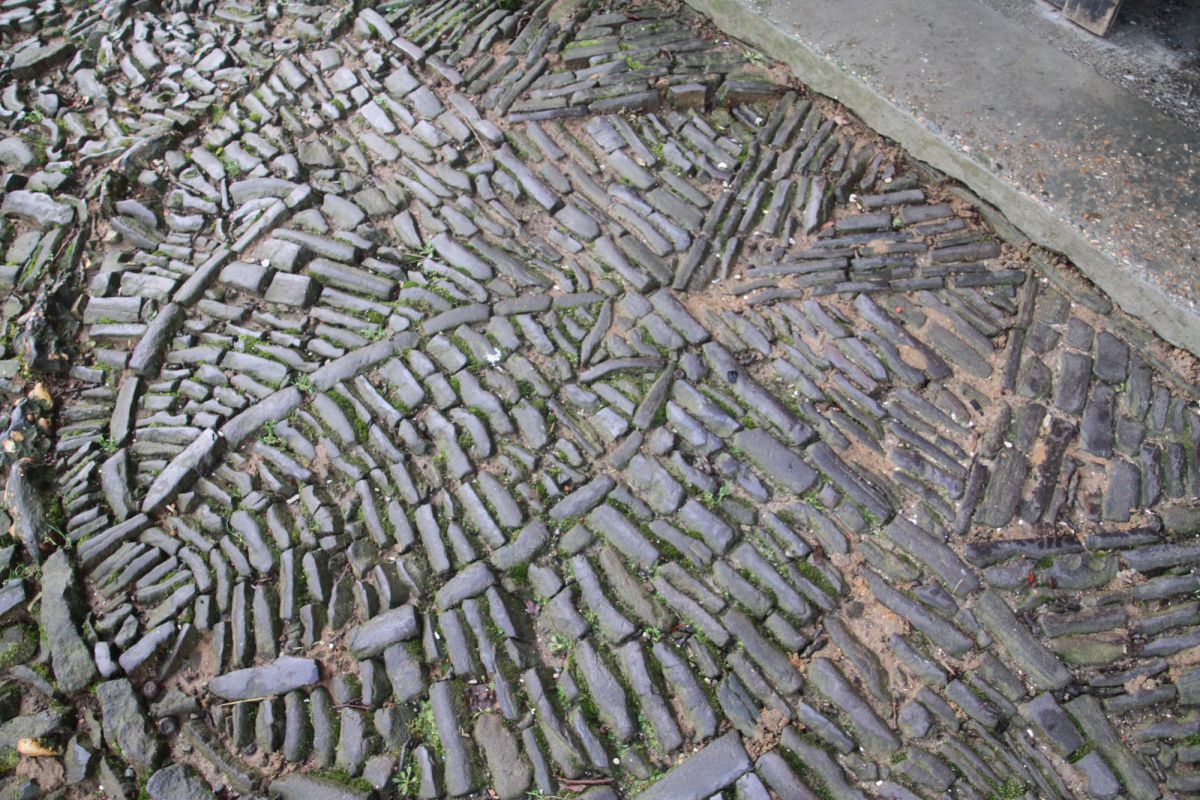
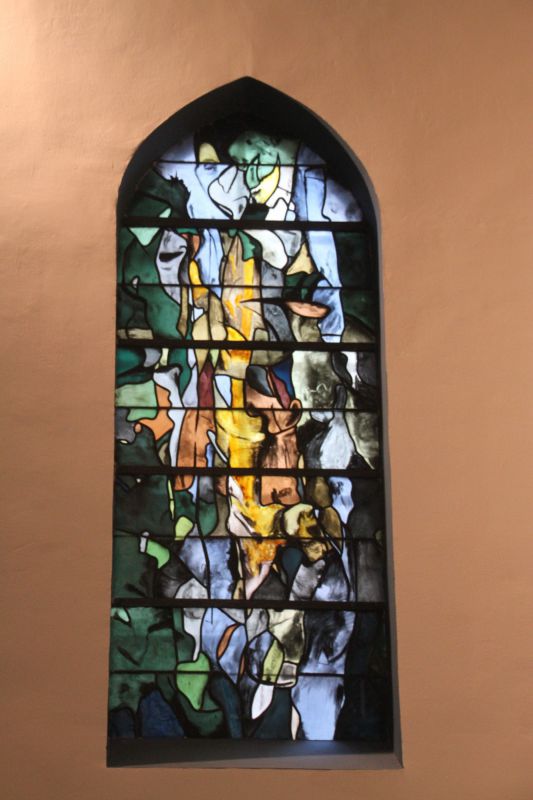
A fish made of pieces of blue granite, visible from the entrance, invites into this brick building of one aisle. The great simplicity of the interior decoration, recently restored, gives majesty to the interior. The simple decoration particularly valorises the « Way of the Cross » and the light modern stained-glass windows.
Near to the church, the Abbey Shop, reputed for its choice of books and monastic produce, welcomes visitors, and in the woods around a path leads to the small chapel of the Passion.

Photos



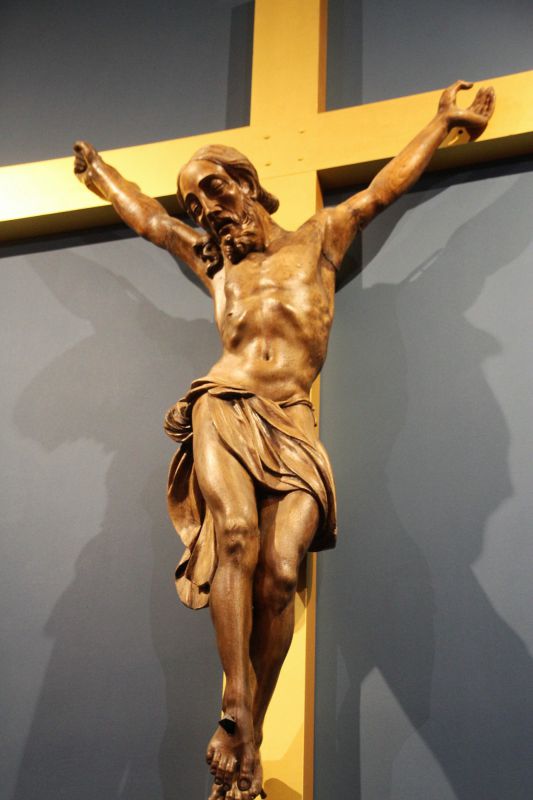
Remarkable elements
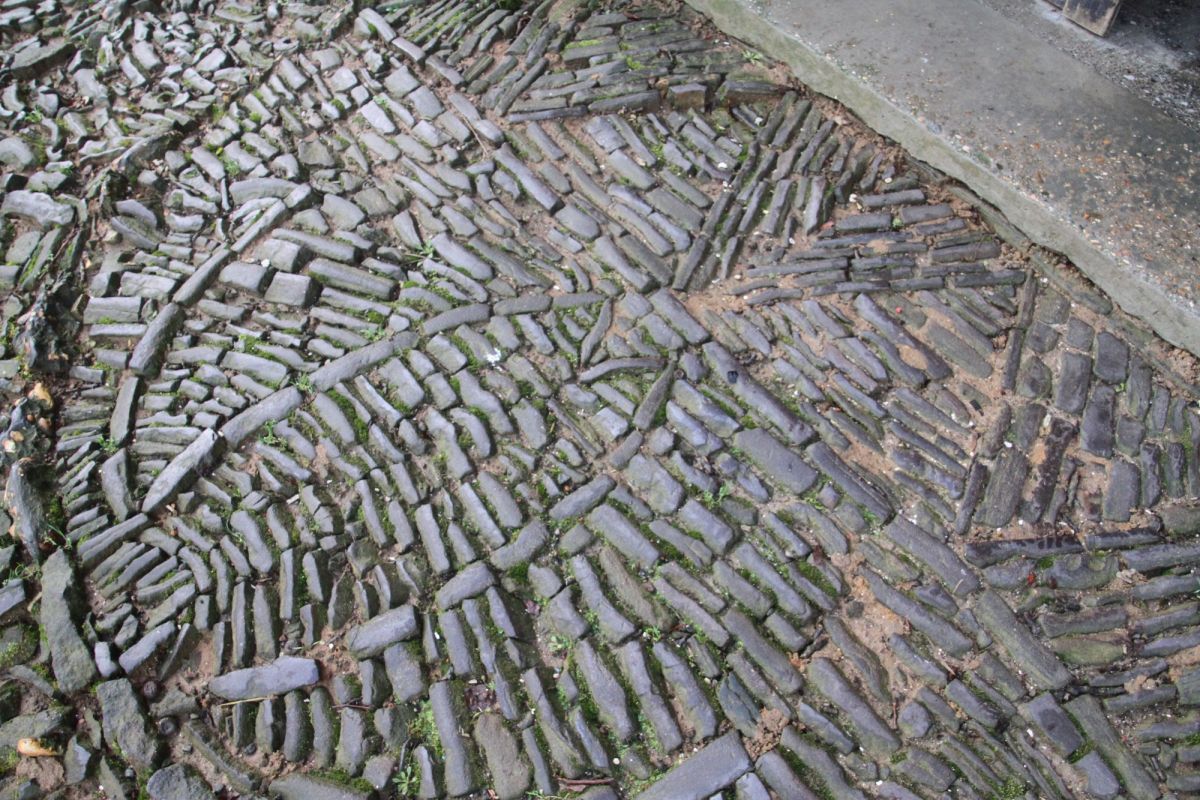
The fish
Fish were the symbol of Christ for early Roman Christians. This image, common since the 2nd century AD, allowed them to recognise each other as fellow believers: two curves drawn on the ground to form the shape of a fish, engraved on funerary furniture in the Roman catacombs, sketched on terracotta lamps, depicted on mosaics, etc. For a long time, this representation of the fish, derived from a Greek pun, was the main symbol of Christianity, an allegory of Christ the Saviour and evoking baptism.

The altar
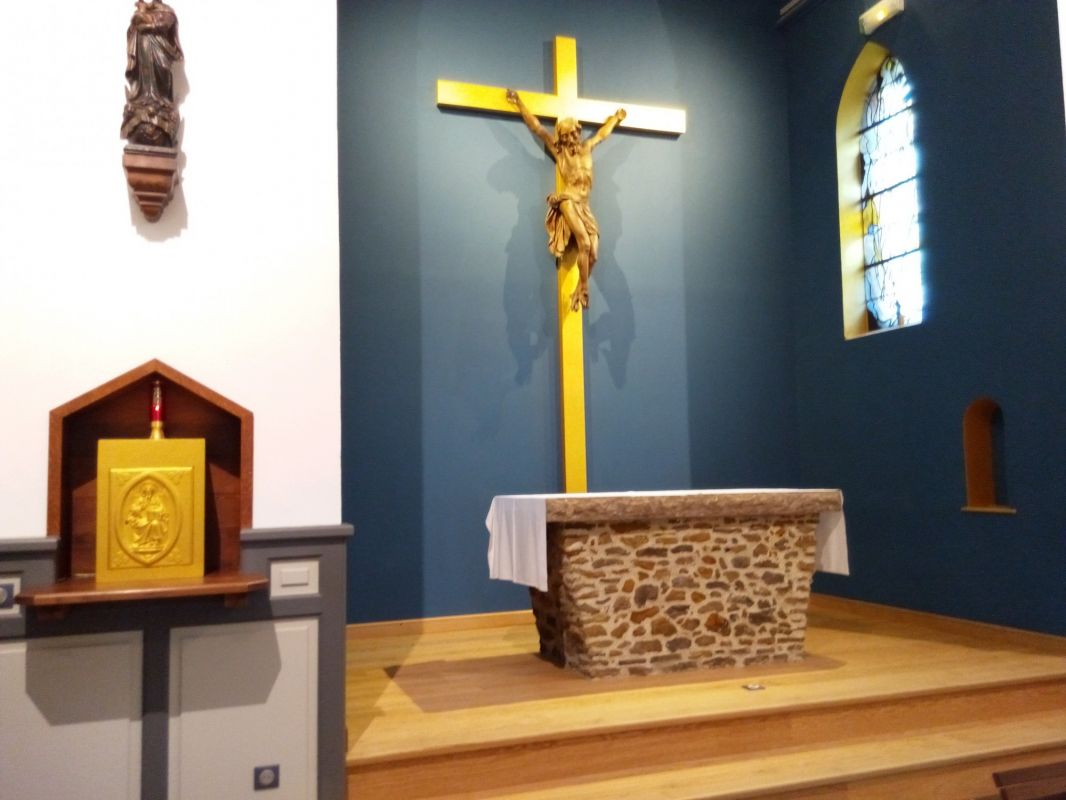
The altar is built from iron-rich stones from Mont-des-Cats, with each stone representing a family living on the mountain.
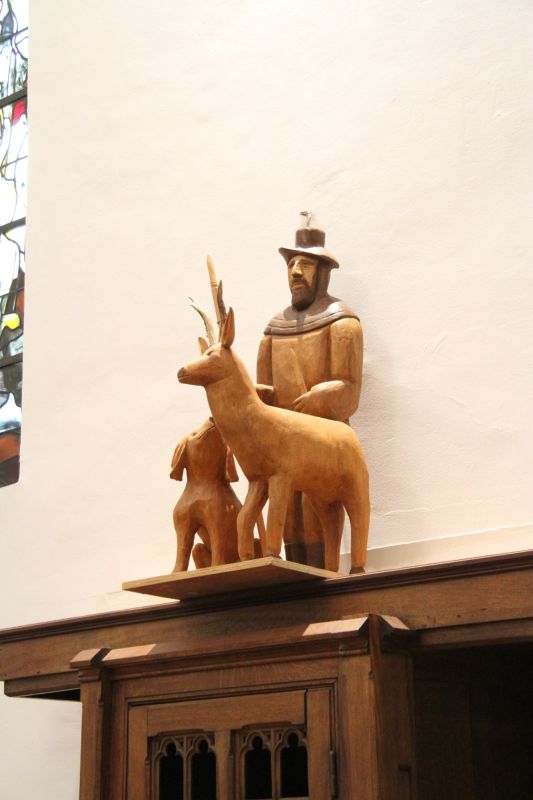
Saint Hubert
Statue of Saint Hubert, bishop and patron saint of hunters, depicted as a hunter. He is shown here in hunting attire, accompanied by a dog and a deer. According to legend, this Frankish lord was so passionate about hunting that he forgot his duties and went hunting on Good Friday. During the hunt, a deer, the allegory of Christ, appeared to him and converted him, calling him to join Saint Lambert in Maastricht.

Chapel of the Passion
Since the French Revolution, an ancient cross, saved from destruction, has been venerated on the site for its virtues against fever, thanks to pieces of cloth hung on it. A chapel was built in 1819, then rebuilt in 1857. Enlarged by Dom Jérôme Parent, it houses the cross in a sepulchre. Handkerchiefs are tied to the railings to “bind the evil”, a gesture that gave rise to the Flemish expression “het zeer afbinnen”.

Vitraux