
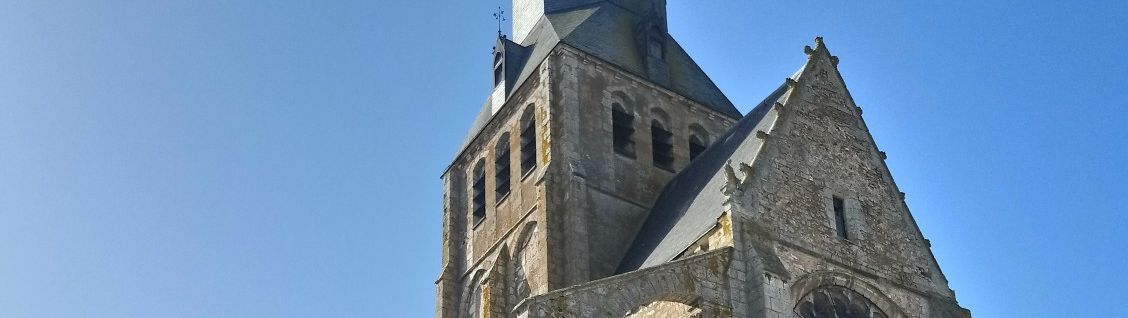
Our Lady
Place de l'église
28800 Bonneval
Church | XIII | Gothic | Catholic Church


Map
Opening hours
01 January - 31 December
Mon 9.00 - 19.00
Tue 9.00 - 19.00
Wed 9.00 - 19.00
Thu 9.00 - 19.00
Fri 9.00 - 19.00
Sat 9.00 - 19.00
Sun 9.00 - 19.00
Description
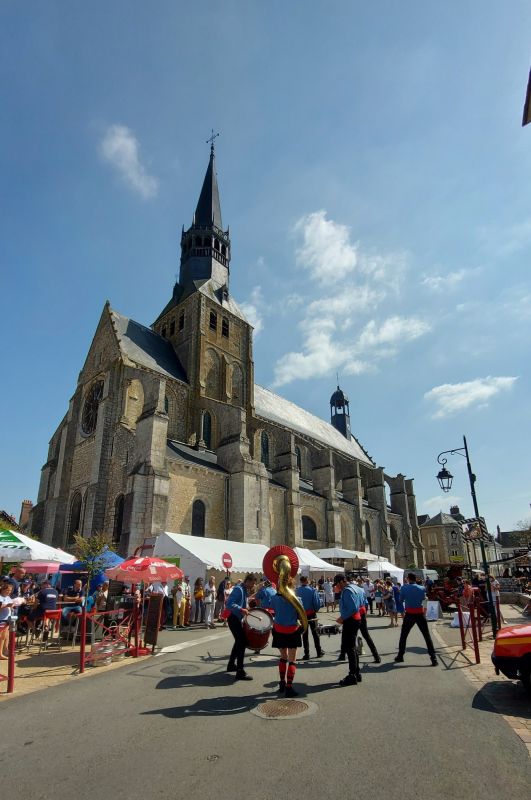
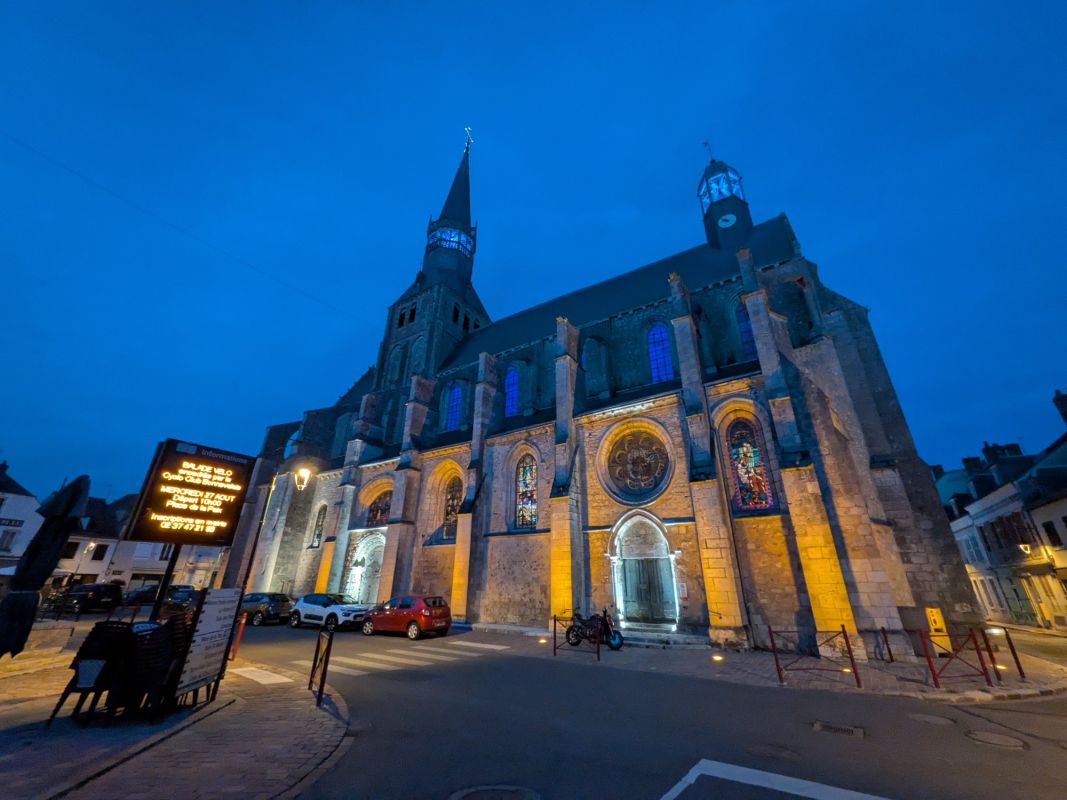
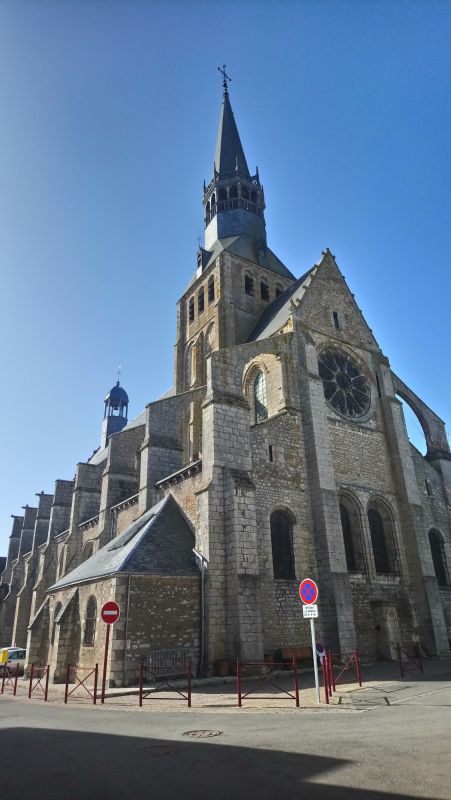
At the heart of the village stands the Church of Notre-Dame de Bonneval. Its foundations date back to the end of the 12th century, making it contemporary with the Cathedral of Notre-Dame de Chartres. All that remains of the original Romanesque style are the lower parts of the chevet and the three neighbouring semi-circular windows in each aisle. The rest of the building is in pure early Gothic style from the late 13th century. A series of alterations and restorations in the 19th century completed the ensemble without detracting from its character.
Due to its remarkable architectural homogeneity, the church has been listed as a historic monument since 1954.
The remarkable triforium of the nave, with its gallery of pointed arches, is impressive from the moment you enter. The harmony and balance of the lines make this gallery the most artistic part of the building. Above, you can admire the pointed windows that capture and diffuse the light. Looking more closely, you can see capitals decorated with crockets alternating with human faces.
The choir is surmounted by a domed vault, a rare feature north of the Loire.
The aisles are dedicated to Mary on the north side and Joseph on the south side.
Translated with DeepL.com (free version)


Photos
Remarkable elements
Altar of Saint Gilles
The patron saint of Bonneval, Saint Gilles, originally from Athens, is renowned for healing the sick and infirm. In the 12th century, a leprosarium was founded at the northern entrance to the town, in what is now the Saint-Gilles area. As elsewhere in Europe, these leprosariums took in lepers, who were feared in the Middle Ages. To support the leprosarium, Thibault V of Blois, uncle of King Philip Augustus, established a three-day fair, which is still held today as the ‘Saint Gilles flea market’.
Paintings from the abbey
At the entrance to the church in Bonneval, two large paintings from the refectory of the Abbey of Saint-Florentin-et-Saint-Hilaire catch the eye. Donated to the commune around 1793-1794 by Pierre Dutartre, the monastery's second private owner, they depict The Multiplication of the Loaves and Jesus at Simon the Leper's House. The latter is a copy of the painting La Pénitence (Penance), from the series of the seven sacraments by Nicolas Poussin, a 17th-century master.
The organs
Built in 1904 by Abbé Victor Tronchet, a priest from Eure-et-Loir and organ builder, these organs bear witness to his influence on sacred music in the early 20th century. The case, made by a cabinetmaker, rests on a gallery. Since 1983, the instrument has been expanded: it now has 17 stops and 1,156 pipes. Behind it, three lancet windows depict Christ on the cross, surrounded by the Virgin Mary and Saint John.
Stained glass windows
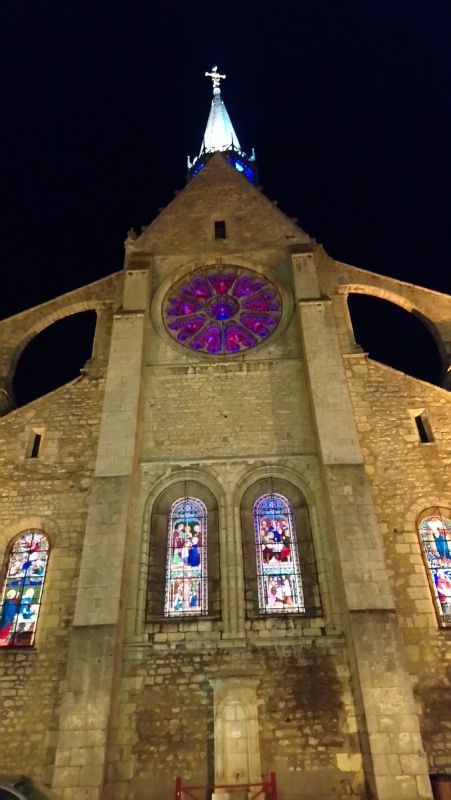
Dominating the high altar, the rose window dating from 1871 celebrates the Virgin Mary and the local patron saints. Installed between 1885 and 1893 by the Claudius Lavergne workshops, in the spirit of the 19th-century medieval revival, the stained glass windows are dedicated to the Eucharist, Mary, Saint Joseph and the major episodes in the life of Christ. Some stained glass windows, such as the grotto of Lourdes, the Black Madonna, the Assumption and Saint Teresa, were added later.
Baptismal font
Probably dating from the 18th century, this baptismal font bears witness to the rise in popularity of this type of furniture, which was very widespread at the time: nearly a thousand were created or remodelled during that century. Like many examples from the period, they are made of black marble veined with white. The oval basin rests on a baluster base and the whole is decorated with gadroon motifs, characteristic of classical decoration.
