
Saint Julian
Place du Commerce 5
61700 Domfront
Church | 1932 | Byzantine | Other


Map
Opening hours
01 January - 31 December
Mon 8.30 - 18.30
Tue 8.30 - 18.30
Wed 8.30 - 18.30
Thu 8.30 - 18.30
Fri 8.30 - 18.30
Sat 8.30 - 18.30
Sun 12.00 - 19.00
Description
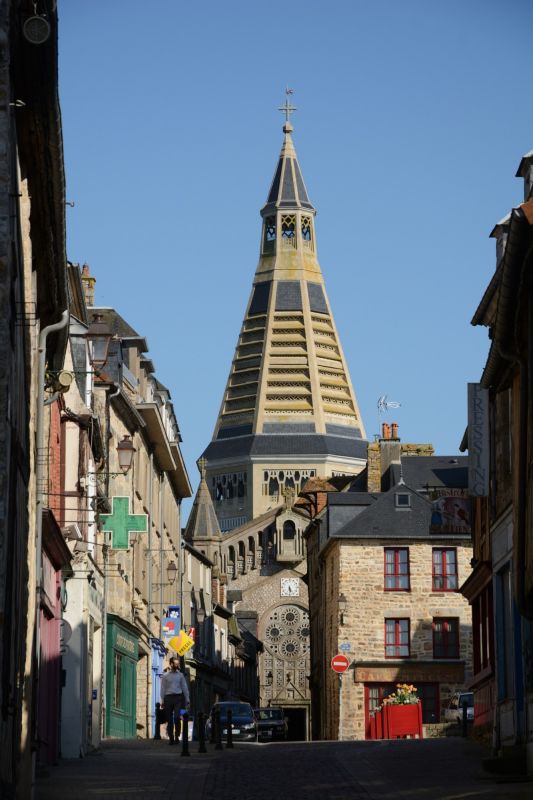
Today, the commune of Domfront, a Petite Cité de Caractère, has retained its medieval charm, even if its main church is a beautiful neo-Byzantine church dating from the early 20th century.
Saint Julian's church was built in reinforced concrete by the famous architect Albert Guilbert between 1924 and 1926 on the site of a former 18th-century church that had been damaged by time and weather.
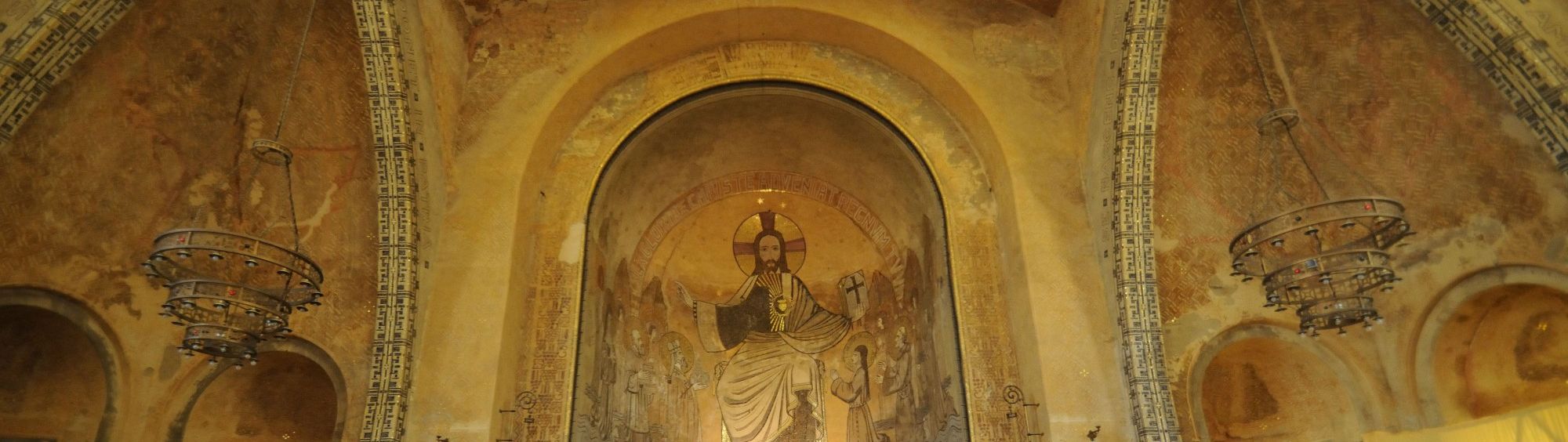
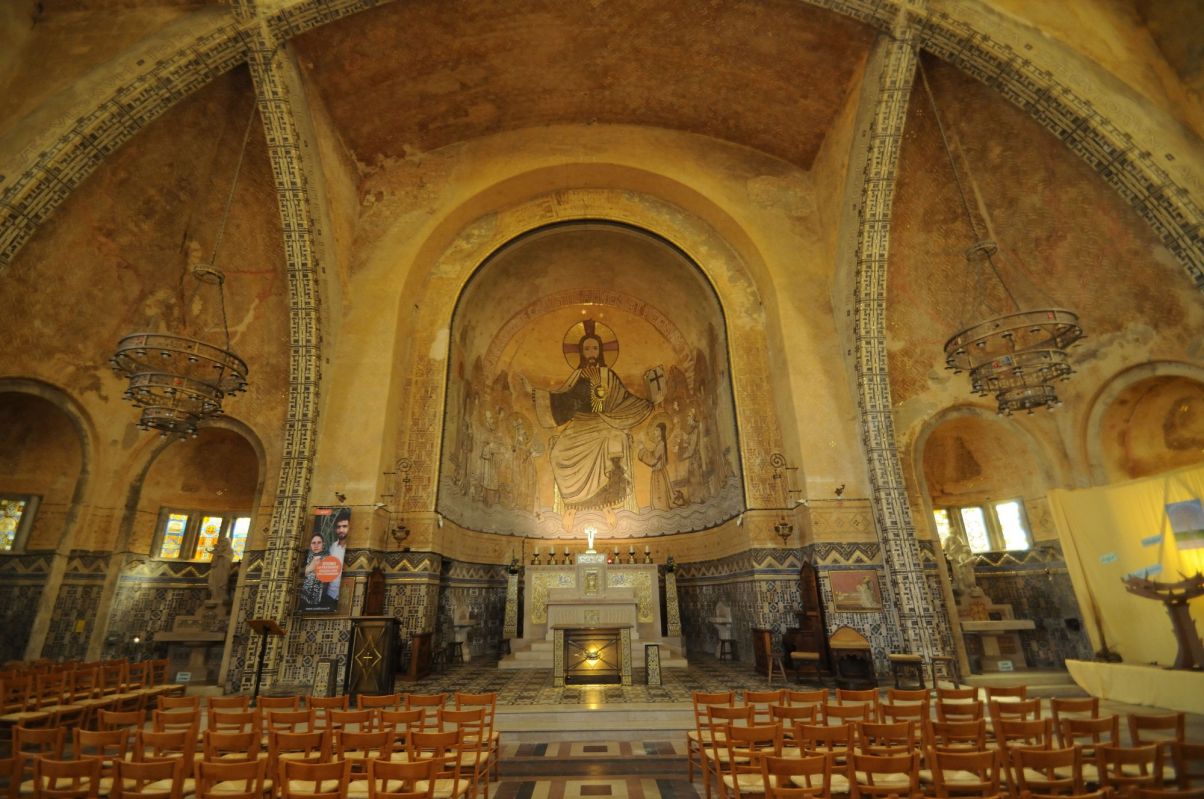
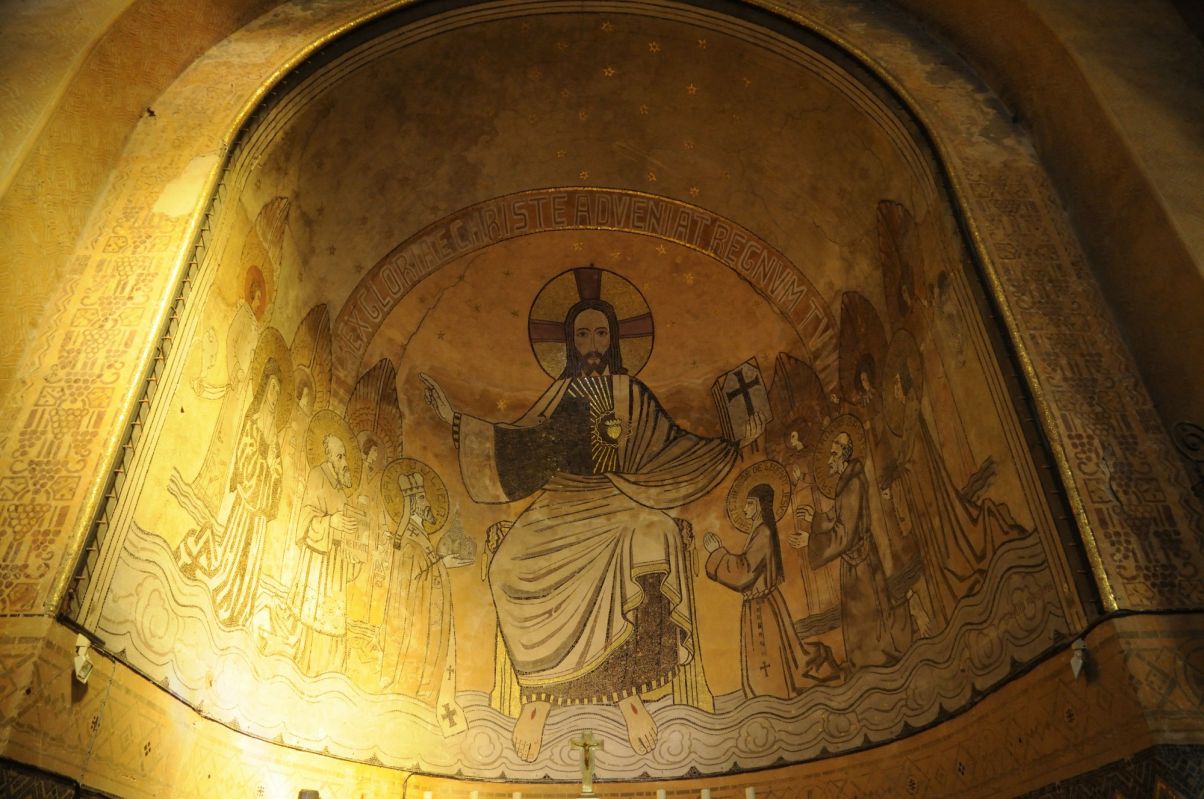
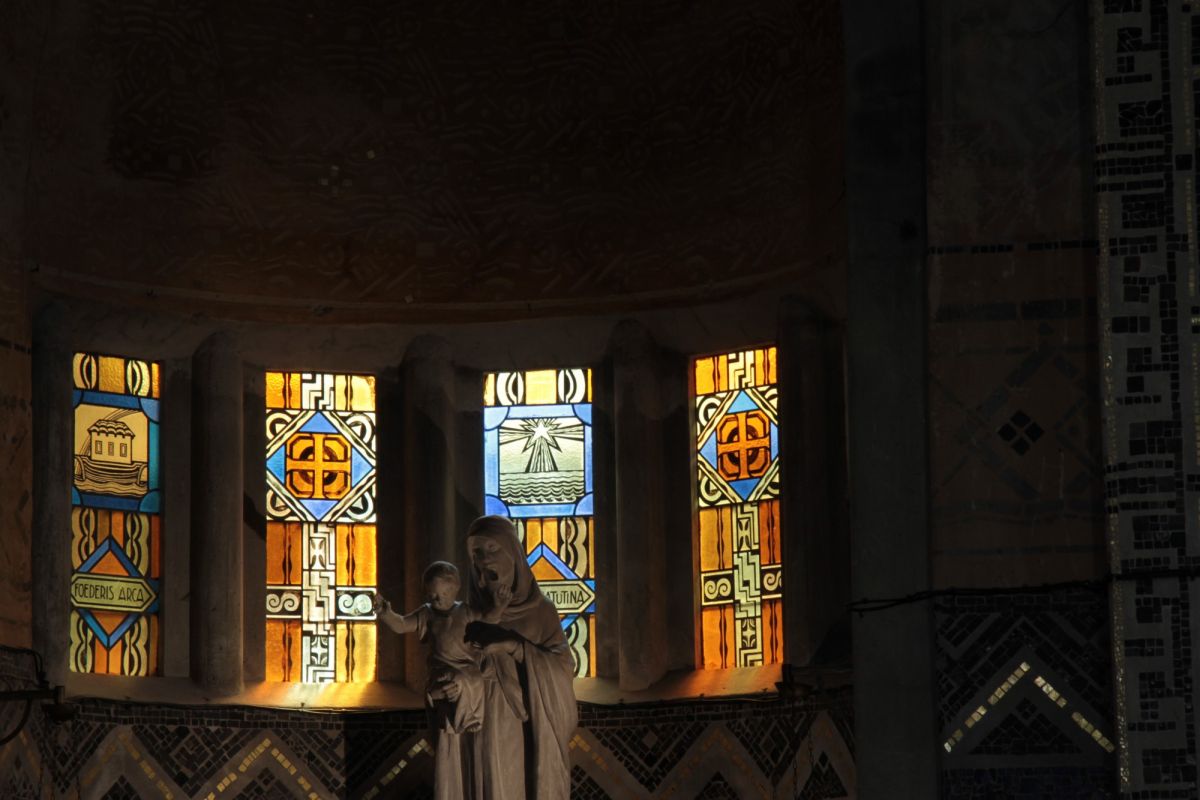
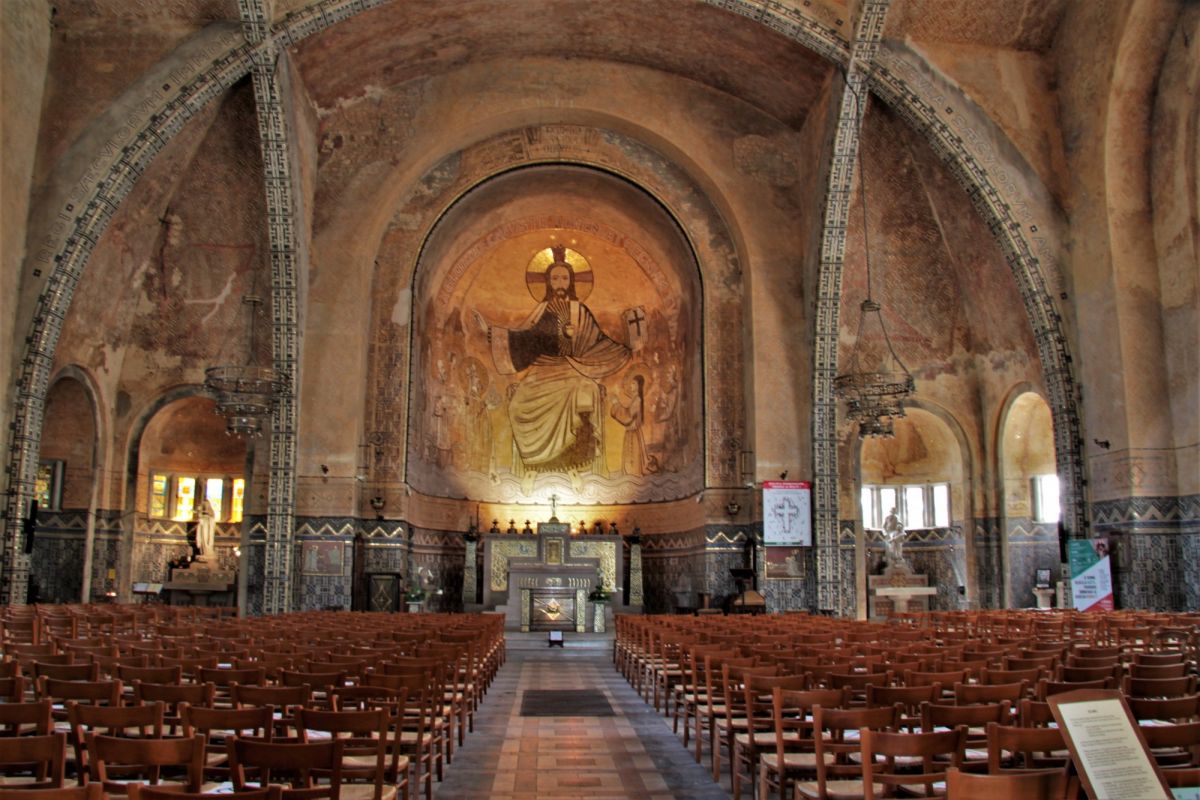
Its Byzantine-inspired square floor plan is perfect, as is its extinguishing bell tower and its art deco decoration created by mosaicist and glass painter Jean Gaudin, whose centrepiece, placed on the apse of the choir, seems to overhang the building. It features a Christ Pantocrator, surrounded by the great Christian figures of the Séez diocese.
This exceptional ensemble has been listed as ‘20th century heritage’ and protected as a Historic Monument since 1993.
For lovers of Romanesque art, at the bottom of the town, on the banks of the Varenne, the church of Our Lady of the Water also opens its doors to you.
Translated with www.DeepL.com/Translator (free version)


Photos

Remarkable elements
Mosaics
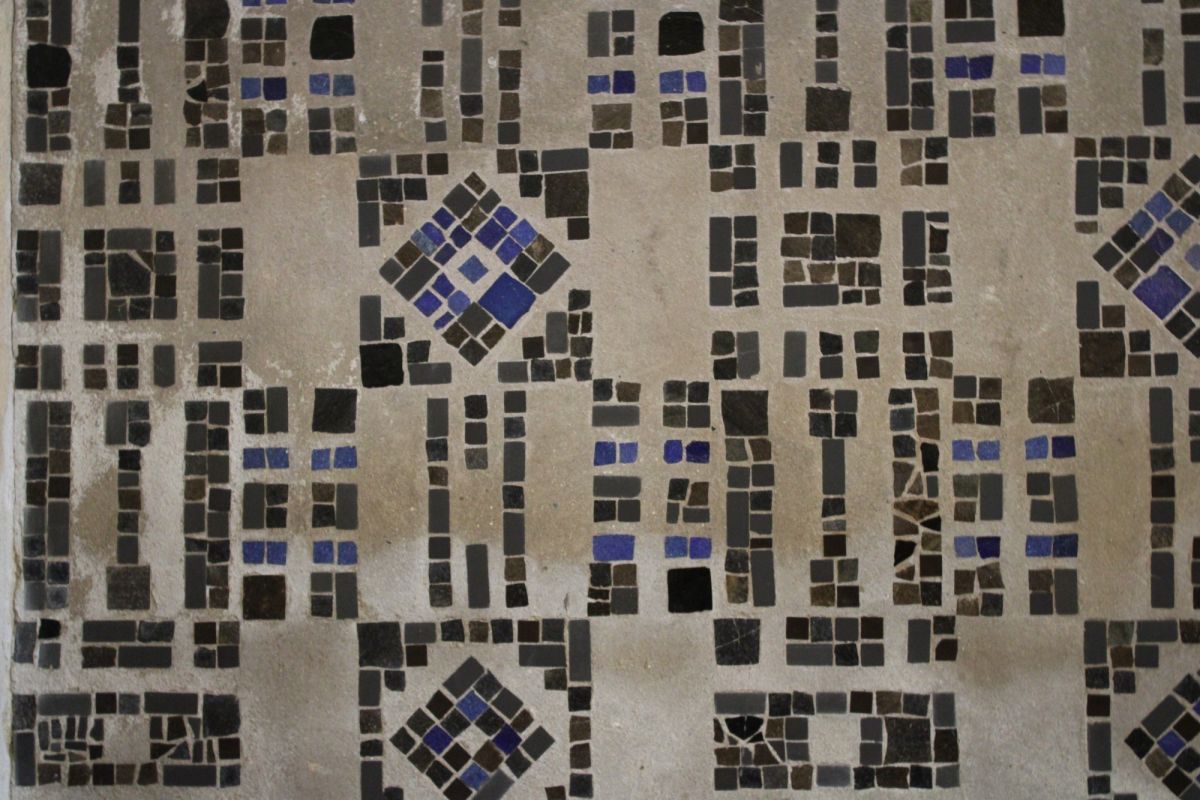
The lower sections of both the side walls and the apsidioles are covered with a musical motif in blue, black and gold tesserae set against a beige plaster background, whilst the upper sections are covered with a layer of yellow ochre plaster; when scraped away, this reveals an underlying layer of grey-yellow ‘sgraffito’ plaster.
Christ Pantocrator
Occupying the entire back wall of the apse, the ‘ALL-POWERFUL CHRIST’, seated on a majestic throne, gazes upon us with a look full of kindness and invites us to meditation. He is flanked by a procession of saints.

Structure
With a centred plan and a single nave of square proportions topped by a dome, the church is preceded by a rectangular western massif. Four semi-circular arches with a span of approximately 20 metres, arranged in pairs, form a square with sides measuring approximately 20 metres on the ground, forming the reinforced concrete structure.
The bell tower, approximately 53 metres high with an octagonal cross-section, sits atop these arches. It features intermediate slabs, sound baffles and beams, all also made of reinforced concrete.
The baptismal font
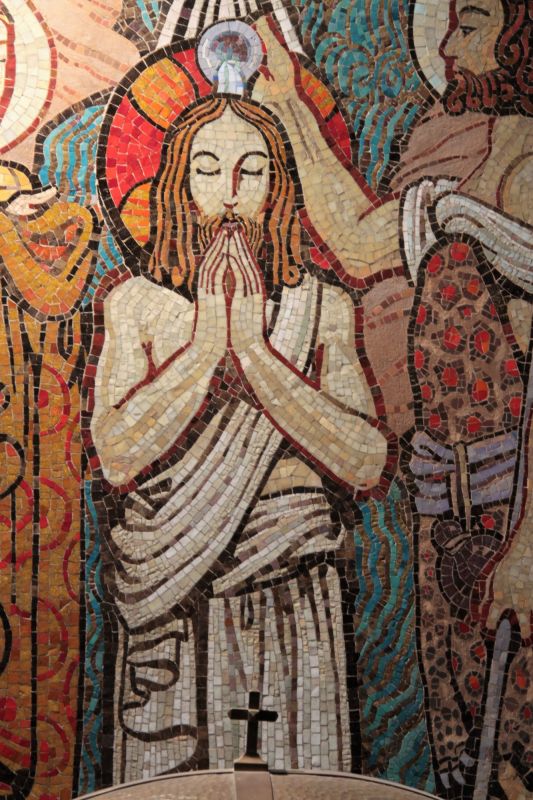
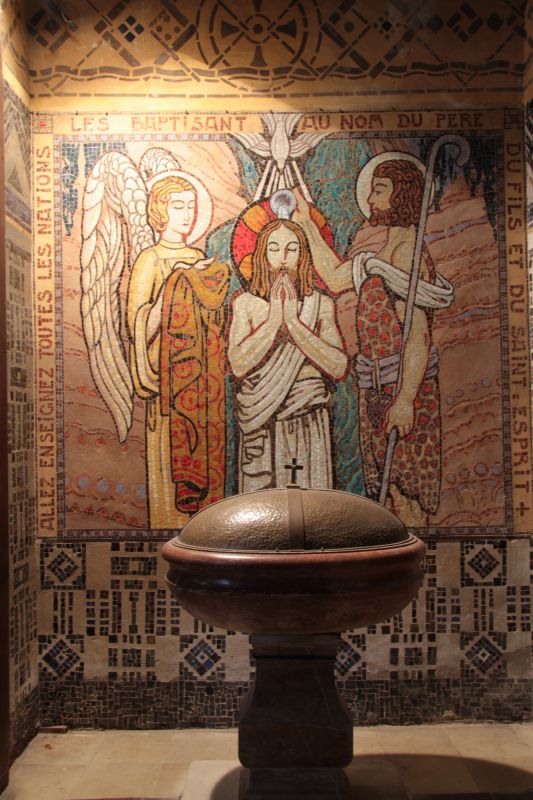
A beautiful, brightly coloured mosaic depicts Saint John the Baptist pouring the water of penance over Christ’s head.
The High Altar and the Ambo
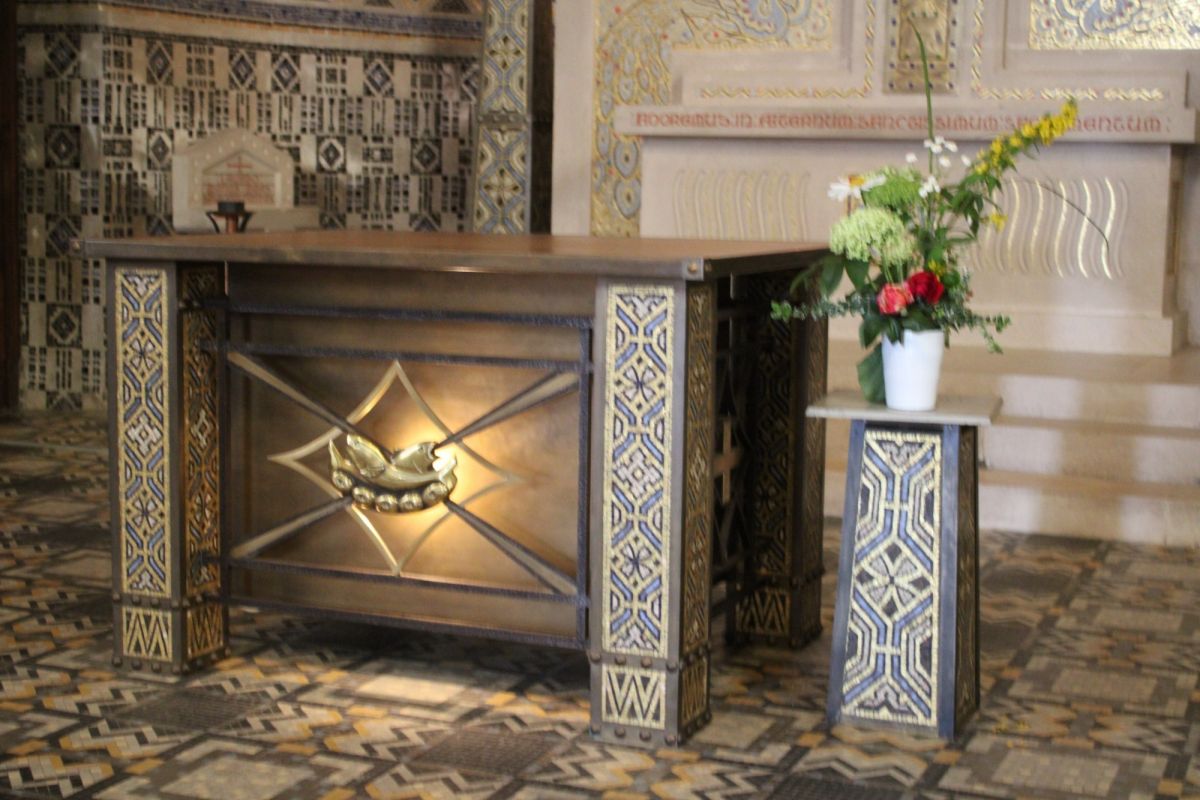
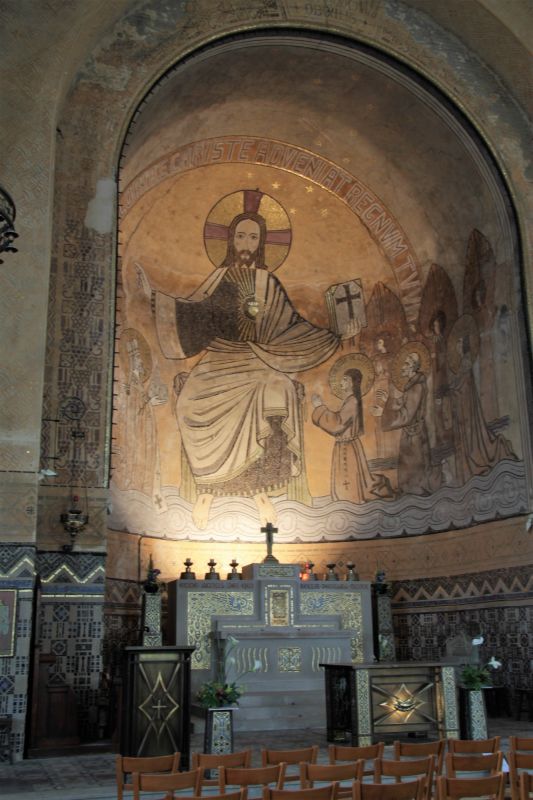
The ensemble has retained its original liturgical layout in the Art Deco style of the 1930s, and the altar is particularly notable for its mosaic depicting two peacocks.
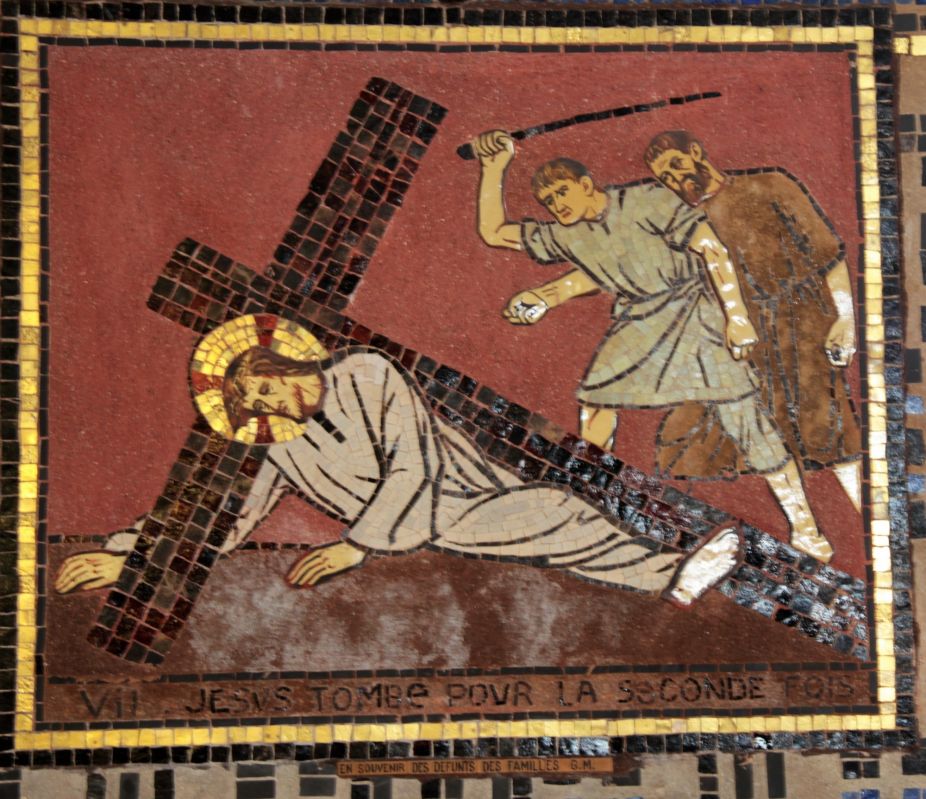
The Stations of the Cross
The fourteen stations of the Cross incorporated into the wall décor are made of enamel and mosaics set in cement; coloured plasterwork is also used (this is a cost-effective decorative technique). These fourteen panels are well worth a closer look, and one could spend a long time analysing them.
