

Saint Joseph
rue de la Charrois 1
52150 Bourmont-entre-Meuse-et-Mouzon
Church | XIX | Neogothic | Catholic Church


Map
Opening hours
01 April - 31 October
Mon 9.00 - 17.00
Tue 9.00 - 17.00
Wed 9.00 - 17.00
Thu 9.00 - 17.00
Fri 9.00 - 17.00
Sat 9.00 - 17.00
Sun 9.00 - 17.00
01 November - 31 March
Mon 10.00 - 16.00
Tue 10.00 - 16.00
Wed 10.00 - 16.00
Thu 10.00 - 16.00
Fri 10.00 - 16.00
Sat 10.00 - 16.00
Sun 10.00 - 16.00
Description
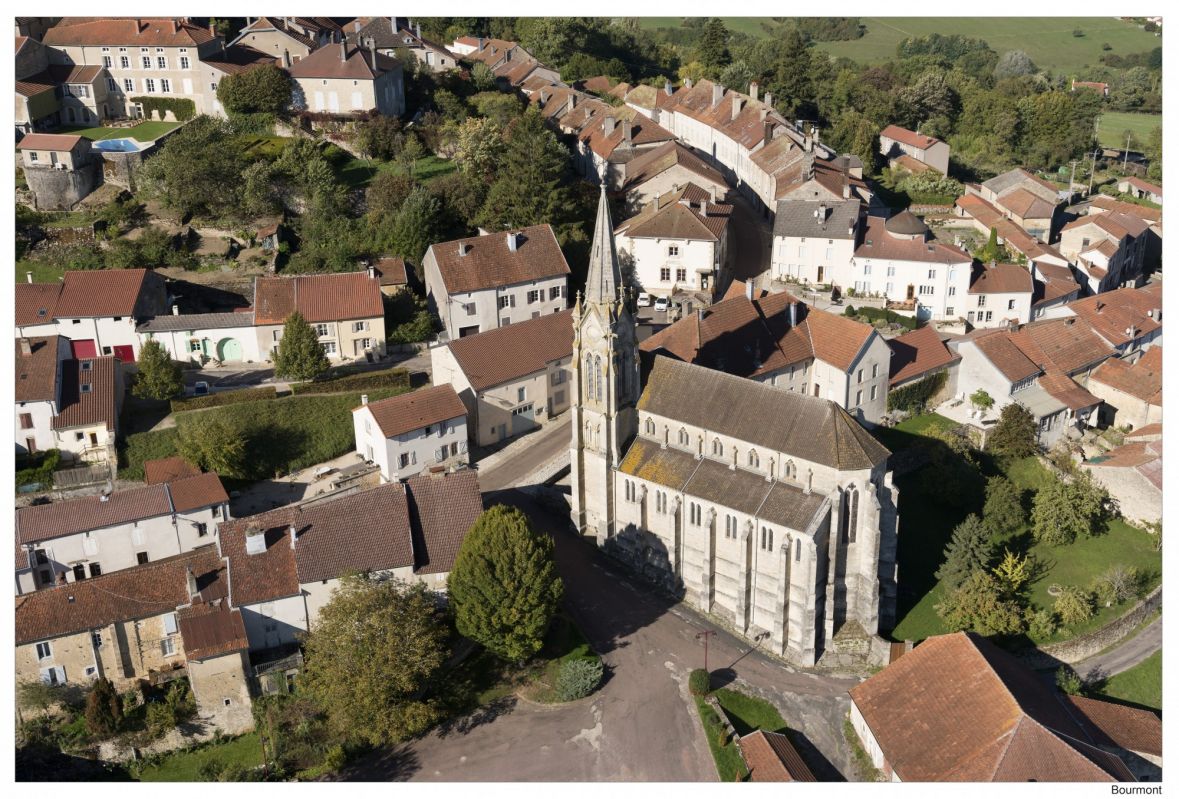
Despite this, Bourmont managed to flourish. Today, several church spires still dot its landscape. The Church of Notre-Dame, a former castle chapel probably founded in the 10th century and dedicated to Saint Florentin, became a collegiate church in the 17th century when the canons of La Mothe settled there. They rebuilt the church in the 18th century. Following the dissolution of the chapter in 1762, it became a parish church, replacing the old Notre-Dame, which was by then in a state of serious disrepair and situated further down in the village, on the site of the current car park adjacent to Saint-Joseph.
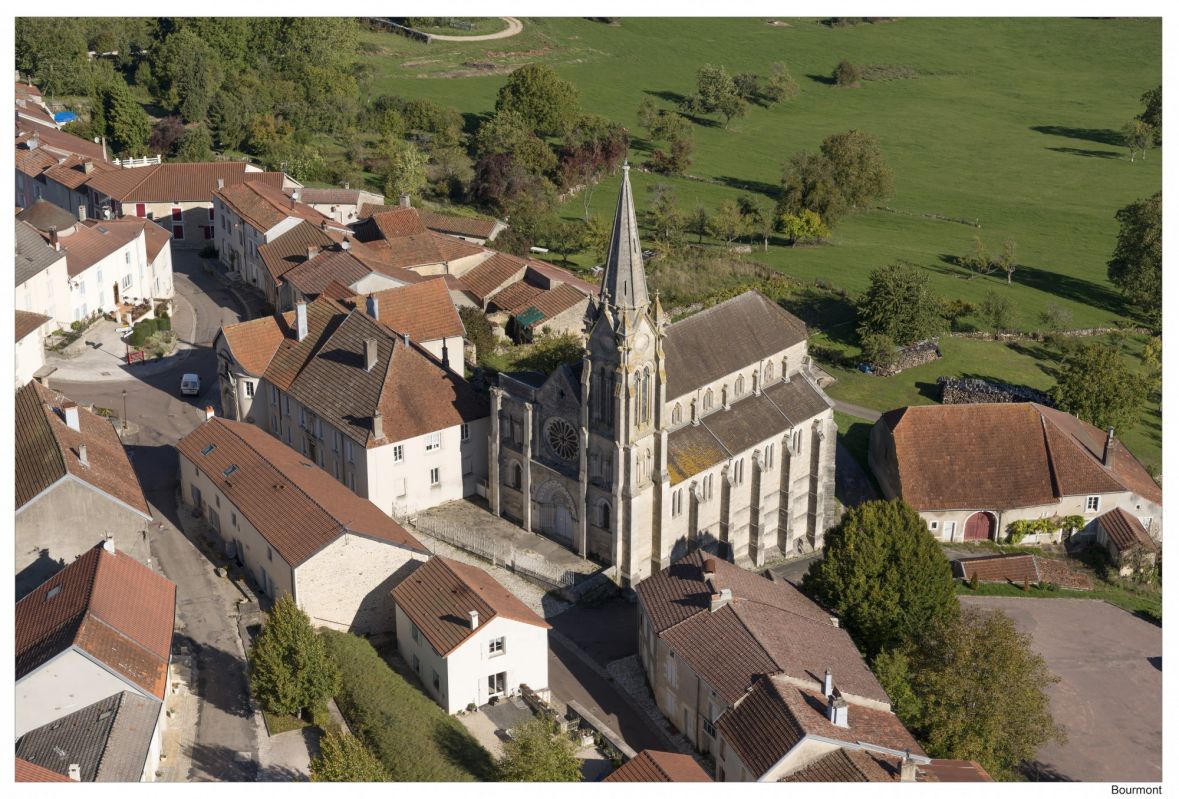
In the 19th century, the locals, weary of the difficult access to Notre-Dame, wanted a new church closer to home. Thanks to the support of Countess Ducos, who was close to the imperial court, Saint-Joseph Church was built from 1855 onwards in the Neo-Gothic style then in vogue and consecrated in 1859.
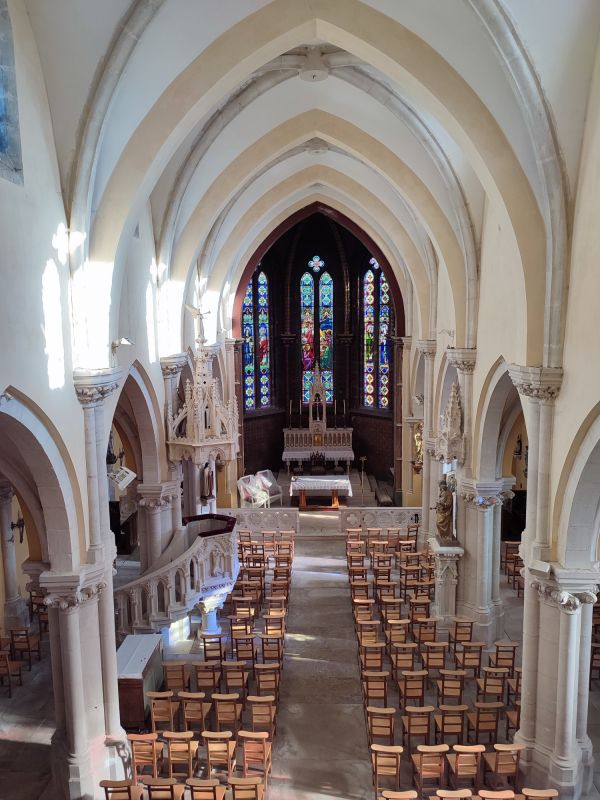
The speed with which the building was constructed explains the remarkable consistency of its architecture and furnishings. Some twenty years later, one of the two planned bell towers was built. Due to a lack of funds, the second one was never built. Even today, stepping through the doors of Saint-Joseph is like stepping back into the refined elegance of the 19th century, which has been admirably preserved.

Photos

Remarkable elements
The eardrum
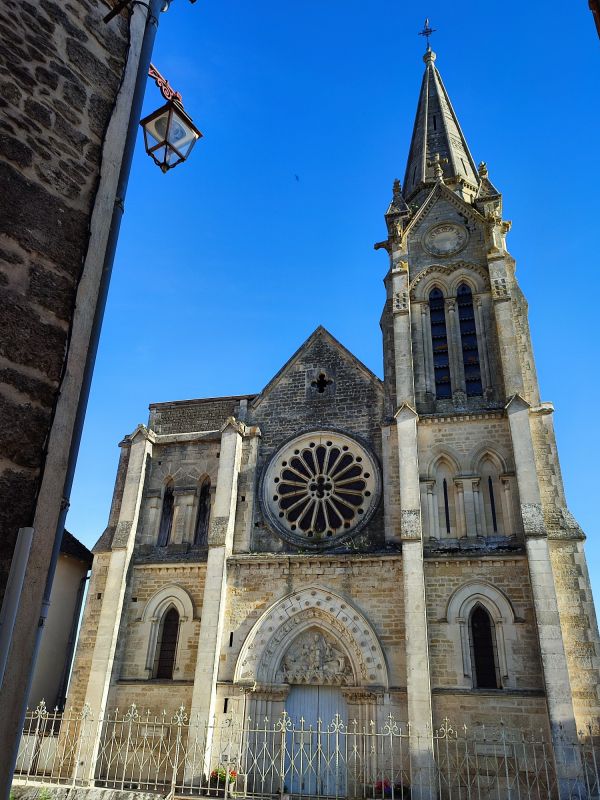
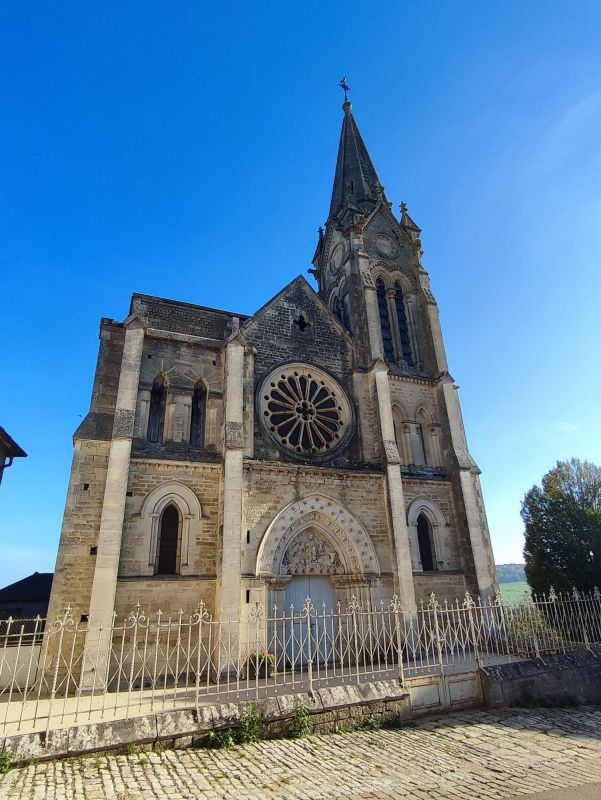
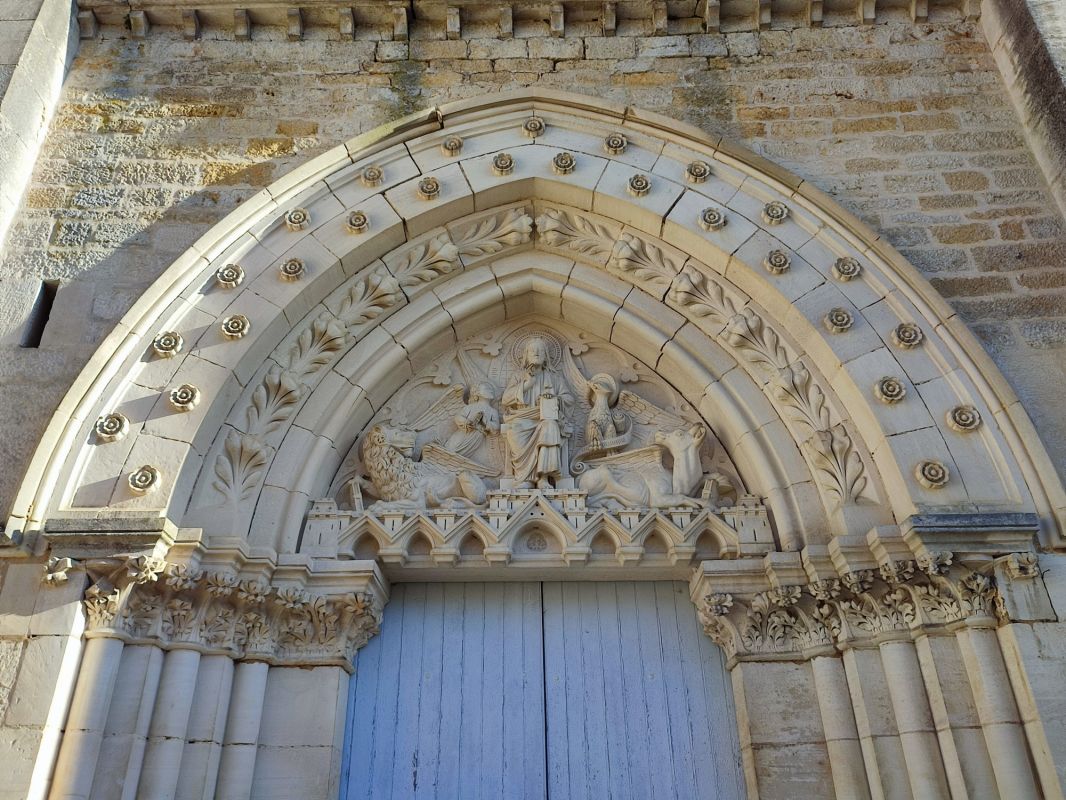
Inspired by the Gothic style, the pointed-arch portal is distinguished by its voussoirs adorned with plant motifs and its Corinthian columns. Its tympanum, sculpted in 1887 by Jules Charonnot, depicts Christ the Judge surrounded by the four Evangelists and their symbols. In Christian tradition, the portal symbolises the entrance to Paradise: Christ welcomes and watches over the faithful as they cross the threshold of the church.
The rose window
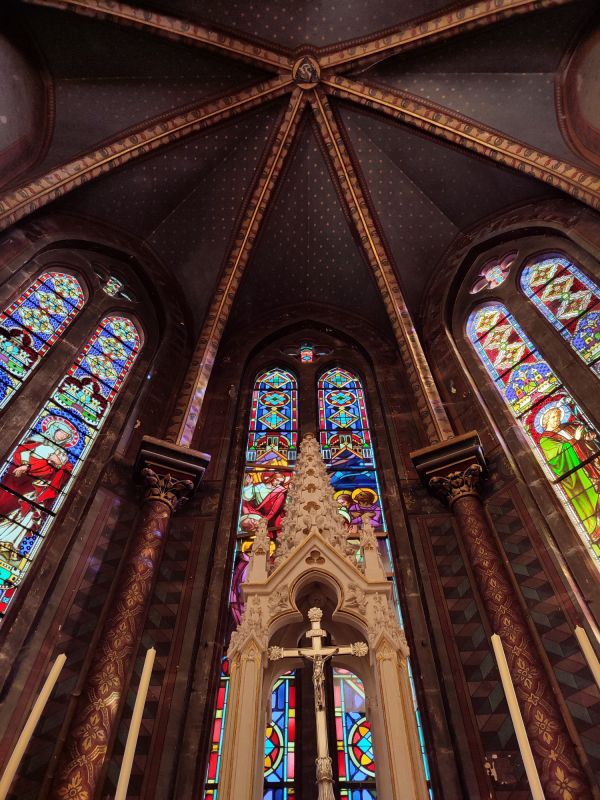
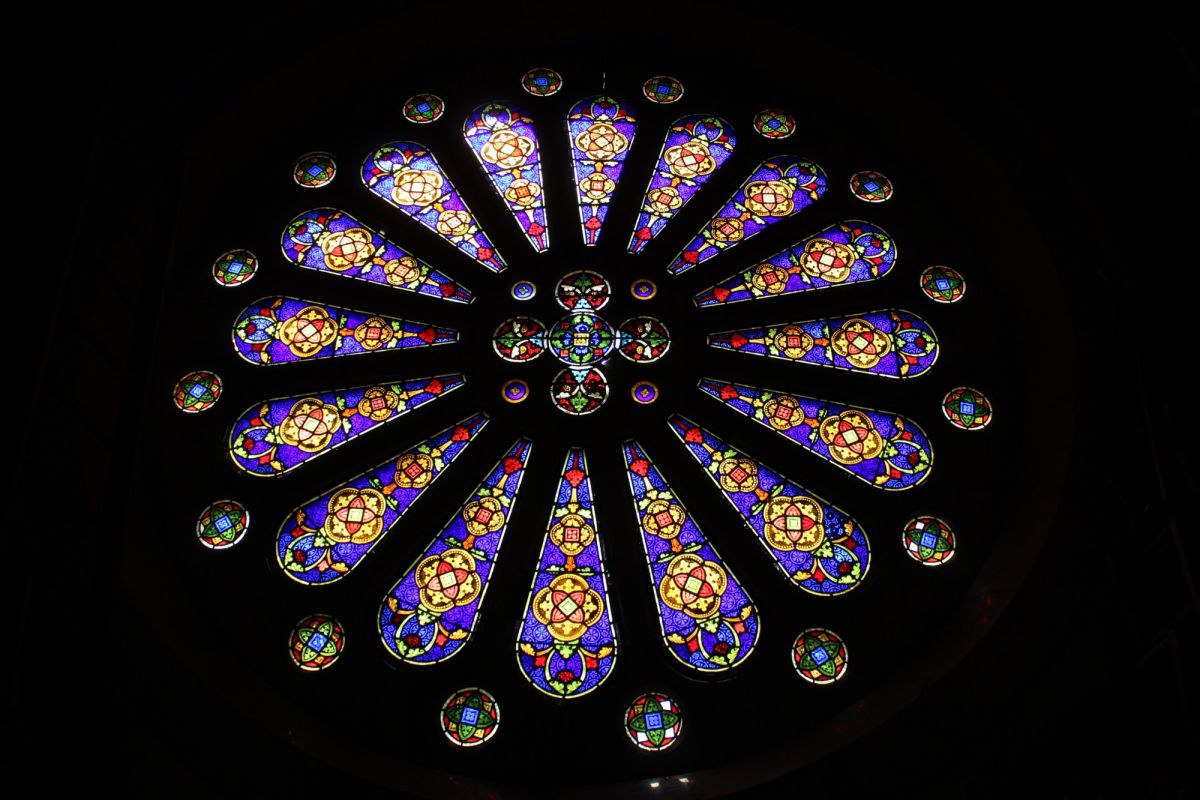
It is a perfect example of the neo-Gothic style of the building. The rose window was created in a remarkably short space of time. Abbé Cultot, then the parish priest of Bourmont, ordered the stained glass windows in the summer of 1858 from the Maréchal workshop in Metz. They were completed and sent out by the workshop in mid-September. Finally, in November, a workman came from Metz to install the windows, which took him 13 days.
Translated with www.DeepL.com/Translator (free version)
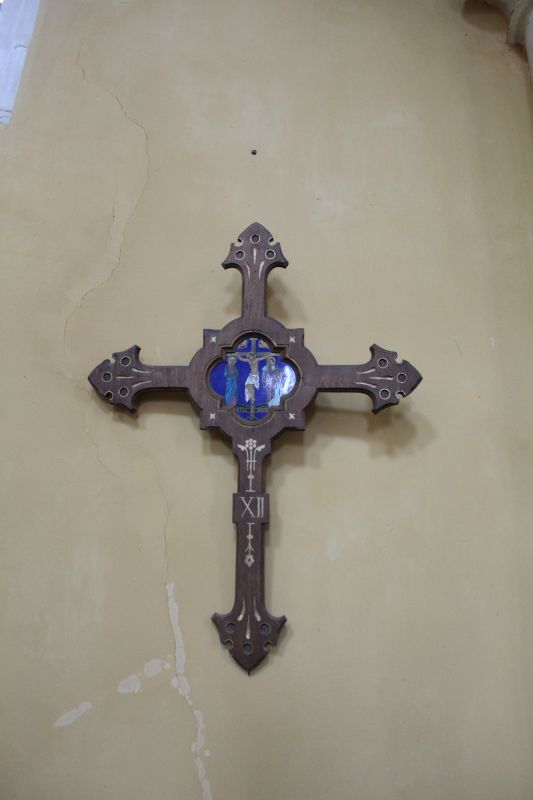
The Way of the Cross
The Way of the Cross was commissioned by Abbot François Xavier Cultot in 1865 from the Poussielgue-Rusand goldsmiths. It was erected in the church on 11 April 1873 in the presence of Mr Maréchal, parish priest of Chaumont-la-ville, and Mr Alcide Gustave Devilliers, vicar of Bourmont. The stations, in the shape of a trefoil cross, are made of wood. At the centre of each is a four-lobed medallion with enamelled copper redents.
Translated with www.DeepL.com/Translator (free version)
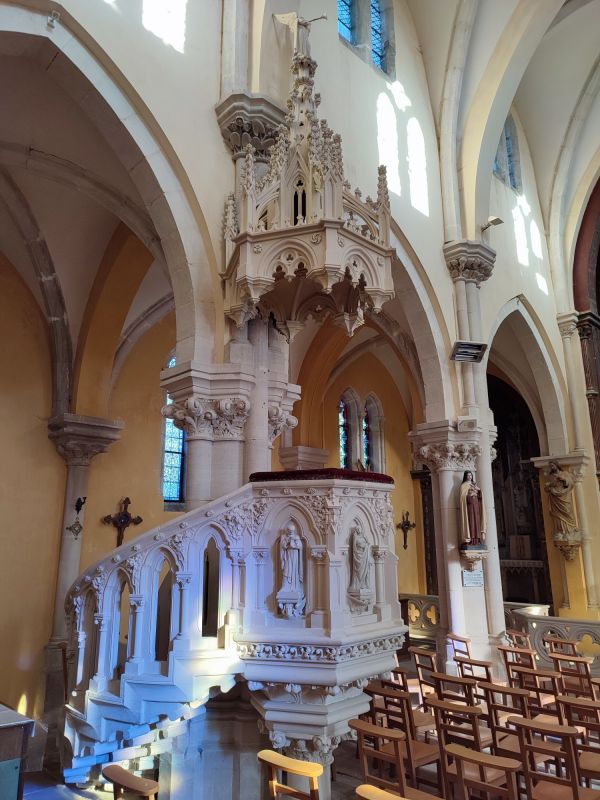
The pulpit
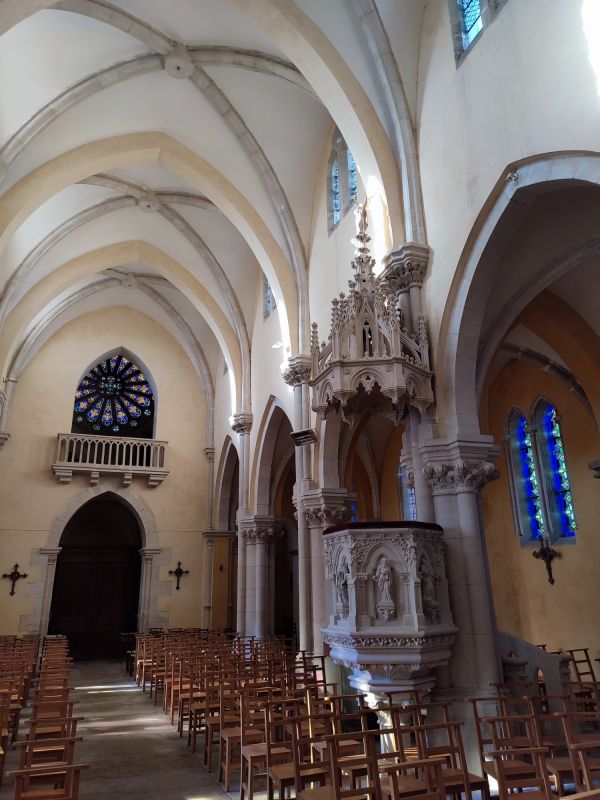
The pulpit blends in perfectly with the church's furnishings. Entirely carved in stone, it is inspired by the flamboyant Gothic style of the 13th century. The staircase and bowl are decorated with plant motifs. The basin also features niches containing statues of the four Evangelists. Finally, the lampshade is adorned with pinnacles surmounted by an angel holding a trumpet. The work is also attributed to Chaumont sculptor Jules Charonnot.
Translated with www.DeepL.com/Translator (free version)
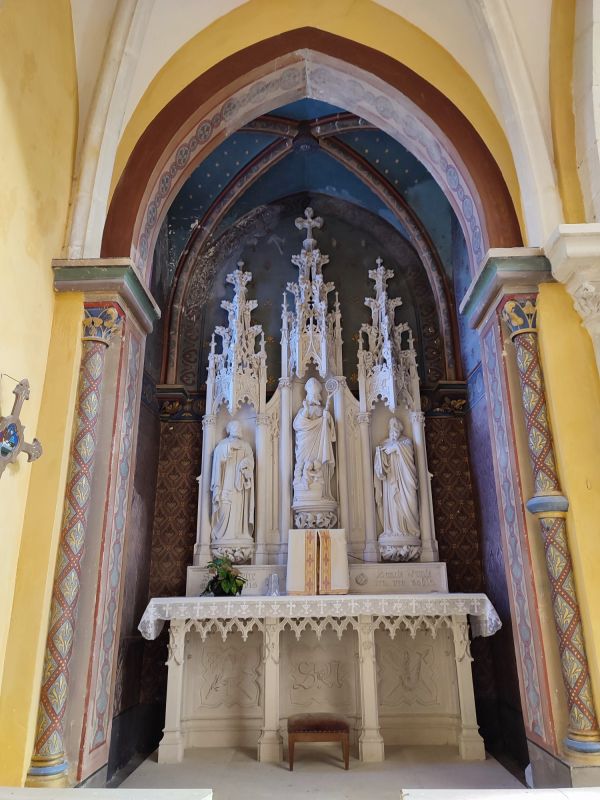
The entire secondary altar of Saint-Nicolas
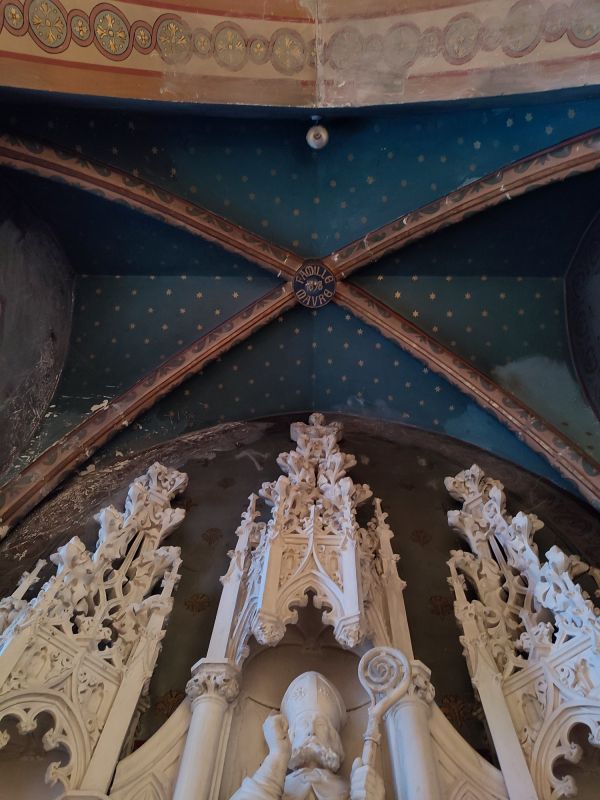
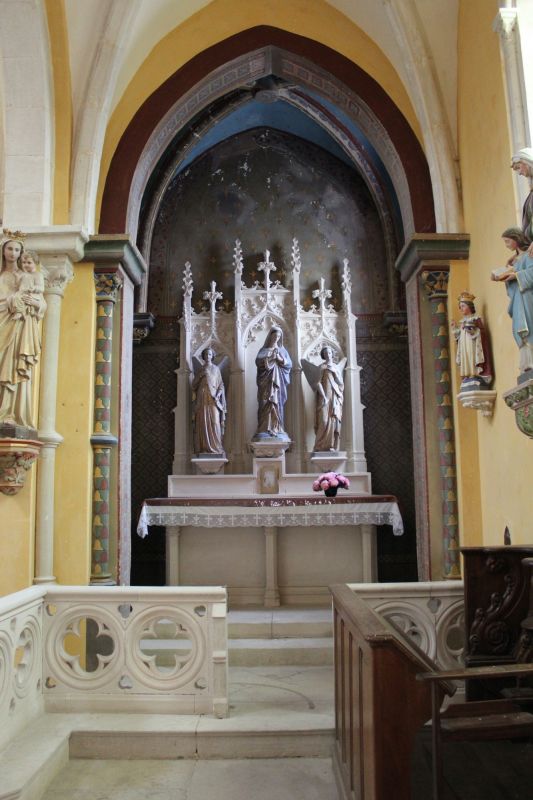
The entire altar and the murals around it were donated by wealthy families from Bourmont when the church was being built. The Gibrat family donated the altar in February 1862. Sculpted by Jules Charonnot, the altar is dedicated to Saint-Nicolas, who is depicted in the centre in the round, surrounded by Saint-Pierre on his left and Saint-Paul on his right. The Maure family donated the murals in 1898, as evidenced by the inscription on the keystone.
Translated with www.DeepL.com/Translator (free version)
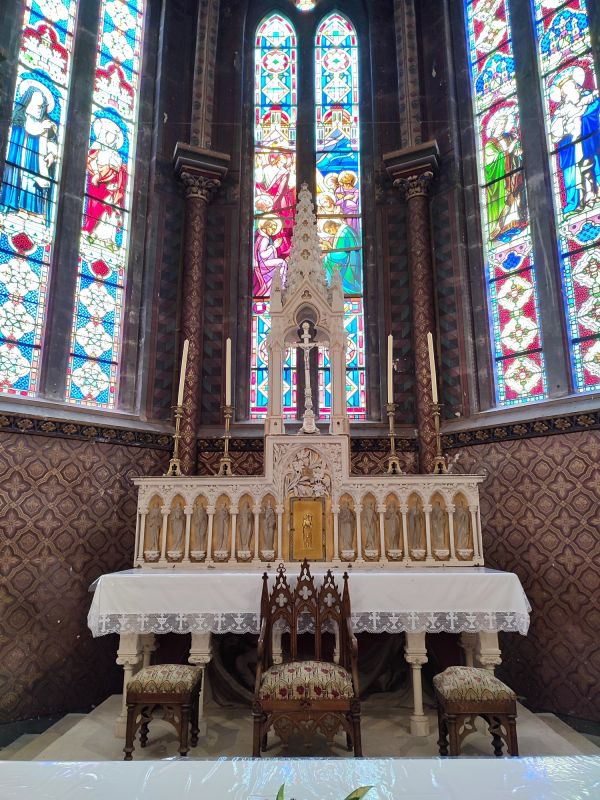
The entire high altar
The composite high altar features a columned façade, behind which a painting of Christ in the shroud is visible. It is surmounted by a monumental platform framing a tabernacle topped with a carved canopy. Twelve niches, originally intended to house statuettes that were never made, are adorned with paintings of the apostles. The candlesticks and the door of the tabernacle were crafted by Placide Poussielgue-Rusand.