Eglise de l'Assomption
Rue de l'Eglise 5
6240 Farciennes
Church | 1837 | Neoclassical | Catholic Church


Map
Opening hours
01 January - 31 December
Mon 10.00 - 12.00
Tue 17.00 - 19.30
Wed -
Thu 14.30 - 16.30
Fri -
Sat -
Sun 10.00 - 13.00
+ on request if available: +32 470 206 519
Religious offices
Description
A first church already existed in 1210, on the present site; we do not know to whom it was dedicated. However, it was smaller than the present church and appears to have been thatched.
The church was demolished in 1523 and rebuilt very slowly, being consecrated 45 years later in 1568. This second church, in Gothic style, was dedicated to Saint Catherine. It was enlarged and covered in slate. In the 17th century, the church tower was used as a watchtower during the troubled times caused by the wars that often ravaged our regions.
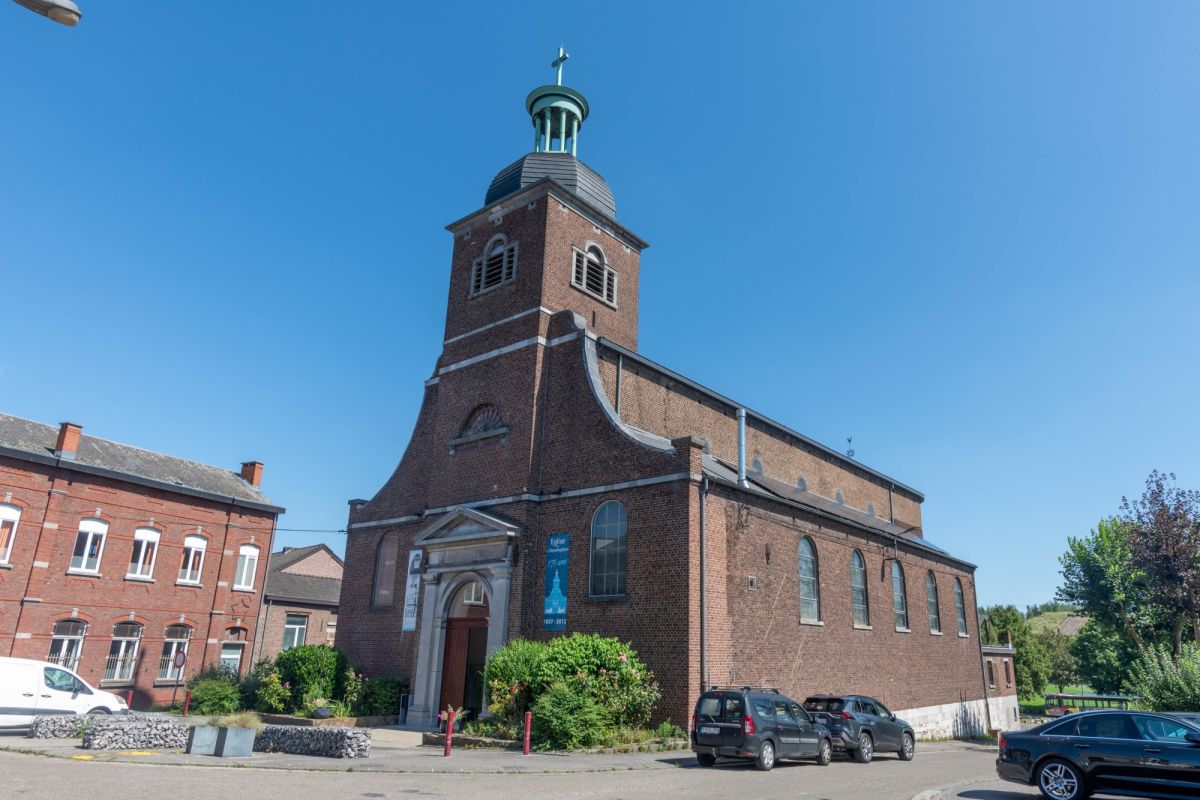
Having become too dilapidated, it was demolished and enlarged in 1834. It was consecrated on 28 April 1837 and is one of the rare neo-classical sanctuaries in our region.
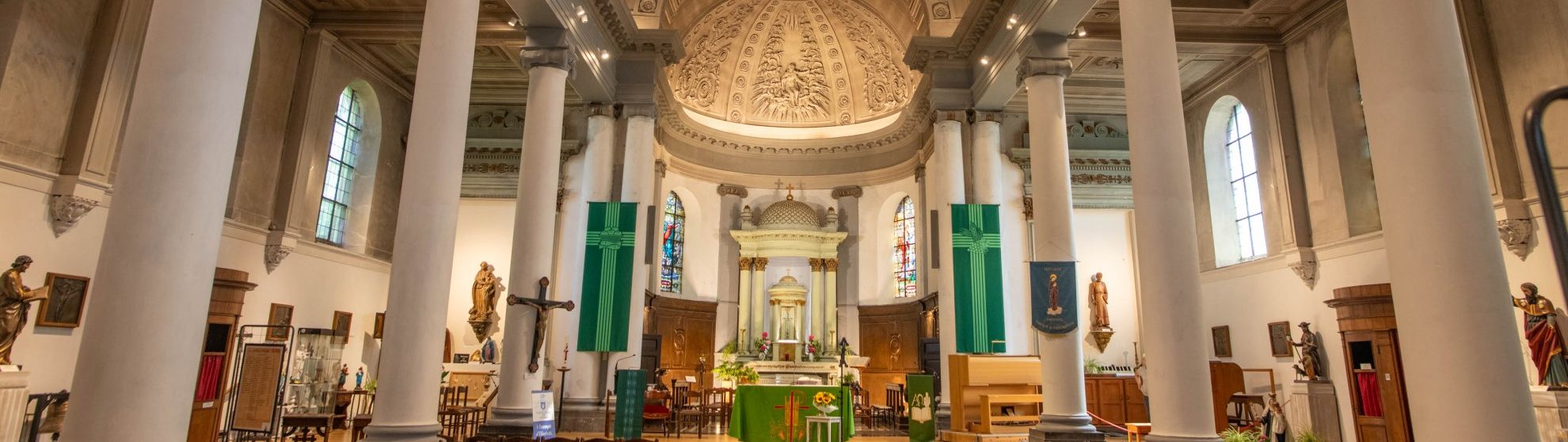
One of the most remarkable interior architectural features is the semi-circular vault, the central motif of which depicts the Assumption of the Virgin Mary. This masterpiece was created by Delbove and Lambillotte, master ceiling decorators and ornamentalists from Farciennes, who had acquired a solid reputation throughout Belgium and beyond for the quality of their work.
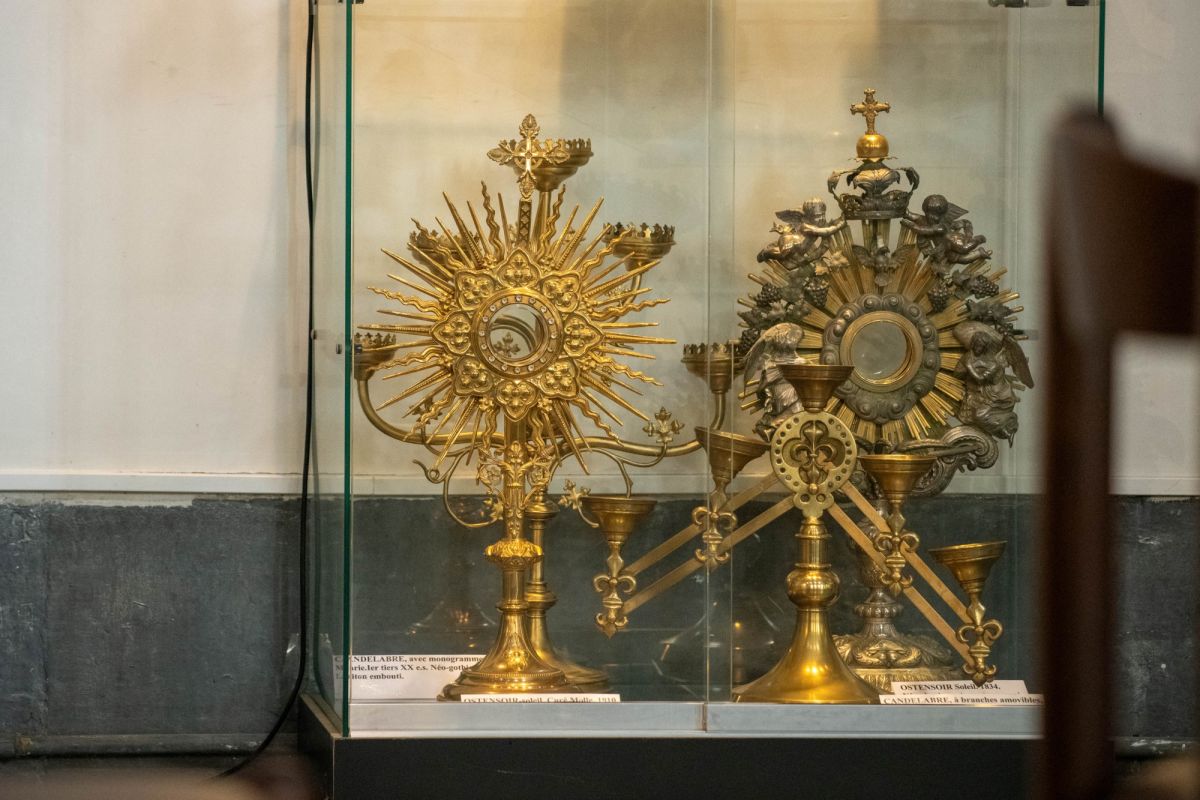
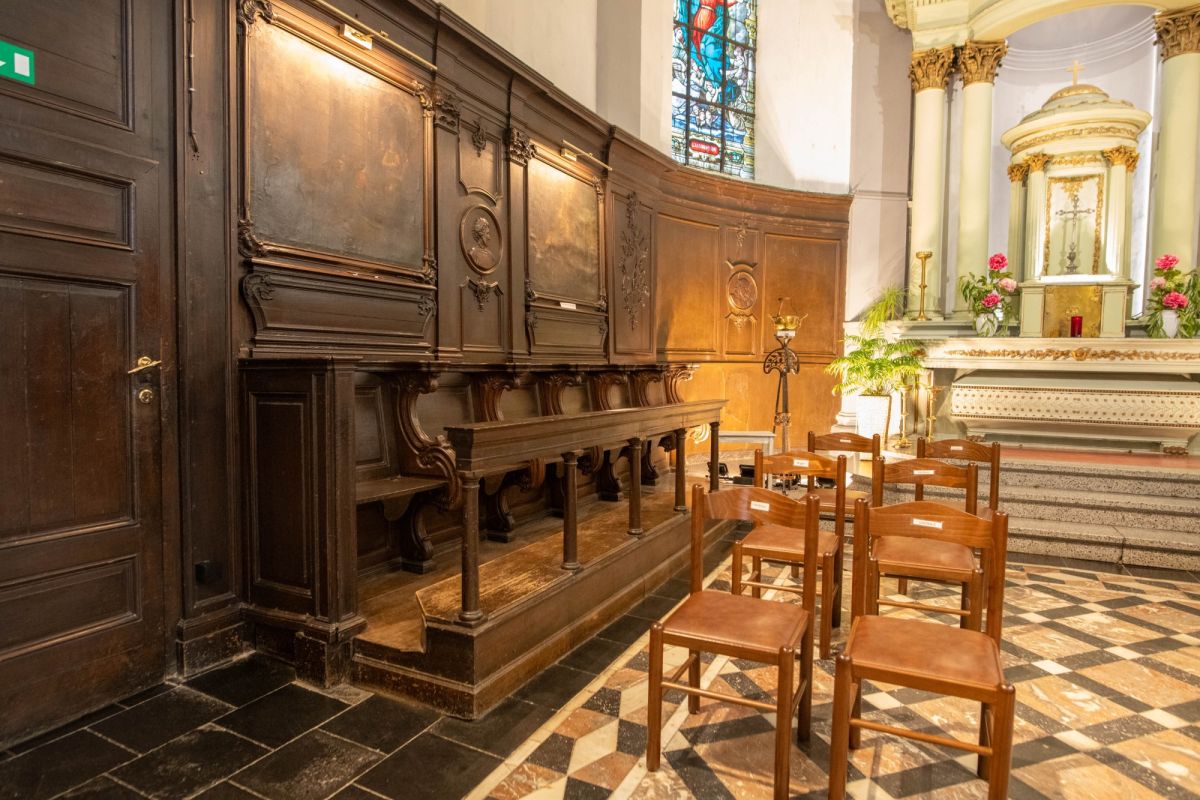
The quality of the furniture used to decorate the room is also remarkable, featuring styles from several periods. These furnishings are legacies of former religious buildings in Farciennes: the Louis XV furniture comes from the former convent of Saint-François, demolished in 1797 by the French revolutionaries. The Gothic furnishings come from the former Saint-Jacques chapel in Tergnée, a hamlet located 1 km from the centre, which was dismantled in 1851 to meet the needs of the collieries.
Work to restore and paint the capitals of the columns was completed in 2017.
KIKIRPA: Photo-library online
Photos
Remarkable elements
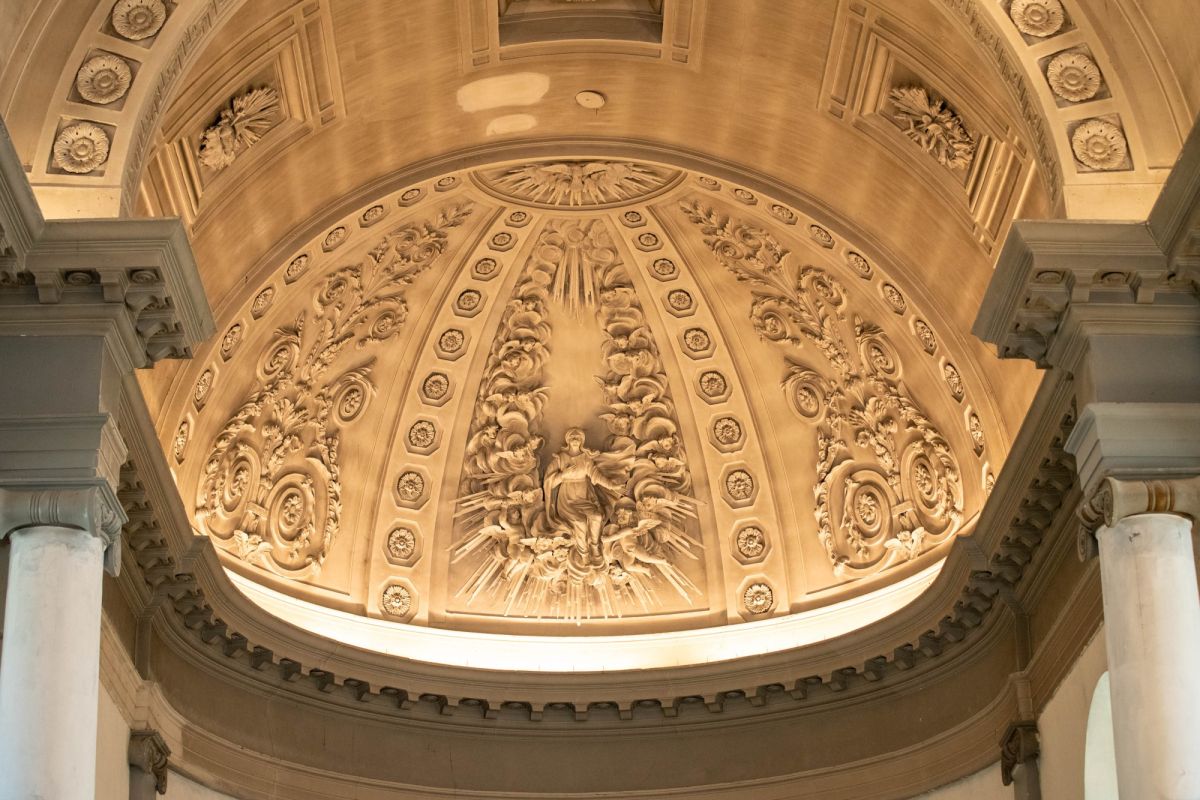
Half-dome vault
This is divided into three sections decorated with plasterwork, with the central motif being the Assumption of the Virgin Mary. The ornamentations, plasterwork, and stucco were created by Joseph Delbove and Paul Lambillott, natives of Farciennes, master ceiling plasterers and ornamentalists who had earned a strong reputation in our region and even beyond our borders. Together with their workers, they volunteered to help rebuild the church.
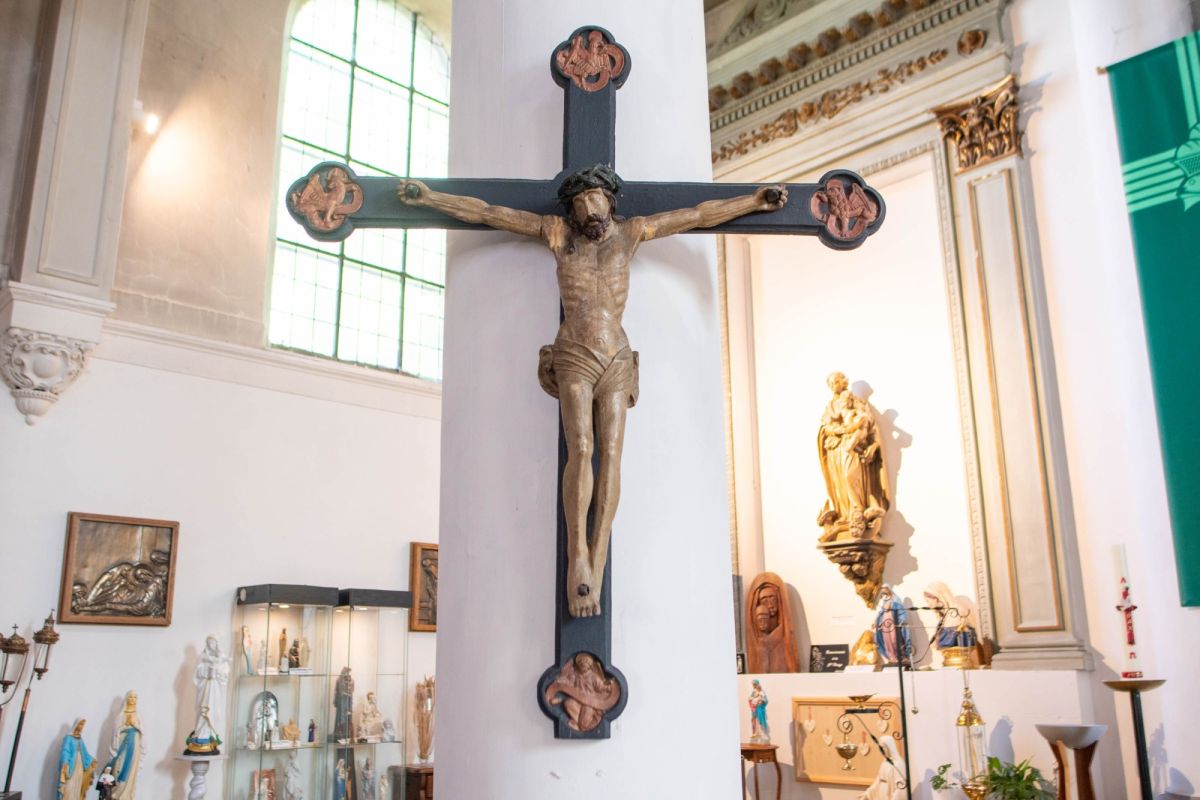
Christ on the cross
This dates from the 16th century, is Gothic in style, and made of polychrome oak.
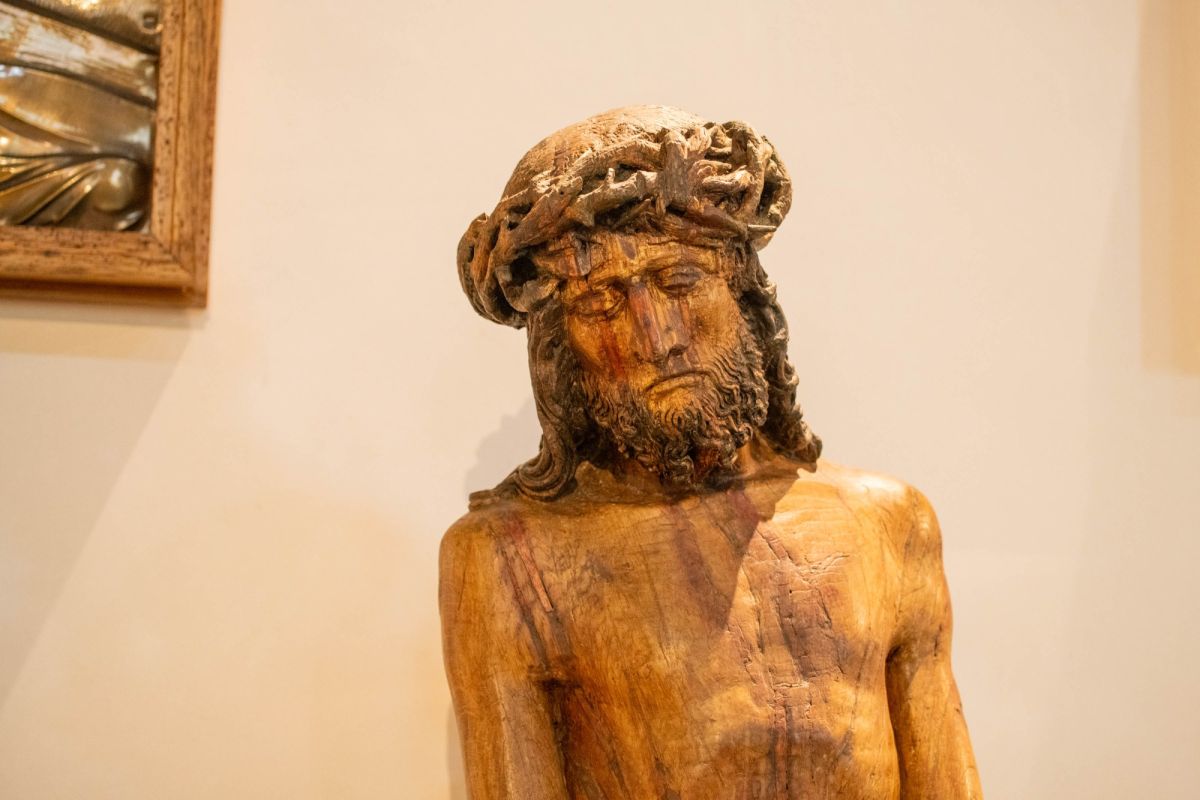
Christ of Pity in Oak
Brabantine Workshops, 1610. In May 2013, the parish council of the Assumption received a 150 cm, 200 kg oak statue of a chained ‘Christ of Pity,’ gifted by the Orban family of Farciennes, who had owned it for generations. The masterpiece had long been displayed in a grotto chapel within their residence on Orban Alley (‘la Straulette’), near the main square, protected from the elements. Originally polychrome, it was stripped in 1983.
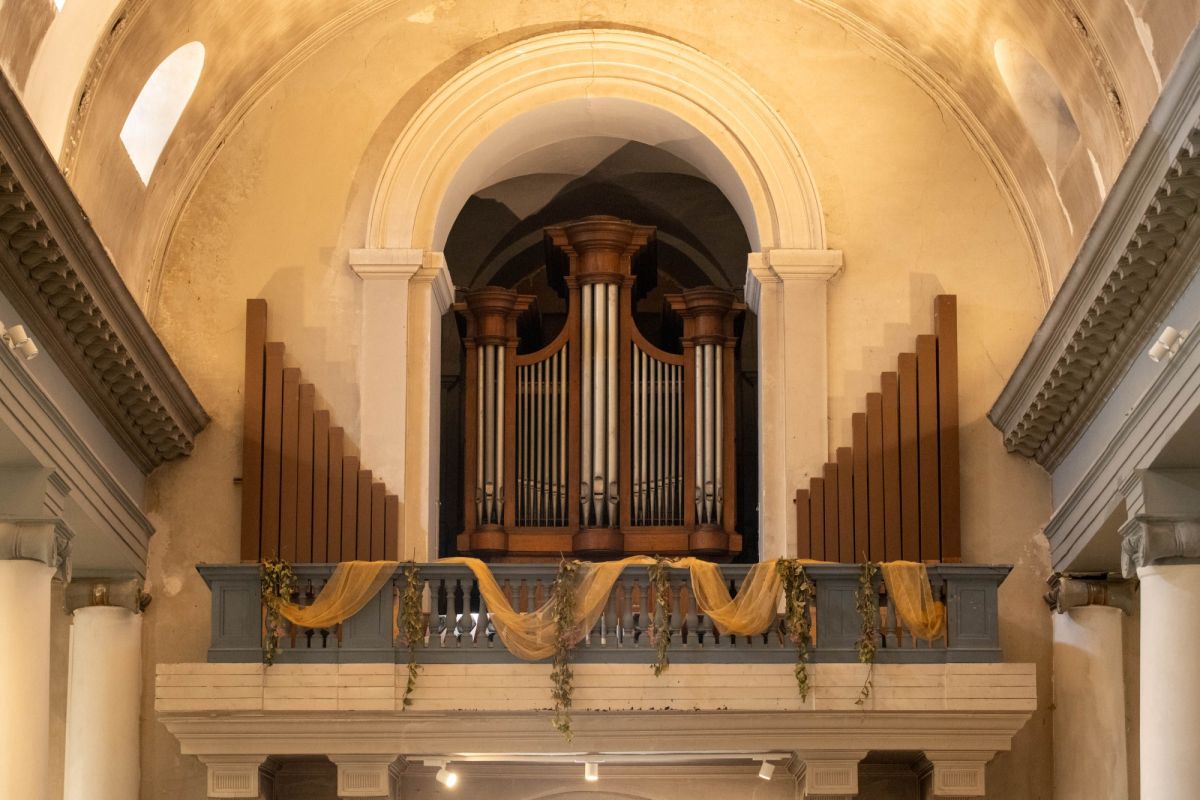
The organ
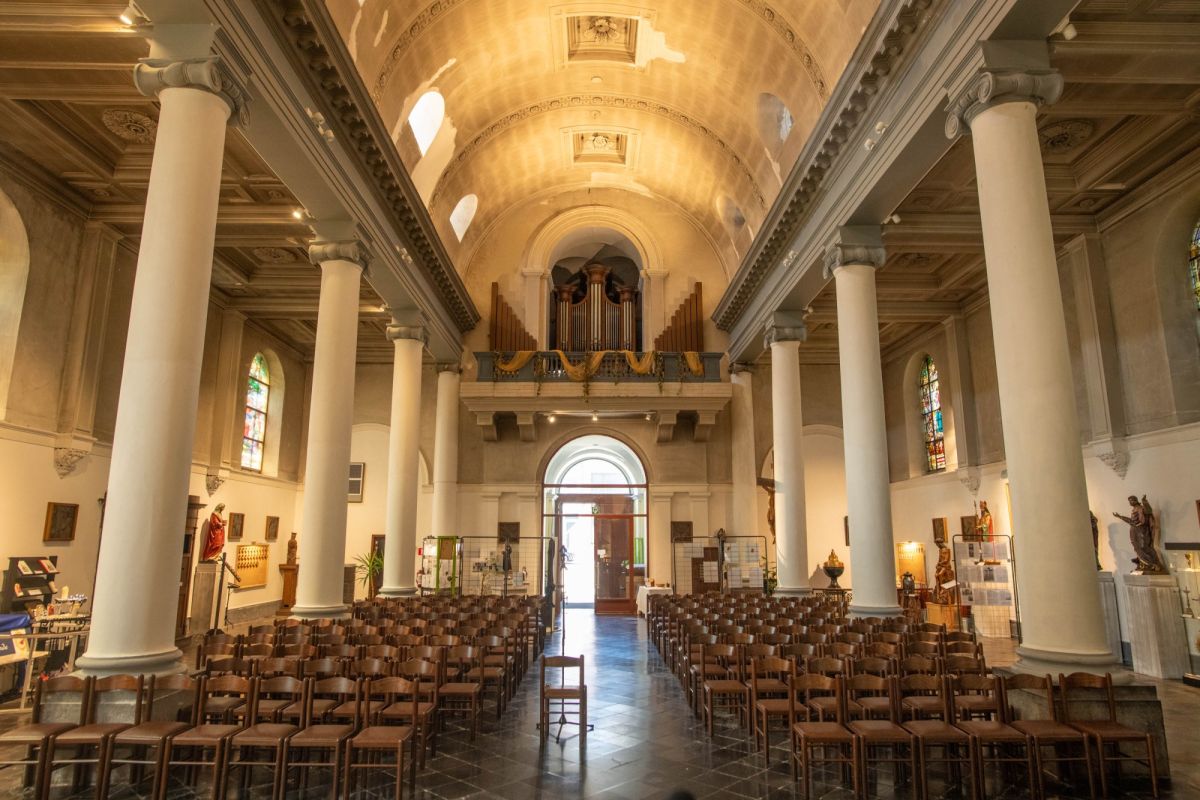
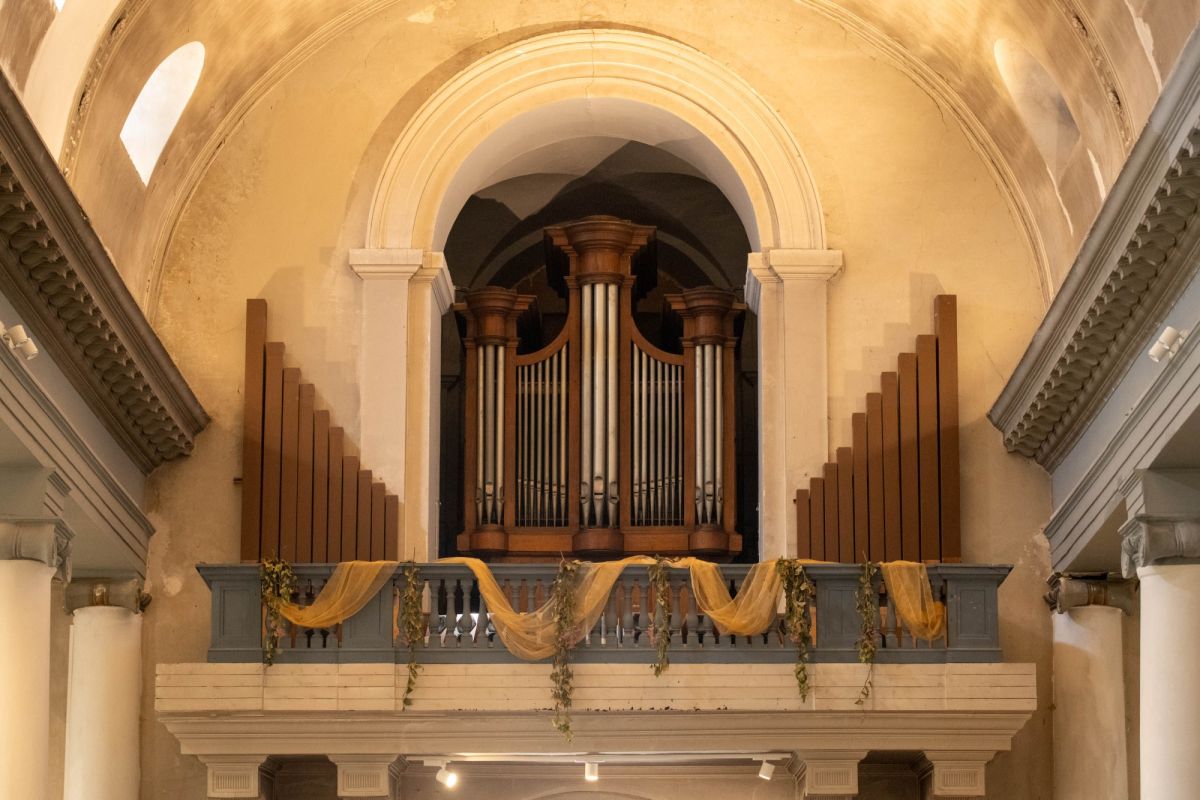
The organ, built by Hyppolyte Loret in 1847 and restored by Jean-Emile Kerkhoff in 1879 (oldest known estimate), was transformed in 1960 by Stevens with a second keyboard and independent console. In November 2017, the Church of the Assumption acquired a digital console (three manuals and pedalboard) controlling both the pipe organ and a powerful digital instrument, making Farciennes the first Belgian church with a hybrid organ of this size.
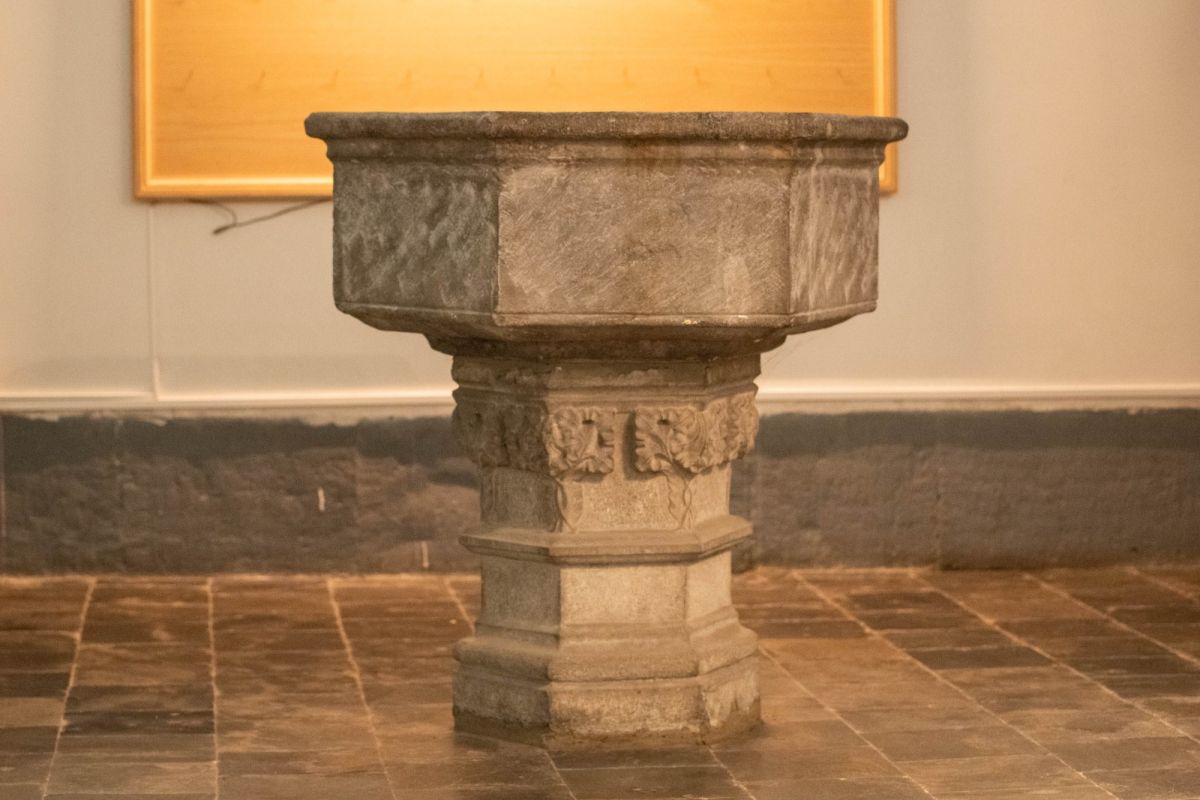
Baptismal fonts
Gothic-style baptismal fonts made of Carboniferous limestone from the 15th century. These fonts come from Piéton. They were located in the former Church of the Holy Family in Grandchamp (a hamlet of Farciennes). During the demolition of the church (following the expropriation of this neighborhood in 1976), they were brought to the Chapel of Louât. With part of the chapel being ceded to the school, they naturally returned to the Church of the Assumption.