Saint Eligius
Zevenekendorp
9080 Zeveneken (Lochristi)
Church | 1287 | Gothic, Classical | Catholic Church


Map
Opening hours
01 January - 31 December
Mon 10.00 - 18.00
Tue 10.00 - 18.00
Wed 10.00 - 18.00
Thu 10.00 - 18.00
Fri 10.00 - 18.00
Sat 10.00 - 18.00
Sun 10.00 - 18.00
Religious offices
Description
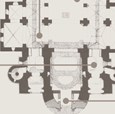
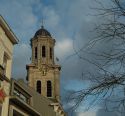
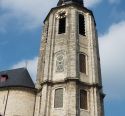
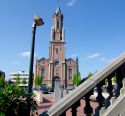
The current tower dates from the 16th century, and the aisles were added in 1773, forming today a three aisled hall church under three gable roofs. In the late 16th century the church was reportedly used for Protestant worship and restored after the 1580 destruction. In 2020 the tower, roofs and calvary were fully restored.
Outside, the 1923 north portal shows a tile panel with angels, a chalice and the text “Reverence to God’s house”. On the east wall, a crucifix hangs under a canopy above a purgatory scene. Behind a decorated blue stone fence rises a rocky mound with three skulls and two vases.
The cemetery fence incorporates a 1921 monument to the fallen; the fences remain unrepaired since a 2015 accident. Along the street, seven recently replaced oaks shape the view, complemented by an artwork carved from a felled oak (2022, Robin Uzeel). The name “Zeveneken” is said to refer to seven oaks.
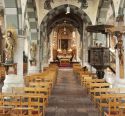
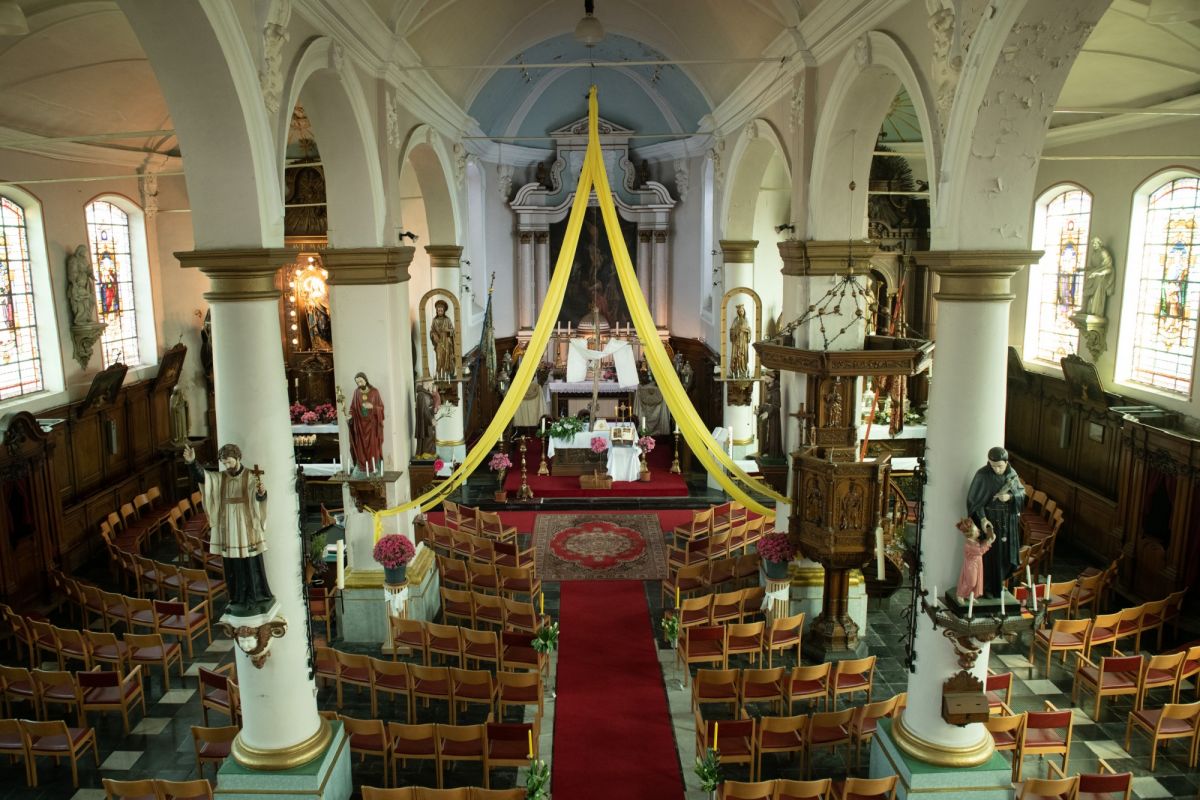
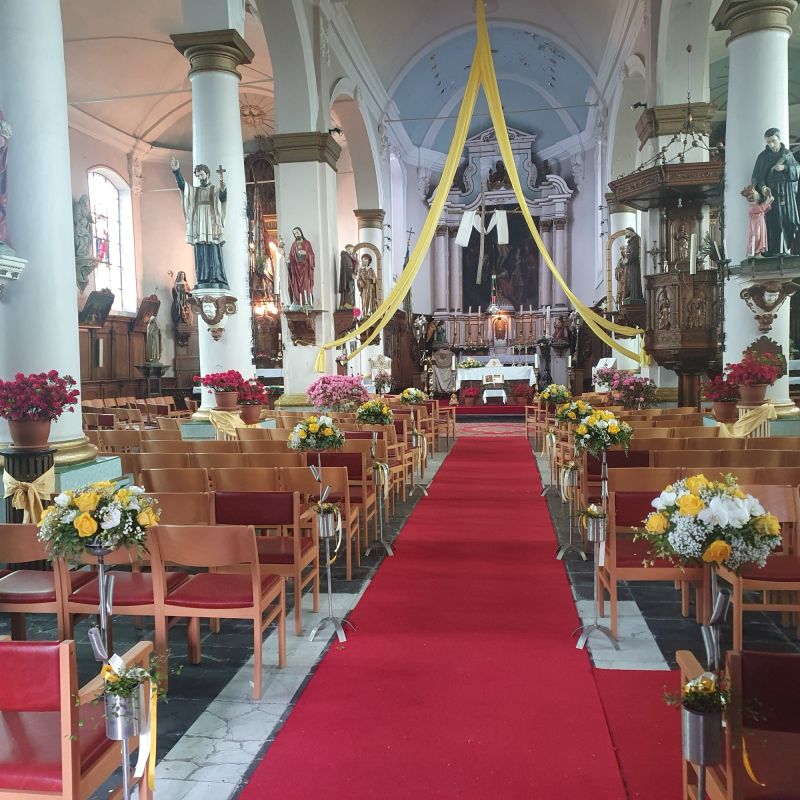
The classical interior was recently repainted. Several paintings and a side altar are dedicated to Saint Eligius. The altar cloth Jesus on the Cross (1653, P. Beernaert) is the oldest element. The choir stalls date from the 18th century, the paneling from the 17th or 18th. A 17th century pulpit and 18th century communion rails complete the furnishings. The Van Peteghem organ has been renewed several times.

Photos



Remarkable elements

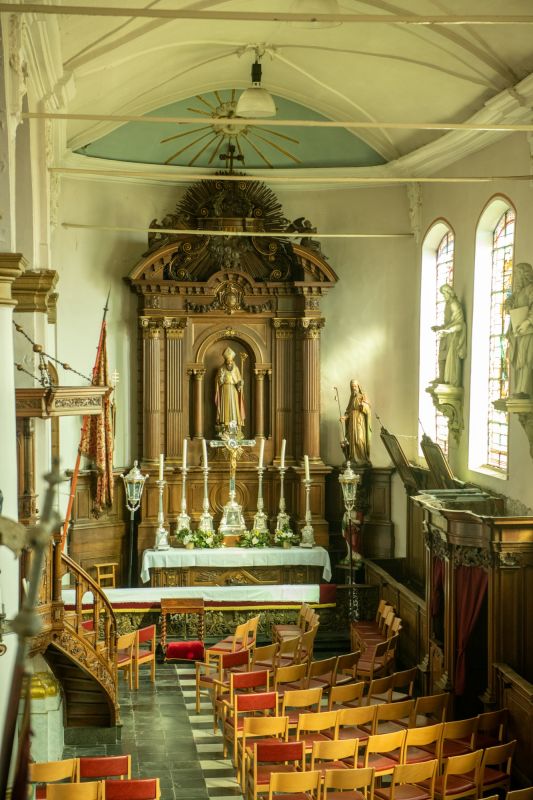
Main altar
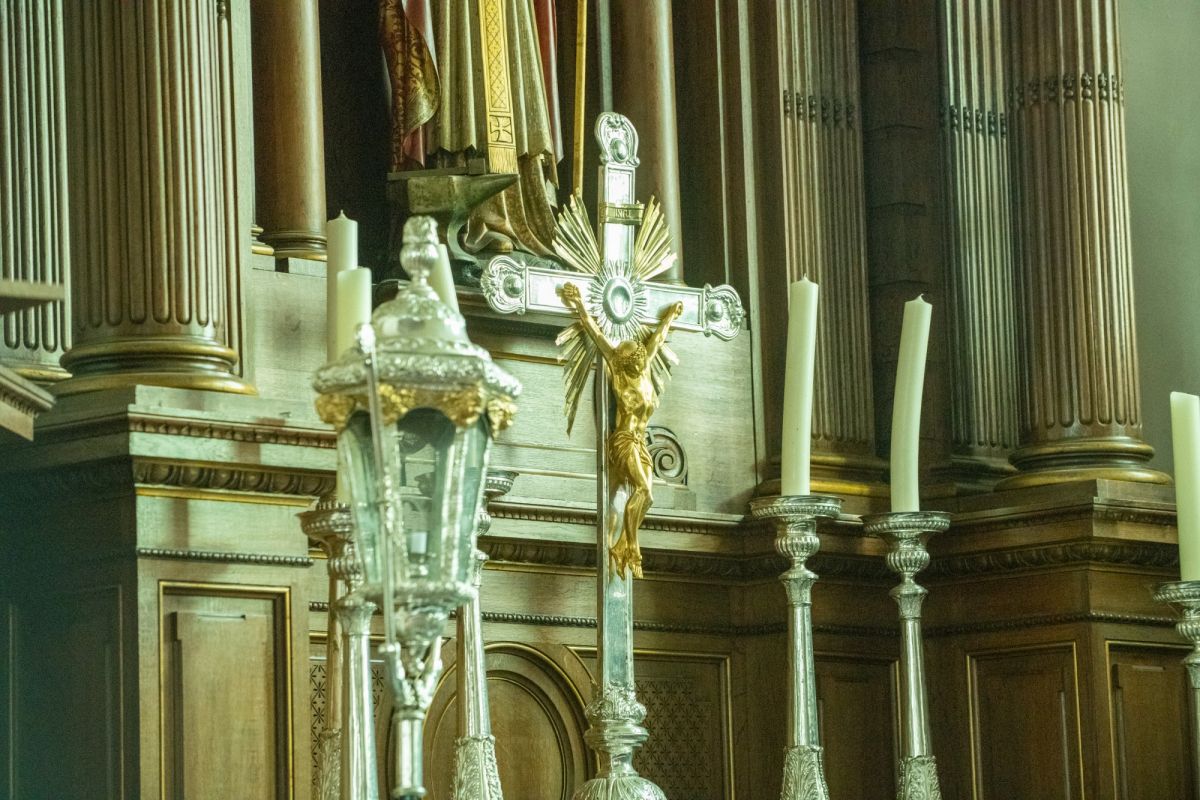
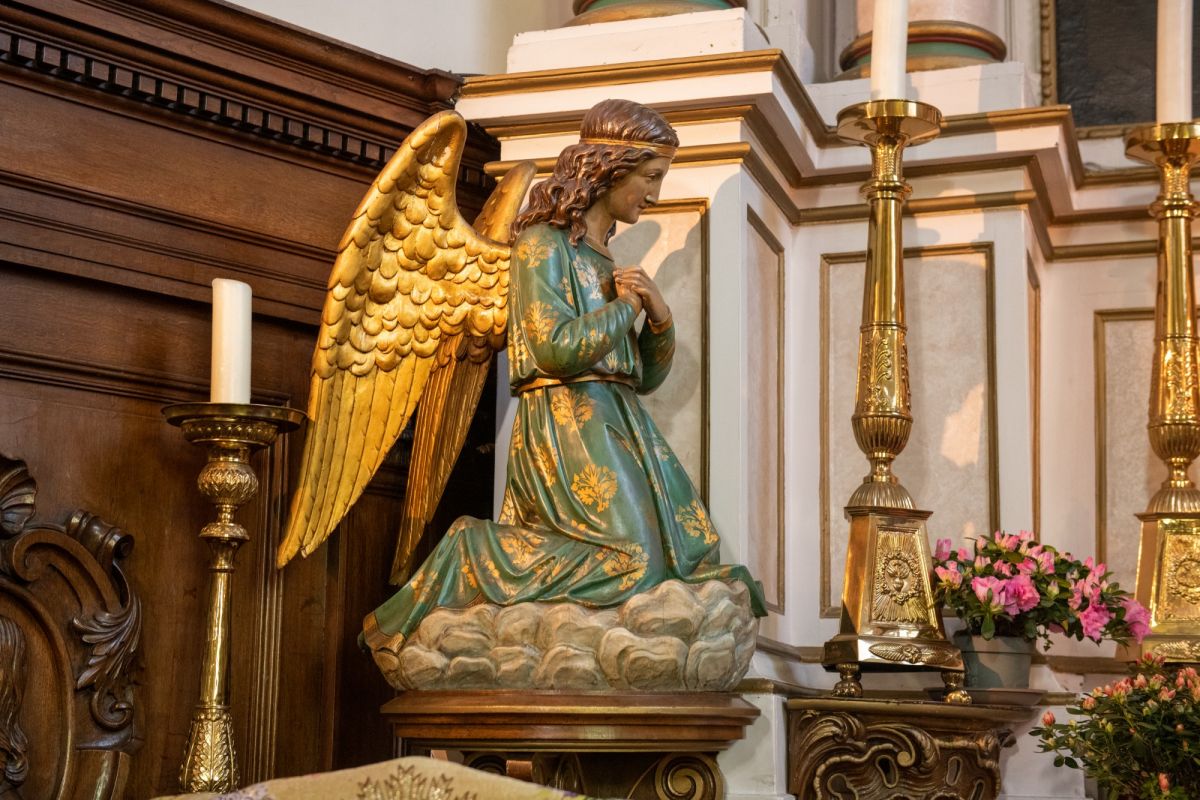
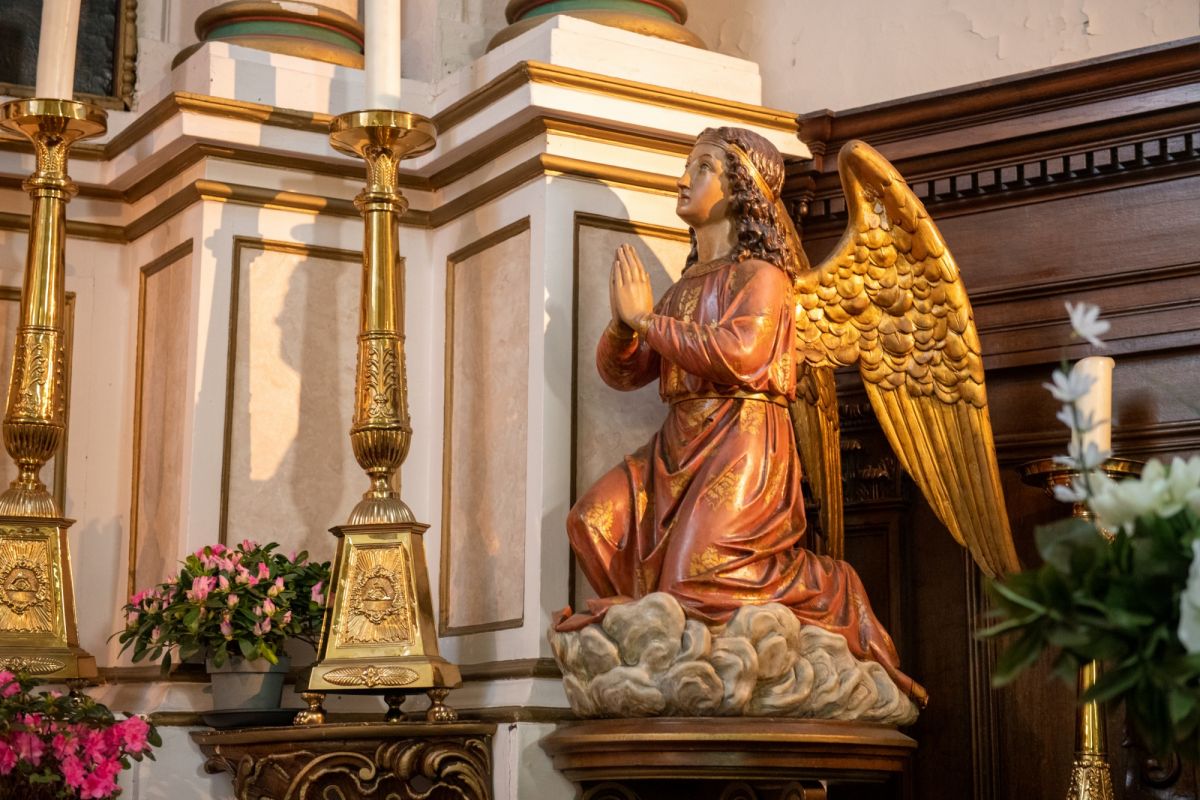
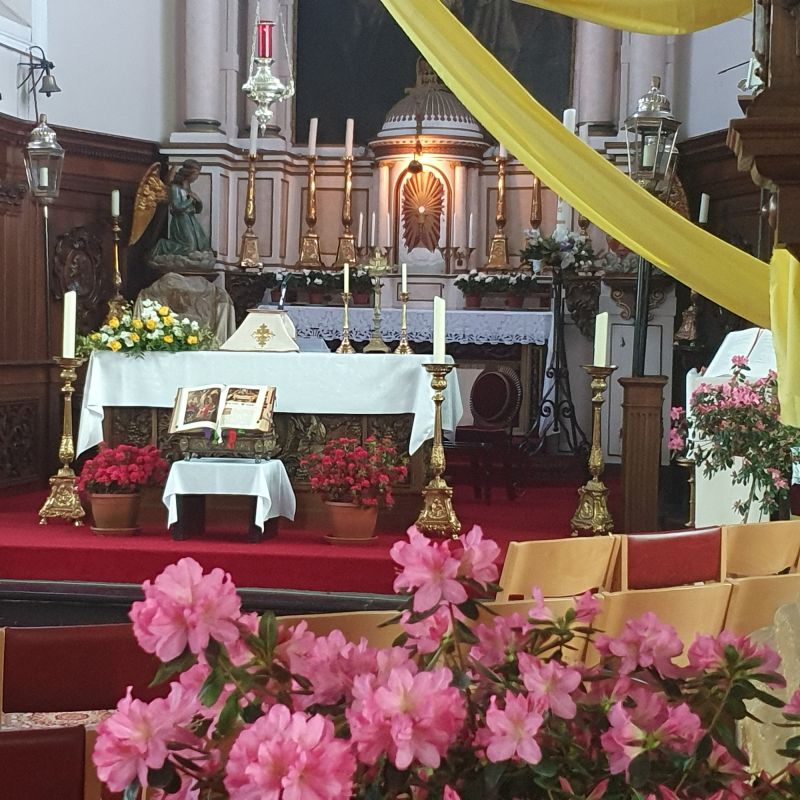
In 1766, this baroque altar replaced an earlier altar that is still preserved underneath. It is a wooden portico altar flanked by two columns with above it a statue of God the Father sculpted by Mathias Zens in 1882. The painting in the middle represents the Coup de Lance and was painted by Ph. Beirnaert in 1653. The neo-classical tabernacle was made in 1832 by the brothers Nimmegeers from the village of Zaffelare who also made the choir stalls in 1857. Both cherubs were purchased in 1837.
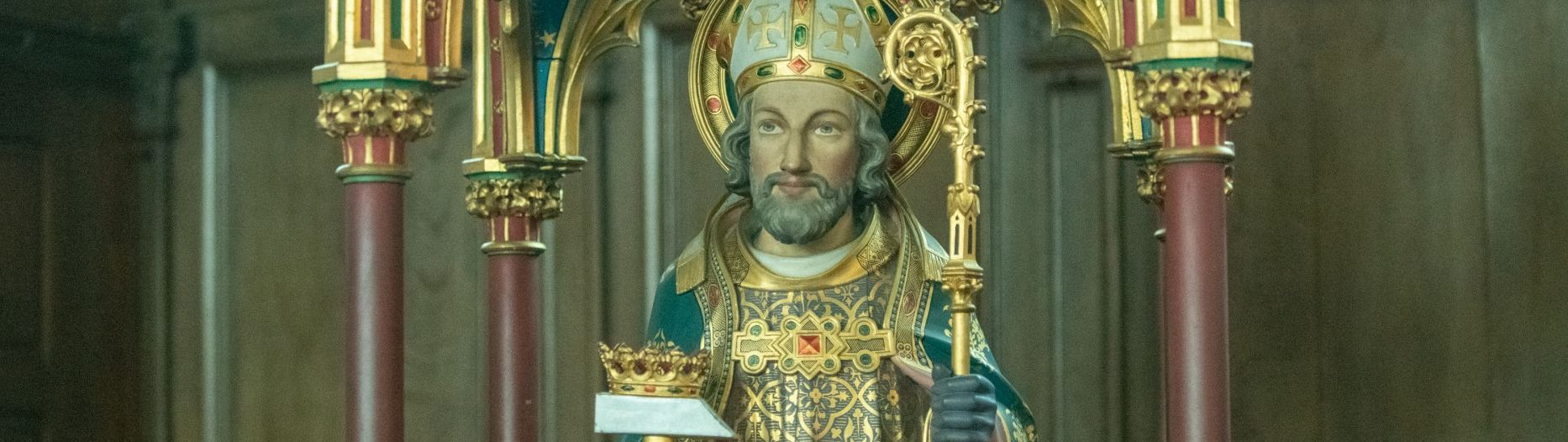
Processional statue of Saint Eligius
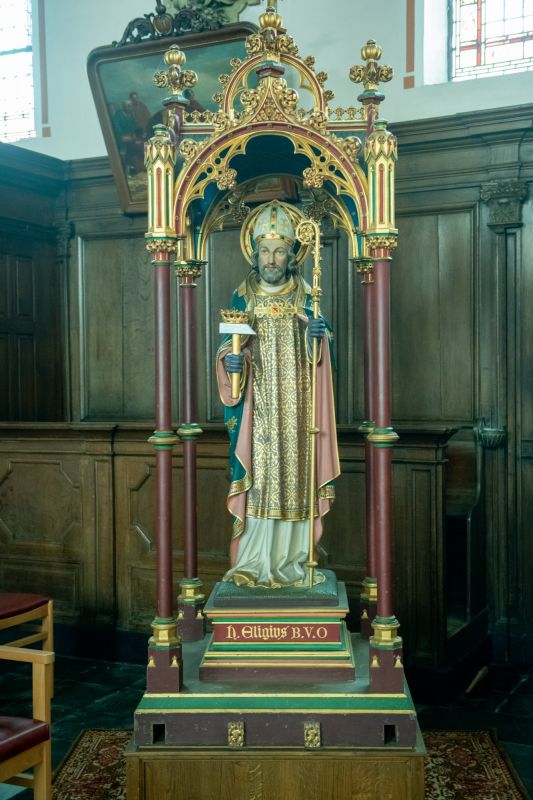
This beautifully sculpted neo-Gothic statue from linden wood was made by Remi Rooms in 1894 and was consecrated on December 1, 1896. Saint Eligius is represented as a bishop under a baldachin. As an attribute he holds a crowned hammer in his hand. The statue was carried during the procession and was also put on display during the horse blessing, now car consecration that takes place every year on June 29th.
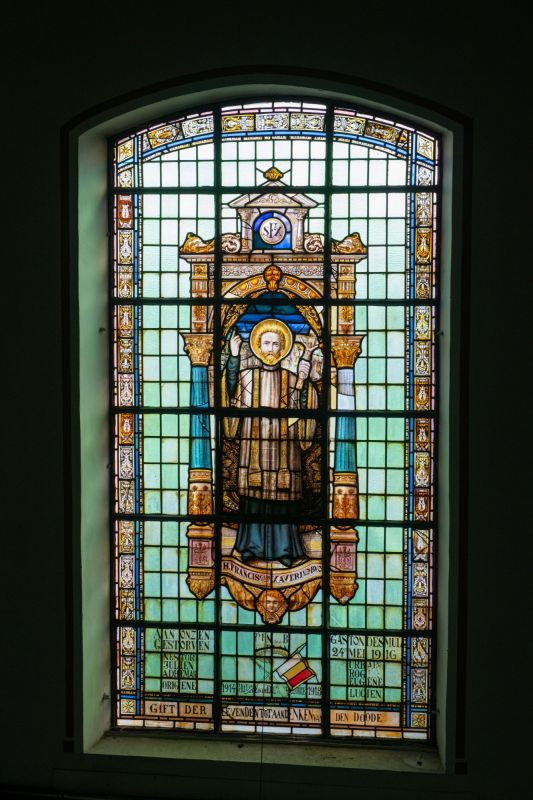
Stained glass windows
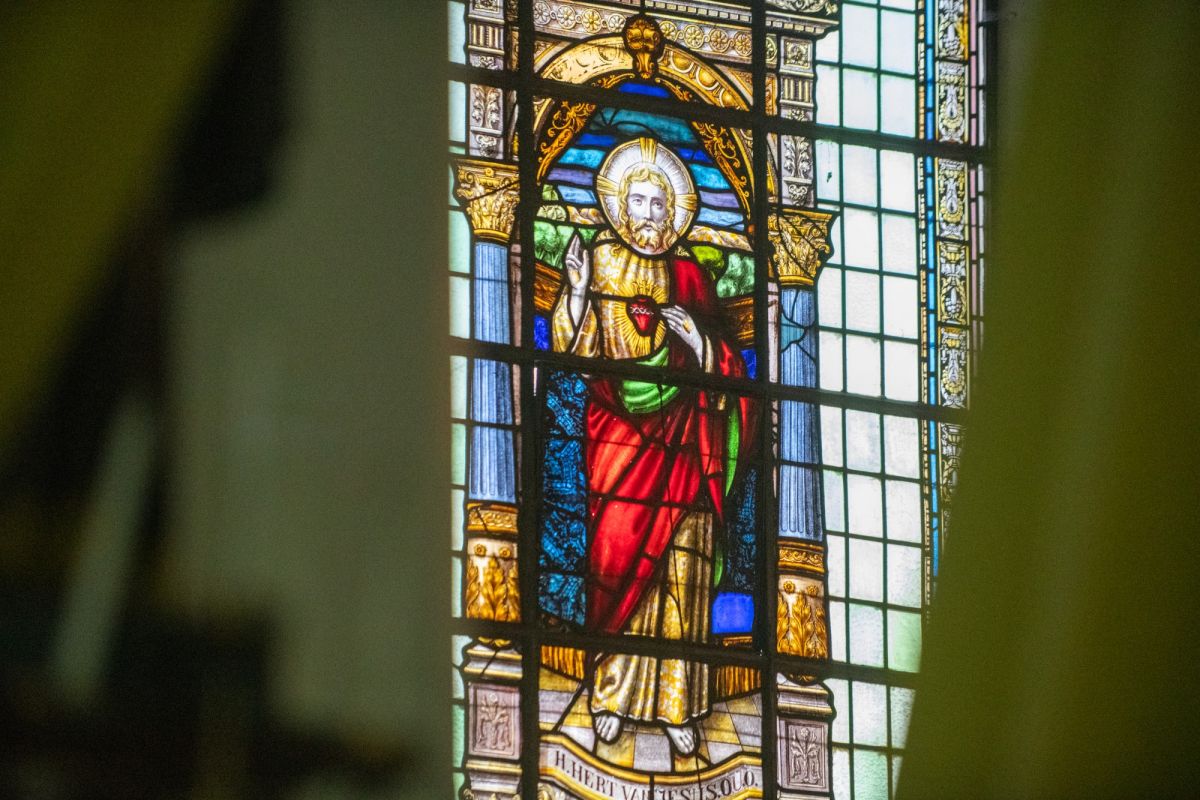
Between 1922 and 1928 A. Van Doorne from Ghent created twelve colorful stained glass windows. They were donated by parishioners, such as the one dedicated to Saint Eligius, or by wealthy citizens like mayor physician Philemon Pauwels. Gustaaf De Smul offered two windows in memory of his fallen son and deceased wife. The saints appear in a portico crowned by a pediment or volutes with medallion, with local history integrated.
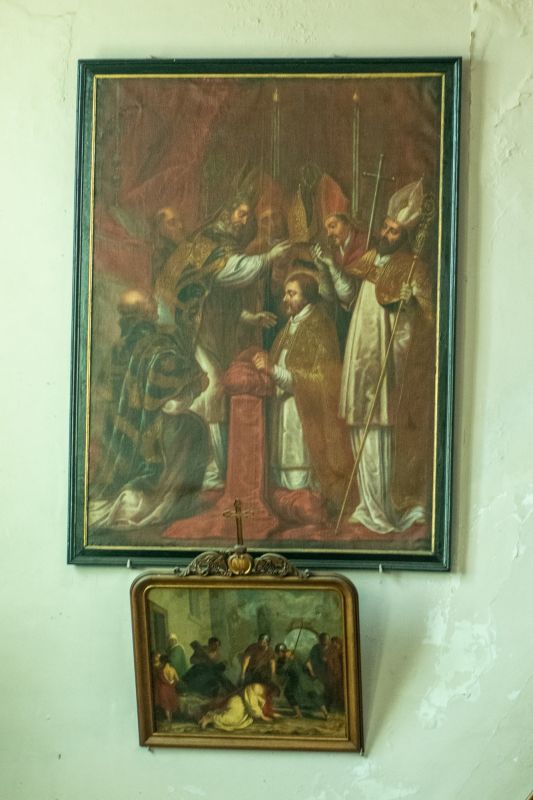
Painting representing the episcopal ordination of Saint Eligius
Eighteenth century painting created by a still unknown Flemish master. Four bishops wearing mitres accompanied by two monks place the bishop’s mitre on Saint Eligius’ head. The painting is part of a series of three.
In the north aisle, Saint Eligius’ honesty is being depicted by the offering of a second saddle to King Clothar II. The painting in the south aisle shows Saint Eligius’ charity work through him handing out alms.
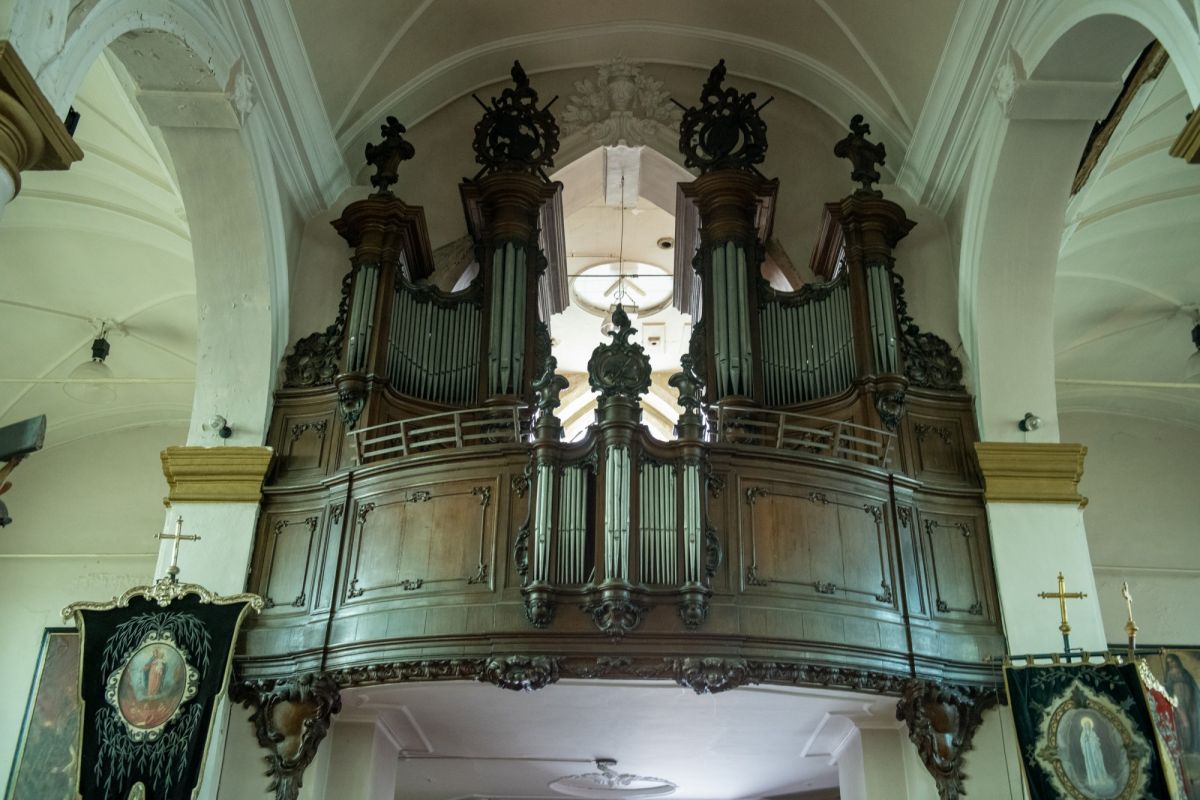
Van Peteghem organ
In 1775 the Lambert Benoît Van Peteghem organ was installed. It originally had one manual and was expanded in 1871 by Petrus Joannes Vereecken into a romantic two manual instrument; these additions were removed during the 2010 2020 restoration. The rococo organ case by Alexander Nuten integrates musical instruments, with pipes only in the southern case. In 1932 the air supply was electrified, though the original bellows remain.
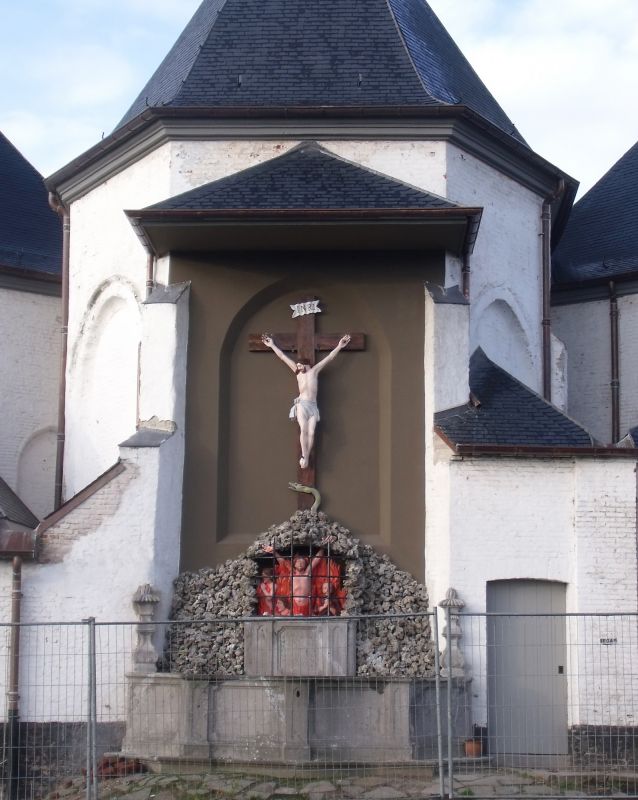
Calvary
On the east side of the church stands an 18th century calvary, restored in 2020 2021. Originally placed at the northeast, it was moved to create space for the northern sacristy. Above the bone house—once adorned with three stolen skulls—appears a lively purgatory set in an artificial rock. Above rises a massive cross with a snake curling upward. The original heavenly Jerusalem backdrop was replaced by a plain brown surface.