Saint Amandus
Geraardsbergsesteenweg 300
9404 Aspelare (Ninove)
Church | XV | Baroque | Catholic Church


Map
Opening hours
01 January - 31 December
Mon 9.00 - 18.00
Tue 9.00 - 18.00
Wed 9.00 - 18.00
Thu 9.00 - 18.00
Fri 9.00 - 18.00
Sat 9.00 - 18.00
Sun 9.00 - 18.00
Religious offices
Description
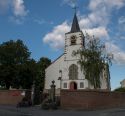
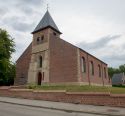
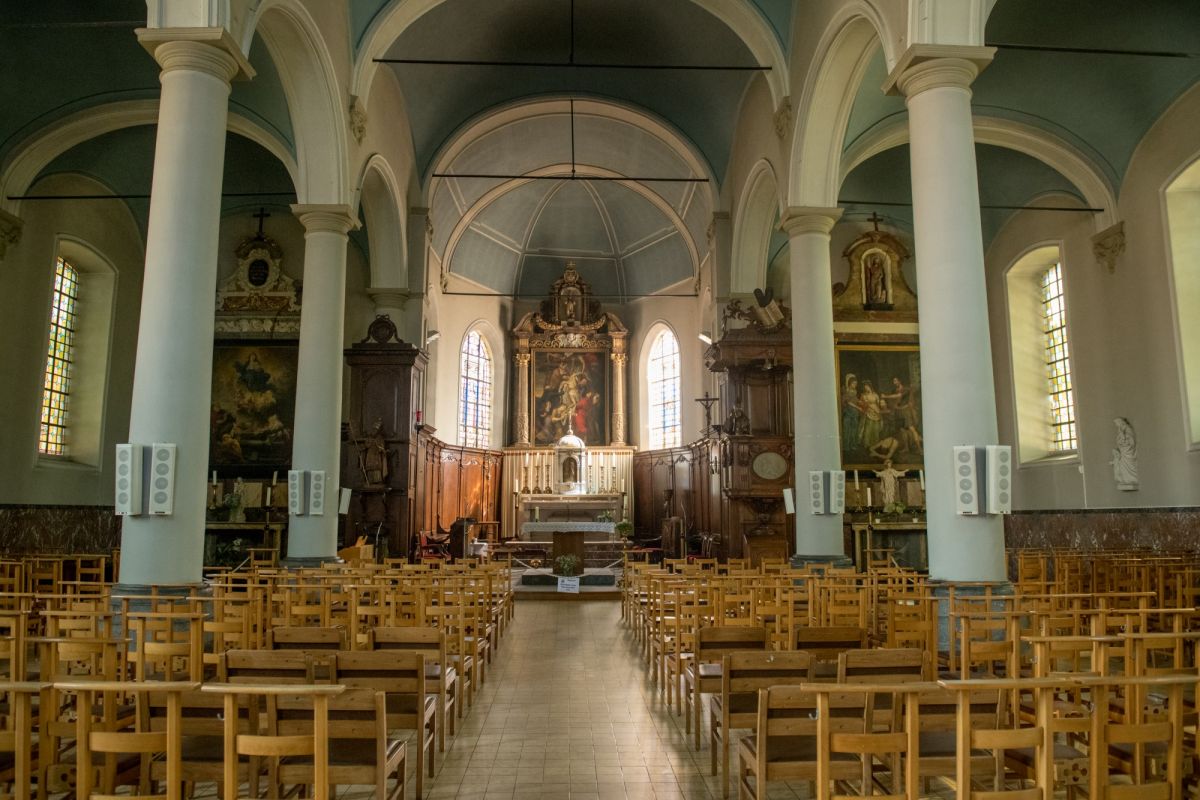
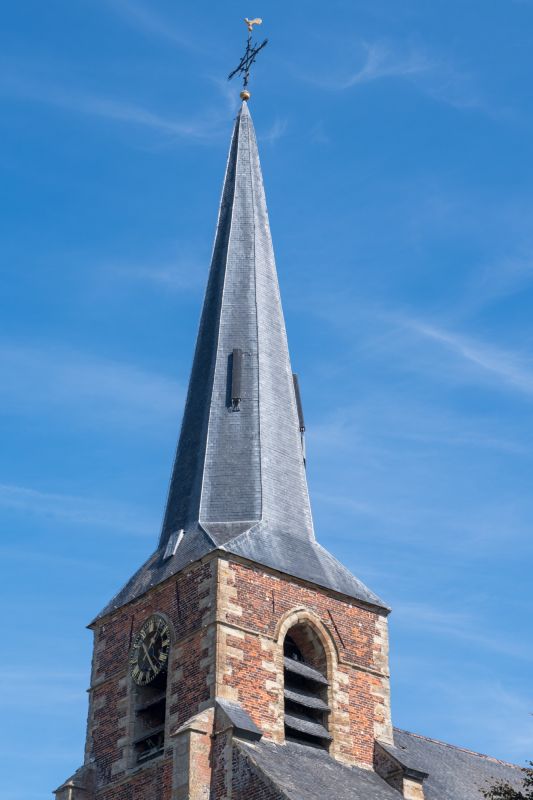
The Saint Amand church is mentioned the same year, though an earlier prayer house is presumed. A new church rose in the 15th century and was enlarged between 1776 and 1778 from a cross shaped plan into a hall church. Its current appearance dates from 1851, when storage rooms were added.
Under the Old Regime, the church belonged to Aspelare and, briefly from 1576 to 1596, to the deanery of Geraardsbergen. Administratively and ecclesiastically, it formed a unit with Nederhasselt. After the French Revolution, Aspelare was integrated into the deanery of Ninove.
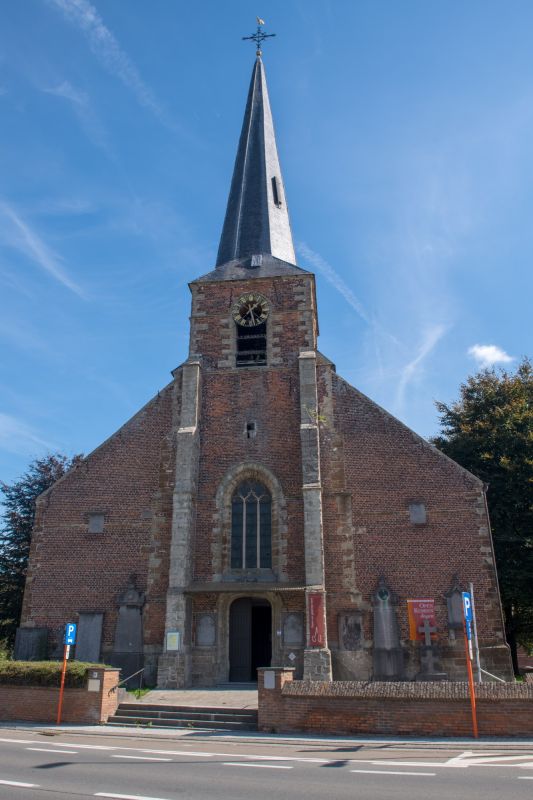
The church stands along the Geraardsbergsesteenweg, which was widened in 1957, forcing the cemetery wall to be rebuilt closer to the western façade. Around 1976, the southern cemetery wall was also moved to allow the widening of Melkbos street and the creation of parking spaces. During the same period, the graves were removed; today only the monumental tombs against the western wall remain.

Photos




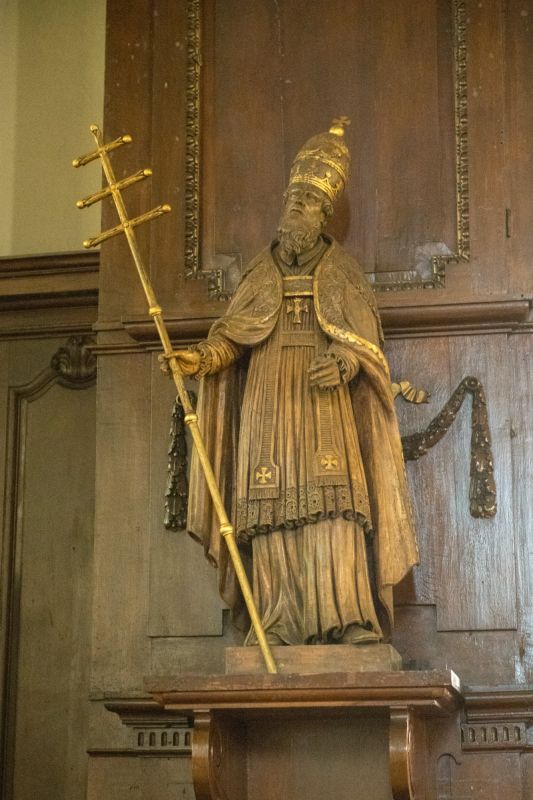
Remarkable elements

Gravestone of Philips de Dyn
Filips De Deyn, 17th century inhabitant of Aspelare, was a sworn surveyor, mathematician and geographer who drew remarkable maps, many for the Ninovian Norbertines. His gravestone recalls him, his wives Anna Van Gansbeek and Anna Droesbeker, and their son Phil. De Dyn, all deceased between 1628 and 1667, with the Old Dutch appeal: pray for the souls.

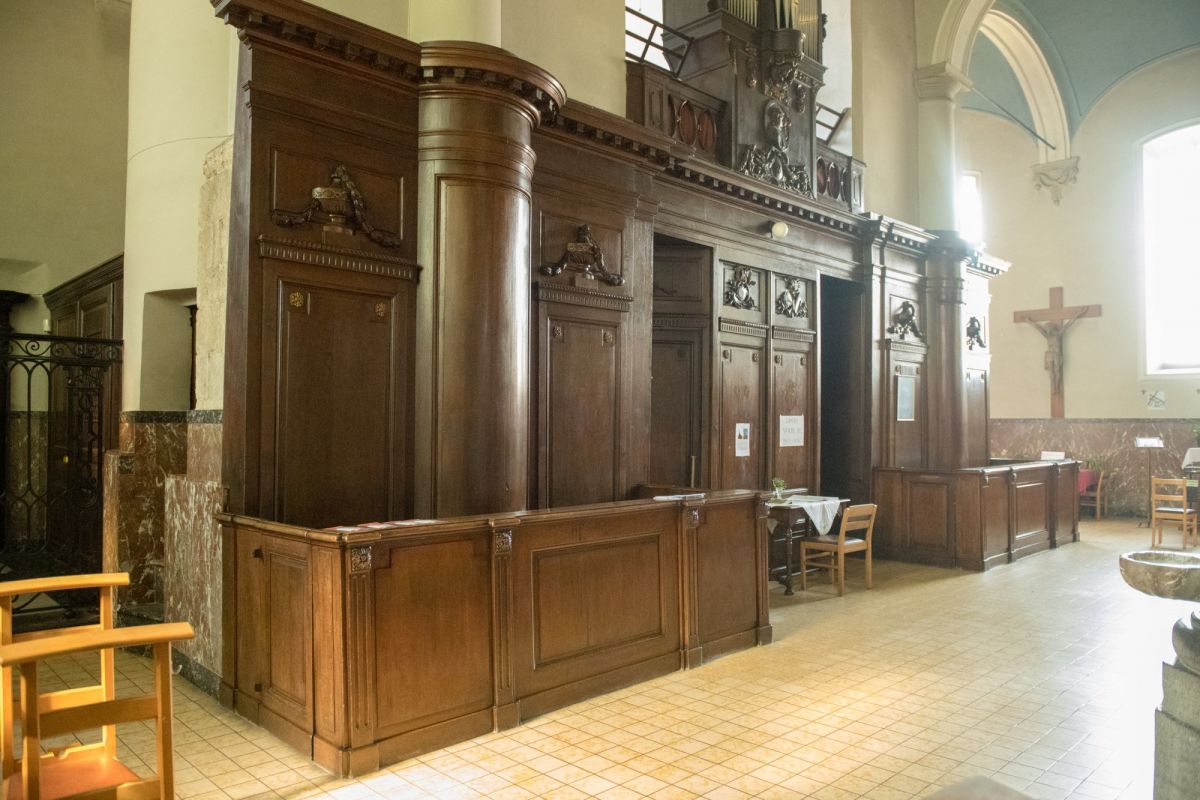
Organ Van Peteghem
Builder and year of construction: Pieter van Peteghem and sons 1783, new organ with use of some elements (e.g. the organ case) of an older instrument.
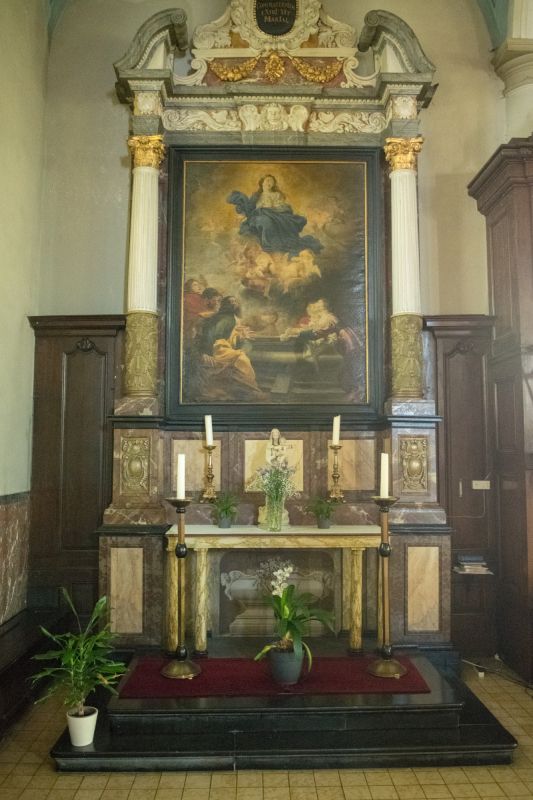
Northern side altar
Painting: The Assumption of Mary. Canvas, 17th century, approx. 240 x 170 cm.
Altar piece: Floral wonder in the empty grave.
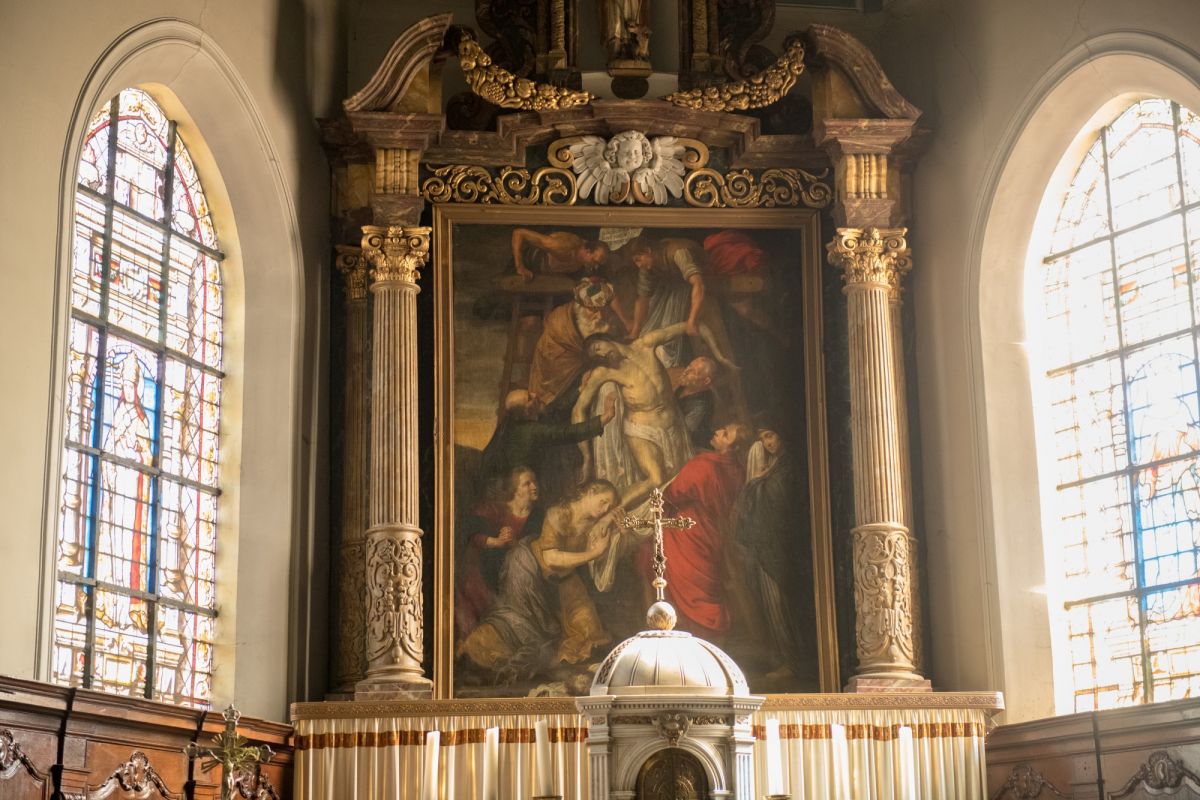
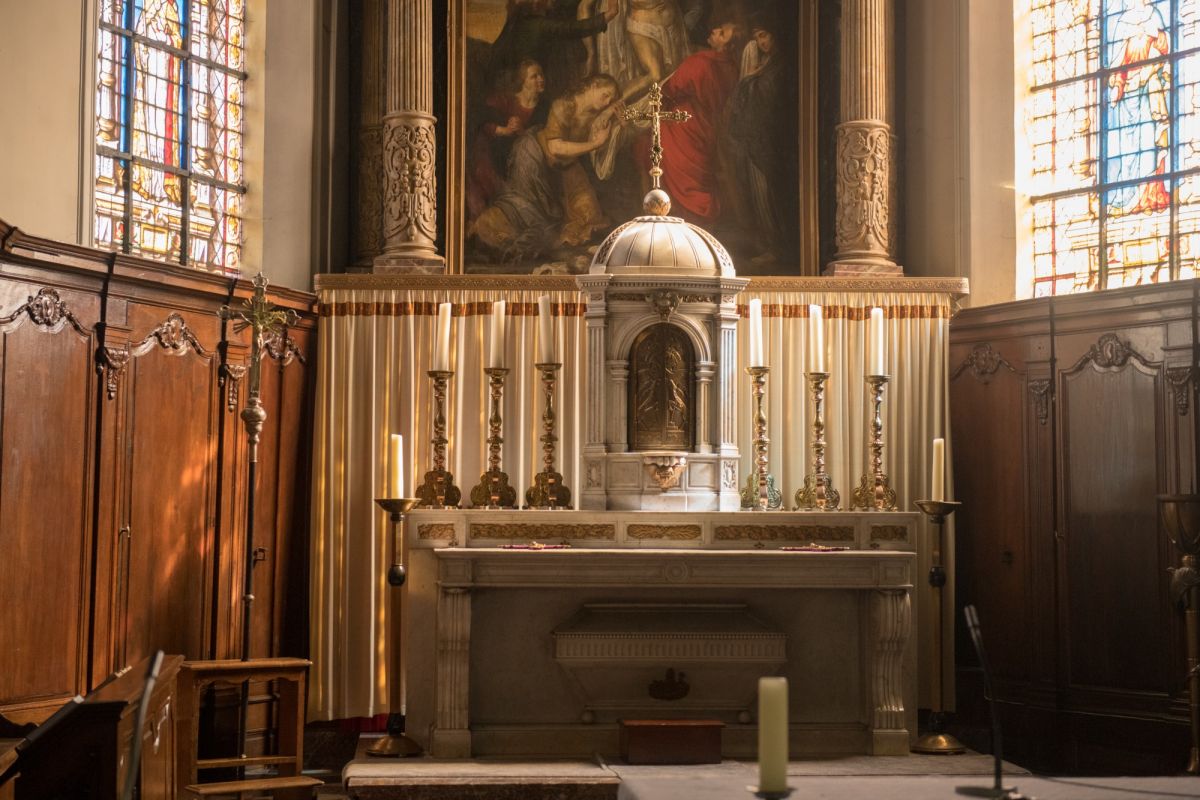
Head altar
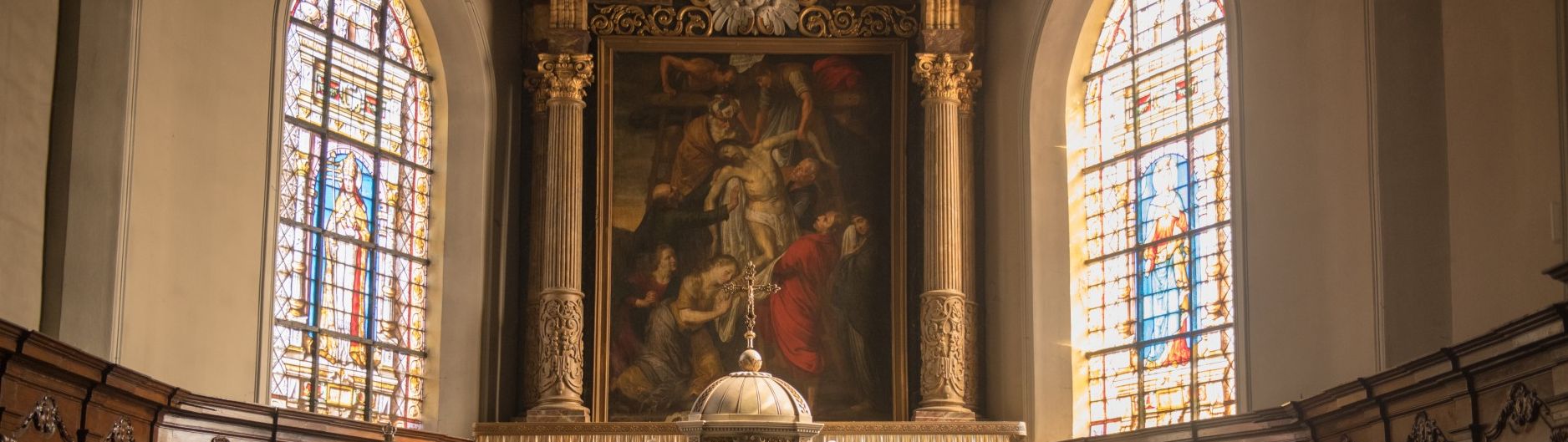
Painting: Descent from the Cross. Canvas, 17th century, approx. 240 x 170 cm.
High altar: White marble, Louis XIV with renaissance background in painted wood. Dedicated to Saint Amand with at the top a little statue of the Saint with crosier in the one hand and a model of a little church in the other. On his feet, one can see an image of a dragon; symbol of evil and disbelief.
Tabernacle on the high altar: White marble, Louis XIV, created in 1853 by J. De Can of Dendermonde.
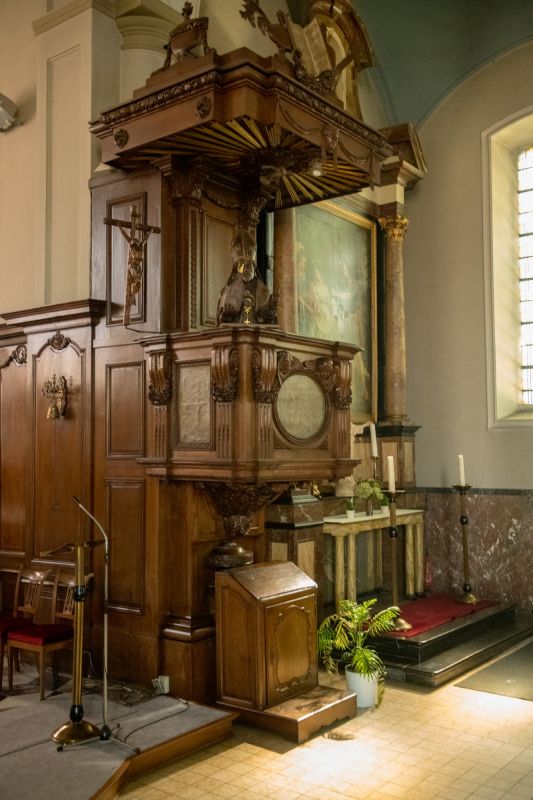
Pulpit
On the cockpit grisailles with depiction of Saint Agnes of Rome (to the left), Preaching of Saint John the Baptist (in the middle), and the Good Shepherd (to the right).
On the handrail: Statue of Saint Amand with relic of the Saint (1641).
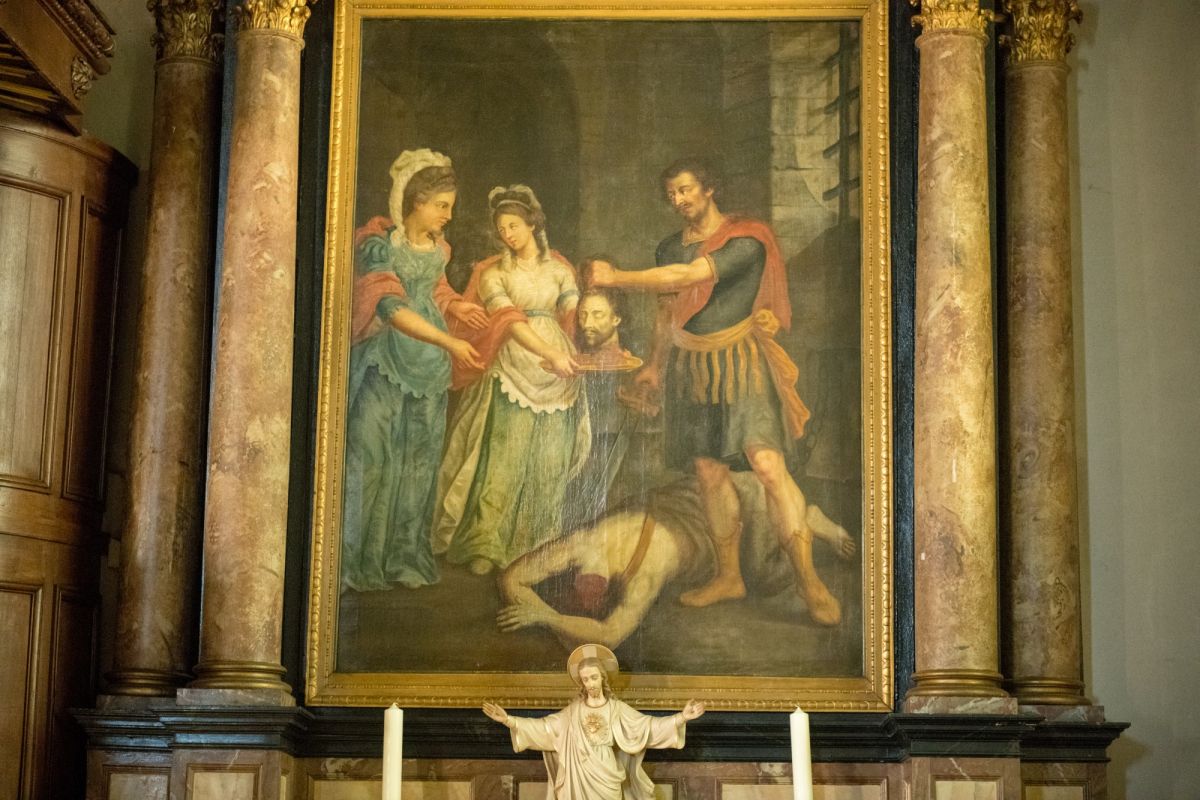
Southern side altar
Painting by E. Bert: Beheading of John the Baptist. Canvas, 18th century, approx. 200 x 150 cm.
Altarpiece: Painted wood in Renaissance style.
Above the altar: Little statue of Saint John.