Saint Peter
Rue du Centre
6672 Beho (Gouvy)
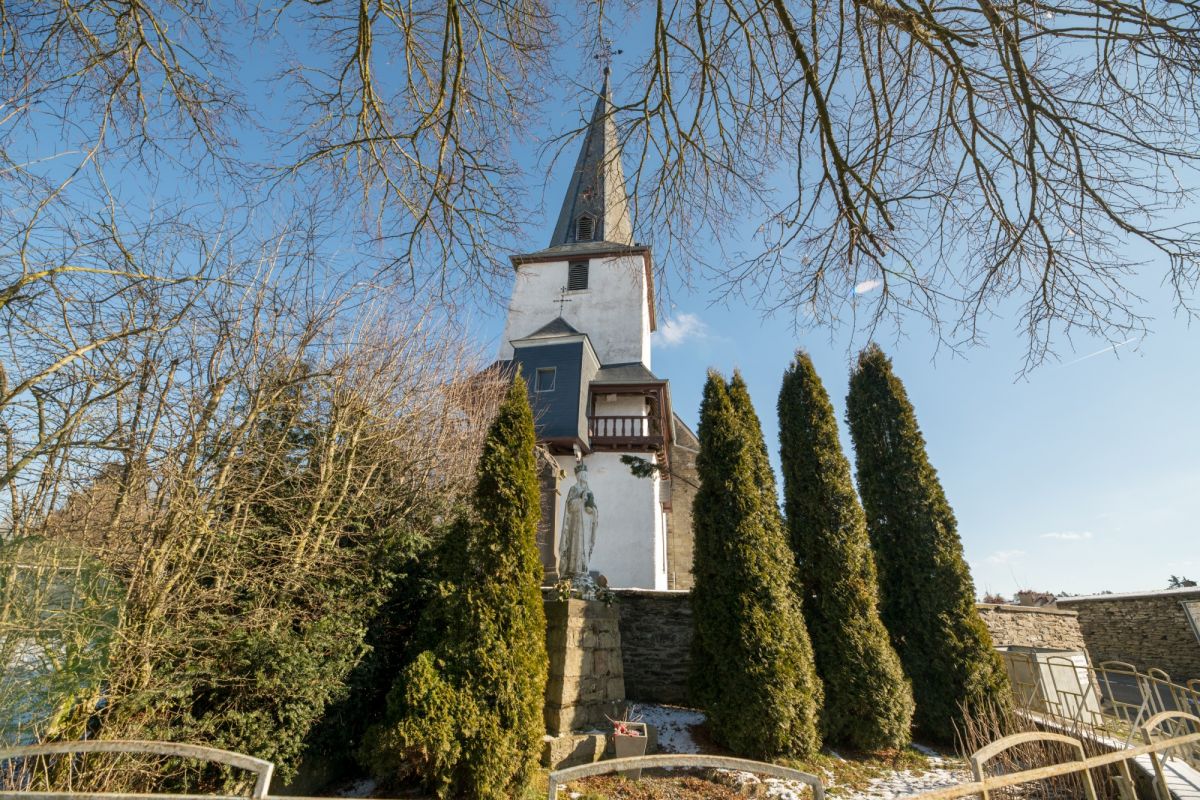
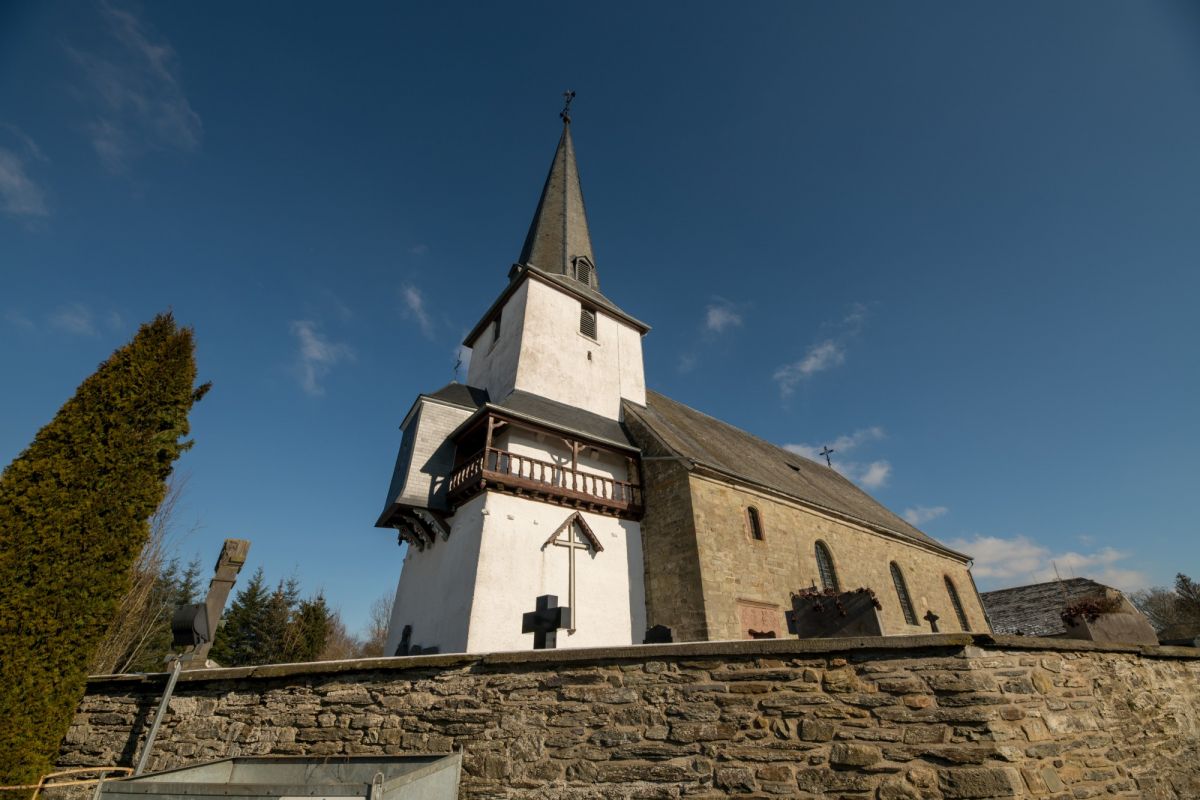
Church | 1712 | Rococo | Catholic Church


Map
Opening hours
01 January - 31 December
Mon 9.00 - 17.00
Tue 9.00 - 17.00
Wed 9.00 - 17.00
Thu 9.00 - 17.00
Fri 9.00 - 17.00
Sat 9.00 - 17.00
Sun 9.00 - 17.00
Description
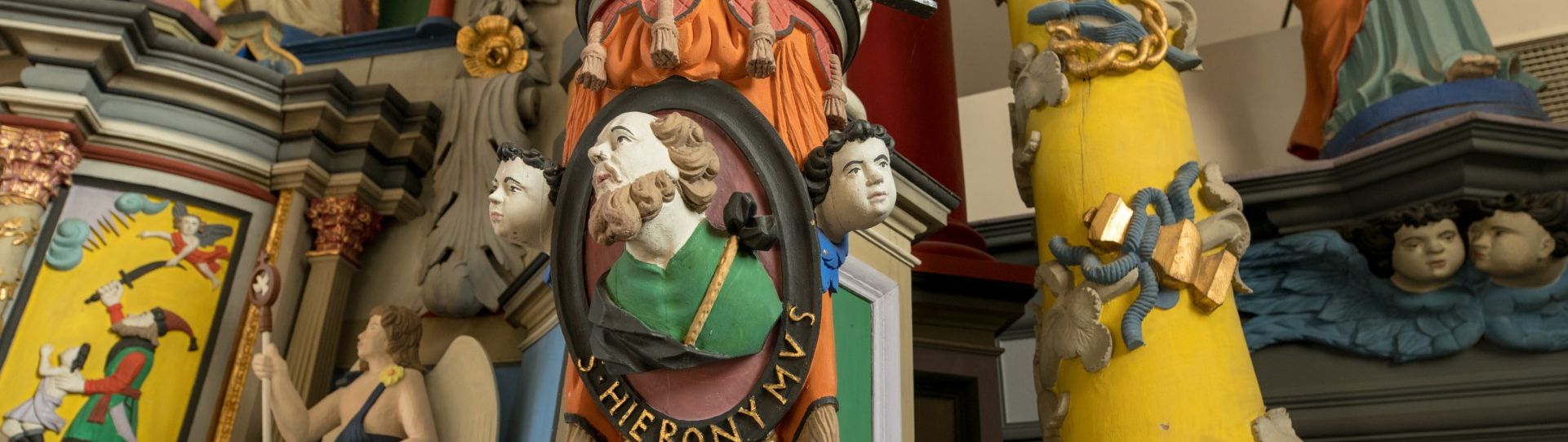
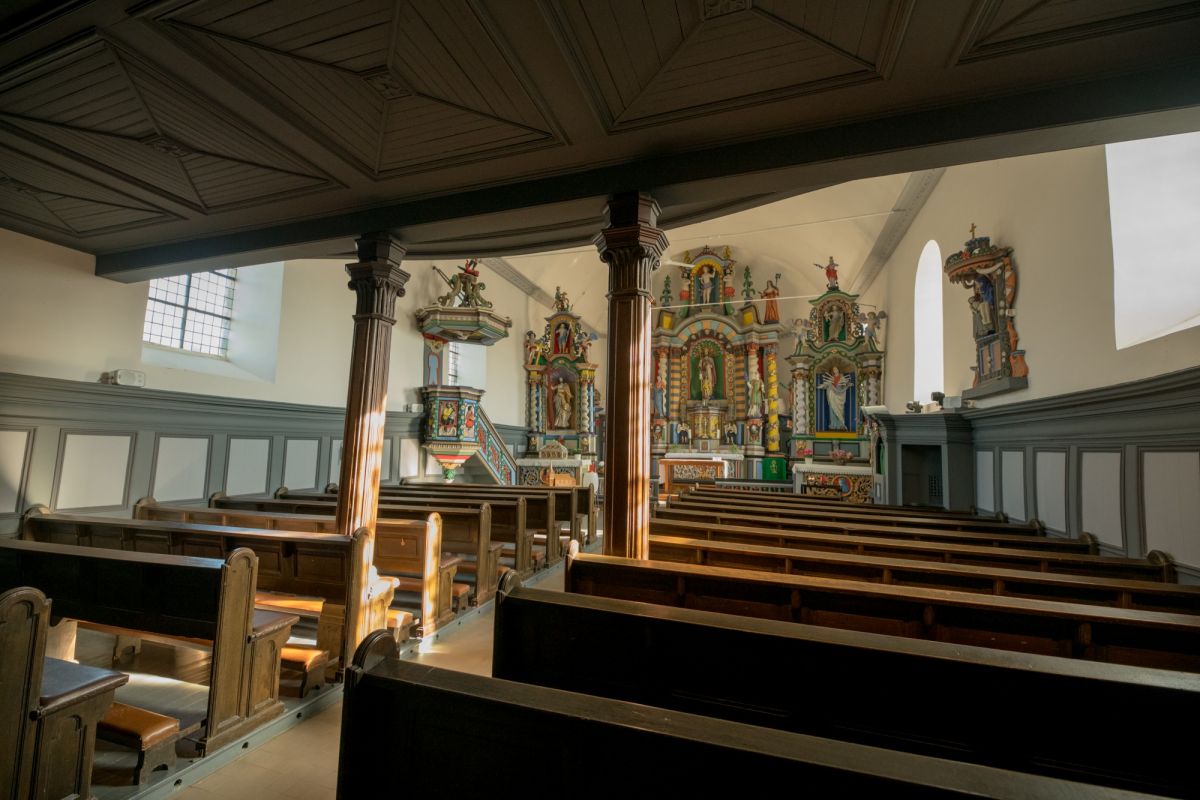
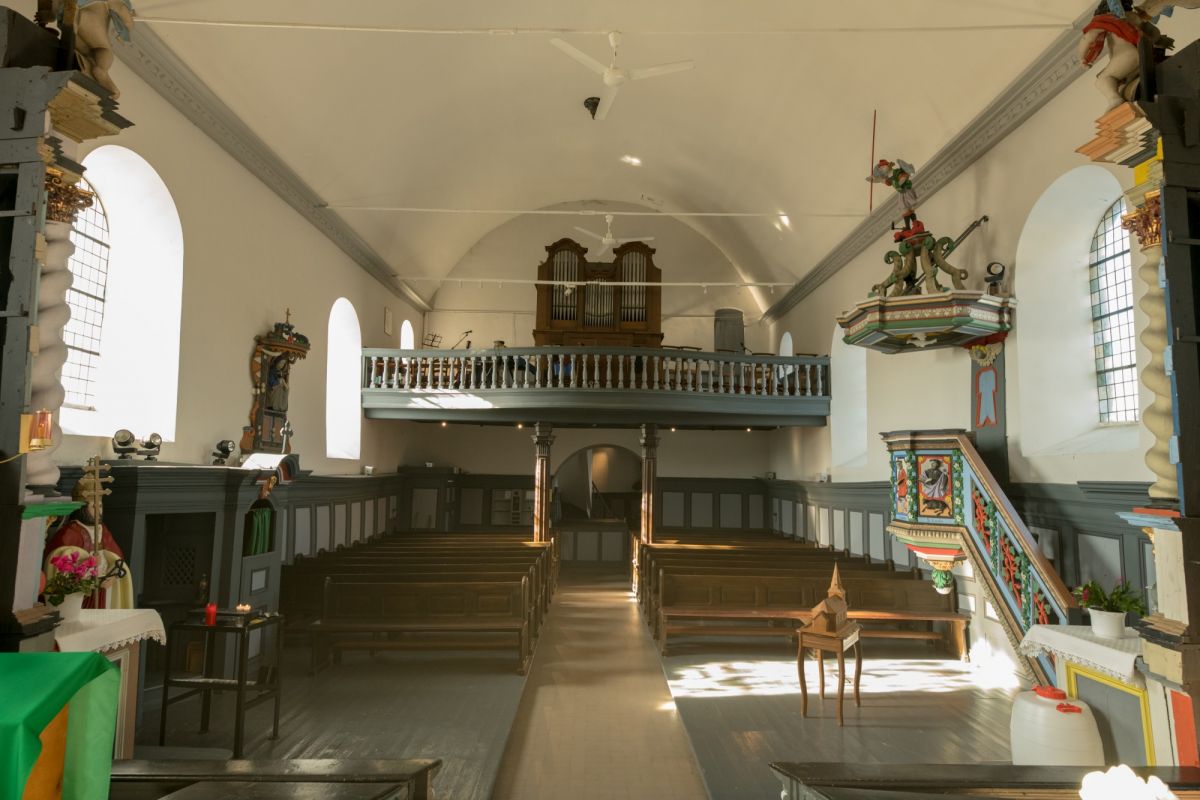
Inside, the general appearance of the nave has changed little since the 18th century restoration, except for the vivid polychrome paintings by the painter Louis-Marie Londot in 1955 after a fire. The style is close to rococo. The altars and the pulpit are artistically carved in oak.
Anecdote: the bell tower has two bells, the small one giving the C and the big one the A. Local tradition has it that in the past, the small bell was rung to ward off storms.
More info
KIKIRPA : photo-library online

Photos

Remarkable elements

High altar
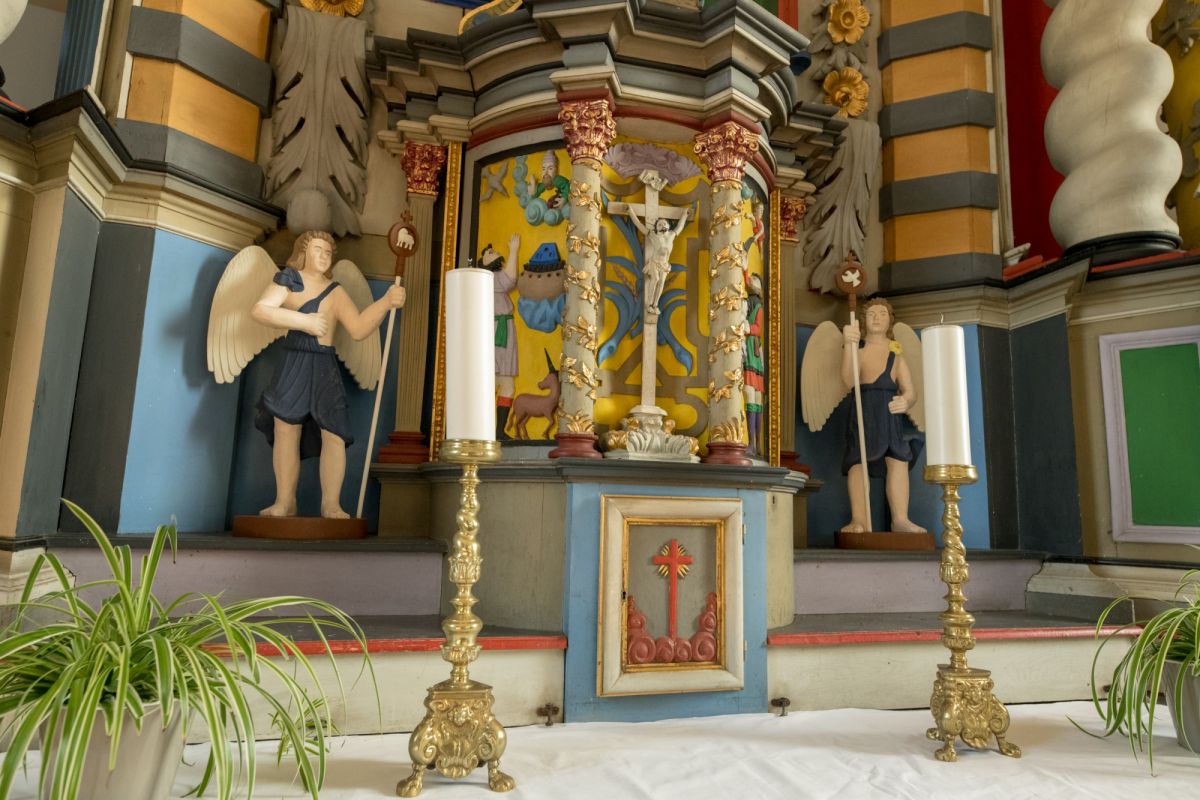
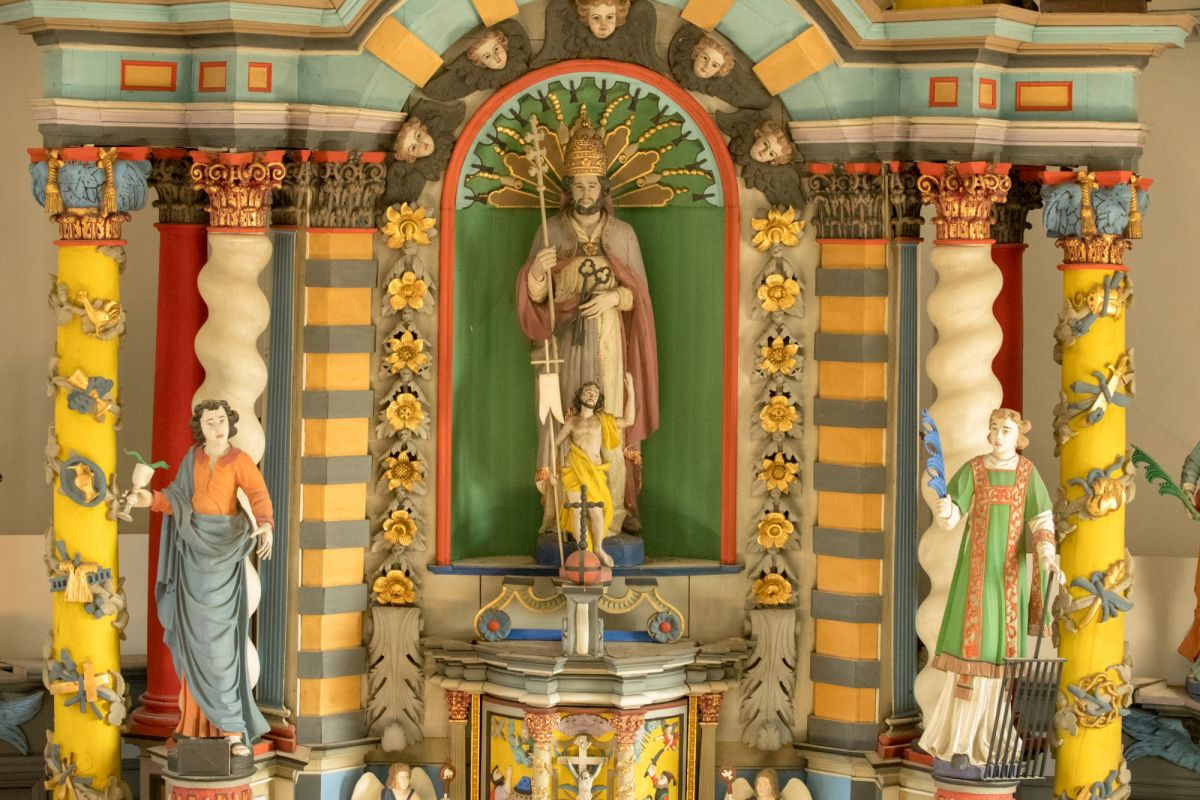
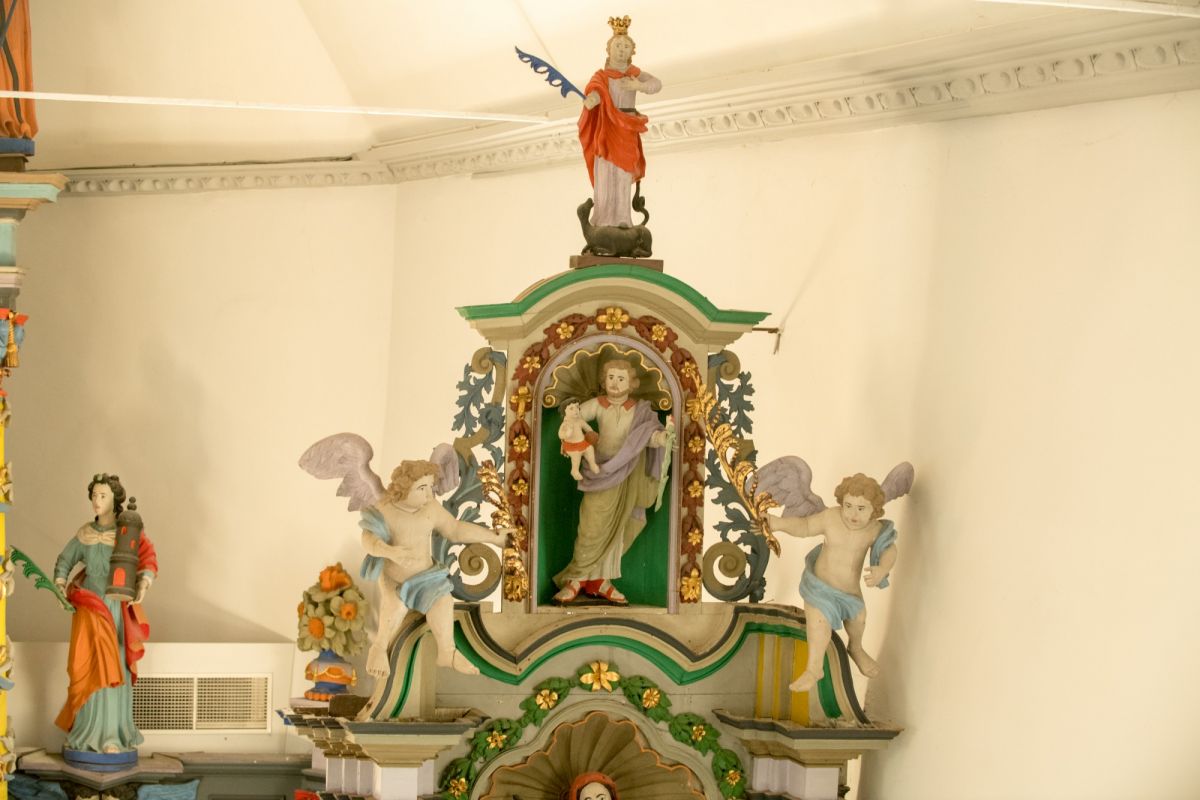
The main church furnishings were carved in oak between 1713 and 1724 by Jean Georges Scholtus of Bastogne, in a transitional style between Louis XIV and Louis XV. He also created the side altars, pulpit, statues and the reliquary, of which only the Sorrowful Virgin remains. The imposing high altar features side columns recalling the Instruments of the Passion and six large oak statues. The overall decoration of the altarpiece expresses a single idea: the glorification of the Church.
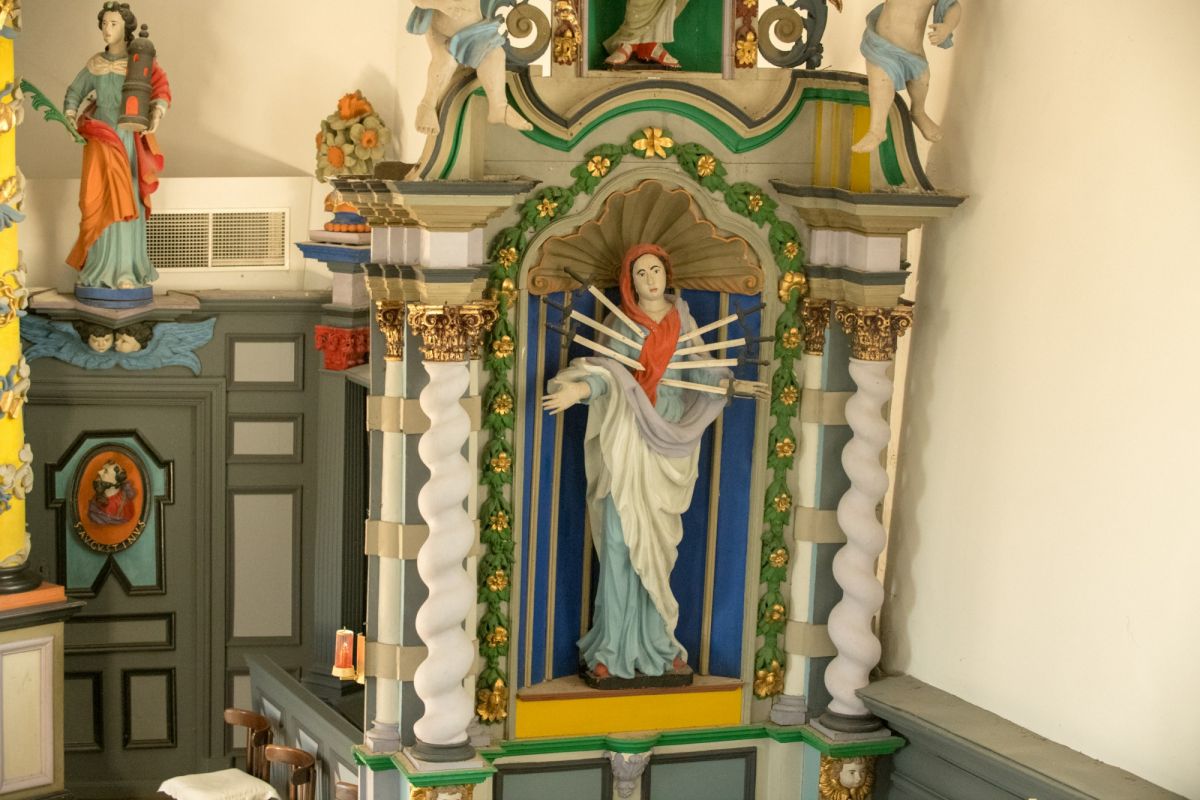
Altar of the Blessed Virgin (right)
Unlike in other churches, the altar of the Virgin Mary is on the right. In the centre of the altarpiece is a large statue of Our Lady of Seven Sorrows. She is shown standing without the bloody body of the Saviour.

Altar of the Holy Cross (left)
In the centre of the altarpiece, stands a statue of the risen Christ; higher up, two angels, each holding a cross; in a niche, a small statue of St John the Baptist and, finally, higher up, a statue of St George.

The reliquary (on the altar of the Holy Cross)
This reliquary, made at the beginning of the 18th century by Master Scholtus, is a rectangular box made of carved wood. Circular oculi open around the perimeter through which the relics appear. In 1865, three of the relics (considered to be authentic) could be exhibited: a piece of the Holy Cross, a relic of St. Peter and one of St. Lawrence.

The Pulpit
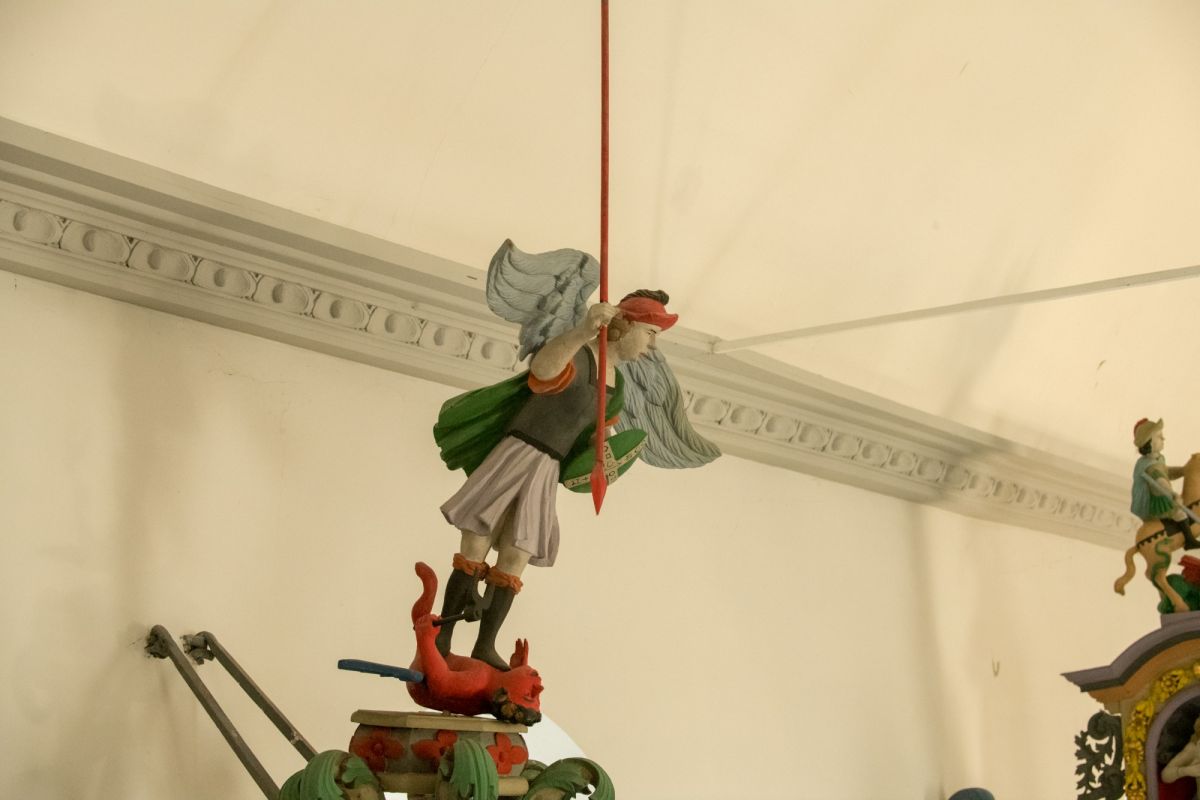
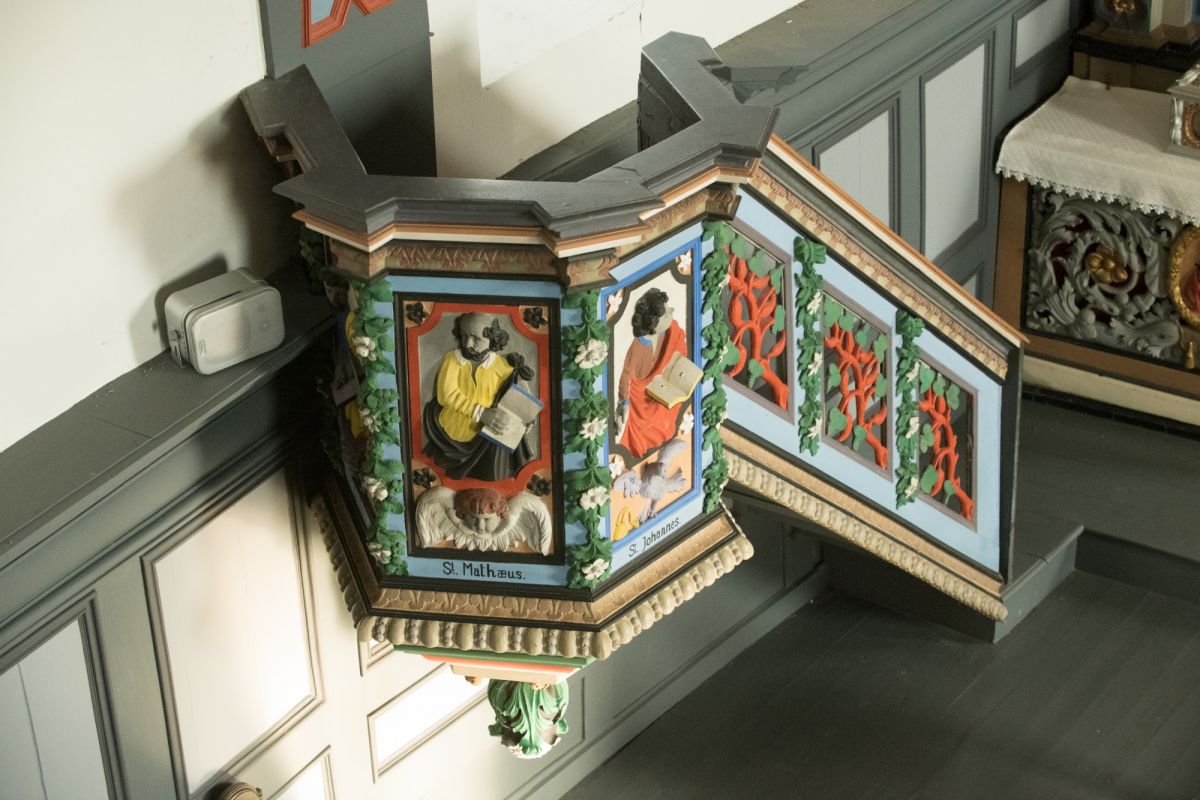
It is as it came from the hands of Master Scholtus. The four evangelists' fugues are carved on the panels. Above the lampshade is a St Michael overcoming the devil.

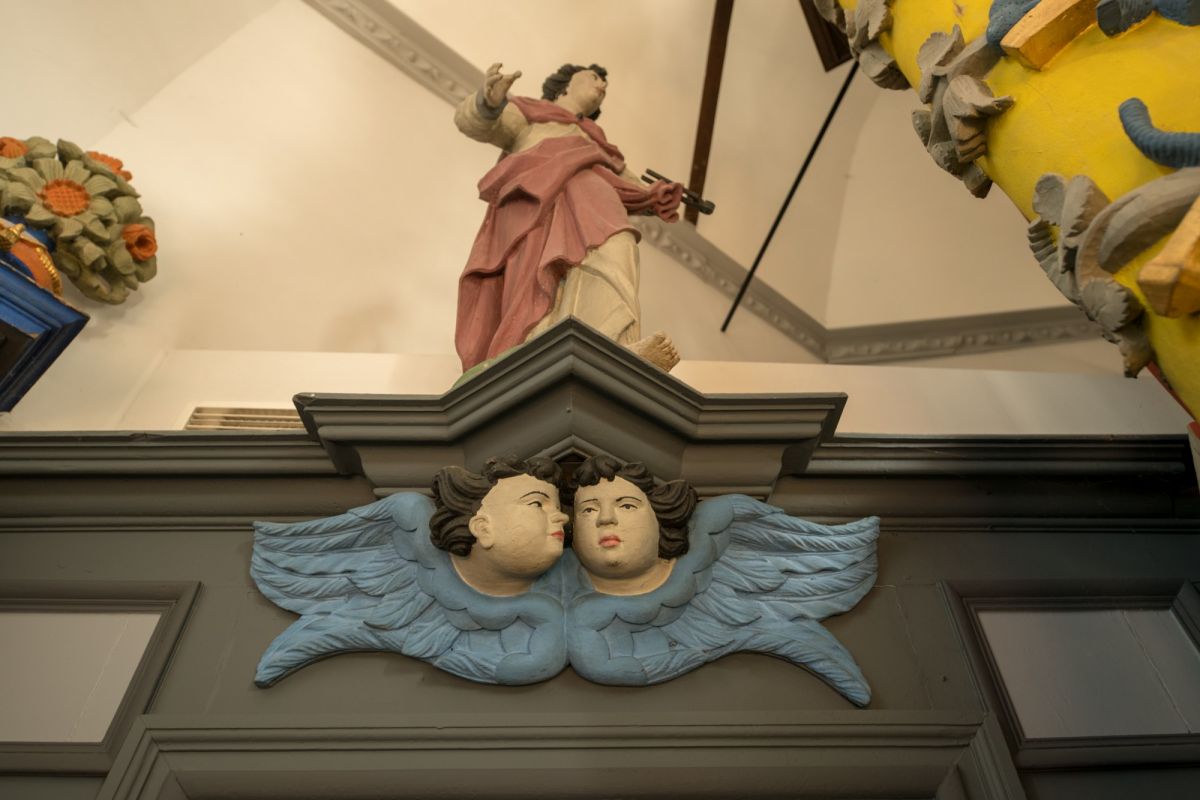
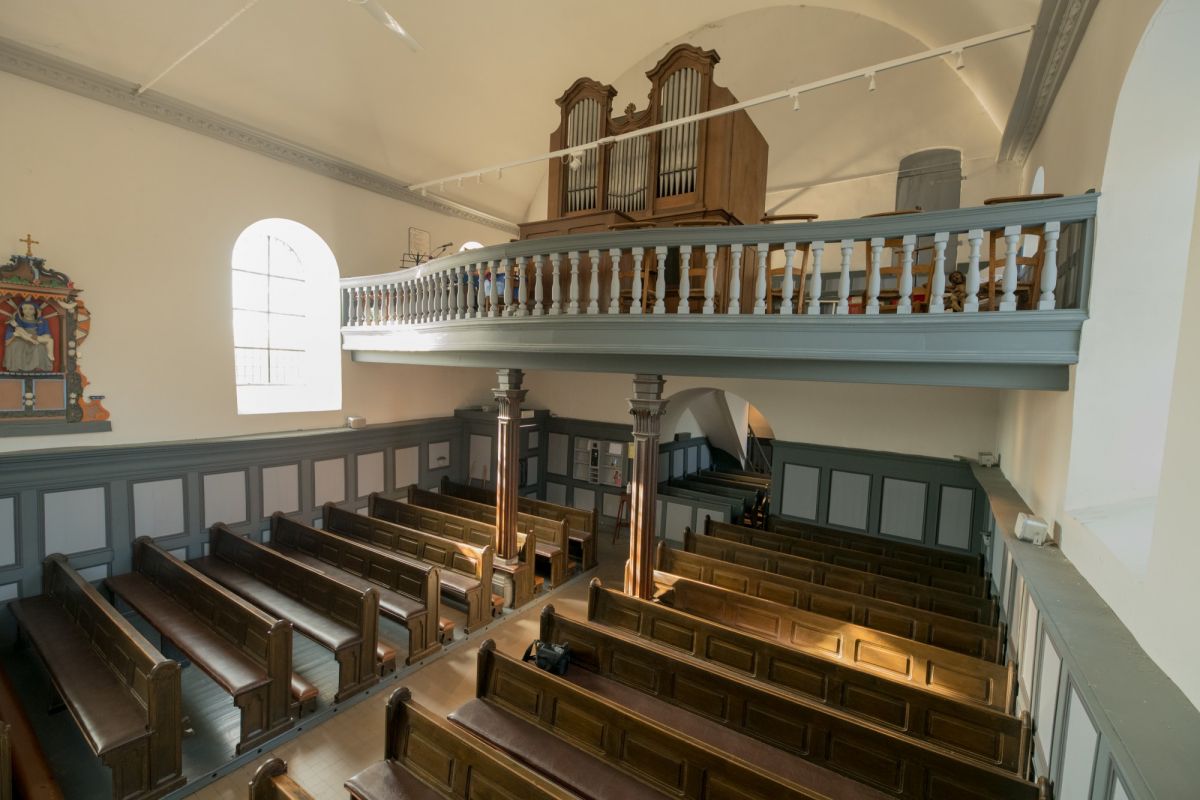
Three carved supports in the gallery
There are three carved supports in the gallery. Note the three old wooden figures that support the loggia.