Saint Martin
Place de Steenkerque
7090 Steenkerque (Braine-le-Comte)
Church | XII-XVI | Neogothic | Catholic Church

Map
Opening hours
01 January - 31 December
Mon 10.00 - 17.00
Tue 10.00 - 17.00
Wed 10.00 - 17.00
Thu 10.00 - 17.00
Fri 10.00 - 17.00
Sat 10.00 - 17.00
Sun 10.00 - 17.00
Religious offices
every second Sunday
Description
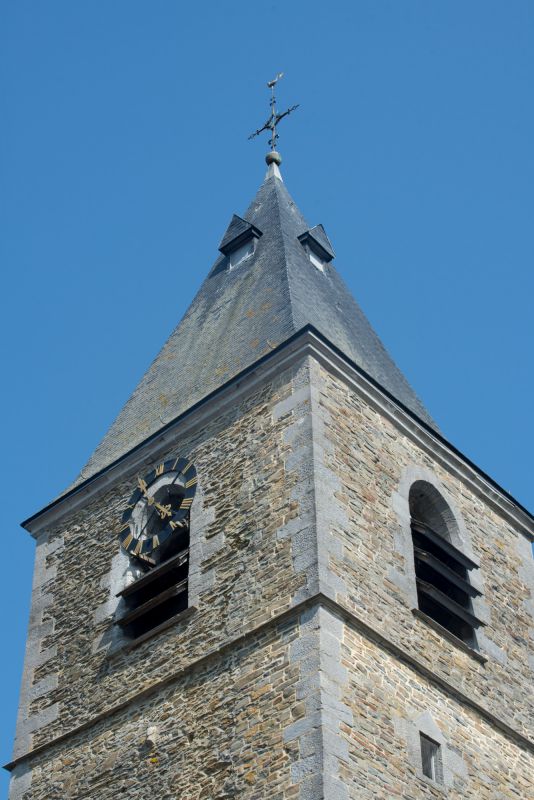
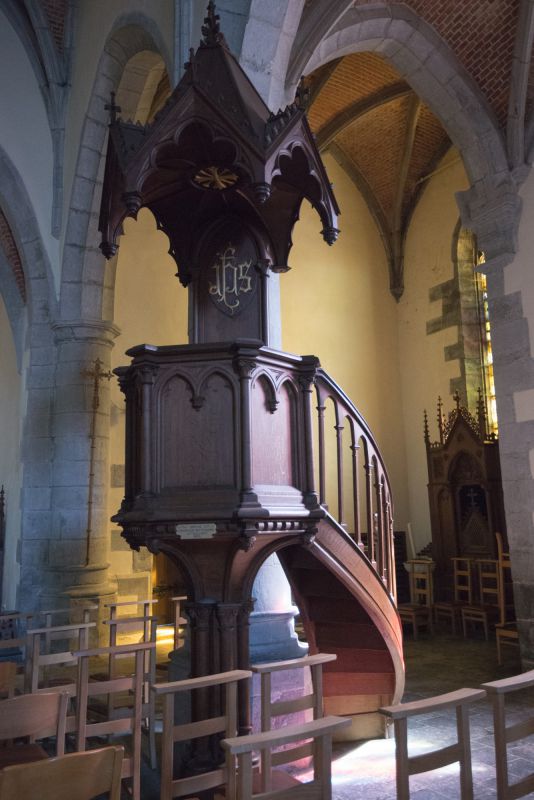
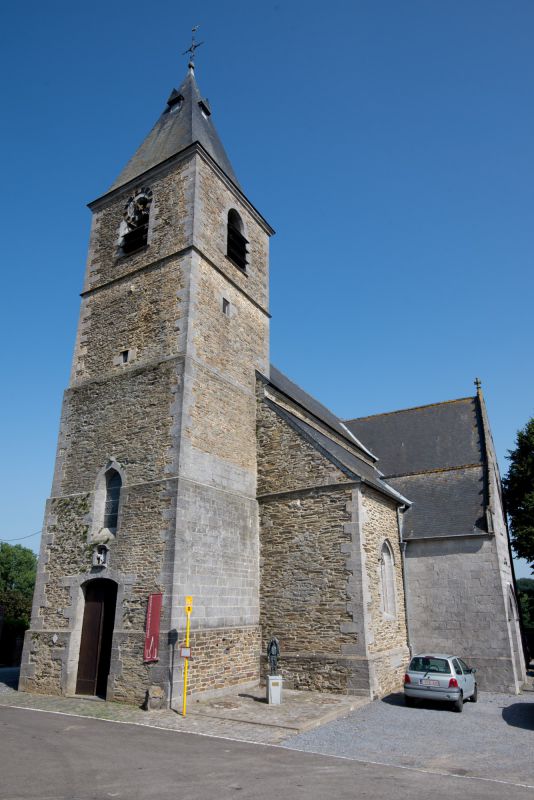
Set on a rocky spur dominating the Senne, this church built in locally dressed stone, gives a beautiful and harmonious impression despite several alterations made over the centuries. Part of the building is Romanesque, but most of the church was constructed during the 16th and 17th centuries, making its appearance essentially Gothic. The tower is completed by a pyramidal spire.
At the entrance stands a recent sculpture (1999) by Claire Fitzpatrick entitled "Le loupiot" (The kid) showing a half man, half animal with a long snout.
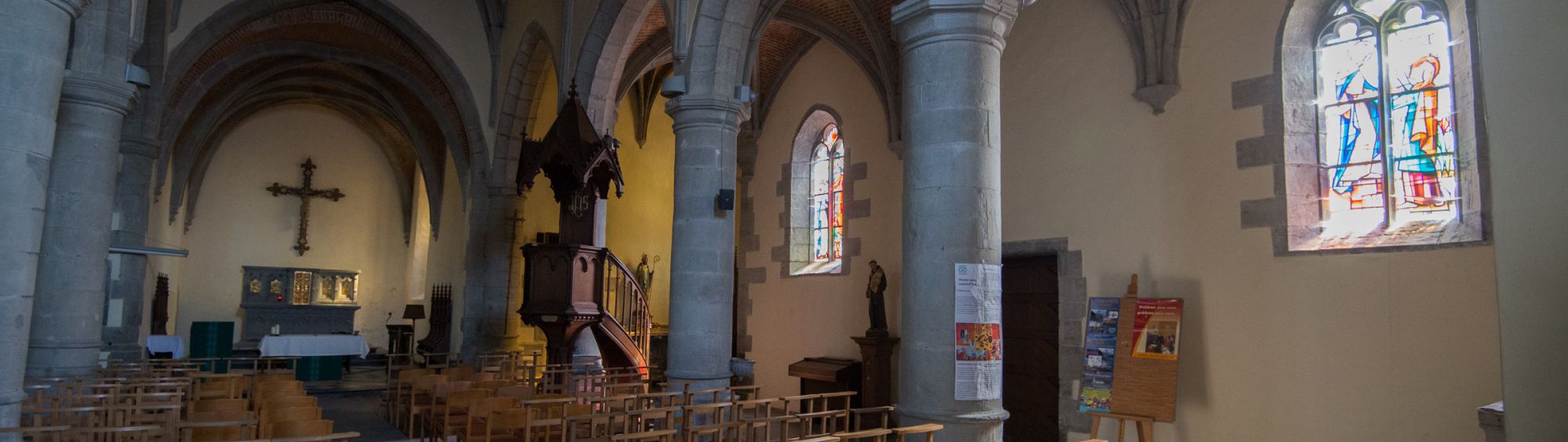
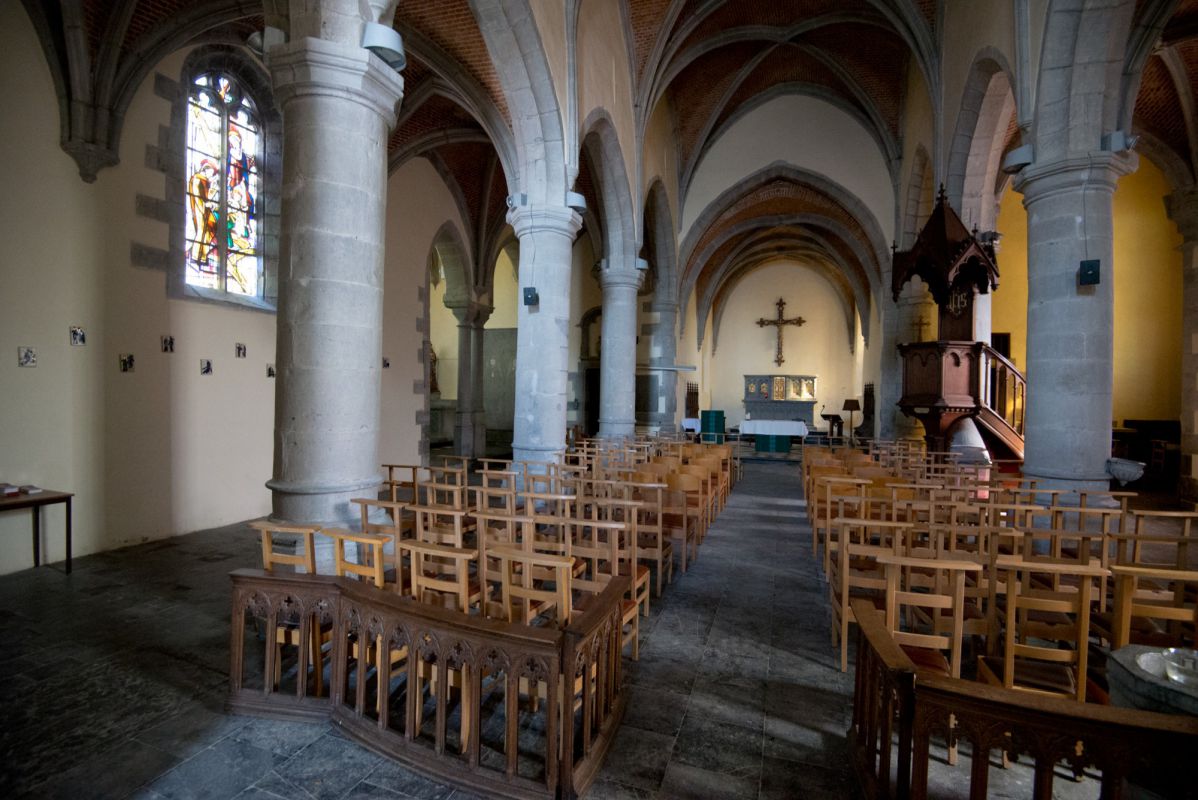
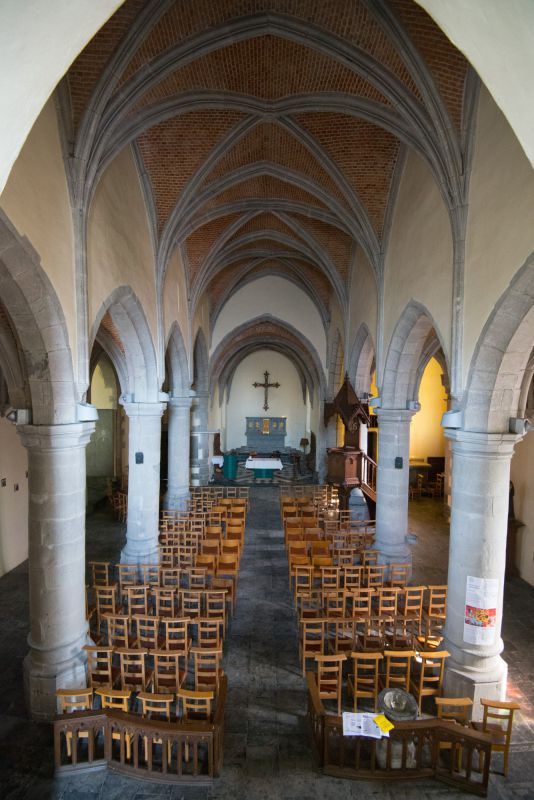
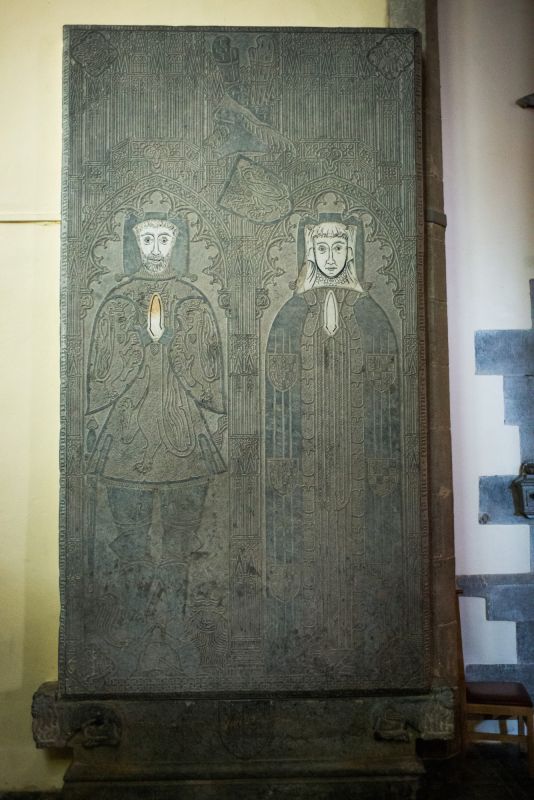
The 2004-2006 restoration made the interior very fresh and luminous, which accentuates its noble and austere setting. Noteworthy is an ancient tombstone of G de Ghavre (1447) and B du Bos (1464).

Photos

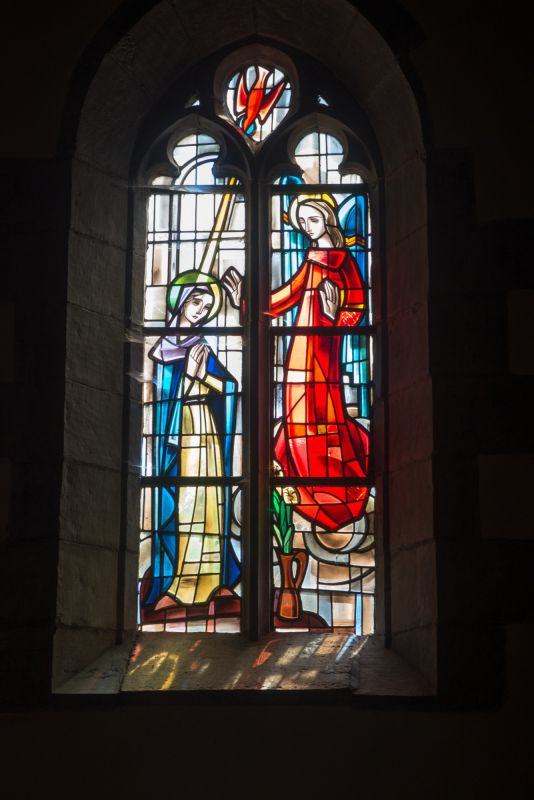

Media
Remarkable elements
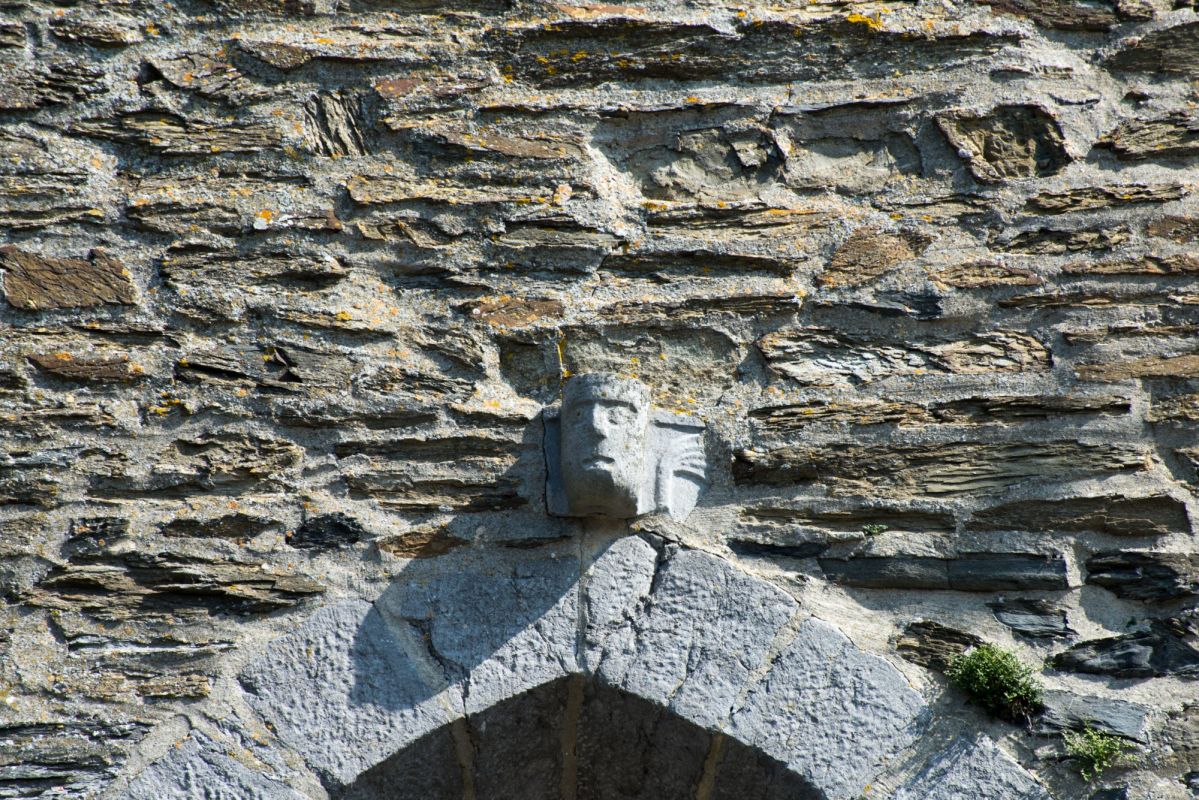
The little heads on the facades
Above the entrance window, a small head comes out of the wall. Her friend does the same a few meters higher. Finally, a third one also watches over the surroundings, hung on the bell tower's staircase turret. They are evangelists, but the fourth one has unfortunately disappeared. Symbolizing the Good News, their heads adorned very ancient baptismal font, dating back to the 12th century, or perhaps even further.
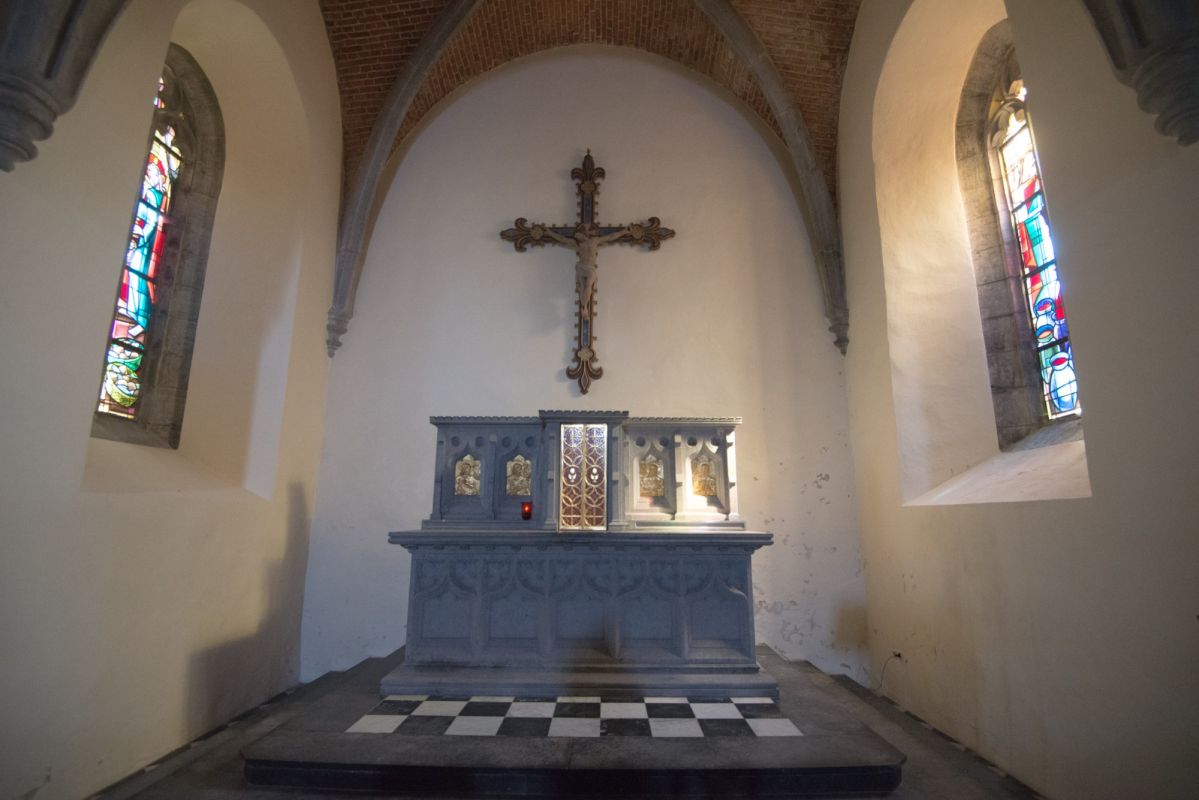
The choir and its windows
The choir and its arched windows (semi-circular) date back to the Romanesque period (12th century).
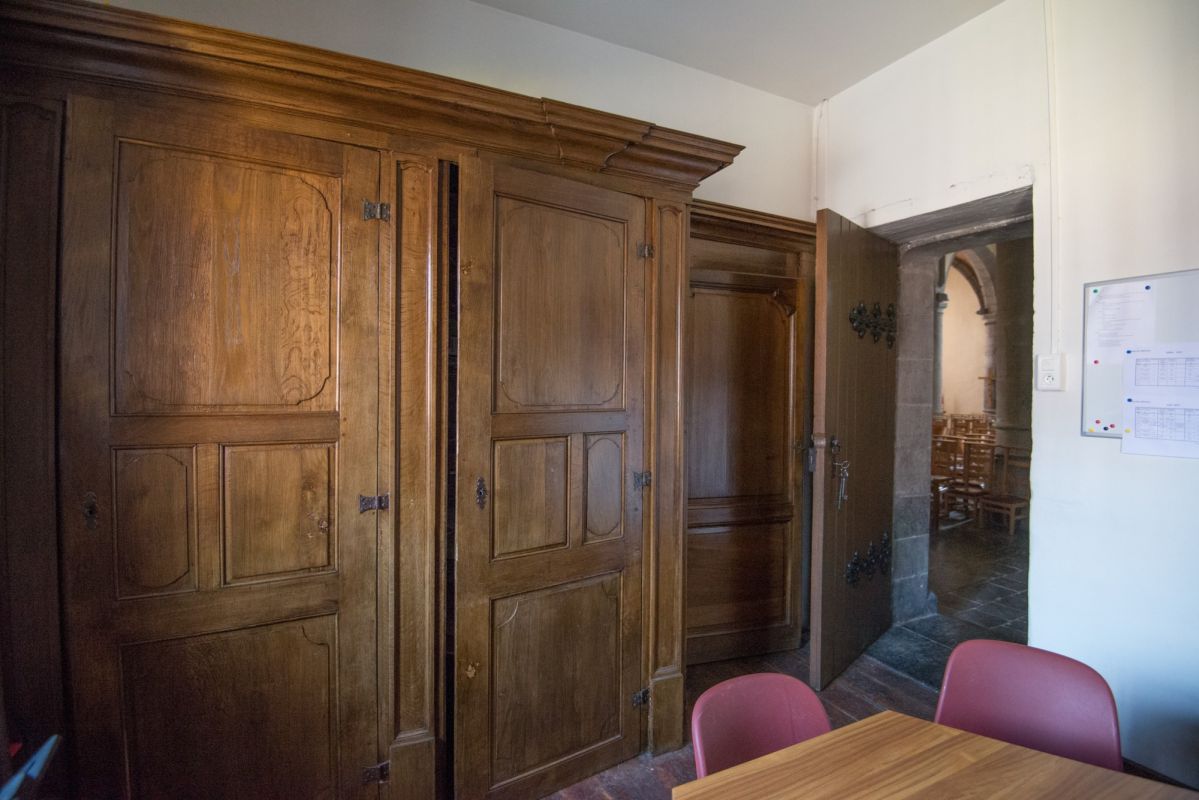
Former private chapel
The present sacristy was first the old private chapel of the lords (the door to the left of the choir). They entered through a small door, hidden at the back of the church, still visible. An opening was made in the wall that opens onto the choir. In this way the lords could attend mass without going among the people.
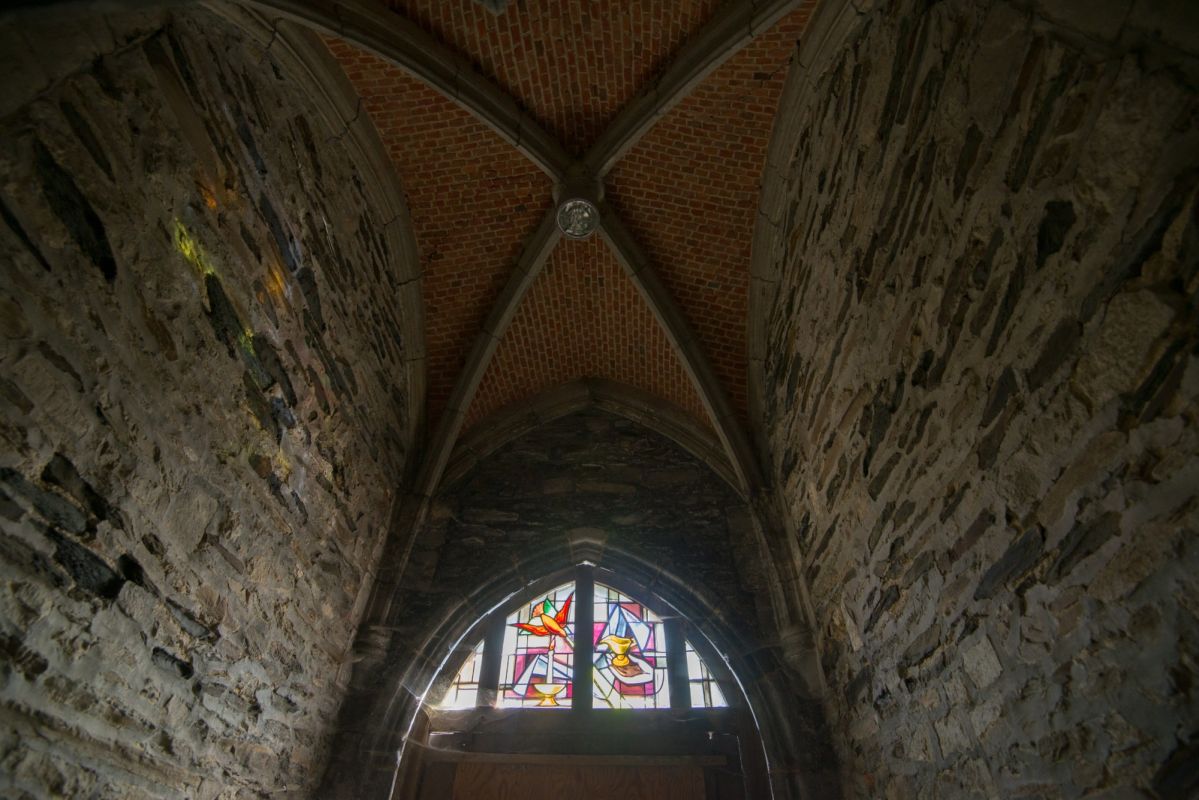
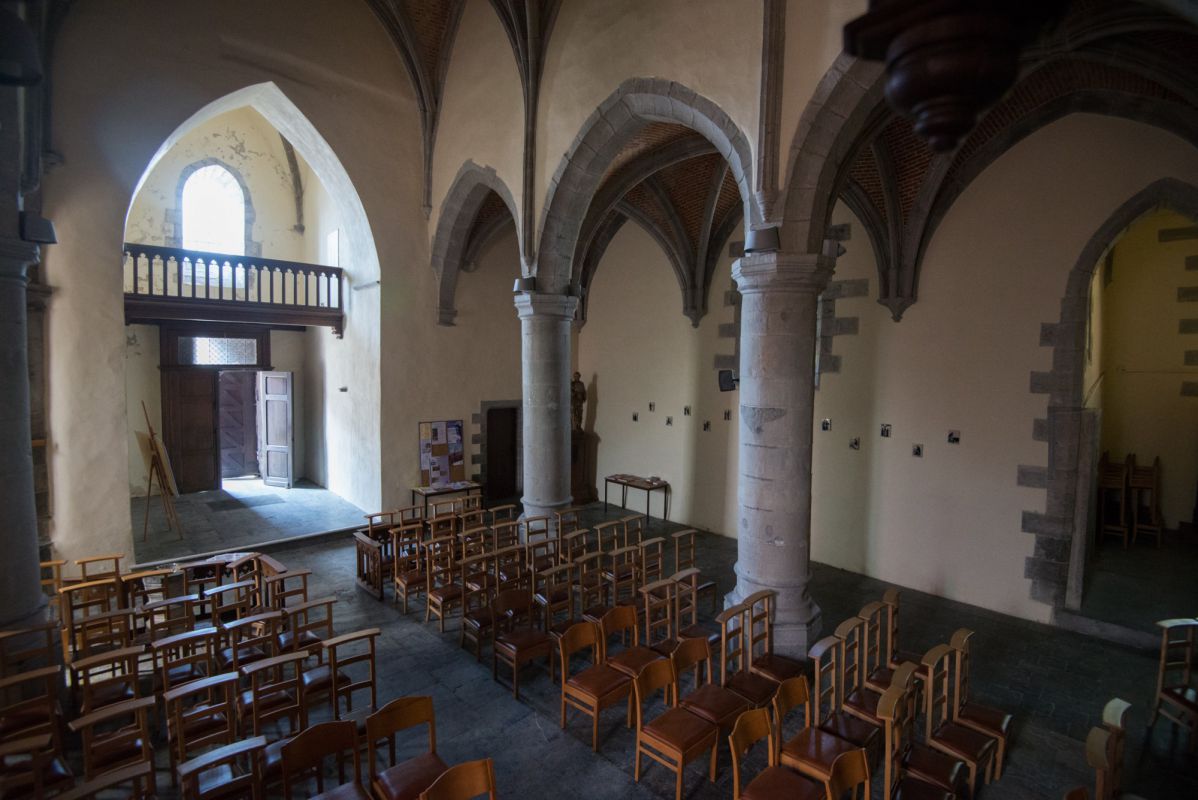
Gothic community hall
At that time, the lords and representatives of the village came together in the community hall, built in the heart of the church. Like the nave and its chapels, it dates back to the XVIth century and represents Gothic particularities. Today it is not accessible but one can get an idea of what it was like to be a municipal hall by visiting the nearby church of Horrues.
Graveplate
In the left chapel, two bright white faces watch over the church: Guillaume de Gavres and his wife Béatrix du Bos. The graveplate once lay horizontally on stones shaped like lions. Lying with heads on pillows, they await the Last Judgment. Their garments blend with the fine Gothic decor, decorated with small floral motifs, and they are accompanied by a lion and a small dog, symbols of strength, fidelity, and the four evangelists.
An arson in Steenkerque
The village burned due to a love story. Jacqueline de Bavière, Countess of Hainaut and wife of the Duke of Brabant, left him for the son of the king of England. Guillaume de Gavres, lord of Steenkerque, had to choose between the Duke and the Countess and chose Jacqueline. In retaliation, Jan IV of Brabant set the village on fire but spared Guillaume de Gavres’ life, as reflected on his grave plate.
Nearby

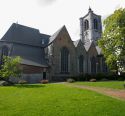


Circuit
The Middle Ages in the Haute Senne region (from Steenkerque to Enghien)
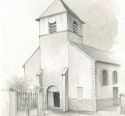
In Steenkerque, home of Guillaume de Gavres, the church will observe your actions. You will then pass on the road to Petit-Enghien before arriving in the medieval city of Enghien. You will meet Jonathas, Saint-Éloi and local lords.
The Middle Ages in the Haute Senne region (from Horrues naar Steenkerque)
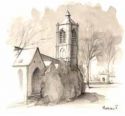
In Horrues, get to know Saint Martin, Saint Hubert and their emblematic animals. Follow in the footsteps of Baudouin IV the builder in Braine-le- Count. Finally, you will follow the Brainette valley to Steenkerque, the village of the mills.
The Middle Ages in the Haute Senne region (full circuit)
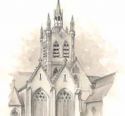
Proudly erected for centuries, churches are witnesses to local history. With castles and farms, they tell about an era and its customs. Are you more of a car person? Our fourth route offers you all the buildings in the program. A great way to learn everything about the region!