
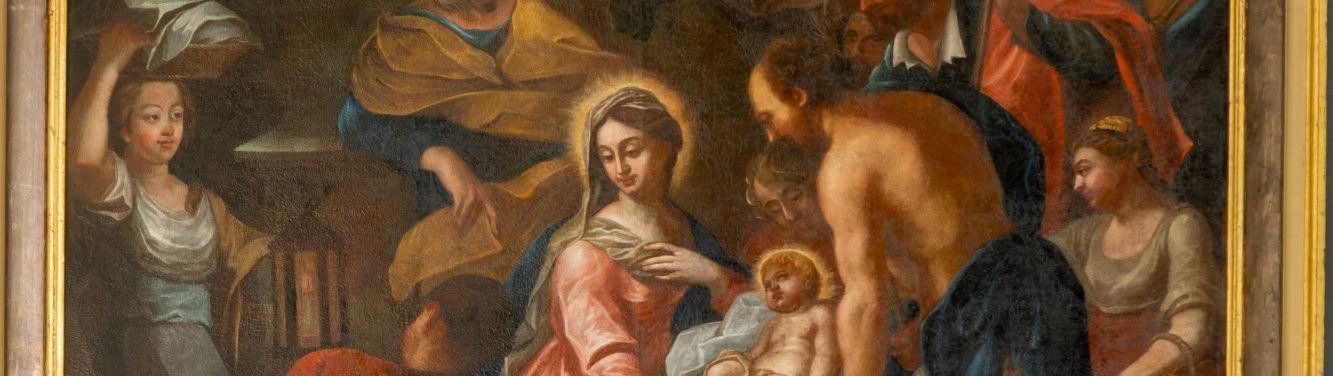
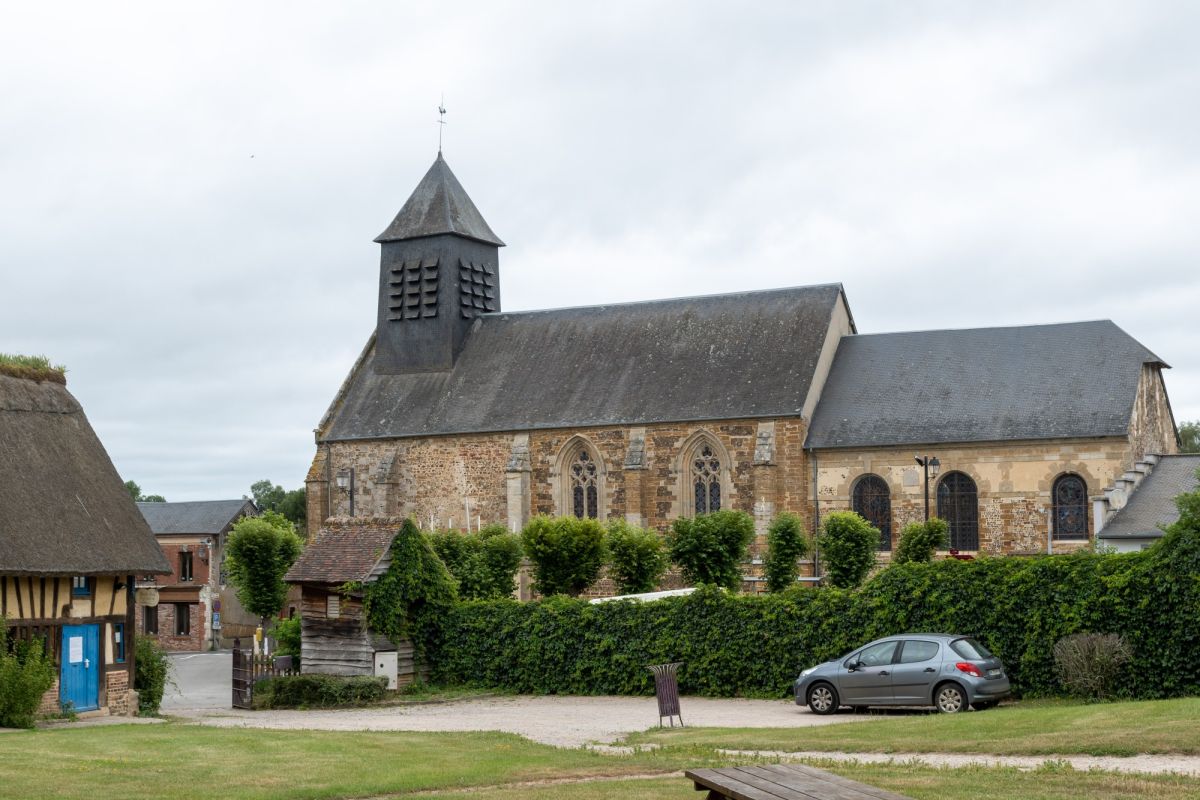
Saint Peter
rue Raoul Hergault 21
61470 Sap-en-Auge
Church | XIII - XIV - XVII | Romanesque, Gothic | Catholic Church


Map
Opening hours
01 January - 31 December
Mon 8.00 - 19.00
Tue 8.00 - 19.00
Wed 8.00 - 19.00
Thu 8.00 - 19.00
Fri 8.00 - 19.00
Sat 8.00 - 19.00
Sun 8.00 - 19.00
Description
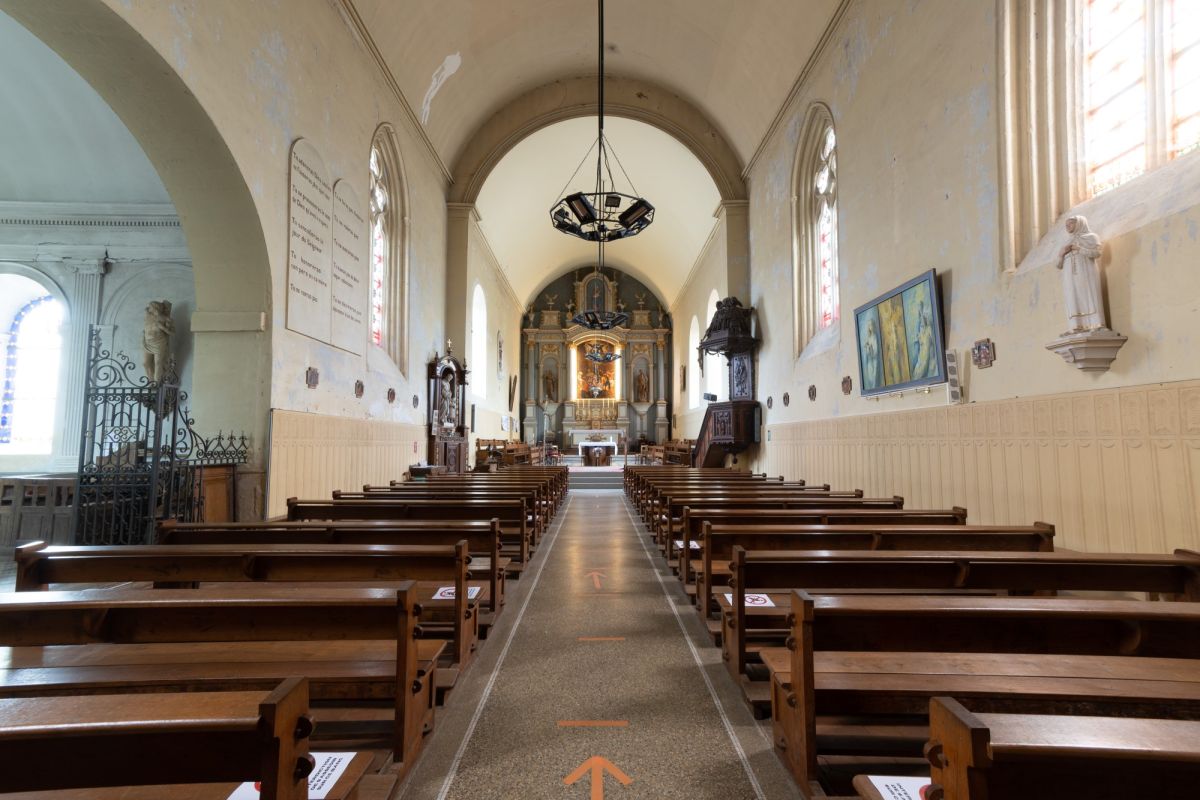
The building consists of a nave, lit by magnificent Gothic trefoil windows, and a narrower choir. In its current form, the nave was rebuilt in the 16th century and the choir in the 17th century. On the north side, the Chapel of the Virgin, adjoining the nave, and the sacristy overlooking the choir, were added in the 17th century.
The entrance door is in the style of Henri IV, surrounded by a chequerboard pattern of bricks and limestone. The façade is highly original: made up of a combination of several types of materials – sandstone limestone, cut alone for the pillars or assembled in a chequerboard pattern, brick, rough or squared flint for infill, puddingstone in alternating layers, etc. – it is a perfect illustration of the diversity of materials found in the buildings of Le Sap.
The Church of Saint Peter and Saint Paul was listed as a Historic Monument in March 1979.


Photos
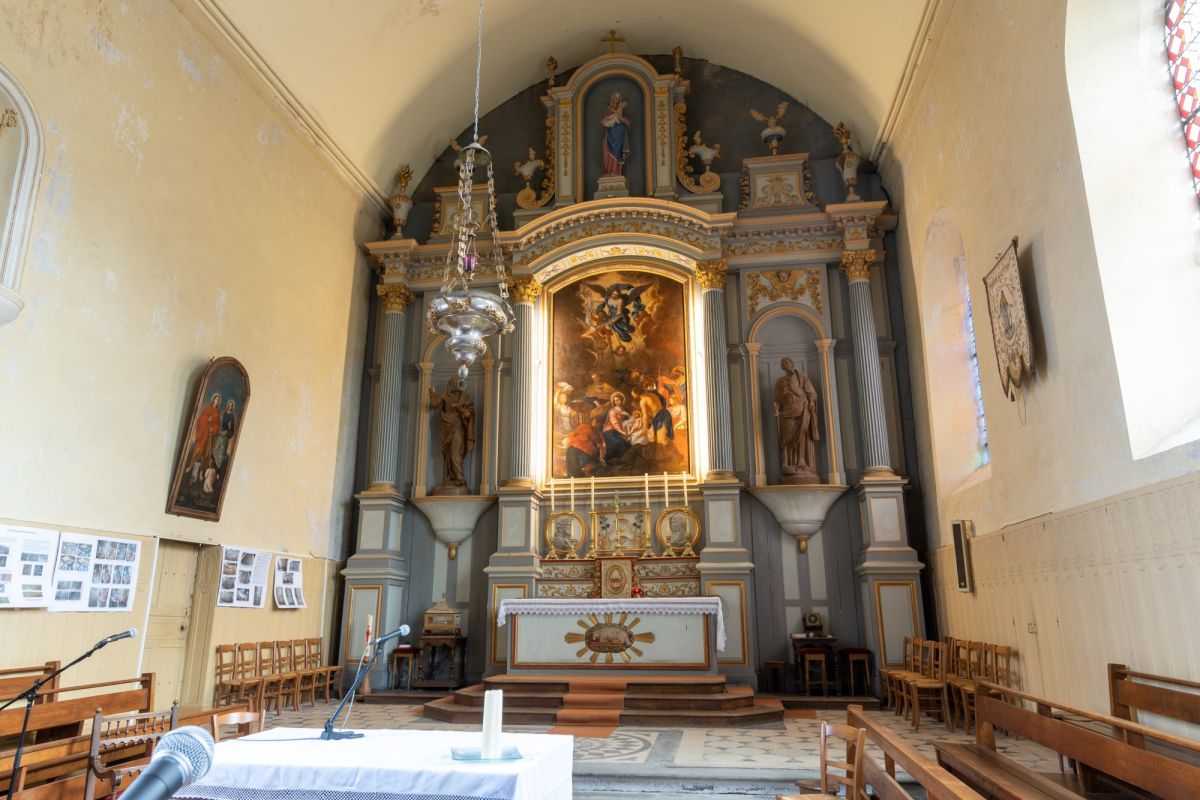
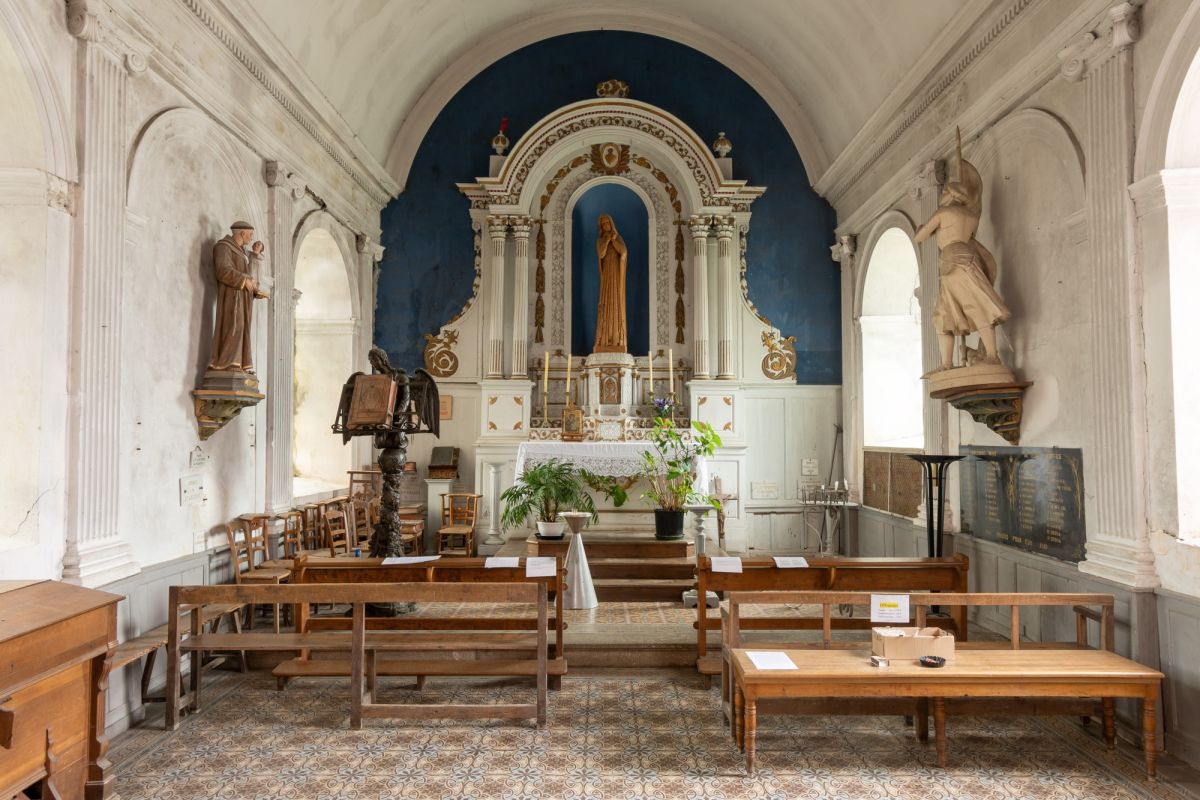
Remarkable elements
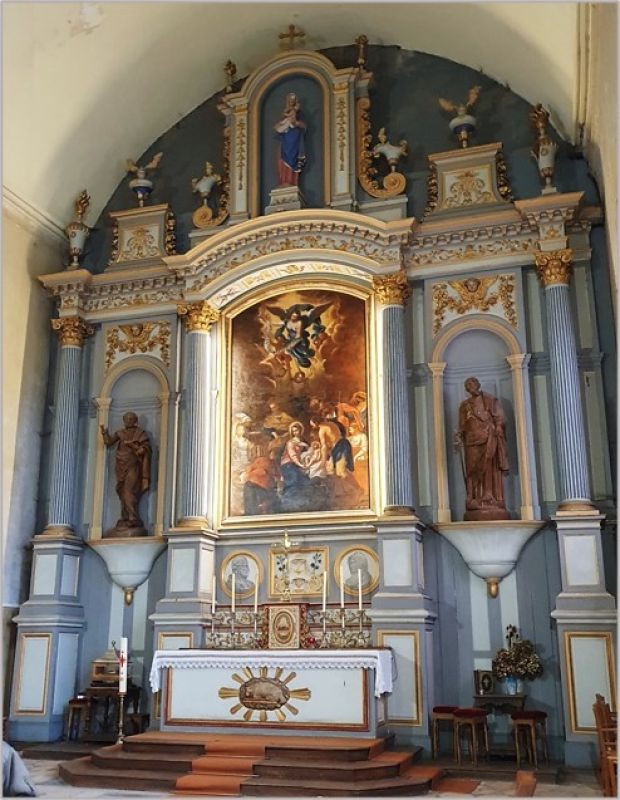
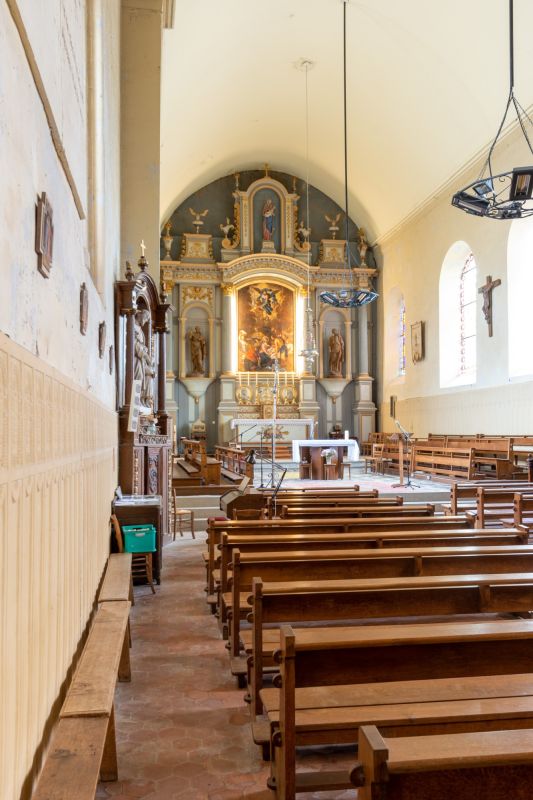
The high altar and its altarpiece
The winged altarpiece was created in 1707 by Gilles de Brasnu. Two niches contain wooden statues of Saint Peter and Saint Paul. The painted wooden altar chest is decorated with the mystical lamb in glory, which can also be found on the door of the winged tabernacle. Above the steps are two medallions depicting the profiles of Christ and the Virgin Mary.
In the centre, the painting of the Adoration of the Shepherds, dated 1711, is probably the work of Eustache Restout after Rubens.
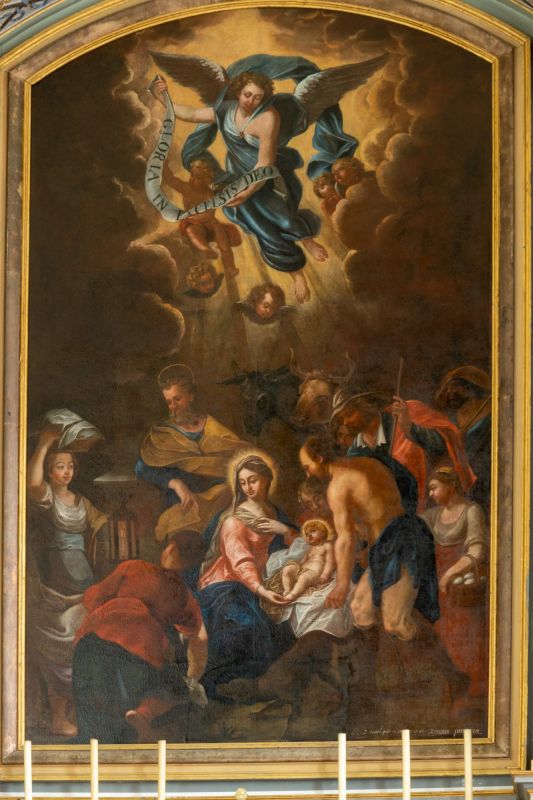
The Adoration of the Shepherds
This monumental **Adoration of the Shepherds** (3.80 × 2.50 m), signed “Retous pint 1711”, was inspired by Rubens. Its creator remains uncertain: long attributed to Jean Restout, it is now more likely to have come from the workshop of Eustache Restout, painter, architect and sub-prior of Mondaye Abbey. The painting reflects the artistic influence of this renowned Norman family of painters.
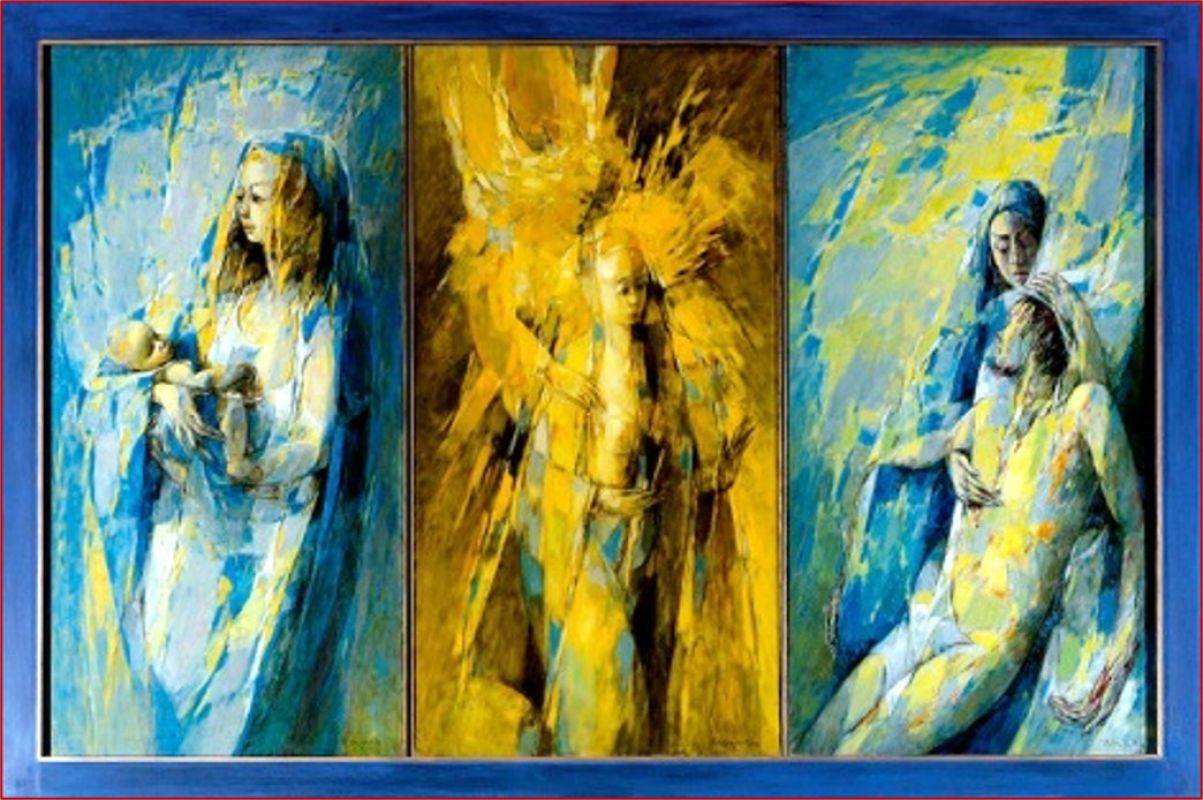
The Annunciation Triptych, by Philippe Gautier
On the south wall of the nave, this work by painter Philippe Gautier was donated to the municipality. It consists of three large-format paintings. On the left is the Presentation in the Temple and on the right is the Descent from the Cross.
The central painting was painted in 1977 for the Gemmail international competition. It won the ‘Prix de la Lumière’ (Prize of Light) for the Annunciation, in which the angel Gabriel appears in a burst of sparkling light. Its backlighting illuminates the work and enhances the colours.
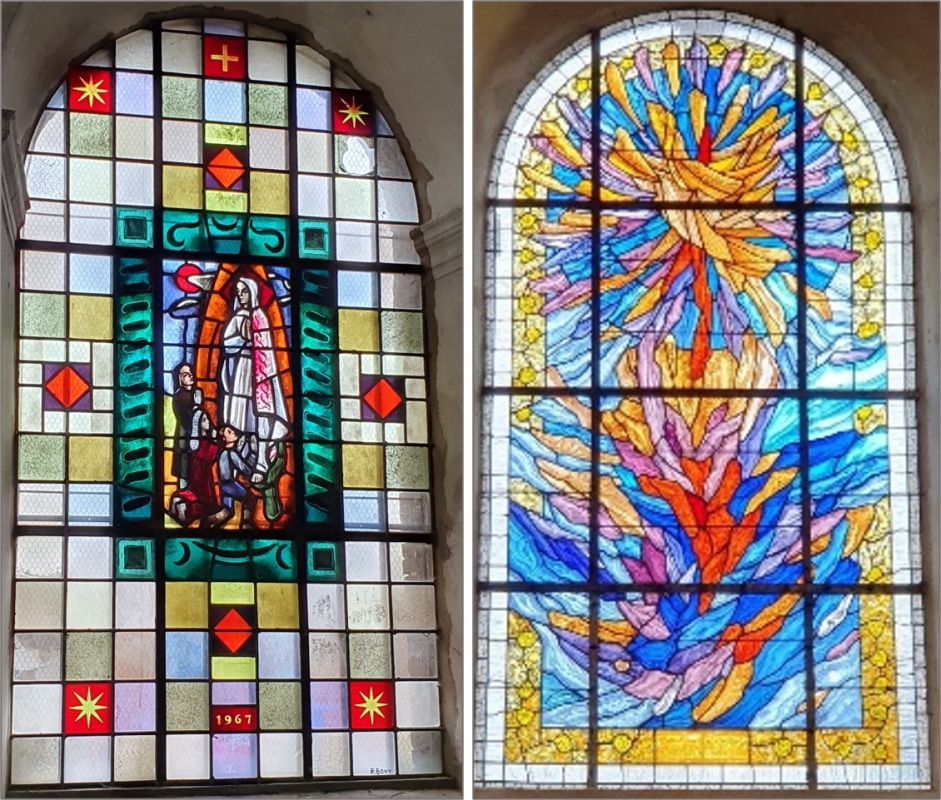
The stained glass windows
Several 20th-century stained glass windows illuminate the church. Those in the choir were designed and created in 2010 by the artist Florent Chaboissier (1948-). Next to the south window is a stained glass window by Gérard Bourget (1936-), master glassmaker in La Manche, created in 1997 based on a design by Nicolas Gautier, then architect of the Buildings of France in Orne.
The two stained glass windows in the Chapel of the Virgin are by Paul Bony (1911-1982), the official master glassmaker of the painter Henri Matisse.
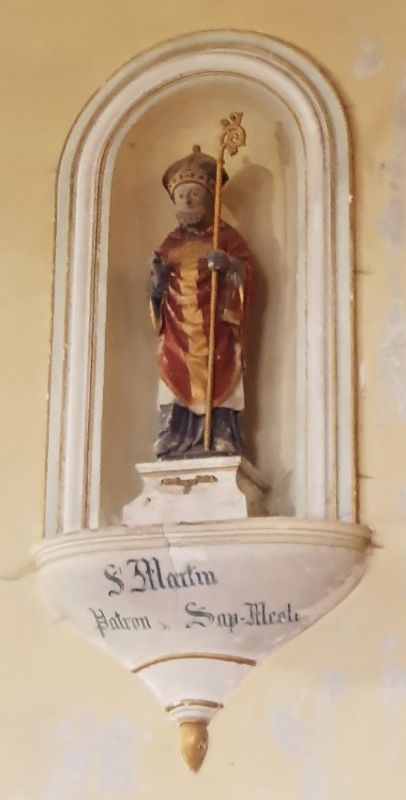
The statue of Saint Martin
Near the high altar, this small painted stone statue dates from the 16th century. Saint Martin is dressed in a Gothic chasuble. It is the only remnant of the church of Sapmesle (or Sap-Mesle), destroyed in 1825, of which Saint Martin was the patron saint, as evidenced by the inscription on its base.
Sapmesle is still a locality of Sap-en-Auge, following its incorporation into the commune of Sap in 1882.
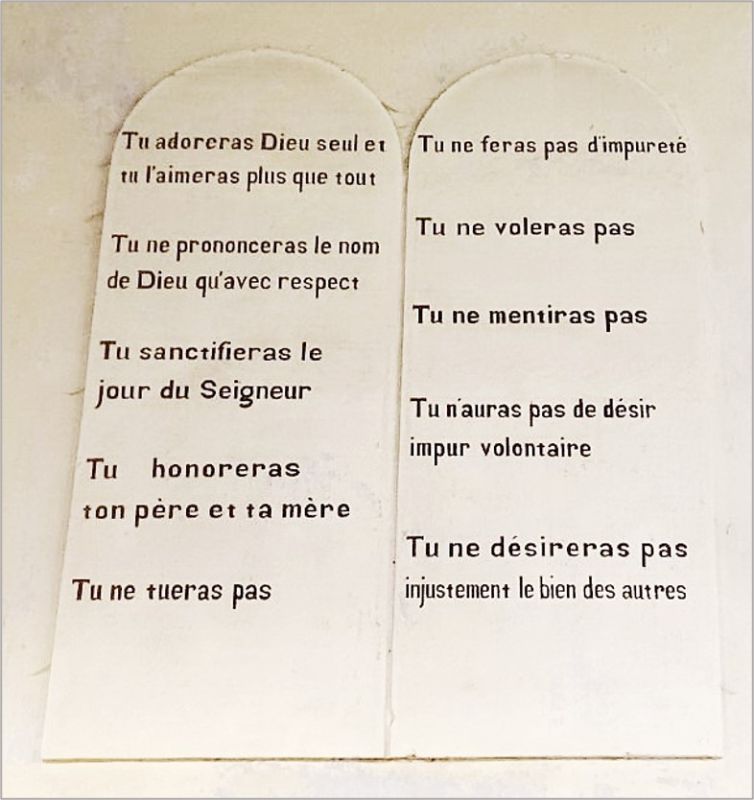
The Decalogue
This open book in relief, as if placed on the north wall of the nave, represents the Tablets of the Law received by Moses from God on Mount Sinai, listing the Ten Commandments. It is a rare representation of the precepts of the Old Testament.
