
Our Lady of the Nativity
Place du Marché
52300 Joinville
Church | XII-XIX | Romanesque, Gothic, Renaissance, Neogothic | Catholic Church


Map
Opening hours
01 January - 31 December
Mon 10.00 - 19.00
Tue 10.00 - 19.00
Wed 10.00 - 19.00
Thu 10.00 - 19.00
Fri 10.00 - 19.00
Sat 10.00 - 19.00
Sun 10.00 - 19.00
Religious offices
Saturday 6.30 pm or Sunday 10.30 am (uncertain)
Description
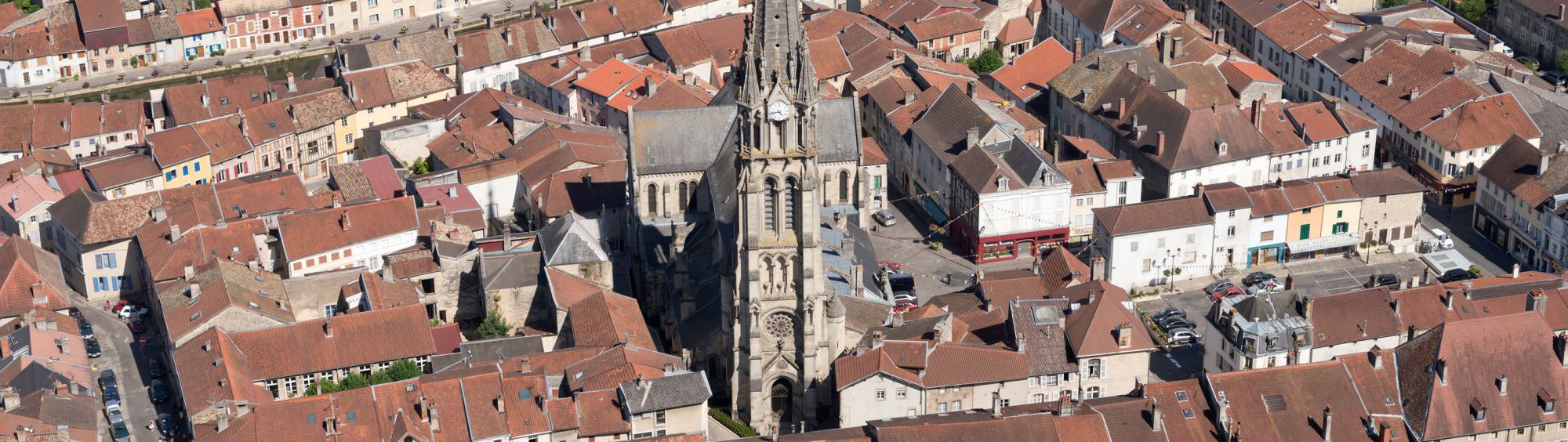
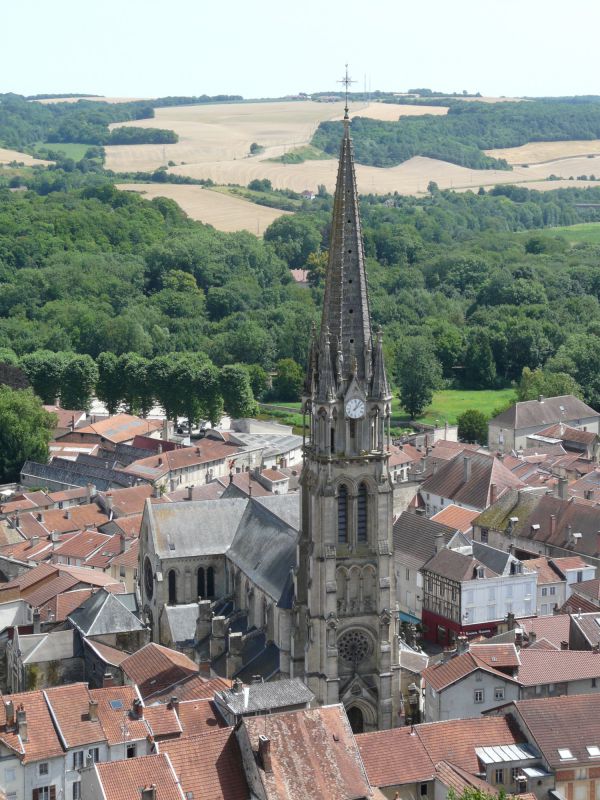
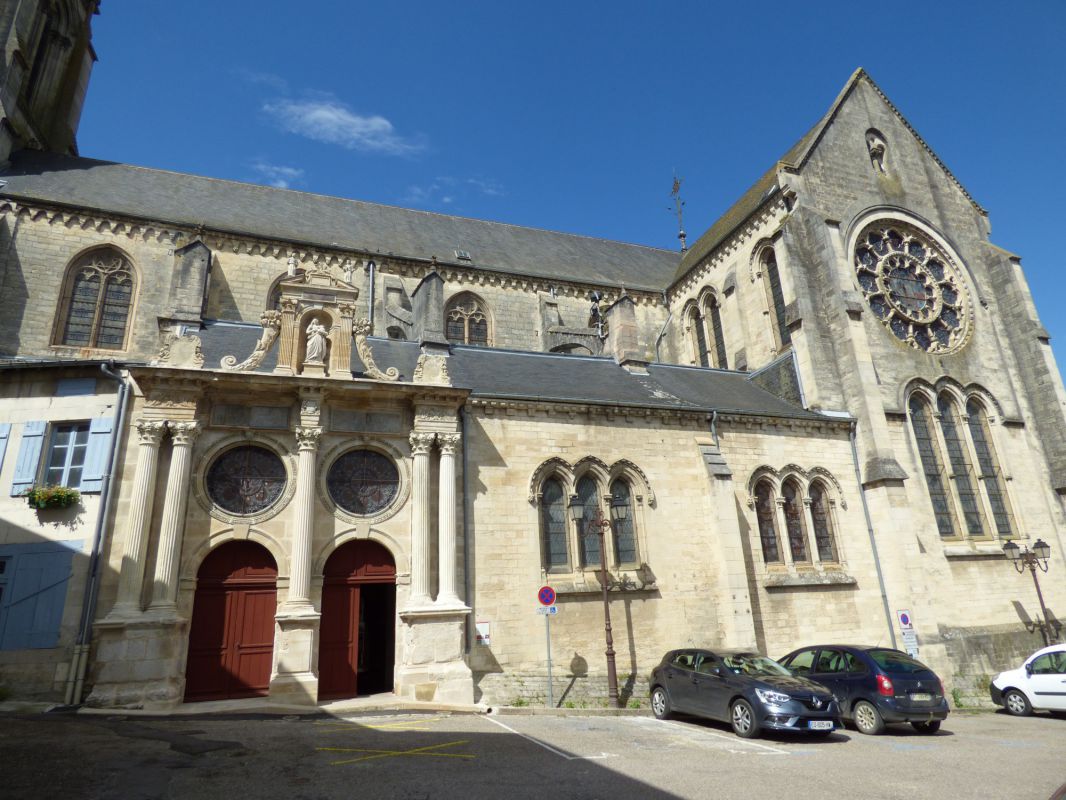
Located in the historic heart of Joinville, Notre-Dame Church dates back to the 12th century and is the oldest religious building in the town. The central nave and side aisles remain from this period. In the 19th century, the transept and apse were completely rebuilt after the decision to remove the old bell tower. The bell tower had already been remodelled following the fire of 1544 caused by the troops of Charles V. The current bell tower, in the form of a high tower that has become one of the symbols of Joinville, dates from this major renovation project and was built on the site of a Renaissance portal that no longer exists.
Inside, several elements still bear witness to the medieval church, notably the stair tower and the rose window, visible from the organ loft. According to tradition, the old portal housed a statue of Jovin, the legendary founder of Joinville, accompanied by his wife. This figure is said to have given his name to the town and founded the church in the 4th century.
Notre-Dame Church also houses a prestigious relic: Saint Joseph's belt, brought back from the Holy Land by Jean, Lord of Joinville, companion of Saint Louis during the Seventh Crusade. Among the building's other treasures is a remarkable collection of statues, including a 16th-century depiction of Christ's burial, considered one of the most beautiful in the region.
To the left of the old Renaissance portal, on the square, there are two small stone shops, donated by the Guise family. The only survivors of the many shops that once stood next to the church, they were rebuilt after the fire of 1544, as the previous wooden ones had helped the fire to spread.
Translated with www.DeepL.com/Translator (free version)


Photos

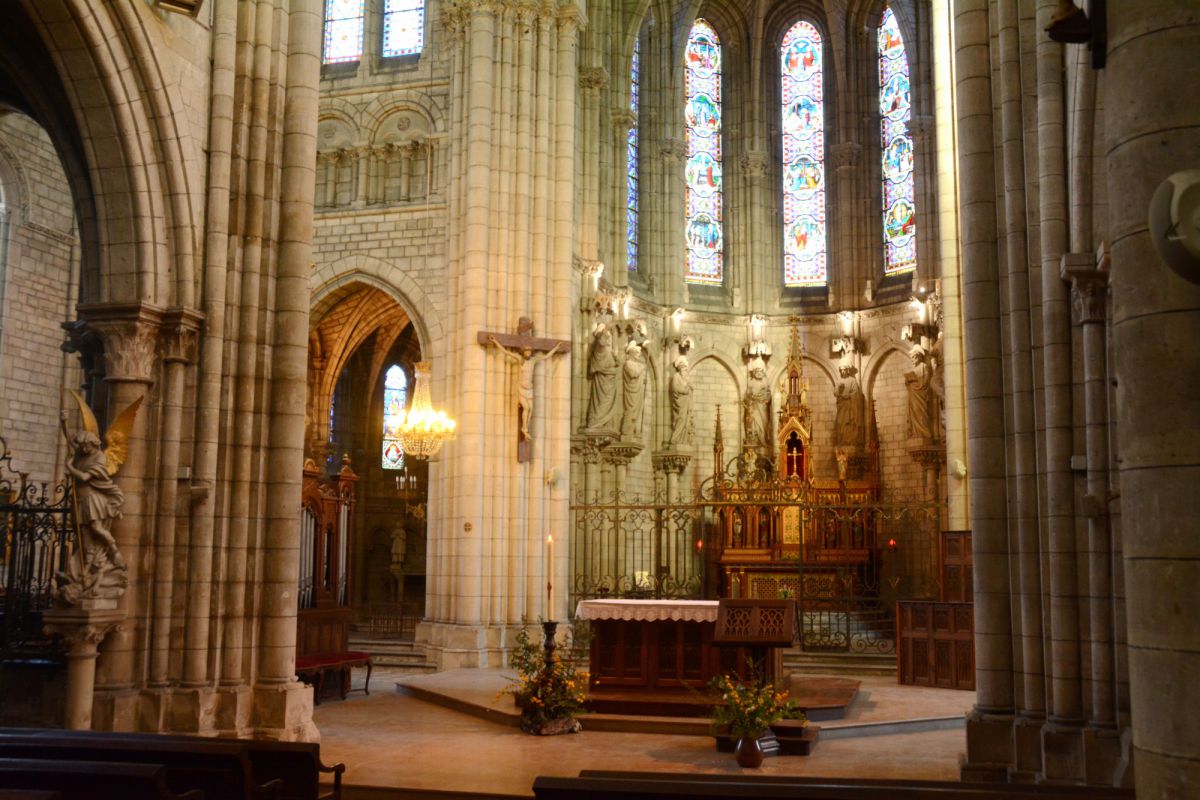
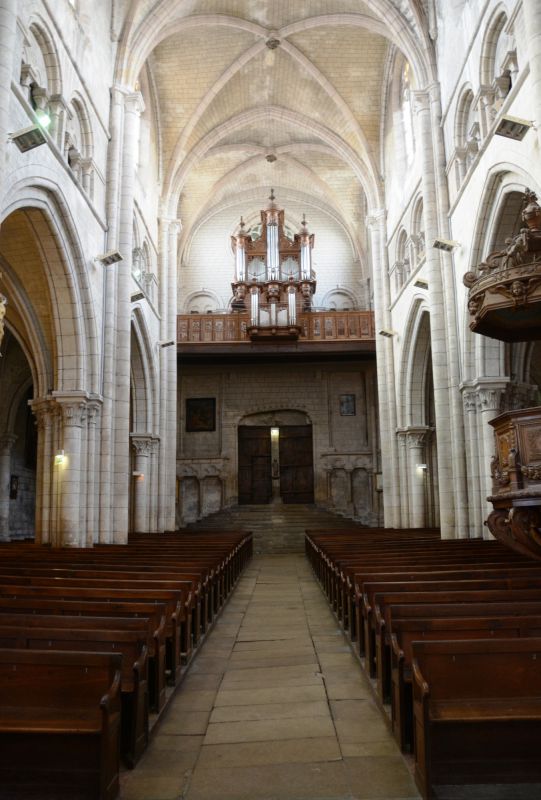
Remarkable elements
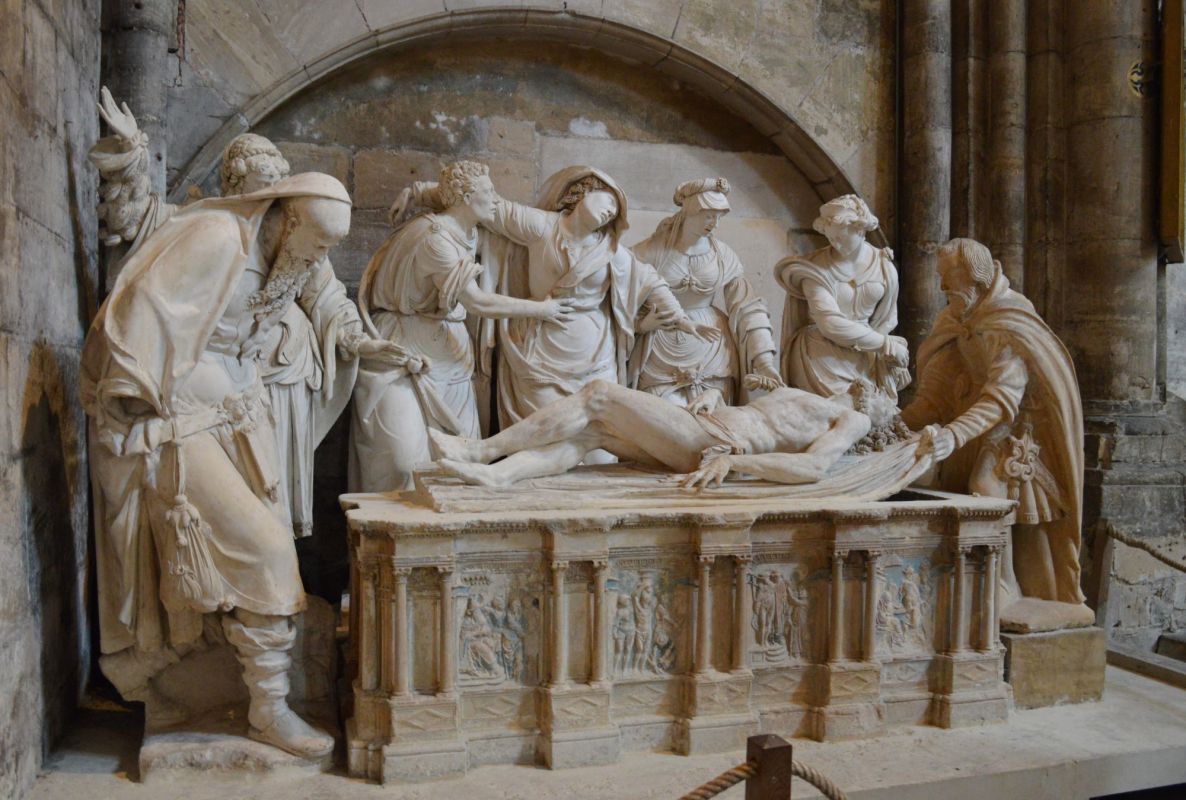
Tombstone
As you enter the church on the left, a sculpted group of eight life-size figures dramatically depicts the burial of Jesus. This masterpiece was made for the Saint-Laurent collegiate church (no longer in existence) at the request of Antoinette de Bourbon (1494-1583), the first Duchess of Guise, and was then offered by the Duchess to the town. It was recently attributed to the Champagne sculptor Claude Bornot and dated to the early 1540s.
NB: due to work being carried out inside the building, the Entombment has been made safe and is no longer visible until further notice.
Translated with www.DeepL.com/Translator (free version)
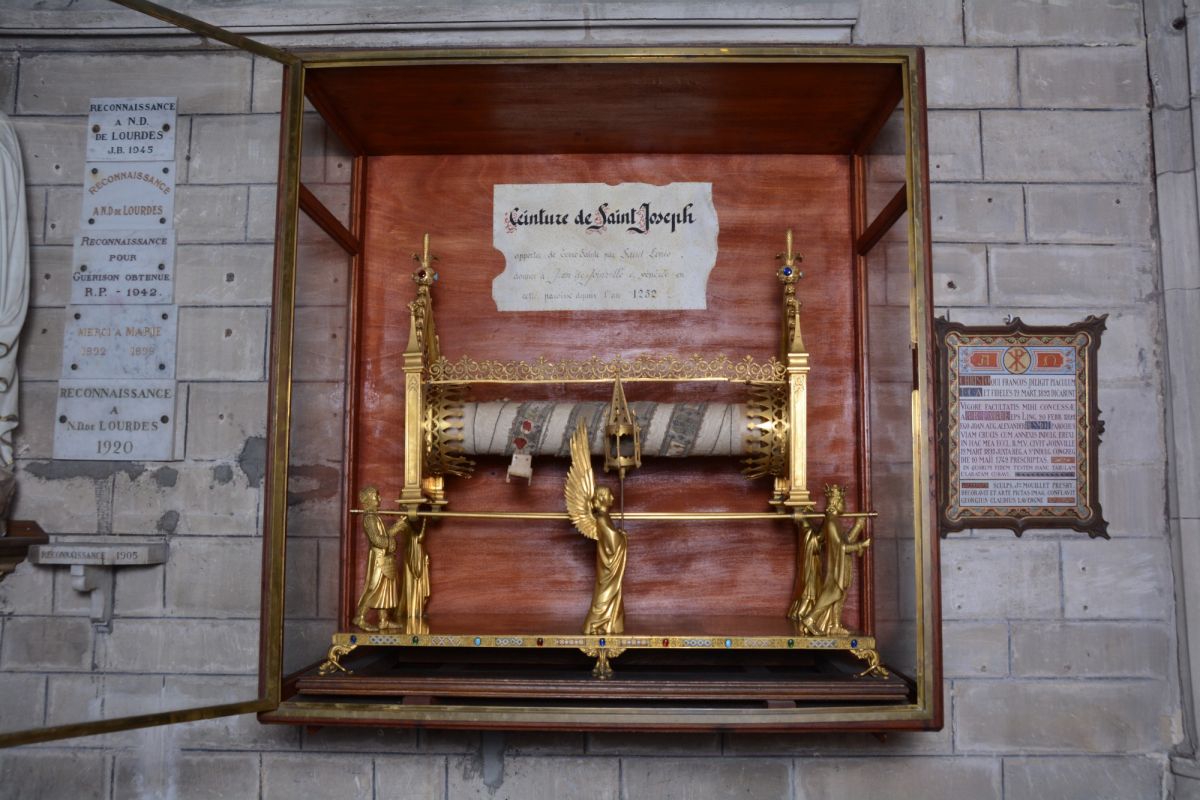
St. Joseph's belt
Located in the south chapel of the church (on the square side), the belt of Saint Joseph is the only relic of the saint preserved in France. Brought back from the Holy Land by Lord Jean de Joinville at the end of the 7th Crusade, it has been the object of intense devotion to this day. Wrapped around a cylinder, it is presented in a 19th century reliquary, carried by six figures: the French king St Louis, the knight Jean de Joinville, the bishop of Châlons-en-Champagne, a monk and two winged angels.
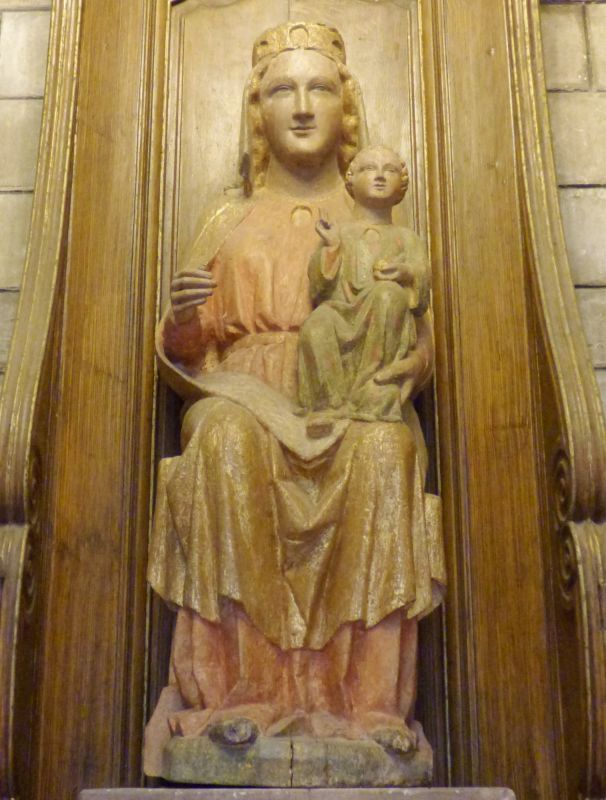
Statue of the Virgin
Opposite the chapel of Saint Joseph, the chapel of Saint Lawrence houses a 13th century Virgin and Child, represented seated, in a "throne of wisdom" (sedes sapientiae). According to local tradition, it was saved from the revolutionary sackings by a local woman. The Virgin and Child have unfortunately lost the medallions that adorned their busts. This statue has been classified as a Historic Monument since 1908.
Translated with www.DeepL.com/Translator (free version)
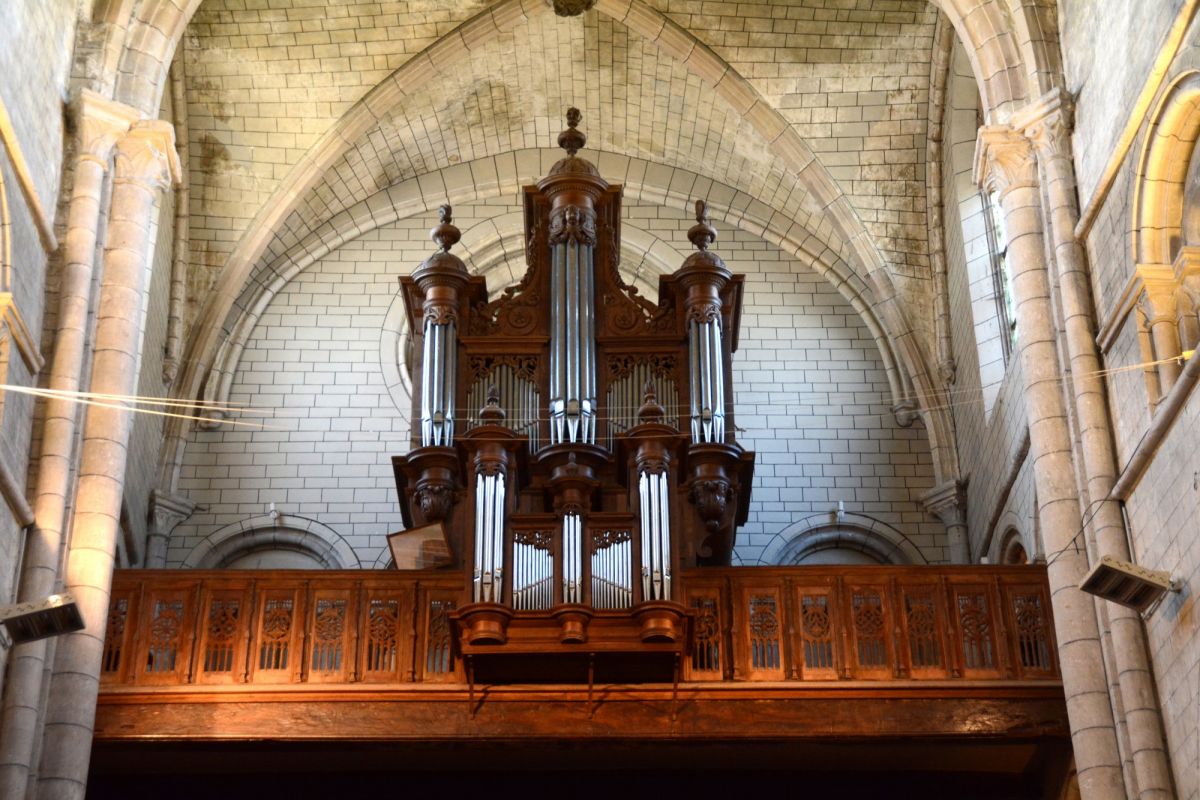
Organ
Made by the organ builder Louis Le Bé in 1688, this instrument is one of the few organs of this period preserved in the department. It was initially designed for the palace of the Counts of Champagne in Troyes, before being bought by the town of Joinville in 1698. Concerts are organised in the summer by the association Renaissance de l'orgure, in order to make the full range of sound of its fifteen stops heard. The organ rests on a gallery dated around 1544-1568.
Translated with www.DeepL.com/Translator (free version)

Late 12th century nave
Structured in three levels and composed of pointed arches, its architecture presents the characteristics of the Gothic period. Modernised in the 16th century, it received new vaults in the 17th century. On the outside, the nave of the church is decorated with a frieze of sculpted modillions under the stone cornice, representing a whole series of grinning faces: no two are the same !
Translated with www.DeepL.com/Translator (free version)
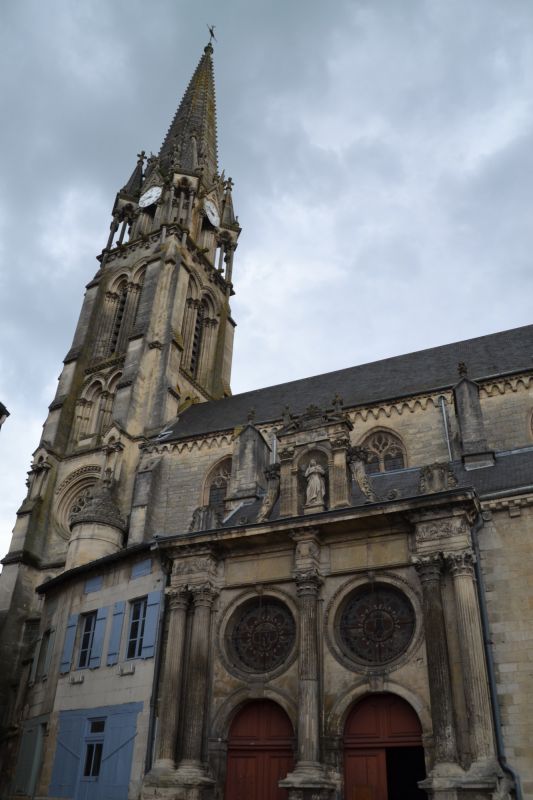
19th century St Joseph's bell tower
The church tower was originally located at the transept crossing. In poor condition, it was dismantled and a new bell tower was rebuilt against the western façade in 1875 by the architect Hubert-Nicolas Fisbacq in the style of neo-Gothic architecture. Currently under restoration (2022-2024), it stands at over 82 m high: it is the highest bell tower in Haute-Marne.
Translated with www.DeepL.com/Translator (free version)