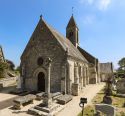
Saint Martin
Place Edmond Paillaud
14480 Creully-sur-Seulles
Church | XII | Romanesque, Gothic, Neogothic, Neoromanesque | Catholic Church


Map
Opening hours
01 November - 30 April
Mon 9.00 - 17.00
Tue 9.00 - 17.00
Wed 9.00 - 17.00
Thu 9.00 - 17.00
Fri 9.00 - 17.00
Sat 9.00 - 17.00
Sun 9.00 - 17.00
01 May - 31 October
Mon 9.00 - 19.00
Tue 9.00 - 19.00
Wed 9.00 - 19.00
Thu 9.00 - 19.00
Fri 9.00 - 19.00
Sat 9.00 - 19.00
Sun 9.00 - 19.00
Description
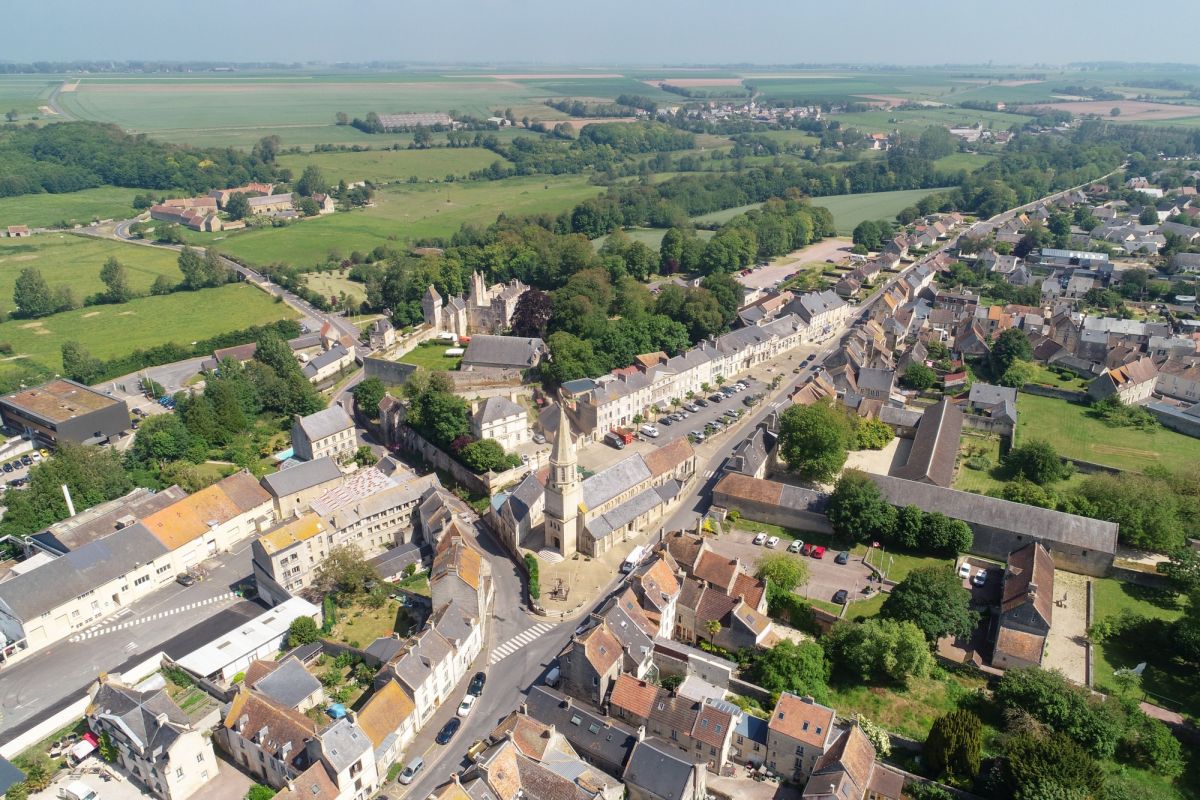
Its history begins with the arrival of the Vikings in Normandy. A descendant of the famous Rollo founded the first fortress in Creully, which over the years became the seat of a Norman barony. Today, this fortress is renowned as one of the oldest and most important in Calvados.
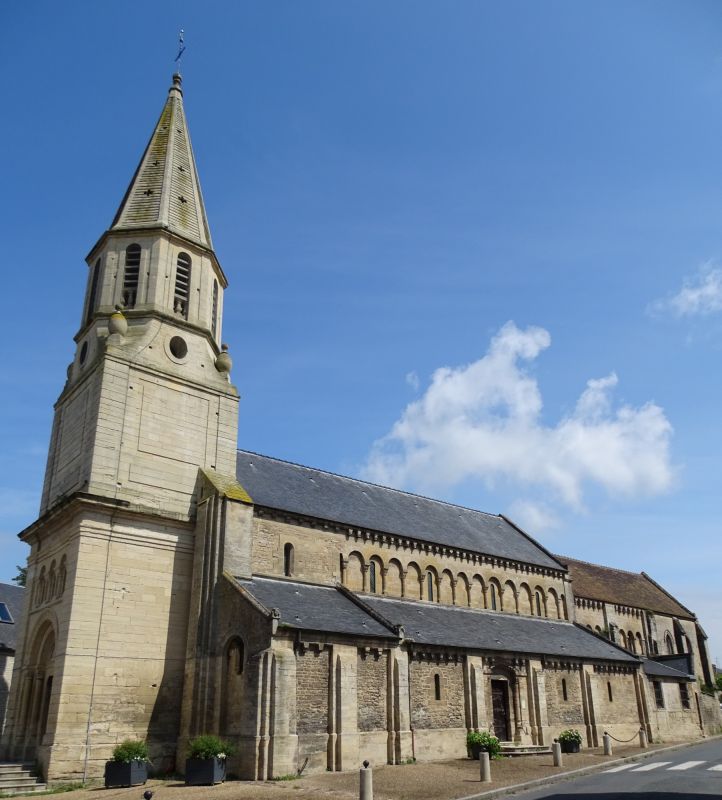
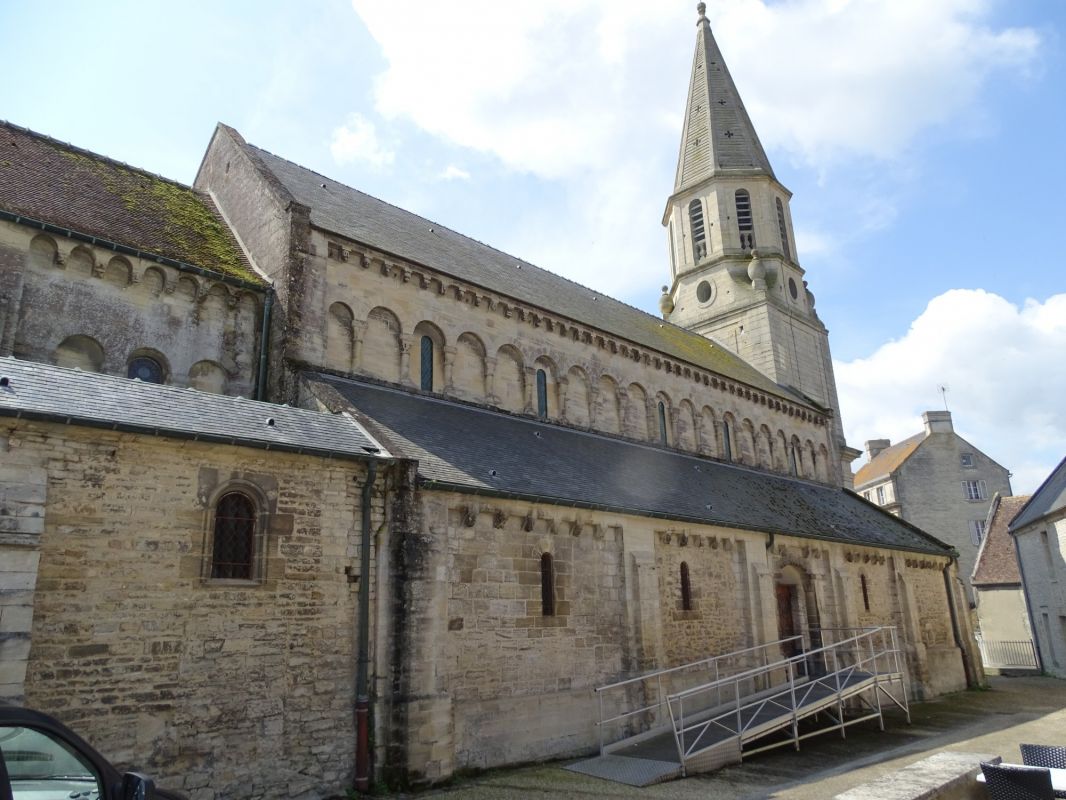
The architecture of the fortress bears a strong resemblance to that of the church, which was built at the same time, in the 12th century. The Romanesque architectural ensemble is still visible today, even though it was remodelled in the 15th century and then again in the 19th century during the restoration of the church.
A visit to Saint-Martin Church in Creully offers an impressive and abundant display of Romanesque decoration, straight out of a medieval picture book. Both inside and outside the building, numerous sculpted heads accompany curious visitors on their tour. The characteristic motifs of Norman Romanesque decoration are also visible, such as gadroons and zigzag arches.
In addition to this Romanesque architecture, there are later additions such as the tomb of Antoine III de Sillans, Lord of Creully in 1641, the 18th-century octagonal tower, and the 19th-century porch, whose tympanum depicts Saint Martin.
The church has been listed as a historic monument since 1 March 1879.

Photos
Remarkable elements
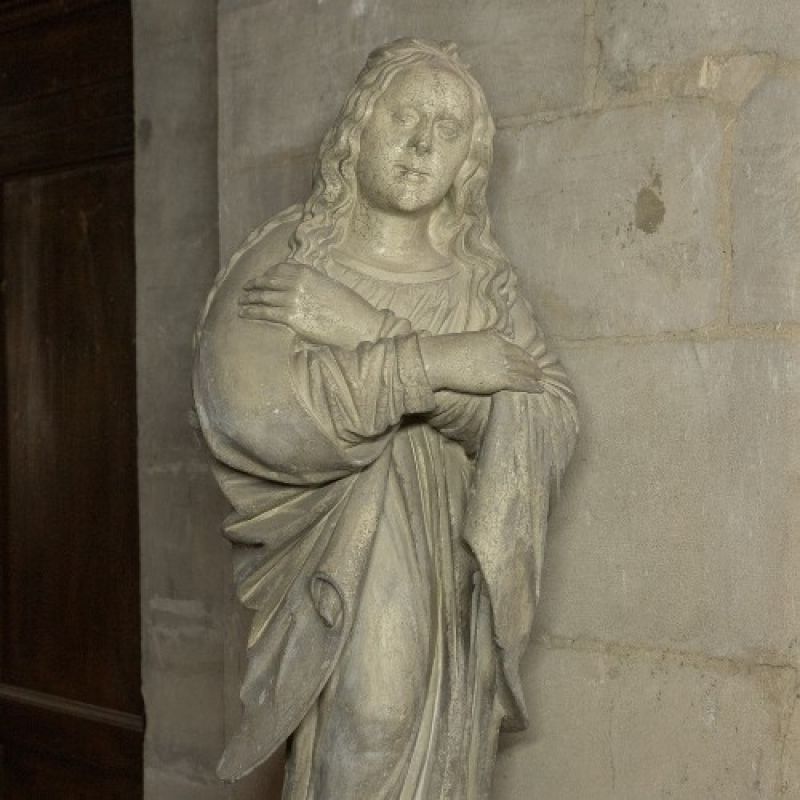
Statue of Saint Margaret
This limestone statuette dates from the 17th century. It is believed to have come from the chapel of Creullet Castle (on the outskirts of Creully in the direction of Crépon). According to legend, Margaret was thrown into a pit by a governor whom she refused. Swallowed by an enormous dragon, she emerged alive. This explains the presence of the dragon beneath her feet, a fairly simple way of identifying her. This episode made her the patron saint of women in labour.
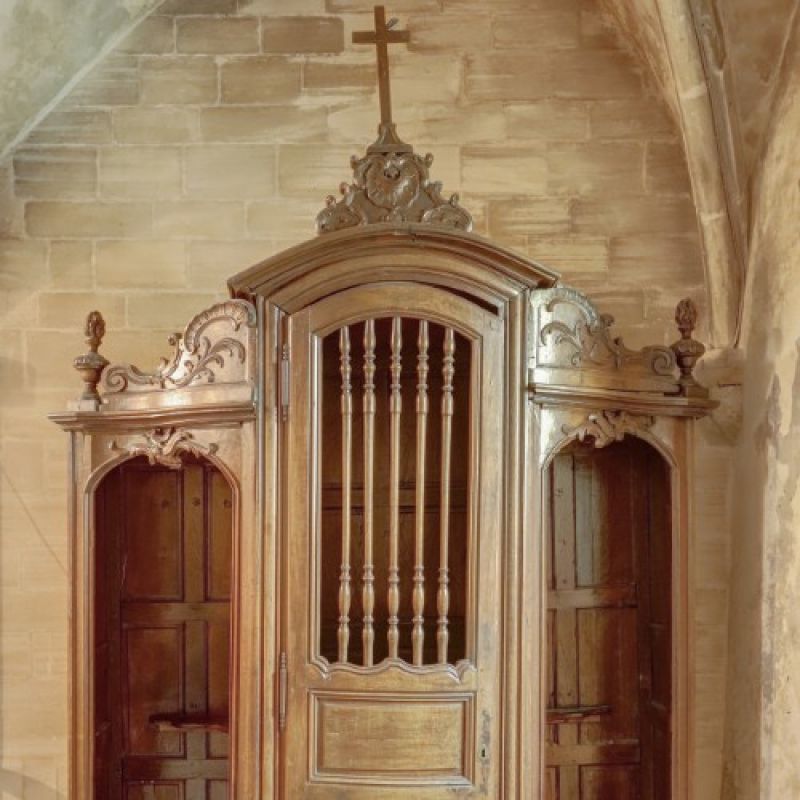
Confessional
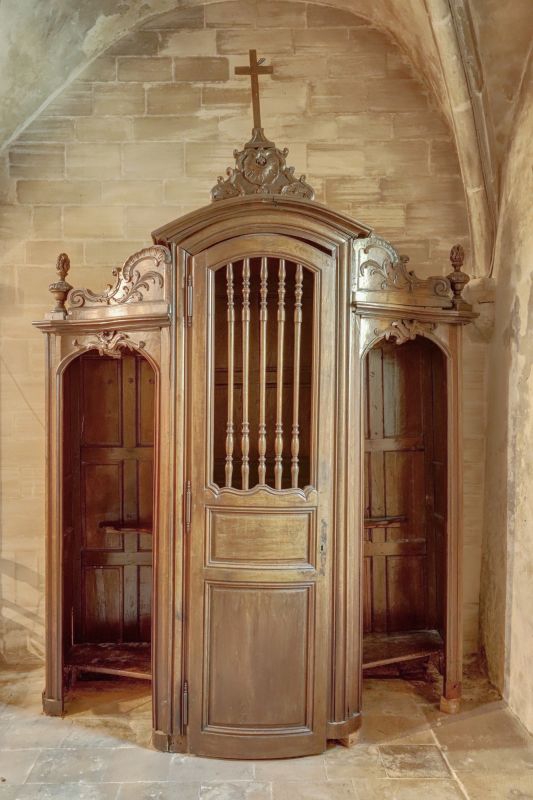
Carved from oak, it comes from the nearby church in Coulombs, where its twin is still preserved. Its carved decoration is characteristic of the 18th century: harmonious curved lines, elegant fire pots at the ends, beautiful palms and finely carved small hooks. This confessional has three booths: the confessor stands in the middle in the booth closed by a door and the penitents took their places at the sides.
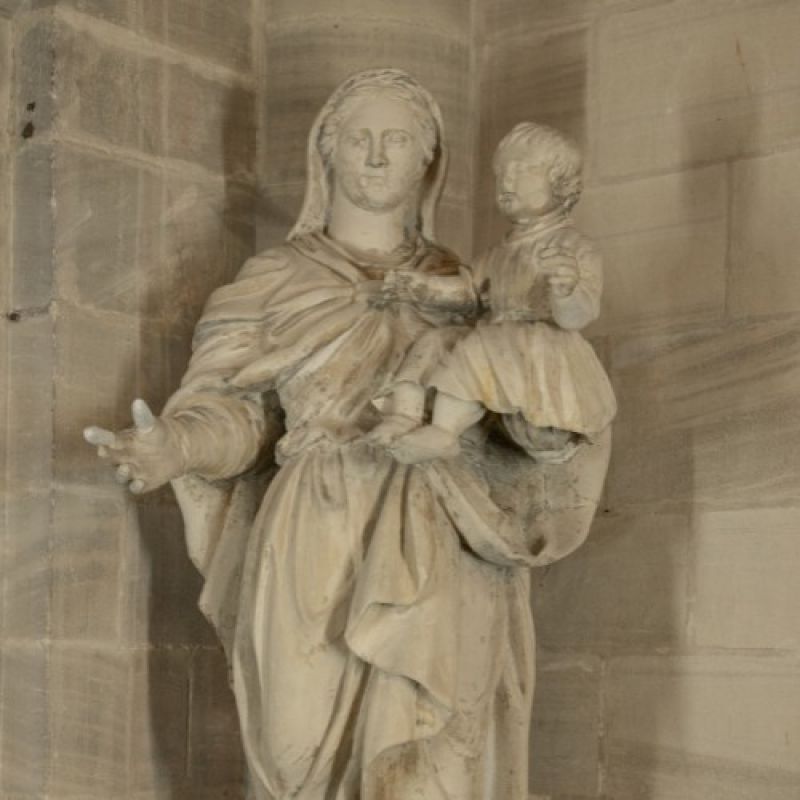
Statue of the Virgin and Child
Now placed on an old holy water font, this 18th-century limestone statue of the Virgin and Child is carved in a style that is fairly common in the region. Statues with a very similar style can be found in neighbouring churches: the Virgin Mary in an imposing position, the baby Jesus dressed in a long tunic, the Virgin Mary's hand supporting him as he sits, and both figures with baby-like faces. It is possible, but not certain, that they were created in the same workshop.

Burial vault
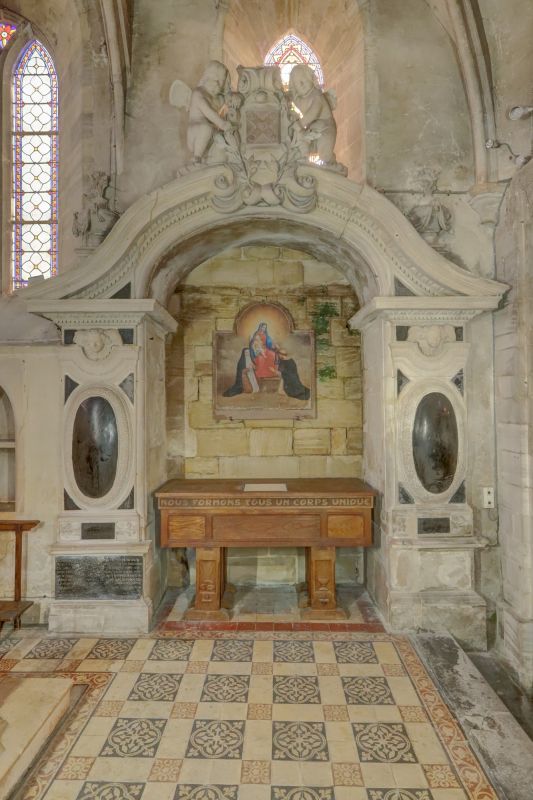
Until the 19th century, two tombs faced each other: that of Antoine de Sillans (1507-circa 1570), lord and baron of Creully, destroyed during the construction of the north chapel, but whose epitaph, transferred to the foot of the other tomb, is still visible. The latter is that of Antoine III de Sillans, Marquis of Creully, who died in 1641. The family coat of arms crowning the tomb, which was destroyed during the Revolution and held by two weeping angels, was later restored.
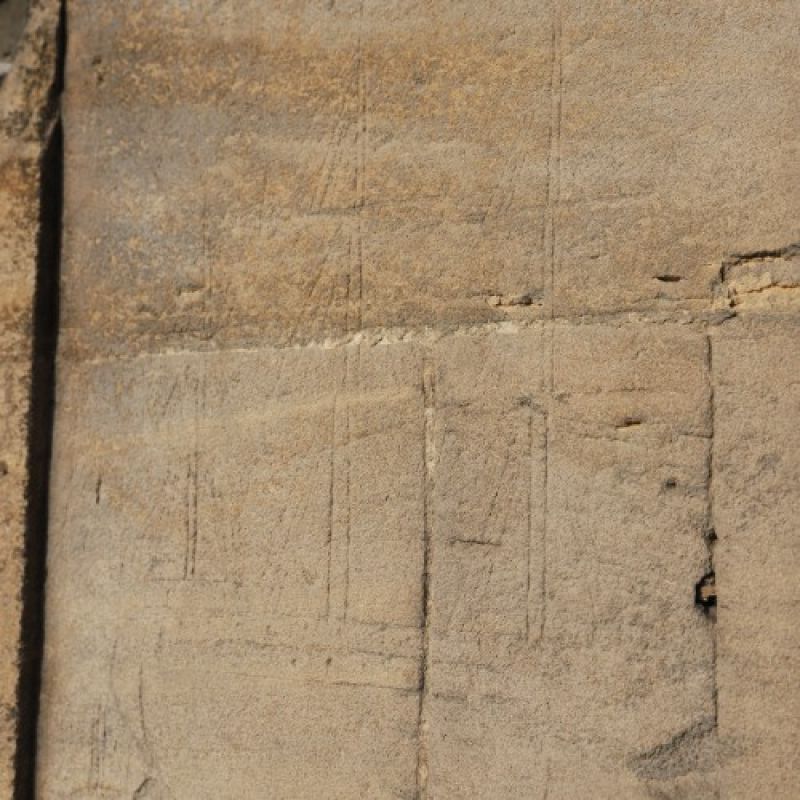
Graffiti
Graffiti is an inscription or drawing ‘engraved’ in stone. The very soft limestone of Caen and Creully has encouraged this form of expression. On the coast and inland, there are marine graffiti. They can be found on the outside wall of the church, on the street side. They depict large three-masted ships. There are also rows of cannons reminiscent of the silhouettes of ships. Could there be a link with the ships of the Battle of La Hougue in 1692?
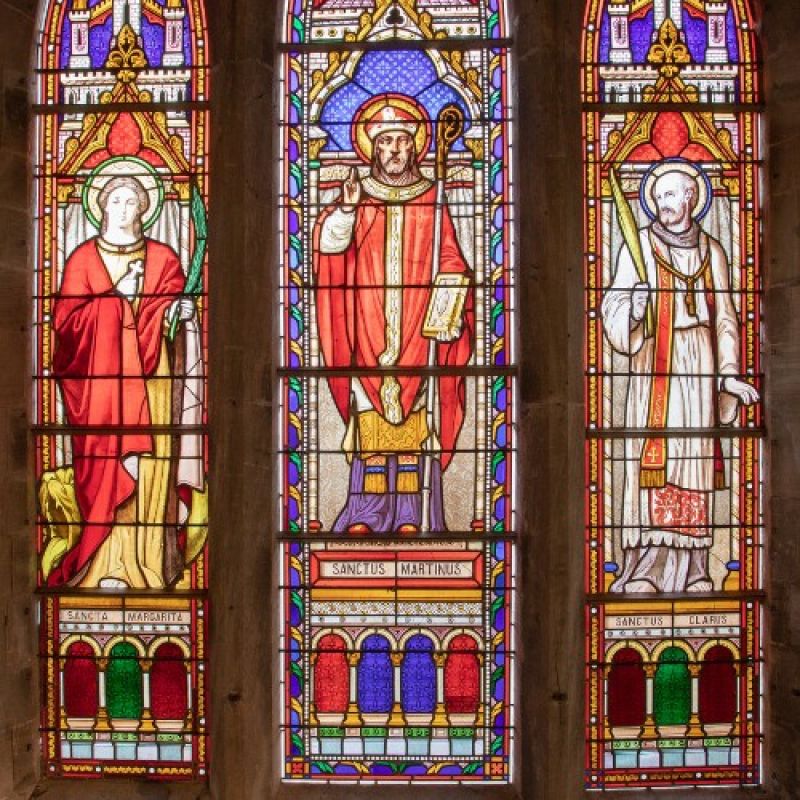
Stained glass window
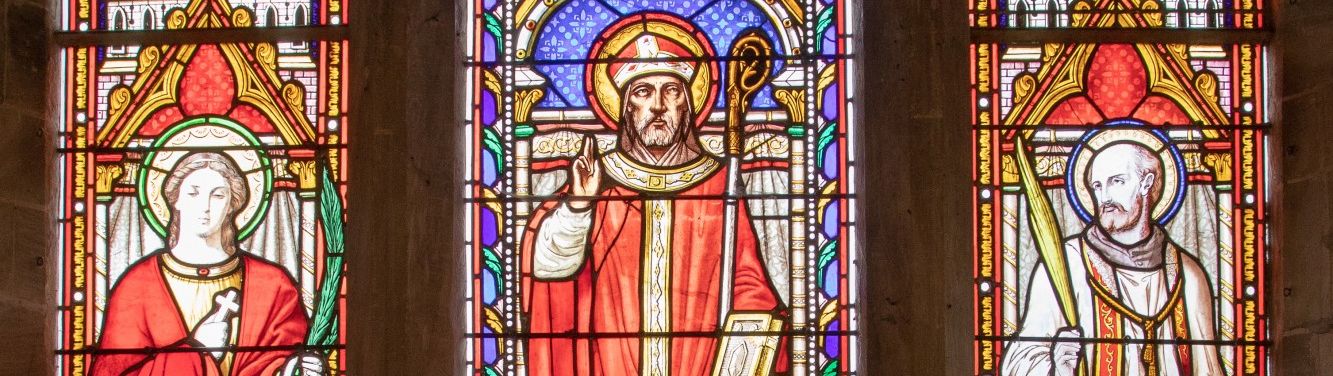
Trois personnages ornent cette verrière de Louis-Victor Gesta (1828-1894), verrier à Toulouse. À gauche figure sainte Marguerite et son dragon. Au centre, saint Martin est représenté en évêque (il fut évêque de Tours) : grand évangélisateur de l’ancienne Gaule, il est patron de nombreuses églises. On le retrouve sculpté en train de partager son manteau avec un mendiant au-dessus du porche principal. À gauche, saint Clair, ermite et abbé du VIIe siècle, tient la palme des martyrs.