Saint John the Baptist
Route de Bapaume
62121 Achiet-le-Grand
Church | 1927 | Art deco | Catholic Church

Map
Opening hours
01 April - 30 September
Mon
Tue
Wed 14.00 - 19.00
Thu
Fri 14.00 - 19.00
Sat 14.00 - 19.00
Sun
01 December - 31 December
Mon
Tue
Wed 14.00 - 18.00
Thu
Fri 14.00 - 18.00
Sat 14.00 - 18.00
Sun
Description
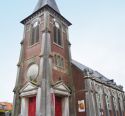
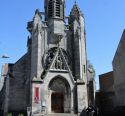
This small village in southern Artois (west of Bapaume) was awarded the Croix de Guerre in 1920 after suffering bombing and the almost total destruction of its buildings. The first church is documented as early as the 17th century, and a photo was taken by a German in 1916. This photo shows a square tower, which was very common in the region. The façade had two trefoil niches that housed statues of the Virgin Mary and Saint John the Baptist, protected as historic monuments since the 16th century, which were unfortunately destroyed during the war.
At the time of reconstruction, the commune of Achiet-le-Grand joined the cooperative reconstruction society and was eligible for the reconstruction of its church. The architect Paul Lebret was appointed in 1927. He proposed a Latin cross-shaped building with a bell tower attached to the south-west façade. The church of Achiet-le-Grand is considered to be the manifesto of the architect's work, which reached its peak with the reconstruction a year later of the church of Hébuterne a few kilometres away.
Translated with www.DeepL.com/Translator (free version)


Photos


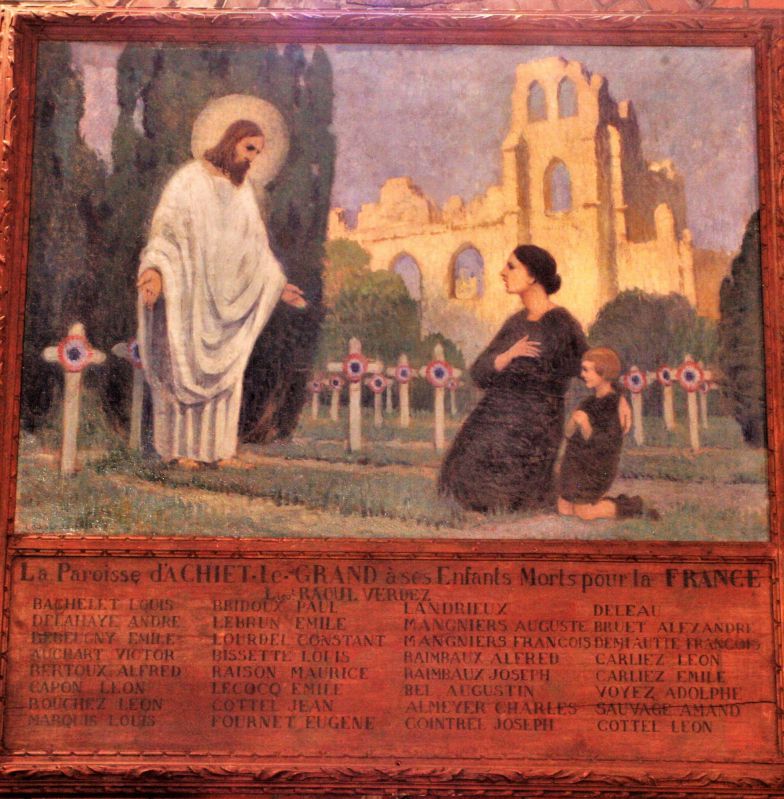

Remarkable elements

The Way of the Cross
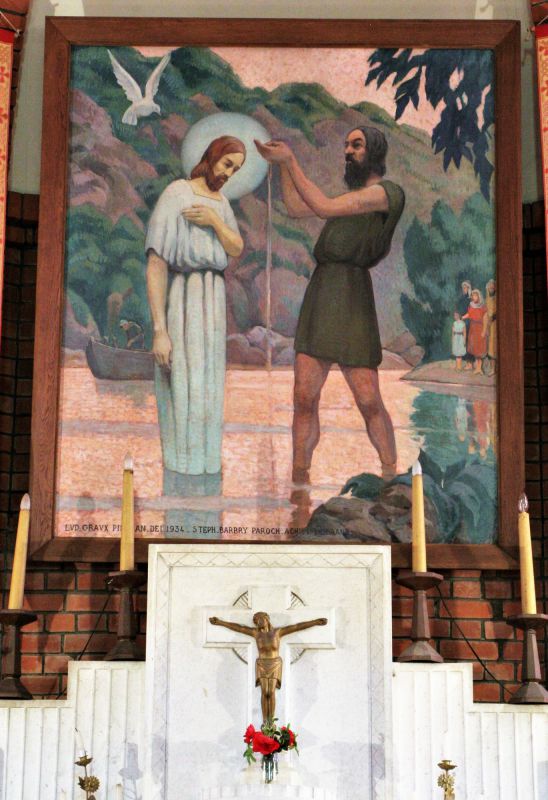
This series of paintings depicting Christ's Way of the Cross is signed by the artist Louis William Graux. This artist also created The Baptism of Christ in 1934, which is displayed in the choir above the high altar.
Translated with www.DeepL.com/Translator (free version)
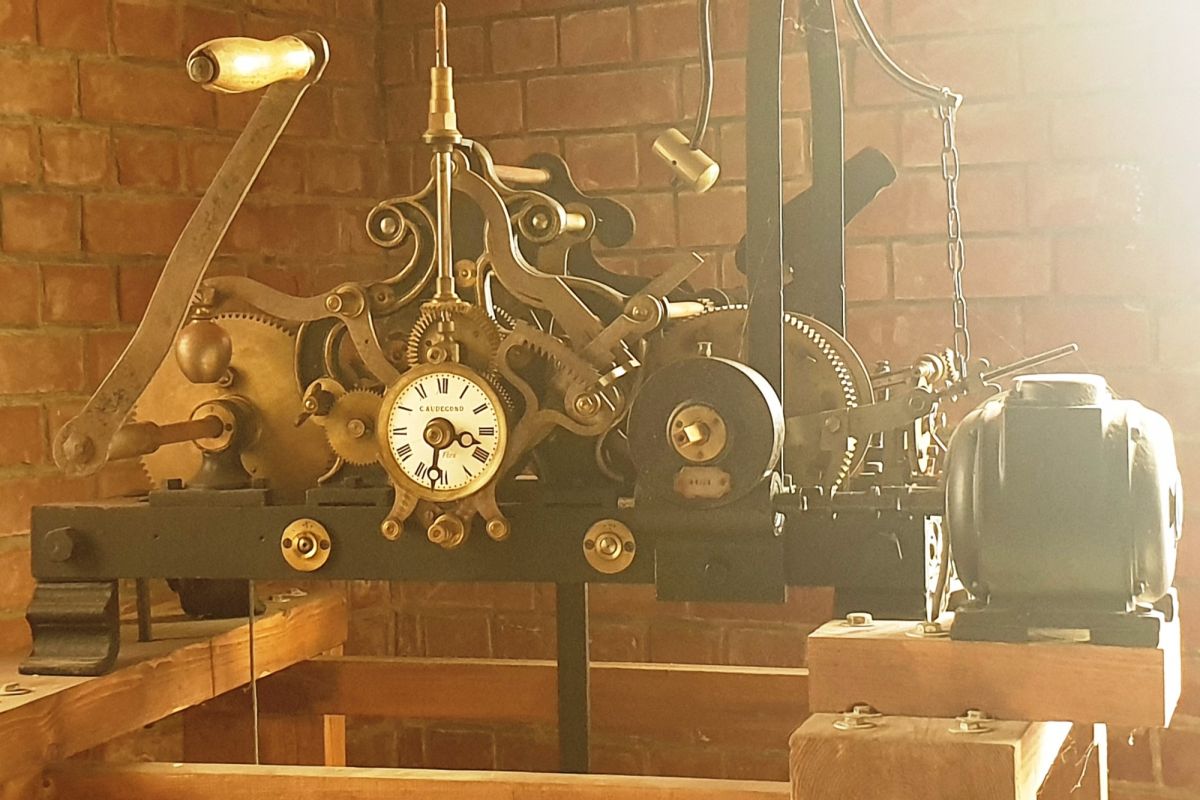
The clock
An antique clock mechanism with a pendulum and counterweight designed to be mounted on a church. The dial is enamelled with the name of the clockmaker, C. Audegond. He is believed to have worked in the 18th and 19th centuries, and his workshop was certainly based in La Fère in the Aisne department.
Translated with www.DeepL.com/Translator (free version)

The stained glass windows
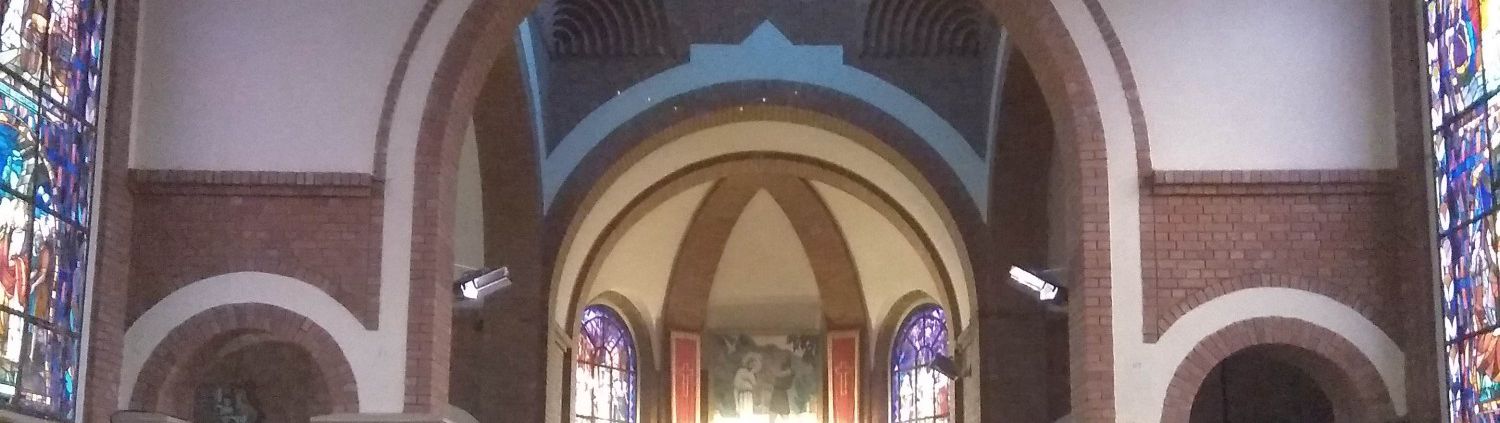
In 1931, Father Étienne Barbry commissioned Julien Vosch to create a series of ten stained glass windows for the nave and two for the choir. Each stained glass window in the nave consists of two scenes depicting episodes from the life of Christ and figures from the Church. The stained glass windows in the choir depict the Presentation of Christ in the Temple and the beheading of Saint John the Baptist.
Translated with www.DeepL.com/Translator (free version)

Liturgical furnishings
Much of the liturgical furnishings were made in 1932 by Émile Pouillon's company, which specialised in marble work and decoration. These include the high altar and candlesticks, the pulpit, the confessional and the stalls, all of which reflect the style in vogue at the time: Art Deco.
Translated with www.DeepL.com/Translator (free version)